Introduction to Chemicals from Biomass (eBook)
John Wiley & Sons (Verlag)
978-1-118-71445-4 (ISBN)
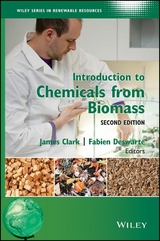
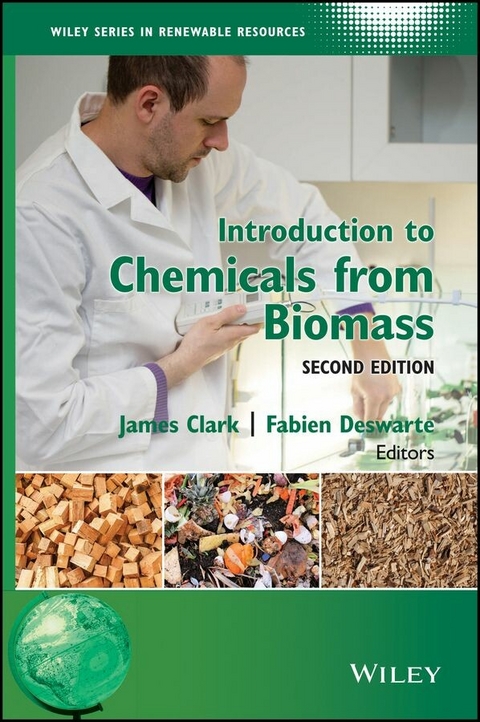
Introduction to Chemicals from Biomass, Second Edition presents an overview of the use of biorenewable resources in the 21st century for the manufacture of chemical products, materials and energy. The book demonstrates that biomass is essentially a rich mixture of chemicals and materials and, as such, has a tremendous potential as feedstock for making a wide range of chemicals and materials with applications in industries from pharmaceuticals to furniture.
Completely revised and updated to reflect recent developments, this new edition begins with an introduction to the biorefinery concept, followed by chapters addressing the various types of available biomass feedstocks, including waste, and the different pre-treatment and processing technologies being developed to turn these feedstocks into platform chemicals, polymers, materials and energy. The book concludes with a discussion on the policies and strategies being put in place for delivering the so-called Bioeconomy.
Introduction to Chemicals from Biomass is a valuable resource for academics, industrial scientists and policy-makers working in the areas of industrial biotechnology, biorenewables, chemical engineering, fine and bulk chemical production, agriculture technologies, plant science, and energy and power generation.
We need to reduce our dependence on fossil resources and increasingly derive all the chemicals we take for granted and use in our daily life from biomass – and we must make sure that we do this using green chemistry and sustainable technologies!
For more information on the Wiley Series in Renewable Resources, visit www.wiley.com/go/rrs
Topics covered include:
• The biorefinery concept
• Biomass feedstocks
• Pre-treatment technologies
• Platform molecules from renewable resources
• Polymers from bio-based monomers
• Biomaterials
• Bio-based energy production
Praise for the 1st edition:
“Drawing on the expertise of the authors the book involves a degree of plant biology and chemical engineering, which illustrates the multidisciplinary nature of the topic beautifully” - Chemistry World
Introduction to Chemicals from Biomass, Second Edition presents an overview of the use of biorenewable resources in the 21st century for the manufacture of chemical products, materials and energy. The book demonstrates that biomass is essentially a rich mixture of chemicals and materials and, as such, has a tremendous potential as feedstock for making a wide range of chemicals and materials with applications in industries from pharmaceuticals to furniture. Completely revised and updated to reflect recent developments, this new edition begins with an introduction to the biorefinery concept, followed by chapters addressing the various types of available biomass feedstocks, including waste, and the different pre-treatment and processing technologies being developed to turn these feedstocks into platform chemicals, polymers, materials and energy. The book concludes with a discussion on the policies and strategies being put in place for delivering the so-called Bioeconomy. Introduction to Chemicals from Biomass is a valuable resource for academics, industrial scientists and policy-makers working in the areas of industrial biotechnology, biorenewables, chemical engineering, fine and bulk chemical production, agriculture technologies, plant science, and energy and power generation. We need to reduce our dependence on fossil resources and increasingly derive all the chemicals we take for granted and use in our daily life from biomass and we must make sure that we do this using green chemistry and sustainable technologies! For more information on the Wiley Series in Renewable Resources, visit www.wiley.com/go/rrs Topics covered include: The biorefinery concept Biomass feedstocks Pre-treatment technologies Platform molecules from renewable resources Polymers from bio-based monomers Biomaterials Bio-based energy production Praise for the 1st edition: Drawing on the expertise of the authors the book involves a degree of plant biology and chemical engineering, which illustrates the multidisciplinary nature of the topic beautifully - Chemistry World
Editors James Clark, Green Chemistry Centre of Excellence, University of York, UK Fabien Deswarte, Biorenewables Development Centre, York Science Park, UK Series Editor Christian Stevens, Faculty of Bioscience Engineering, Ghent University, Ghent, Belgium
1
The Biorefinery Concept: An Integrated Approach
James Clark1 and Fabien Deswarte2
1 Department of Chemistry, Green Chemistry Centre of Excellence, University of York, UK
2 The Biorenewables Development Centre, The Biocentre, York Science Park, UK
1.1 Sustainability for the Twenty-First Century
The greatest challenge we face in the twenty-first century is to reconcile our desires as a society to live lives based on consumption of a wider range of articles both essential (e.g. food) and luxury (e.g. mobile phones) with the fact that we live on a single planet with limited resources (to make the articles) and limited capacity to absorb our wastes (spent articles). While some will argue that we should not be limited by our own planet and instead seek to exploit extra-terrestrial resources (e.g. mining the asteroids), most of us believe it makes more sense to match our lifestyles with the planet we live on.
We can express this in the form of an equation whereby the Earth’s capacity (EC) is defined as the product of world population P, the economic activity of an individual C and a conversion factor between activity and environmental burden B:
EC = P × C × B.
Since we live in a time of growing P and C (through the rapid economic development of the mega-states of the East in particular), and if we assume that all the indicators of environmental stress (including climate change, full landfill sites, pollution and global warming) are at least partly correct, then to be sustainable we must reduce B. There are two ways to do this:
- dematerialisation: use less resources per person and hence produce less waste; and
- transmaterialisation: use different materials and have a different attitude to ‘waste’.
While many argue for dematerialisation, this is a dangerous route to go down as it typically requires that the developing nations listen to the developed nations and ‘learn from their mistakes’. While many of our manufacturing processes in regions such as Europe and North America are becoming increasingly more efficient, we continue to treat most of our waste with contempt, focusing on disposal and an ‘out of sight, out of mind’ attitude. We also have to face the unavoidable truth that people in developing countries want to enjoy the same standard of living we have benefited from in the developed world; pontificating academics and politicians in the West talking about the need to reduce consumption will have little impact on the habits of the rest of the world!
Transmaterialisation, as it would apply to a sustainable society based on consumer goods, is more fundamental. It makes no assumption about limits of consumption other than the need to fit in with natural cycles such as using biomass at no more than the rate nature can produce it. Transmaterialisation also avoids clearly environmentally incompatible practices (such as using short-lifetime articles that linger unproductively in the environment for long periods of time, e.g. non-biodegradable polyolefin plastic bags) and bases our consumption pattern on the circular economy model, with spent articles becoming a resource for other manufacturing [1]. This model is essentially the same as the green chemistry concept, at least in terms of the chemical processes and products that dominate consumer goods, described in more detail in Section 1.4.
1.2 Renewable Resources: Nature and Availability
We need to find new ways of generating the chemicals, energy and materials as well as food that a growing world population (increasing P) and growing individual expectations (increasing C) needs, while limiting environmental damage. At the beginning of transmaterialisation is the feedstock or primary resource and this needs to be made renewable (see Figure 1.1). An ideal renewable resource is one that can be replenished over a relatively short timescale or is essentially limitless in supply. Resources such as coal, natural gas and crude oil come from carbon dioxide, ‘fixed’ by nature through photosynthesis many millions of years ago. They are of limited supply, cannot be replaced and are therefore non-renewable. In contrast, resources such as solar radiation, wind, tides and biomass can be considered as renewable resources, which are (if appropriately managed) in no danger of being over-exploited. However, it is important to note that while the first three resources can be used as a renewable source of energy, biomass can be used to produce not only energy but also chemicals and materials, the focus of this book.
Figure 1.1 Different types of renewable and non-renewable resources.
By definition, biomass corresponds to any organic matter available on a recurring basis (see Figure 1.2). The two most obvious types of biomass are wood and crops (e.g. wheat, maize and rice). Another very important type of biomass we tend to forget about is waste (e.g. food waste, manure, etc.), which is the focus of Section 1.3. These resources are generally considered to be renewable as they can be continually re-grown/regenerated. They take up carbon dioxide from the air while they are growing (through photosynthesis) and then return it to the air at the end of life, thereby creating a closed loop [2].
Figure 1.2 Different types of biomass.
Food crops can indeed be used to produce energy (e.g. biodiesel from vegetable oil), materials (e.g. polylactic acid from corn) and chemicals (e.g. polyols from wheat). However, it is becoming widely recognised by governments and scientists that waste and lignocellulosic materials (e.g. wood, straw and energy crops) provide a much better energy production opportunity than food crops since they avoid competition with the food sector and often do not require as much land and fertilisers to grow. In fact, only 3% of the 170 million tonnes of biomass produced yearly by photosynthesis is currently being cultivated, harvested and used (food and non-food applications) [3]. Indeed, according to a report published by the USDOE and the USDA [4], the US alone could sustainably supply more than one billion dry tons of biomass annually by 2030. As seen in Table 1.1, the biomass potential in Europe is also enormous.
Table 1.1 Biomass potential in the EU [5].
| Biomass potential (MTonnes oil equivalent) |
| 2010 | 2020 | 2030 |
| Organic wastes | 100 | 100 | 102 |
| Energy crops | 43–46 | 76–94 | 102–142 |
| Forest products | 43 | 39–45 | 39–72 |
| Total | 186 | 215–239 | 243–316 |
1.3 The Challenge of Waste
Waste is a major global issue and is becoming more important in developing countries, as well as in the West. According to the World Bank, world cities generate about 1.3 billion tonnes (Gt) of solid waste per year, and this is expected to increase to 2.2 Gt by 2025 [6]. Globally, solid waste management costs will increase from today’s $200 billion per year to about $375 billion per year in 2025. Cost increases will be most severe in low-income countries (more than five-fold increases) and lower–middle income countries (more than four-fold increases). Global governments need to put in place programmes to reduce, reuse, recycle or valorise as much waste as possible before burning it (and recovering the energy) or otherwise disposing of it.
Few countries have a constructive waste management policy whereby a significant proportion of the waste is used in some way (see Figure 1.3); reliable data are however not easily available from developing countries, other than anecdotal evidence such as from India where many people apparently make a living from waste [7]. The increasing costs of traditional fossil reserves, along with concerns over security of supply and the identification of critical raw mineral materials by the European Union (EU) is beginning to make people realise that the traditional linear economy model of extract-process-consume-dispose is unsustainable [8]. Rather, we must move towards a circular economy whereby we continue to make use of the resources in articles when they are no longer required in their current form. This is waste valorisation.
Figure 1.3 The fate of waste in different countries.
Waste produced in the food supply chain is a good example of a pre-consumer type of waste generated on a large scale all over the world. Sixty percent of this is organic matter, which can represent up to 50% of all the waste produced in a country. Food waste is ranked third of 15 identified resource productivity opportunities in the McKinsey report ‘Resource Revolution: Meeting the World’s Energy, Material, Food and Water Needs’ [9]. But there are few examples that take us away from the totally wasteful and polluting landfilling or first-generation and limited-value recycling practices such as composting and animal feed production. We...
| Erscheint lt. Verlag | 22.12.2014 |
|---|---|
| Reihe/Serie | Wiley Series in Renewable Resource |
| Wiley Series in Renewable Resources | Wiley Series in Renewable Resources |
| Sprache | englisch |
| Themenwelt | Naturwissenschaften ► Chemie ► Technische Chemie |
| Technik ► Elektrotechnik / Energietechnik | |
| Schlagworte | Biorefinery, Biorenewables, Biomass, Waste, Biowaste, Chemicals, Eenergy, Platform Molecules, Biomaterials, Green Chemistry • Biotechnologie i. d. Biowissenschaften • Biotechnology • Biowissenschaften • Chemie • Chemistry • Industrial Chemistry • Life Sciences • Nachhaltige u. Grüne Chemie • Nachhaltige u. Grüne Chemie • Sustainable Chemistry & Green Chemistry • Technische u. Industrielle Chemie |
| ISBN-10 | 1-118-71445-8 / 1118714458 |
| ISBN-13 | 978-1-118-71445-4 / 9781118714454 |
| Informationen gemäß Produktsicherheitsverordnung (GPSR) | |
| Haben Sie eine Frage zum Produkt? |
 EPUB (Adobe DRM)
Kopierschutz: Adobe-DRM
Adobe-DRM ist ein Kopierschutz, der das eBook vor Mißbrauch schützen soll. Dabei wird das eBook bereits beim Download auf Ihre persönliche Adobe-ID autorisiert. Lesen können Sie das eBook dann nur auf den Geräten, welche ebenfalls auf Ihre Adobe-ID registriert sind.
Details zum Adobe-DRM
Dateiformat: EPUB (Electronic Publication)
EPUB ist ein offener Standard für eBooks und eignet sich besonders zur Darstellung von Belletristik und Sachbüchern. Der Fließtext wird dynamisch an die Display- und Schriftgröße angepasst. Auch für mobile Lesegeräte ist EPUB daher gut geeignet.
Systemvoraussetzungen:
PC/Mac: Mit einem PC oder Mac können Sie dieses eBook lesen. Sie benötigen eine
eReader: Dieses eBook kann mit (fast) allen eBook-Readern gelesen werden. Mit dem amazon-Kindle ist es aber nicht kompatibel.
Smartphone/Tablet: Egal ob Apple oder Android, dieses eBook können Sie lesen. Sie benötigen eine
Geräteliste und zusätzliche Hinweise
Buying eBooks from abroad
For tax law reasons we can sell eBooks just within Germany and Switzerland. Regrettably we cannot fulfill eBook-orders from other countries.
aus dem Bereich