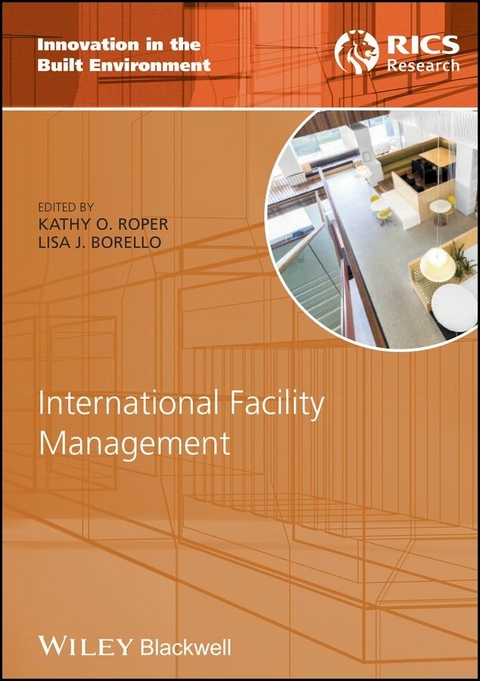
International Facility Management (eBook)
John Wiley & Sons (Verlag)
978-1-118-77163-1 (ISBN)
International Facility Management presents a comprehensive and diverse collection of topics that provides current, cutting edge research in the evolving field of FM. The editors here offer a holistic approach to both the study and the practice of facility management, incorporating the perspective of scholars and practitioners from across the globe.
Topics covered deal with the changes occurring in the field today and include key research areas for both academics and practitioners. The focus is on actual practice of FM organizations - rather than on what FM should be - and the authors examine the latest techniques, models and case studies to provide a unique exploration of the new global world of facility management.
Chapters here cover the changing spectrum of topics including sustainability and energy conservation, and workplace transitions for greater collaboration. The international scope and emphasis on maturity and professionalism of the field further sets this book apart from its competitors.
Lisa J. Borello is an Editor and Grants Manager at Auburn University with more than 13 years of experience writing and editing scholarly and non-scholarly work. She is completing her doctorate degree in Sociology of Science & Technology at Georgia Institute of Technology.
Kathy O. Roper is Associate Professor and Chair Integrated Facility Management at Georgia Institute of Technology where she teaches graduate courses in facility management, project management, and corporate real estate. Following a 23-year career in corporate, government and non-for-profit facility and real estate management, she is also co-founder and co-editor of the open access International Facility Management Journal.
This up-to-date compilation of topics on the maturity and changes occurring within facility management worldwide offers insights into the growth and development of FM and its impact on today's business organisations. International Facility Management presents a comprehensive and diverse collection of topics that provides current, cutting edge research in the evolving field of FM. The editors here offer a holistic approach to both the study and the practice of facility management, incorporating the perspective of scholars and practitioners from across the globe. Topics covered deal with the changes occurring in the field today and include key research areas for both academics and practitioners. The focus is on actual practice of FM organizations rather than on what FM should be - and the authors examine the latest techniques, models and case studies to provide a unique exploration of the new global world of facility management. Chapters here cover the changing spectrum of topics including sustainability and energy conservation, and workplace transitions for greater collaboration. The international scope and emphasis on maturity and professionalism of the field further sets this book apart from its competitors.
Lisa J. Borello is an Editor and Grants Manager at Auburn University with more than 13 years of experience writing and editing scholarly and non-scholarly work. She is completing her doctorate degree in Sociology of Science & Technology at Georgia Institute of Technology. Kathy O. Roper is Associate Professor and Chair Integrated Facility Management at Georgia Institute of Technology where she teaches graduate courses in facility management, project management, and corporate real estate. Following a 23-year career in corporate, government and non-for-profit facility and real estate management, she is also co-founder and co-editor of the open access International Facility Management Journal.
International Facility Management 5
Copyright 6
Contents 7
About the Authors 9
Abbreviations 11
Introduction 13
Chapter 1 Facility Management: Changing Global Viewpoints and Maturity 15
Overview of the Volume 16
References 18
2 Competencies, Credentials, Education, and Training 19
CCET Framework as the Linchpin to Transformation 21
Authoritative and Influential Stakeholders 23
FM and CRE Professional Associations 24
Specialty FM and CRE Professional Associations 29
Other Global Professional Associations 31
Other National FM Associations 34
Competency Architecture for Credentials 34
Alignment of CCET with Industry 36
Paradigm of Sequence and Emphasis on Education versus Training 38
Framework of FM Competence – Leaning Forward to the Enterprise 39
Enterprise Alignment with the Life Cycle of Talent 39
Framing CCET to Produce the Next Generation of FM and CRE Strategic Thinkers 41
Summary and Conclusions 43
References 44
Appendix A: Accredited Degree Programs 45
Appendix B: Facility Management (FM) Organizations 47
FM Resource Organizations 1
International FM Organizations 1
Appendix C: Framework for Full FM Career Planning 1
3 FM Consultancy and Client–Provider Relationships 53
Client–Contractor Relationships 54
Minimizing Costs While Maximizing Value 59
Managing Scope Creep yet Maintaining a Customer Service Orientation 62
Summary and Conclusions 64
References 64
4 Globalization of Facility Management 67
Africa 68
Asia 70
Australasia 72
Europe 73
Middle East 75
North America 75
South and Central America 77
Summary and Conclusions 78
References 78
5 Sustainability and Carbon Reporting 81
Drivers of Sustainability 82
Sustainability Reporting 83
Sustainability and the Facility Manager 87
Sustainability Reporting 89
Building Management 91
GRI Environmental Indicators 91
GRI Energy Indicators 92
GRI Water and Waste Indicators 94
GRI Site Issues (Biodiversity) Indicators 96
GRI Carbon (Emissions and Effluents) Indicators 96
GRI Products and Services, and Compliance, Indicators 98
GRI Transport and Overall Indicators 98
Life-Cycle Management 100
Measurement and Monitoring 101
Summary and Conclusions 102
6 Emergency Preparedness and Business Continuity 105
Business Continuity Program (BCP) Management 105
Authorities and Legislative Requirements 106
Developing a BCP 106
Program Review 109
Business Continuity Planning Continuum 110
Prevention and Mitigation 110
Vendor Resiliency Questionnaire 112
Mutual Aid and Mutual Assistance 113
Communication Systems 114
Training 114
Exercises 115
Response 116
Notification Levels 117
Recovery 120
Post-Incident Recovery and Record Keeping 120
Return to Normal Operations 121
Corrective Action Plan 121
Summary and Conclusions 122
7 Changing Workplaces and Distributed Work 123
The Knowledge Age 123
Distributed Work 125
What Are Distributed Workplaces? 127
Management Issues in Distributed Work 129
Cultural Diversity 130
Generational Diversity 131
Social Responsibility 131
Successful Distributed Workplaces 132
Steps to Developing Successful Distributed Workplace Strategies 132
Examples of Success 133
Summary and Conclusions 134
References 135
8 Measuring Work 137
Introduction: Why Measure Performance? 137
Foundations of Performance Measurement 138
Setting a Benchmark Standard 138
Transition from Core to Noncore Measures 139
Revolutionising Performance Measurement in the Service Sector 140
The Balanced Scorecard – the Strategic Performance Measurement System 141
Evolution of Performance Measurement in FM 142
Importance of Performance Measurement in FM 142
A Balanced Scorecard in FM ? 142
Benchmarking in FM 144
A Lack of Understanding? 144
From Measurement to Management 145
What Performance Indicators? 146
New Challenges and Opportunities 147
Invest in the Social Age and Learn More from Your Customers 147
Case Study: Aligning Customer Satisfaction to Business Strategy 148
Summary and Conclusions 151
References 153
9 Industry-Specific Needs 155
Education Facilities 155
An Education Facility’s Condition and Students’ Performance 155
Energy Management in Schools and Other Educational Facilities 156
Space Usage and Planning in School Facilities 157
Safety, Security, and Disaster Recovery 158
Public Sector Buildings 159
Use of Technology in the FM Industry 159
Financing of FM by Public Finance Initiatives in the Public Sector 160
Building Performance Measurement and Simulations 161
Efficient Preservation of Aged and Deteriorating Structures 162
Healthcare Facilities 163
Life-cycle Cost Analysis and Methodologies 163
O& M Strategies to Optimize FM Performance
Maximizing Value during Predesign, Delivery, and Construction 165
FM Strategies for Infection Control in Healthcare Facilities 166
Office Buildings 167
Changing Office Work Patterns 167
Adaptability and Productivity in Office Spaces 169
Ventilation in Office Buildings 170
Incorporating FM into Core Business Goals 171
Summary and Conclusions 173
References 174
10 Evolution and the Future of Facility Management 181
Evolution of FM 181
Technologies and Future FM 183
General and Building Technologies 183
FM Software 185
Project Management Developments 185
Summary and Conclusions 191
References 191
Index 193
| Erscheint lt. Verlag | 11.11.2013 |
|---|---|
| Reihe/Serie | Innovation in the Built Environment | Innovation in the Built Environment |
| Sprache | englisch |
| Themenwelt | Technik ► Bauwesen |
| Wirtschaft ► Betriebswirtschaft / Management ► Unternehmensführung / Management | |
| Schlagworte | Approach • Bauingenieur- u. Bauwesen • Civil Engineering & Construction • Collection • Compilation • Edge • Editors • evolving • Facilities Management • Facility • Facility Management • Field • FM • Gebäudeausrüstung u. -management • Gebäudeausrüstung u. -management • Globe • growth • holistic • Insights • international • Maturity • Practice • Practitioners • provides current • Research • Study • Topics • uptodate • worldwide offers |
| ISBN-10 | 1-118-77163-X / 111877163X |
| ISBN-13 | 978-1-118-77163-1 / 9781118771631 |
| Informationen gemäß Produktsicherheitsverordnung (GPSR) | |
| Haben Sie eine Frage zum Produkt? |
 PDF (Adobe DRM)
Kopierschutz: Adobe-DRM
Adobe-DRM ist ein Kopierschutz, der das eBook vor Mißbrauch schützen soll. Dabei wird das eBook bereits beim Download auf Ihre persönliche Adobe-ID autorisiert. Lesen können Sie das eBook dann nur auf den Geräten, welche ebenfalls auf Ihre Adobe-ID registriert sind.
Details zum Adobe-DRM
Dateiformat: PDF (Portable Document Format)
Mit einem festen Seitenlayout eignet sich die PDF besonders für Fachbücher mit Spalten, Tabellen und Abbildungen. Eine PDF kann auf fast allen Geräten angezeigt werden, ist aber für kleine Displays (Smartphone, eReader) nur eingeschränkt geeignet.
Systemvoraussetzungen:
PC/Mac: Mit einem PC oder Mac können Sie dieses eBook lesen. Sie benötigen eine
eReader: Dieses eBook kann mit (fast) allen eBook-Readern gelesen werden. Mit dem amazon-Kindle ist es aber nicht kompatibel.
Smartphone/Tablet: Egal ob Apple oder Android, dieses eBook können Sie lesen. Sie benötigen eine
Geräteliste und zusätzliche Hinweise
Buying eBooks from abroad
For tax law reasons we can sell eBooks just within Germany and Switzerland. Regrettably we cannot fulfill eBook-orders from other countries.
aus dem Bereich