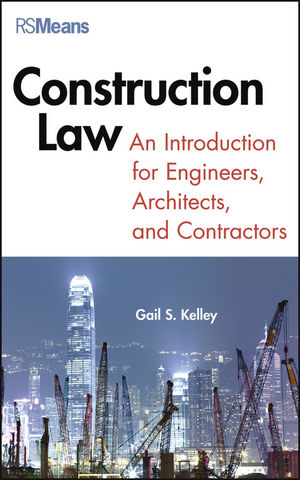
Construction Law (eBook)
John Wiley & Sons (Verlag)
978-1-118-36075-0 (ISBN)
A clear, concise introduction to construction law for professionals
Construction Law: An Introduction for Engineers, Architects, and Contractors offers a comprehensive review of the U.S. legal environment, focusing on the legal concepts and issues applicable to the design and construction industries. Topics covered include:
- Basic legal principles
- Project participants
- Project delivery systems
- Construction contracts
- The design process
- Procurement
- Pricing construction projects
- Subcontractors and suppliers
- Time for performance
- Construction scheduling
- Contract administration
- The payment process
- Changes to the work
- Differing site conditions
- Termination of the construction contract
- Mechanic's liens
- Construction insurance
- Surety bonds
- Liability for defective construction
- Calculations of damages
- The Economic Loss Doctrine
- Alternative dispute resolution
This book serves as an excellent introduction to construction law for students as well as professionals in the construction industry.
GAIL S. KELLEY is a Professional Engineer and LEED Accredited Professional as well as a licensed attorney in Maryland and the District of Columbia. Gail has an extensive background in design and construction having worked in construction management, structural design, and structural evaluation.
A clear, concise introduction to construction law for professionals Construction Law: An Introduction for Engineers, Architects, and Contractors offers a comprehensive review of the U.S. legal environment, focusing on the legal concepts and issues applicable to the design and construction industries. Topics covered include: Basic legal principles Project participants Project delivery systems Construction contracts The design process Procurement Pricing construction projects Subcontractors and suppliers Time for performance Construction scheduling Contract administration The payment process Changes to the work Differing site conditions Termination of the construction contract Mechanic's liens Construction insurance Surety bonds Liability for defective construction Calculations of damages The Economic Loss Doctrine Alternative dispute resolution This book serves as an excellent introduction to construction law for students as well as professionals in the construction industry.
GAIL S. KELLEY is a Professional Engineer and LEED Accredited Professional as well as a licensed attorney in Maryland and the District of Columbia. Gail has an extensive background in design and construction having worked in construction management, structural design, and structural evaluation.
Construction Law: An Introduction for engineers, Architects, and Contractors 5
Copyright 6
Contents 9
Preface 21
1: Law and Government 25
1.1: Introduction 25
1.1.1: The Powers of Governments 25
1.1.2: City and County Governments 26
1.1.3: The Powers of the Federal Government 26
1.2: The Sources and Hierarchy of Law 27
1.2.1: The Constitution 27
1.2.2: Statutes and Ordinances 27
1.2.3: Agency Regulations 28
1.2.4: International Treaties 28
1.2.5: Appellate Court Opinions 28
1.3: The American Judicial System 28
1.3.1: Structure of the Court Systems 29
1.3.2: Federal Trial and Appeals Courts 29
1.3.3: State Trial and Appeals Courts 30
1.4: Common Law 30
1.4.1: Stare Decisis 31
1.4.2: Restatements of the Law 31
1.5: Legal Codes 32
1.5.1: Uniform Codes 32
1.5.2: The Uniform Commercial Code 33
1.6: Legal Doctrines 33
1.7: Choice-of-Law Clauses 34
1.8: Criminal Law versus Civil Law 35
1.9: Cause of Action 35
1.10: Summary Judgment 36
2: Basic Legal Principles 39
2.1: Legal Issues in Construction 39
2.2: Principles of Contract Law 39
2.2.1: Unilateral Contracts versus Bilateral Contracts 40
2.2.2: Oral Contracts 40
2.2.3: Third-Party Beneficiaries 41
2.2.4: Contract Interpretation 41
2.3: Principles of Agency Law 45
2.3.1: Apparent Authority 45
2.3.2: The Principal's Liability for the Agent's Acts 46
2.3.3: Ratification 46
2.4: Principles of Tort Law 47
2.4.1: Intentional Torts 47
2.4.2: Unintentional Torts (Negligence) 47
2.4.3: Strict Liability 51
2.4.4: Misrepresentation 52
3: Project Participants 53
3.1: The Owner 53
3.1.1: Access to the Building Site 54
3.1.2: Restrictions on Use of the Property 55
3.2: The Design Professional Team 55
3.2.1: Site Evaluation Consultants 56
3.2.2: The Geotechnical Consultant 57
3.3: The Construction Team 57
3.3.1: Subcontractors and Suppliers 58
3.4: Construction Lenders 58
3.4.1: Collateral Assignment to Lender 59
3.4.2: Other Lender Requirements 59
3.4.3: Construction Loans 60
3.4.4: Bond Financing 61
4: Project Delivery Systems 63
4.1: Design-Bid-Build 63
4.2: Multiple Primes 65
4.3: Construction Management 65
4.3.1: Agency Construction Management 66
4.3.2: Construction Management At-Risk (CMAR) 66
4.4: Design-Build 67
4.4.1: Design-Build Proposals 68
4.4.2: Advantages and Disadvantages of Design-Build 69
4.4.3: Bridging Consultants 70
4.5: Engineer-Procure-Construct (EPC) 70
4.6: Turnkey Construction 71
4.7: Integrated Project Delivery (IPD) 71
4.8: Fast-Track Construction 71
4.9: Public-Private Partnerships 72
4.9.1: History of Public-Private Partnerships 73
4.9.2: Constraints on Public-Private Partnerships 73
5: Construction Contracts 75
5.1: The Construction Contract 75
5.1.1: Prebid Conferences 75
5.1.2: Right to Reject Bids 76
5.2: The Contract Documents (Owner-Contractor) 76
5.2.1: The Contractor's Bid 77
5.3: Conflicts between the Documents 78
5.4: Errors in the Documents 78
5.4.1: Latent Discrepancies 79
5.5: Specific over General Written over Printed
5.6: Interpretation against Drafter 80
5.7: Specifications 81
5.8: Description of the Work under a Construction Contract 81
5.9: Third-Party Beneficiaries 82
5.10: Industry Standard Forms versus Custom Forms 82
5.10.1: Drafting Custom Forms 83
5.10.2: AIA Contract Documents 84
5.10.3: Engineers Joint Contract Documents Committee (EJCDC) 86
5.10.4: ConsensusDOCS 87
5.10.5: Comparing the AIA, EJCDC, and ConsensusDOCS Documents 88
5.10.6: AGC Forms 89
5.10.7: Other Industry Standard Forms 89
5.11: Commencement of Work Prior to Contract 89
5.11.1: Letters of Intent 90
6: The Design Process 91
6.1: Design Responsibilities 91
6.1.1: Contractor's Responsibility for Design 91
6.1.2: Value Engineering 92
6.2: The Owner's Program 92
6.3: The Design Agreement (Owner-A/E) 92
6.3.1: Schematic Design Phase 93
6.3.2: Design Development Phase 93
6.3.3: Construction Documents Phase 93
6.3.4: Bidding or Negotiation Phase Services 94
6.3.5: Construction Phase Services 94
6.3.6: Basic Services versus Additional Services 95
6.3.7: The A/E's Compensation 95
6.4: Standard of Care Applicable to Design Services 95
6.4.1: Contractual Standard of Care 96
6.4.2: Proving Violation of the Standard of Care 97
6.4.3: Implied Warranties 97
6.4.4: Designing to the Owner's Budget 98
6.4.5: The A/E's Liability for its Estimate 98
6.5: Ownership of the Design Documents 99
6.5.1: Use of the Plans and Specifications 99
6.6: Termination of the Design Agreement 100
7: The Procurement Process 101
7.1: Selection of Contractors for Public Projects 101
7.1.1: The Bid Package 102
7.1.2: Duty to Award to the Lowest Bidder 102
7.1.3: Bid Responsiveness 102
7.1.4: Responsible Bidder 103
7.1.5: Bid Protests 104
7.1.6: Bid Security 105
7.1.7: "Best Value" Awards 105
7.2: Selection of Design Professionals 106
7.3: Alternatives to Design-Bid-Build in the Public Sector 107
7.3.1: Design-Build Construction in the Public Sector 107
7.4: The Federal Acquisition Regulation (FAR) 108
7.5: Procurement on Private Projects 109
8: Pricing Construction Projects 111
8.1: Fixed-Price Contracts 111
8.1.1: Fundamental Characteristic of a Fixed-Price Contract 111
8.1.2: Allowances 112
8.1.3: Material Price Escalation Clauses 112
8.1.4: Index Pricing 113
8.2: Cost-Plus Contracts 113
8.2.1: Labor 114
8.2.2: Subcontracted Work 114
8.2.3: Heavy Equipment 115
8.2.4: Small Tool Allowance 115
8.2.5: Reasonableness or Necessity of Costs Incurred 115
8.2.6: Contractor's Overhead and Profit 116
8.2.7: Estimates and Cost-Plus Contracts 116
8.2.8: Timely Payment Discounts 117
8.2.9: Audit Rights 117
8.3: Cost-Plus with Guaranteed Maximum Price 117
8.4: Unit-Price Contracts 118
8.4.1: Variation in Estimated Quantities (VEQ) Clauses 118
8.5: Unbalanced Bidding 119
8.6: Bidding When the Design Is Incomplete 120
9: Subcontractors and Suppliers 121
9.1: Subcontractors versus Suppliers 121
9.2: Owner's Control over Subcontractor Selection 122
9.3: Subcontractor Bids 122
9.3.1: Enforcing a Subcontractor's Bid 123
9.3.2: The Subcontractor's Right to Enforce Its Bid 124
9.4: Incorporation by Reference 124
9.5: Flow-down and Flow-up Provisions 125
9.5.1: Rights and Liabilities of the Parties under Flow-down Provisions 125
9.6: Duty to Cooperate and Coordinate Subcontract Work 126
9.6.1: Limiting the Liability for Coordination 126
9.6.2: Coordination of Multiple Primes 127
9.7: Subcontractor Payment 127
9.7.1: "Pay-If-Paid" versus "Pay-When-Paid" 128
9.8: Subcontractor Claims against the Owner 129
9.8.1: The Pass-through System 130
9.8.2: Liquidating Agreements 130
9.9: Conditional Assignment of the Subcontracts to the Owner 131
9.10: Minority and Disadvantaged Business Programs 132
9.10.1: Federal Minority and Disadvantaged Business Programs 133
9.10.2: Agency DBE Programs 135
10: Time for Performance 137
10.1: Time Is of the Essence 137
10.1.1: Time-Is-of-the-Essence Clauses in Construction Contracts 138
10.2: Date of Commencement/Time for Completion 138
10.2.1: Delays in Commencement of the Work 139
10.2.2: Waiver of Time for Completion 139
10.3: Substantial Completion 140
10.3.1: The Significance of Substantial Completion 140
10.3.2: Establishing Substantial Completion 141
10.4: Final Completion/Final Payment 141
10.4.1: Acceptance of Defective Work 142
10.5: Delays 143
10.5.1: Determining Whether a Delay Was within a Party's Control 144
10.5.2: Delays Due to Weather 145
10.5.3: Concurrent Delays 146
10.6: Liquidated Damages 146
10.7: Constructive Acceleration 148
10.8: Right to Finish Early 148
10.9: Milestones 149
11: Construction Scheduling 151
11.1: Bar Charts 151
11.2: Critical Path Scheduling 152
11.2.1: Activity Logic 152
11.2.2: Arrow Diagramming 152
11.2.3: Precedence Diagramming 153
11.2.4: As-Planned (Baseline) Schedule 153
11.2.5: Float 154
11.2.6: Critical Path 154
11.2.7: Multiple Calendars 155
11.3: Scheduling Specifications 155
11.4: Schedule Updates 156
11.5: Resource Leveling 156
11.6: CPM-Based Methods for Proof of Delay Claims 157
11.6.1: Total Time Analysis 157
11.6.2: Impacted As-Planned ("What-If ") 158
11.6.3: Collapsed As-Built ("But For") 158
11.6.4: As-Planned versus As-Built 158
11.6.5: Windows Analysis 159
11.7: Expert Witness Testimony 159
11.8: Using CPM to Estimate Extensions of Time 160
11.9: Using Bar Charts to Prove Delay Claims 161
12: Contract Administration 163
12.1: The A/E's Role in Contract Administration 163
12.2: A/E's Liability for Contract Administration 164
12.2.1: Approval of Shop Drawings and Other Submittals 164
12.2.2: Site Visits and Inspections 165
12.2.3: AIA B101 Provisions 166
12.2.4: The Right to Stop Work 166
12.2.5: Approval of Progress Payments 167
12.2.6: Responding to Change Order Requests 168
12.2.7: Requests for Information, Interpretations, and Clarifications 168
12.3: A/E's Role in Contractor Termination 168
12.4: Initial Decision Maker (IDM) 169
13: The Payment Process 171
13.1: Progress Payments 171
13.1.1: Schedule of Values 171
13.1.2: The Application for Payment 172
13.1.3: Certification of Payment 172
13.2: Retainage 173
13.2.1: Payment of Subcontractor's Retainage 174
13.2.2: Claims on Retainage 174
13.3: Accord and Satisfaction 174
13.3.1: Payment of an Accord by Check 175
13.4: Joint Checks 176
13.4.1: Joint Payee versus Alternative Payee 176
13.5: Title Insurance 176
13.6: Obligations of the Lender 177
13.7: Evidence of Financing 177
13.8: Prompt Payment Acts 178
13.8.1: The Progress Payment Request 178
13.8.2: Payment on Subcontracts 178
13.9: The Owner's Payment Obligation on Private Construction 179
13.10: The False Claims Act 179
13.10.1: Liability for False Claims 180
13.10.2: Prosecution of False Claims 180
13.10.3: State False Claims Act 181
14: Changes to the Work 183
14.1: Contract Changes 183
14.1.1: Construction Change Directives 184
14.2: Pricing Change Orders 184
14.2.1: Determination of Price by a Third Party 185
14.2.2: Schedule Adjustments 185
14.3: Constructive Changes 185
14.3.1: Owner's Direction or Improper Rejection of Work 186
14.3.2: Notice Requirements for a Constructive Change 186
14.3.3: Waiver of Notice Requirement 187
14.3.4: Extra Work versus Additional Work 187
14.4: Federal Government Contracts 187
14.4.1: Equitable Adjustments 188
14.4.2: Escrow of Bid Documents 188
14.5: Authority to Issue Changes 189
14.5.1: Apparent Authority and Ratification 189
14.6: Duty to Perform the Changed Work 190
14.7: Reservation of Rights 190
14.8: Changes Clauses in Subcontracts 192
14.9: Documentation of Costs 192
14.10: Cardinal Changes 193
14.10.1: The Contractor's Options 193
15: Differing Site Conditions 195
15.1: The Purpose of the Differing Site Conditions Clause 195
15.2: Differing Site Conditions Claims 196
15.2.1: Type I—Conditions Materially Different Than Indicated 196
15.2.2: Type II—Conditions of an Unusual Nature 197
15.3: Limitations on Claims for Differing Site Conditions 198
15.3.1: Duty to Make a Site Inspection/Duty to Investigate 199
15.3.2: Disclaimers 199
15.3.3: Notice 201
15.3.4: Waiver of Claims 201
15.4: Variations in Estimated Quantities Clause 201
15.5: Geotechnical Baseline Summary Report 202
15.6: Hazardous Materials 202
15.7: Tort and Breach-of-Contract Actions 202
15.7.1: Misrepresentation (Intentional or Negligent) 203
15.7.2: Owner's Breach of Implied Warranty of Plans and Specs 203
15.7.3: Failure to Disclose Superior Knowledge 203
15.7.4: Mutual Mistake 204
16: Termination of the Construction Contract 205
16.1: Unilateral Termination 205
16.2: Contractual Termination Provisions 206
16.3: Termination by the Contractor for Cause 206
16.4: Termination by the Owner for Cause 207
16.4.1: Notice and Opportunity to Cure 207
16.5: Wrongful Termination 208
16.6: The Role of the Performance Bond Surety 209
16.7: Termination for Convenience 210
17: Mechanic's Liens 211
17.1: Purpose of a Mechanic's Lien 211
17.2: Procedures for Filing a Lien 212
17.3: Lien Entitlement 212
17.3.1: Liens for Services 213
17.3.2: Liens for Materials 213
17.4: Enforcement of the Lien 214
17.4.1: Priorities 214
17.4.2: Bonding Off 215
17.5: Interests Subject to a Lien 215
17.5.1: Subcontractor and Supplier Claims 216
17.5.2: Amount of the Lien 216
17.6: Lien Waivers 217
17.6.1: No-Lien Contracts 218
17.7: Rights of Owners and Third Parties 218
17.8: The Effect of Bankruptcy on a Mechanic's Lien 218
17.9: Trust Fund Statutes 219
17.10: Stop Notices 219
17.11: Liens on Public Property 219
18: Construction Insurance 221
18.1: Types of Insurance 221
18.2: Commercial General Liability 222
18.2.1: Bodily Injury and Property Damage 222
18.2.2: Exclusions to Coverage 223
18.2.3: Additional Insured Status 224
18.3: Builder's Risk Insurance 224
18.4: Workers' Compensation Insurance 225
18.5: Professional Liability Insurance 225
18.6: Wrap-up Insurance Programs 226
18.7: Waiver of Subrogation 226
19: Surety Bonds 229
19.1: Use of Surety Bonds in the Construction Industry 229
19.1.1: Bid Guarantees 230
19.1.2: Payment Bonds 230
19.1.3: Performance Bonds 232
19.2: Rights and Remedies of Sureties 232
19.2.1: Indemnity Agreements 233
19.2.2: Discharge of the Surety's Obligations 233
19.3: Bonding Requirements 234
20: Liability for Defective Construction 235
20.1: Determining Liability 235
20.2: Owner Claims against the Contractor 236
20.2.1: Warranties 236
20.2.2: Notice Requirements 237
20.2.3: Tort Claims 237
20.3: The Spearin Doctrine 238
20.3.1: Application of the Spearin Doctrine 238
20.3.2: Limitations on Spearin 239
20.4: The A/E's Liability for Defective Construction 240
20.5: Affirmative Defenses 241
20.5.1: Statutes of Limitation 241
20.5.2: Statutes of Repose 242
21: Calculations of Damages 245
21.1: Compensatory Damages 245
21.1.1: Consequential Damages 246
21.2: Punitive Damages 246
21.3: Duty to Mitigate Damages 247
21.4: Owner's Damages 247
21.4.1: Owner's Damages for Late Completion 247
21.4.2: Economic Waste 249
21.4.3: Betterment 249
21.5: Contractor's Damages 250
21.5.1: Equipment Costs 250
21.5.2: Home Office Overhead 251
21.5.3: Cost Increases for Labor and Materials 252
21.5.4: Methods of Estimating Loss of Productivity 252
21.6: Limitation of Liability 254
21.6.1: Exculpatory Clauses 254
21.6.2: Indemnification Agreements 255
21.6.3: Limitation-of-Liability Clauses 256
21.6.4: Waiver of Consequential Damages 257
21.7: Specific Performance 258
21.8: Tort Claims 258
21.9: Recovery of Damages in the Absence of an Express Contract 259
21.9.1: Reliance Interest—Promissory Estoppel 259
21.9.2: Implied-in-Fact Contracts—Quantum Meruit 260
21.9.3: Restitution Interest—Unjust Enrichment 260
21.9.4: Quantum Meruit versus Unjust Enrichment 261
22: The Economic Loss Doctrine 263
22.1: Tort versus Contract Law 263
22.1.1: Definition of Economic Loss 264
22.1.2: Development of the Economic Loss Doctrine 264
22.1.3: Basis for the Doctrine 265
22.1.4: Public Policy Considerations 265
22.1.5: Strict Application of the Doctrine 266
22.1.6: Exceptions to the Economic Loss Doctrine 266
22.2: Claims of Defective Construction Products 267
22.2.1: Damage to Other Property 268
22.3: Claims of Defective Construction Services 268
22.3.1: Claims of Defective Design Professional Services 269
22.4: Potentially Dangerous Products (Risk of Harm Exception) 270
22.5: Negligent Misrepresentation 271
22.5.1: Negligent Misrepresentation Claimants 271
22.5.2: Tort versus Contract Claims for Negligent Misrepresentation 272
23: Alternative Dispute Resolution 273
23.1: Arbitration 273
23.1.1: Arbitration Clauses 274
23.1.2: Arbitration Statutes 274
23.1.3: Arbitration Organization Rules 275
23.1.4: Prehearing Activities 275
23.1.5: Selection of Arbitrators 276
23.1.6: The Arbitration Hearing 276
23.1.7: The Award 276
23.1.8: Appealing the Award 277
23.1.9: Costs of Arbitration 278
23.1.10: Typical Schedule for Arbitration 278
23.1.11: Joinder and Consolidation 278
23.1.12: Waiver of Arbitration Rights 279
23.1.13: Effect of Arbitration on the Surety 280
23.2: Litigation versus Arbitration 280
23.3: Mediation 281
23.4: Other Types of Alternative Dispute Resolution 282
23.4.1: Med/Arb 282
23.4.2: Mini-Trial and Summary Proceedings 282
23.4.3: Dispute Resolution Boards 283
23.4.4: Standing Neutrals 284
23.5: Dispute Prevention 284
Appendix A: List of Abbreviations 285
Appendix B: Table of Cases 289
Appendix C: Understanding Case Citations 291
Glossary 295
Index 303
| Erscheint lt. Verlag | 22.8.2012 |
|---|---|
| Sprache | englisch |
| Themenwelt | Recht / Steuern ► Allgemeines / Lexika |
| Recht / Steuern ► EU / Internationales Recht | |
| Recht / Steuern ► Öffentliches Recht | |
| Recht / Steuern ► Privatrecht / Bürgerliches Recht ► Baurecht (privat) | |
| Technik ► Bauwesen | |
| Schlagworte | Architecture • Architektur • Baubetrieb • Bauingenieur- u. Bauwesen • Baurecht • Civil Engineering & Construction • construction law • construction law for engineers architects and contractors, AIA documents, consensusDOCs, EJCDC documents, construction law for managers architects and engineers, fundamentals of construction law, legal aspects of architecture, gail kelley, white, enhada, sweet • Construction Management |
| ISBN-10 | 1-118-36075-3 / 1118360753 |
| ISBN-13 | 978-1-118-36075-0 / 9781118360750 |
| Informationen gemäß Produktsicherheitsverordnung (GPSR) | |
| Haben Sie eine Frage zum Produkt? |
 PDF (Adobe DRM)
Kopierschutz: Adobe-DRM
Adobe-DRM ist ein Kopierschutz, der das eBook vor Mißbrauch schützen soll. Dabei wird das eBook bereits beim Download auf Ihre persönliche Adobe-ID autorisiert. Lesen können Sie das eBook dann nur auf den Geräten, welche ebenfalls auf Ihre Adobe-ID registriert sind.
Details zum Adobe-DRM
Dateiformat: PDF (Portable Document Format)
Mit einem festen Seitenlayout eignet sich die PDF besonders für Fachbücher mit Spalten, Tabellen und Abbildungen. Eine PDF kann auf fast allen Geräten angezeigt werden, ist aber für kleine Displays (Smartphone, eReader) nur eingeschränkt geeignet.
Systemvoraussetzungen:
PC/Mac: Mit einem PC oder Mac können Sie dieses eBook lesen. Sie benötigen eine
eReader: Dieses eBook kann mit (fast) allen eBook-Readern gelesen werden. Mit dem amazon-Kindle ist es aber nicht kompatibel.
Smartphone/Tablet: Egal ob Apple oder Android, dieses eBook können Sie lesen. Sie benötigen eine
Geräteliste und zusätzliche Hinweise
Buying eBooks from abroad
For tax law reasons we can sell eBooks just within Germany and Switzerland. Regrettably we cannot fulfill eBook-orders from other countries.
aus dem Bereich