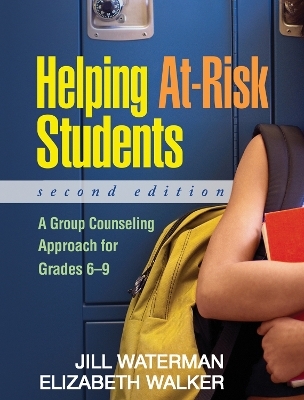
Helping At-Risk Students, Second Edition
Guilford Publications (Verlag)
978-1-60623-002-2 (ISBN)
Engaging, activity based, and effective, this widely used group counseling curriculum (the SPARK program) is designed for flexible implementation in school or clinical settings. The program helps youth build skills for school success and social-emotional growth while exploring such crucial topics as personal goals, ethnic identity and prejudice, peer pressure, violence prevention, and family relationships. Featured are 36 reproducible handouts and forms—plus Spanish-language versions of the 32 handouts—in a large-size format with lay-flat binding for ease of use.
New to This Edition
*Revised and expanded to incorporate new findings and field-tested strategies.
*New module on male–female relationships.
*New sessions on emotion regulation, communication, and relational aggression.
*Strategies for whole-class implementation have been added.
*Nearly half of the 68 reproducibles are new or revised.
Jill Waterman, PhD, is Adjunct Professor of Psychology at the University of California, Los Angeles, and coordinator of the UCLA Psychology Clinic, the training clinic for UCLA's top-ranked PhD program in clinical psychology. Her research and publications focus on various aspects of child trauma and on developing and evaluating interventions aimed at helping our most vulnerable children. Dr. Waterman is also a practicing psychotherapist in the Los Angeles area. Elizabeth Walker, PhD, received her doctorate in clinical psychology from the University of California, Los Angeles, in 2000. As a graduate student, she spent several years working with inner-city students in the Los Angeles area, and she currently works with economically disadvantaged, ethnically diverse high school students in Denver. Additionally, she is especially interested in integrating religion and spirituality into the therapeutic process.
1. Guidelines for Setting Up and Leading Groups
Goals of the SPARK Program
Getting Started
Selecting Group Members
Structure of the Groups
Group Leaders
Presenting the Groups to Prospective Members
Pregroup Individual Interviews and/or
Questionnnaires
Group Counseling Techniques
Developing Trust and Understanding Confidentiality
Building Group Cohesion
Group Process
Developmental Considerations
Maintaining Order and Leader Sanity
Uses and Parameters of Check-In and Check-Out
Issues in Ending the Groups
Dilemmas for Group Leaders
Handling Issues of Child Abuse and Suicidality
Suicidality
Balancing the Needs of Individual Group Members
with the Requirements of the Psychoeducational
Curriculum
Dealing with Members Who Do Not Participate
Dealing with Chronically Disruptive Members
Parameters of the Group Leader Role
Adapting the Curriculum for Full Classroom Use
2. The SPARK Curriculum
Overview of Module Content
Recruitment Criteria
Module One: Trust-Building and Communication Skills
Module Two: Anger Management and Emotion Regulation Skills
Module Three: Ethnic Identity and Anti-Prejudice
Module Four: Educational Aspirations
Module Five: Peer Pressure, Bullying, and Gangs
Module Six: Male–Female Relationships
Module Seven: Exposure to Violence and Posttraumatic Stress Reactions
Module Eight: Family Relationships
Termination Session: The Party
3. Effectiveness of SPARK Groups
Characteristics of Participating Group Members
Family Structure and Distress
Outcome of the SPARK Groups
Time 1 and Time 2 Differences for Those in the
Treatment Group
Time 1 and Time 2 Differences for Those in the
Control Group
Comparisons between the Treatment and Control
Groups
Pilot Evaluations of New and Revised Modules in This Edition
Summary and Conclusions
Information Regarding Data Analyses
Appendix A. Sample Materials for Beginning SPARK Groups
Appendix B. Curriculum Materials and Handouts
Appendix C. Sample Materials in Spanish for Beginning SPARK Groups
Appendix D. Curriculum Materials and Handouts in Spanish
| Erscheint lt. Verlag | 9.2.2009 |
|---|---|
| Verlagsort | New York |
| Sprache | englisch |
| Maße | 203 x 267 mm |
| Gewicht | 601 g |
| Themenwelt | Sozialwissenschaften ► Pädagogik ► Didaktik |
| Sozialwissenschaften ► Pädagogik ► Sozialpädagogik | |
| Sozialwissenschaften ► Soziologie | |
| ISBN-10 | 1-60623-002-6 / 1606230026 |
| ISBN-13 | 978-1-60623-002-2 / 9781606230022 |
| Zustand | Neuware |
| Informationen gemäß Produktsicherheitsverordnung (GPSR) | |
| Haben Sie eine Frage zum Produkt? |
aus dem Bereich