Helping At-Risk Students, First Edition
Guilford Publications (Verlag)
978-1-57230-571-7 (ISBN)
- Titel erscheint in neuer Auflage
- Artikel merken
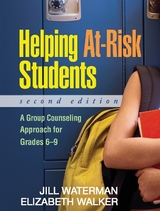
This book provides a comprehensive, empirically supported group counseling program for youngsters at risk for academic, behavioral, and emotional difficulties. Designed for implementation in the span of a school semester, the curriculum has been shown to foster competence in areas crucial to successful development, including problem solving, violence prevention, and interpersonal skill building. The book first presents an overview of program goals and methods and describes how to set up groups, select members, and promote a trusting, supportive environment. Step-by-step guidelines for conducting each session are then delineated. The book describes a wealth of engaging activities and discussions that facilitate exploration of such vital issues as educational goals, ethnic identity, prejudice and discrimination, peer pressure, and family relationships. Appendices contain reproducible materials in both English and Spanish, including forms, pregroup and postgroup assessments, and student game cards, worksheets, and handouts. This innovative curriculum is ideal for use with youngsters dealing with family distress, academic problems, exposure to violence, and socioeconomic disadvantage.
Jill Waterman, PhD, is Adjunct Professor of Psychology at the University of California, Los Angeles, and Coordinator of the UCLA Psychology Clinic. In addition to numerous articles on aspects of child trauma, she is the coauthor of Sexual Abuse of Young Children and Behind the Playground Walls. She is also a practicing psychotherapist in the Los Angeles area. Elizabeth Walker, PhD, received her doctorate in Clinical Psychology from the University of California, Los Angeles, in 2000. As a graduate student, she spent several years working with adolescents in inner-city schools, and she completed her predoctoral internship at the UCSD Psychology Internship Consortium in 2000. Her research interests include the role of religion and spirituality in the lives of young people, and developing and implementing interventions for at-risk youth.
Guidelines for Setting Up and Leading Groups. Goals of the Program. Getting Started. Group Counseling Techniques. Dilemmas for Group Leaders. The SPARK Curriculum. Overview of Module Content. Recruitment Criteria. Module One: Trust Building and Content. Recruitment Criteria. Module One: Trust Building and Communication Skills. Module Two: Anger Management and Problem-Solving Skills. Module Three: Ethnic Identity and Anti-Prejudice. Module Four: Educational Aspirations. Module Five: Peer Pressure and Gangs. Module Six: Exposure to Violence and Posttraumatic Stress Reactions. Module Seven: Family Relationships. Termination Session: The Party. Effectiveness of SPARK Groups. Characteristics of Participating Group Members. Outcomes of the Groups. Summary and Conclusions. Appendices: A. Sample Materials for Beginning Groups. B. Curriculum Materials and Handouts. C. Sample Materials in Spanish for Beginning Groups. D. Curriculum Materials and Handouts in Spanish.
| Erscheint lt. Verlag | 21.12.2000 |
|---|---|
| Verlagsort | New York |
| Sprache | englisch |
| Gewicht | 578 g |
| Themenwelt | Geisteswissenschaften ► Psychologie ► Pädagogische Psychologie |
| Sozialwissenschaften ► Pädagogik ► Didaktik | |
| Sozialwissenschaften ► Soziologie | |
| ISBN-10 | 1-57230-571-1 / 1572305711 |
| ISBN-13 | 978-1-57230-571-7 / 9781572305717 |
| Zustand | Neuware |
| Informationen gemäß Produktsicherheitsverordnung (GPSR) | |
| Haben Sie eine Frage zum Produkt? |
aus dem Bereich