



Dream Society Realized
Seiten
2010
|
2nd Revised edition
McGraw-Hill Professional (Verlag)
978-0-07-148649-1 (ISBN)
McGraw-Hill Professional (Verlag)
978-0-07-148649-1 (ISBN)
- Titel wird leider nicht erscheinen
- Artikel merken
Presents an essay on the demand for goods and services. This book predicts that the information-based society will evolve into a society that values the stories behind products and services. These stories fill the need for emotional wealth when material wealth has become commonplace.
In 1999, Rolf Jensen, world renowned futurist and trend spotter, published his influential book, "The Dream Society". The book sold nearly 30,000 copies, was translated into 10 languages.Here's what "Library Journal" had to say: 'Jensen, director of the Copenhagen Institute for Future Studies, presents a riveting essay on the future demand for goods and services. He predicts that the present information-based society will evolve into a society that values the stories behind products and services. According to Jensen, these stories will fill the need for emotional wealth when material wealth has become commonplace. The demand for product stories will in turn increase the demand for imaginative storytellers who can artfully direct consumer emotions in a wealthy global culture where hard play replaces hard work. As wealth grows, so will the number of choices for consumer goods and emotional experiences. Jensen provides numerous current examples of an encroaching dream society, from paying premium prices for eggs from free-range chickens to the fantasy experience of video games. Well presented and organized, this is highly recommended'.This updated edition will contain 40 per cent new material including new case studies, new predictions, and new strategies.
In the past, the consumer said: "I am normal." "I will buy what's standard." "It's OK if my neighbors buy the same brand as me." Not any more! The new trend says "I am special." "I want personalized products."The Dream Society consumer buys products designed to be unique. The consumer now says, "I want the product to tell my story." Example: Build-a-Bear, the individualized teddy bears for children (and, increasingly, adults). The shift is from uniformity to diversity. Another example: microbreweries. In 1950 there were many big breweries. In 1995, there are a few, and there are more high-end micro-breweries. Products are stories, experiences, dreams, and fantasies. Amazon.com has got more than 1000 items under the heading "salt." This means smaller brands with better stories.
In 1999, Rolf Jensen, world renowned futurist and trend spotter, published his influential book, "The Dream Society". The book sold nearly 30,000 copies, was translated into 10 languages.Here's what "Library Journal" had to say: 'Jensen, director of the Copenhagen Institute for Future Studies, presents a riveting essay on the future demand for goods and services. He predicts that the present information-based society will evolve into a society that values the stories behind products and services. According to Jensen, these stories will fill the need for emotional wealth when material wealth has become commonplace. The demand for product stories will in turn increase the demand for imaginative storytellers who can artfully direct consumer emotions in a wealthy global culture where hard play replaces hard work. As wealth grows, so will the number of choices for consumer goods and emotional experiences. Jensen provides numerous current examples of an encroaching dream society, from paying premium prices for eggs from free-range chickens to the fantasy experience of video games. Well presented and organized, this is highly recommended'.This updated edition will contain 40 per cent new material including new case studies, new predictions, and new strategies.
In the past, the consumer said: "I am normal." "I will buy what's standard." "It's OK if my neighbors buy the same brand as me." Not any more! The new trend says "I am special." "I want personalized products."The Dream Society consumer buys products designed to be unique. The consumer now says, "I want the product to tell my story." Example: Build-a-Bear, the individualized teddy bears for children (and, increasingly, adults). The shift is from uniformity to diversity. Another example: microbreweries. In 1950 there were many big breweries. In 1995, there are a few, and there are more high-end micro-breweries. Products are stories, experiences, dreams, and fantasies. Amazon.com has got more than 1000 items under the heading "salt." This means smaller brands with better stories.
Rolf Jensen (Denmark) , is Chief Imagination Officer, Dream Company A/S. He is a frequently used advisor, author and lecturer, on subjects within the future and corporate storytelling.
| Erscheint lt. Verlag | 16.4.2010 |
|---|---|
| Sprache | englisch |
| Themenwelt | Sozialwissenschaften |
| Wirtschaft ► Betriebswirtschaft / Management ► Unternehmensführung / Management | |
| Wirtschaft ► Volkswirtschaftslehre ► Ökonometrie | |
| ISBN-10 | 0-07-148649-6 / 0071486496 |
| ISBN-13 | 978-0-07-148649-1 / 9780071486491 |
| Zustand | Neuware |
| Informationen gemäß Produktsicherheitsverordnung (GPSR) | |
| Haben Sie eine Frage zum Produkt? |
Mehr entdecken
aus dem Bereich


aus dem Bereich
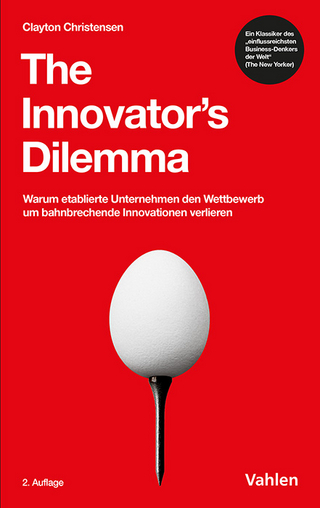
warum etablierte Unternehmen den Wettbewerb um bahnbrechende …
Buch | Softcover (2025)
Vahlen (Verlag)
CHF 48,85
wie man Menschen wirklich weiterbringt
Buch | Softcover (2024)
Vahlen (Verlag)
CHF 37,65
wie Teams funktionieren und wann sie effektiv arbeiten
Buch | Softcover (2024)
Vahlen (Verlag)
CHF 45,95


