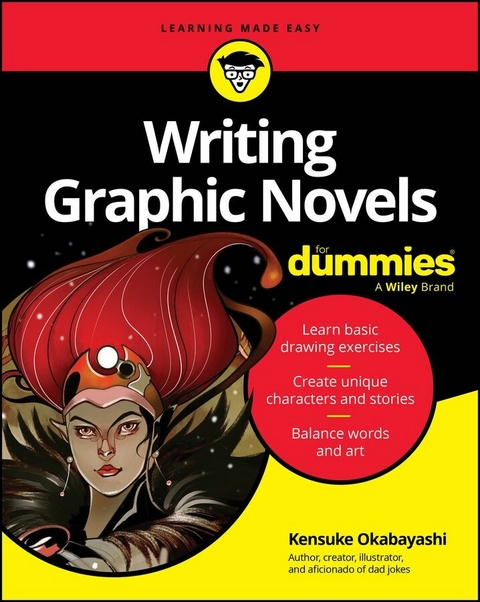
Writing Graphic Novels For Dummies (eBook)
563 Seiten
For Dummies (Verlag)
978-1-394-35374-3 (ISBN)
Turn your ideas into graphic novels with this step-by-step guide-including drawing exercises
Writing Graphic Novels For Dummies walks you through the process of graphic novel creation step-by-step, guiding you through the process of developing ideas, concepts, and visuals to bring your unique stories to life. Learn how to develop plots, characters, and storylines, create storyboards to organize your work, and how to creative effective visuals to support the narrative. You'll progress from basic drawing skills to more advanced techniques specific to graphic storytelling. Get recommendations for using digital tools, and work through exercises to help jumpstart your creativity and develop your style as a graphic novelist. Plus, an 8-page color insert offers a mini-graphic novel within the book, so you can see all the stages of writing, illustrating, and development of a graphic novel in any genre, from initial concept to completion.
- Learn how to choose materials and drawing supplies to suit your needs
- Understand proportion and scale, and convey different emotions and facial expressions
- Practice your skills with helpful drawing exercises
- Get tips for sharing your creations with the world and promoting your work
This accessible guide is great for aspiring writers, artists, and graphic novel enthusiasts who want to learn how to create their own graphic novels as a hobby or potential career.
Kensuke Okabayashi is a freelance illustrator and comic book graphic novel artist who has worked for Magic: The Gathering, Amazon, Lego, Airbnb, Takara Tomy, and other companies. He is the author of Manga For Dummies and Figure Drawing For Dummies.
Introduction
“Agraphic novel artist? What’s that?”
I get this question a lot — and honestly, I love answering it. Whether it’s friends, strangers, or curious passersby, I’m always excited to share what I do and why I’m so passionate about it. Drawing graphic novels is more than just a job — it’s storytelling through art. And guess what? It’s a field that’s exploding right now. The graphic novel industry is going global, drawing in fresh talent and veteran artists alike. Plus, more major movies are being adapted from original graphic novels than ever before, and the genres just keep expanding.
So What’s a Graphic Novel, and How Is It Different from a Comic Book?
A graphic novel is a form of storytelling that combines visual art with narrative text, typically presented in a book-length format. Like traditional novels, graphic novels feature complex characters and developed plots and often explore deeper themes than the shorter, multi-issue superhero comics commonly found in mainstream publishing.
Although graphic novels are usually self-contained stories, it’s not uncommon for smaller serialized works to be later compiled into a single volume under the graphic novel label.
Although this book-length comic format has existed for some time — especially in the world of manga (Japanese comics), such as Tezuka Osamu’s Message to Adolf and Ode to Kirihito — it was Jewish American artist Will Eisner who is credited with coining the term “graphic novel” in 1978 with his collection of interconnected stories, A Contract with God.
Graphic novels offer the same depth and narrative structure as prose novels but convey their stories through a blend of illustrations and dialogue.
Interested in taking a shot at creating your graphic novel? That’s where this book comes in. It’s designed to help you get started creating your very own graphic novel — from concept to finished pages — centered on the stories you want to tell.
About This Book
If you’ve already flipped through this book, you’ve probably noticed one thing: It’s packed with illustrations. In fact, over half the content is visual. Why? Because the best way to learn how to draw a graphic novel is to see it done. I’ll walk you through everything step by step — with clear instructions, real examples, and room to make it your own.
Everything in here is based on real experience. I’ve worked as a professional illustrator and sequential artist, and before that I was an art student learning the ropes. The techniques I teach here are a blend of both worlds — practical, tested, and approachable.
You’ll explore different drawing styles, from realistic characters to wild, exaggerated ones. Try them all, mix and match, and discover what works best for you. This book covers everything from anatomy and proportions to iconic character archetypes like heroes, villains, and quirky sidekicks. You’ll also learn to add energy and emotion to your panels through motion effects and dynamic compositions.
And when you’re ready to share your masterpiece? I’ve got you covered with tips on self-publishing, printing, and even preparing for your first comic or graphic novel convention.
So, are you ready? To quote the late Heath Ledger’s Joker: “And here … we … go!”
Foolish Assumptions
Before we dive in, I’m going to assume a few things about you:
- You love graphic novel-based movies and want to explore the art form for yourself.
- You’re a seasoned comic book artist looking to break away from superheroes and tell your own stories.
- You’ve never drawn anything beyond stick figures, but you’re curious and ready to try something fun and new.
- You don’t know much about graphic novels (yet), but you’re eager to learn.
- You’re open to digital tools and social media as part of your creative process.
- You don’t care about being published — you just love to draw. (And honestly? That’s enough.)
Icons Used in This Book
Throughout this book, you’ll notice different icons popping up in the margins. Think of these as quick visual cues — little flags to point out helpful tips, important info, or things to watch out for. Each icon has a specific purpose, and here’s a quick guide to what they mean:
Of course, we’d love for you to remember everything in this book — but if that’s a tall order, just keep an eye out for these handy icons in the margins. They’ll help highlight key info you won’t want to miss.
These are quick nuggets of wisdom picked up through years of drawing, teaching, and learning. Tips are here to save you time, avoid mistakes, and get the most out of your efforts.
“Pump the brakes!” Read these before you move forward. Warnings flag common mistakes or missteps that can throw you off track or cost you time later.
Think of these as power tips — they cover subjects that many beginning students often overlook. Take a moment, pay close attention, and really absorb the advice I’m sharing. It’ll help you keep up with the material I’m about to show you.
If you need some help getting the creative juices flowing, seek out this icon.
Beyond the Book
Even after you finish the book, don’t leave without checking out the Cheat Sheet, in which I leave you with some additional tips and info that I simply didn’t have room to include in this book (as if I didn’t already pack this book with a ton of goodies!). You can access the book’s Cheat Sheet at Dummies.com. To access this Cheat Sheet, simply go to https://www.dummies.com/ and search for “graphic novel.”
For those YouTubers looking to learn how to color and illustrate your graphic novel digitally, come check out my YouTube tutorial channel (https://www.youtube.com/@KensukeART), where I cover some tips and tricks that save time and get you amazing results.
Where to Go from Here
I didn’t pour all this time into drawing and writing just for you to skip around — but if you do, I won’t be too offended.
Certain parts of the book — like sidebars or gray boxes — contain extra info that’s interesting but not essential. And any sections marked with the Technical Stuff icon go into advanced topics that you can circle back to later.
This book is organized into seven parts, each focused on a different aspect of graphic novel creation. Here’s a quick breakdown:
- Part 1: Graphic Novels 101 sets you up with the basic art materials and supplies as well as useful warm-up techniques that will come in handy in later chapters.
- Part 2: To the Drawing Board guides you through the essentials of character design, starting with drawing heads and facial structures, and then dives into expressive emotions and facial features. You’ll learn how to master body proportions and poses, which give your characters realistic movement and presence. This part also focuses on adding individuality with costumes, hairstyles, and accessories that reflect your characters’ personalities and roles in the story.
- Part 3: The Assembly of the Greats explores key character archetypes in graphic novels, starting with the main protagonists — your story’s heroes and central figures. Next, you’ll dive into the dreaded villains who bring tension and conflict, and then meet the lovable sidekicks who support the heroes while adding humor, heart, or unexpected depth to the narrative.
- Part 4: Making a Scene guides you through essential visual techniques for building compelling scenes using perspective tools, then moves on to shaping and lighting up your compositions for dramatic effect. Finally, you’ll explore how to draw natural background elements like trees, water, and rocks to bring your environments to life.
- Part 5: The Write Stuff: Coming Up with Your Story and Narrative focuses on the storytelling foundation of your graphic novel. You’ll explore story development, learn how to create effective scripts and thumbnails, and discover how to find your unique voice and connect with the right audience. The section wraps up by helping you craft a strong plot and premise to launch your graphic novel journey with confidence.
- Part 6: One More Thing (Actually, There’s Three) dives into the finishing touches that bring your graphic novel to life. You’ll learn how to craft engaging dialogue using word balloons, add special effects to convey motion and emotion, and, finally, get your work into the spotlight through publication, printing, and sharing on social media.
- Part 7: The Part of Tens wraps things up with inspiration and opportunity, introducing you to ten notable graphic novel artists worth studying, followed by a list of (roughly) ten great places where you can showcase your own work and connect with a wider audience.
Feel free to read straight through or bounce around — there’s no wrong way to use this book. My hope is that you’ll find both...
| Erscheint lt. Verlag | 20.10.2025 |
|---|---|
| Sprache | englisch |
| Themenwelt | Sozialwissenschaften ► Pädagogik ► Bildungstheorie |
| Schlagworte | art for graphic novels • graphic novel career • graphic novel development • graphic novel drawing • graphic novel guide • graphic novelist • Graphic Novels • graphic novel writing • manga writing • write a comic book • write a graphic novel • writing comics |
| ISBN-10 | 1-394-35374-X / 139435374X |
| ISBN-13 | 978-1-394-35374-3 / 9781394353743 |
| Informationen gemäß Produktsicherheitsverordnung (GPSR) | |
| Haben Sie eine Frage zum Produkt? |
 EPUB (Adobe DRM)
Kopierschutz: Adobe-DRM
Adobe-DRM ist ein Kopierschutz, der das eBook vor Mißbrauch schützen soll. Dabei wird das eBook bereits beim Download auf Ihre persönliche Adobe-ID autorisiert. Lesen können Sie das eBook dann nur auf den Geräten, welche ebenfalls auf Ihre Adobe-ID registriert sind.
Details zum Adobe-DRM
Dateiformat: EPUB (Electronic Publication)
EPUB ist ein offener Standard für eBooks und eignet sich besonders zur Darstellung von Belletristik und Sachbüchern. Der Fließtext wird dynamisch an die Display- und Schriftgröße angepasst. Auch für mobile Lesegeräte ist EPUB daher gut geeignet.
Systemvoraussetzungen:
PC/Mac: Mit einem PC oder Mac können Sie dieses eBook lesen. Sie benötigen eine
eReader: Dieses eBook kann mit (fast) allen eBook-Readern gelesen werden. Mit dem amazon-Kindle ist es aber nicht kompatibel.
Smartphone/Tablet: Egal ob Apple oder Android, dieses eBook können Sie lesen. Sie benötigen eine
Geräteliste und zusätzliche Hinweise
Buying eBooks from abroad
For tax law reasons we can sell eBooks just within Germany and Switzerland. Regrettably we cannot fulfill eBook-orders from other countries.
aus dem Bereich