


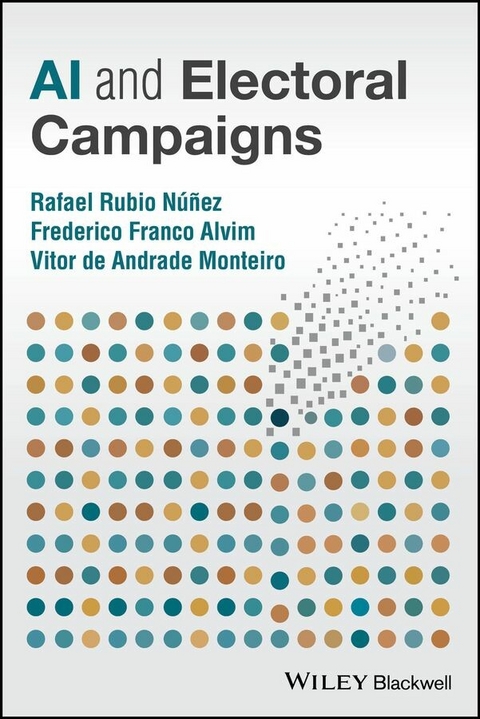
Offers a groundbreaking analysis of how artificial intelligence is reshaping the dynamics of political communication and electoral competition
AI and Electoral Campaigns delivers a timely, in-depth exploration of how artificial intelligence is disrupting the foundational processes of electoral democracy. As AI technologies increasingly shape political communication, this much-needed book equips readers to identify and critically assess the emerging threats to transparency, fairness, and legitimacy in democratic elections. Drawing on real-world cases from across the globe-including Argentina, India, the U.S., and Slovakia-the authors present an empirically grounded taxonomy of AI-related threats, including deepfakes, firehosing, cognitive hacking, astroturfing, and psychographic microtargeting.
AI and Electoral Campaigns fills a critical gap in the literature by addressing not only the political and communicative dimensions of AI's role in elections, but also its legal and ethical implications. The authors propose a clear framework to evaluate the impact of AI through principles-based analysis and present comparative insights into the regulatory responses emerging in diverse jurisdictions. With a structured approach that spans historical context, threat classification, ethical considerations, and legal strategies, the book focuses on the systemic challenges AI poses to electoral integrity.
A foundational guide for navigating the next phase of democratic resilience in the digital age, AI and Electoral Campaigns:
- Offers a global analysis of the new vulnerabilities and systemic risks AI introduces to democratic processes
- Features technical, legal, and practical insights from experts with frontline electoral policy experience
- Addresses the role of electoral management bodies (EMBs) in countering AI-driven disinformation
- Includes an in-depth review of current legislative and regulatory responses from different jurisdictions
- Highlights underexplored 'cyberpathologies' in political discourse shaped by AI technologies
AI and Electoral Campaigns is essential reading for postgraduate and advanced undergraduate students enrolled in courses such as Political Communication, Media Law, AI and Society, and Electoral Law. It is suitable for degree programs in Political Science, Communication Studies, Law, and Public Policy, and also serves as a key reference for electoral officials, policy makers, and legal practitioners.
RAFAEL RUBIO NÚÑEZ is Professor of Constitutional Law at the Complutense University of Madrid. A leading expert in electoral and parliamentary law, he advises international organizations on transparency, digital governance, and electoral integrity and has published extensively on political participation and freedom of expression.
FREDERICO FRANCO ALVIM is a legal expert in electoral law and disinformation, with advisory experience at Brazil's Superior Electoral Court. He has published on electoral justice, media integrity, and democratic resilience. He is a founding member of the Brazilian Academy of Electoral and Political Law.
VITOR DE ANDRADE MONTEIRO is a PhD candidate in Constitutional Law at the Complutense University of Madrid. He is a specialist in procedural and electoral law, with published work focusing on digital democracy and comparative constitutional analysis.
Offers a groundbreaking analysis of how artificial intelligence is reshaping the dynamics of political communication and electoral competition AI and Electoral Campaigns delivers a timely, in-depth exploration of how artificial intelligence is disrupting the foundational processes of electoral democracy. As AI technologies increasingly shape political communication, this much-needed book equips readers to identify and critically assess the emerging threats to transparency, fairness, and legitimacy in democratic elections. Drawing on real-world cases from across the globe including Argentina, India, the U.S., and Slovakia the authors present an empirically grounded taxonomy of AI-related threats, including deepfakes, firehosing, cognitive hacking, astroturfing, and psychographic microtargeting. AI and Electoral Campaigns fills a critical gap in the literature by addressing not only the political and communicative dimensions of AI's role in elections, but also its legal and ethical implications. The authors propose a clear framework to evaluate the impact of AI through principles-based analysis and present comparative insights into the regulatory responses emerging in diverse jurisdictions. With a structured approach that spans historical context, threat classification, ethical considerations, and legal strategies, the book focuses on the systemic challenges AI poses to electoral integrity. A foundational guide for navigating the next phase of democratic resilience in the digital age, AI and Electoral Campaigns: Offers a global analysis of the new vulnerabilities and systemic risks AI introduces to democratic processes Features technical, legal, and practical insights from experts with frontline electoral policy experience Addresses the role of electoral management bodies (EMBs) in countering AI-driven disinformation Includes an in-depth review of current legislative and regulatory responses from different jurisdictions Highlights underexplored cyberpathologies in political discourse shaped by AI technologies AI and Electoral Campaigns is essential reading for postgraduate and advanced undergraduate students enrolled in courses such as Political Communication, Media Law, AI and Society, and Electoral Law. It is suitable for degree programs in Political Science, Communication Studies, Law, and Public Policy, and also serves as a key reference for electoral officials, policy makers, and legal practitioners.
| Erscheint lt. Verlag | 22.9.2025 |
|---|---|
| Sprache | englisch |
| Themenwelt | Sozialwissenschaften ► Kommunikation / Medien |
| Sozialwissenschaften ► Politik / Verwaltung | |
| Sozialwissenschaften ► Soziologie | |
| Schlagworte | AI digital democracy • AI election disinformation • AI election law • AI electoral campaign regulation • AI electoral campaigns • AI electoral integrity • AI ethics • AI political communication • AI political disinformation • artificial intelligence elections |
| ISBN-13 | 9781394311804 / 9781394311804 |
| Informationen gemäß Produktsicherheitsverordnung (GPSR) | |
| Haben Sie eine Frage zum Produkt? |
 PDF (Adobe DRM)
Kopierschutz: Adobe-DRM
Adobe-DRM ist ein Kopierschutz, der das eBook vor Mißbrauch schützen soll. Dabei wird das eBook bereits beim Download auf Ihre persönliche Adobe-ID autorisiert. Lesen können Sie das eBook dann nur auf den Geräten, welche ebenfalls auf Ihre Adobe-ID registriert sind.
Details zum Adobe-DRM
Dateiformat: PDF (Portable Document Format)
Mit einem festen Seitenlayout eignet sich die PDF besonders für Fachbücher mit Spalten, Tabellen und Abbildungen. Eine PDF kann auf fast allen Geräten angezeigt werden, ist aber für kleine Displays (Smartphone, eReader) nur eingeschränkt geeignet.
Systemvoraussetzungen:
PC/Mac: Mit einem PC oder Mac können Sie dieses eBook lesen. Sie benötigen eine
eReader: Dieses eBook kann mit (fast) allen eBook-Readern gelesen werden. Mit dem amazon-Kindle ist es aber nicht kompatibel.
Smartphone/Tablet: Egal ob Apple oder Android, dieses eBook können Sie lesen. Sie benötigen eine
Geräteliste und zusätzliche Hinweise
Buying eBooks from abroad
For tax law reasons we can sell eBooks just within Germany and Switzerland. Regrettably we cannot fulfill eBook-orders from other countries.
aus dem Bereich


