Zum Hauptinhalt springen
Nicht aus der Schweiz? Besuchen Sie lehmanns.de
Für diesen Artikel ist leider kein Bild verfügbar.

Cinematography in the Weimar Republic (eBook)

Lola Lola, Dirty Singles, and the Men Who Shot Them
eBook Download: PDF
2016
286 Seiten
Bloomsbury Publishing (USA) (Verlag)
978-1-68393-830-9 (ISBN)
Systemvoraussetzungen
49,64 inkl. MwSt
(CHF 48,50)
Der eBook-Verkauf erfolgt durch die Lehmanns Media GmbH (Berlin) zum Preis in Euro inkl. MwSt.
  • Download sofort lieferbar
  • Zahlungsarten anzeigen
In film history, director-cinematographer collaborations were on a labor spectrum, with the model of the contracted camera operator in the silent era and that of the cinematographer in the sound era. But in Weimar era German filmmaking, 1919-33, a short period of intense artistic activity and political and economic instability, these models existed side by side due to the emergence of camera operators as independent visual artists and collaborators with directors.Berlin in the 1920s was the chief site of the interdisciplinary avant-garde of the Modernist movement in the visual, literary, architectural, design, typographical, sartorial, and performance arts in Europe. The Weimar Revolution that arose in the aftermath of the November 1918 Armistice and that established the Weimar Republic informed and agitated all of the art movements, such as Expressionism, Dada, the Bauhaus, Minimalism, Objectivism, Verism, and Neue Sachlichkeit ("e;New Objectivity"e;). Among the avant-garde forms of these new stylistically and culturally negotiated arts, the cinema was foremost and since its inception had been a radical experimental practice in new visual technologies that proved instrumental in changing how human beings perceived movement, structure, perspective, light exposure, temporal duration, continuity, spatial orientation, human postural, facial, vocal, and gestural displays, and their own spectatorship, as well as conventions of storytelling like narrative, setting, theme, character, and structure. Whereas most of the arts mobilized into schools, movements, institutions, and other structures, cinema, a collaborative art, tended to organize around its ensembles of practitioners. Historically, the silent film era, 1895-1927, is associated with auteurs, the precursors of Francois Truffaut and other filmmakers in the 1960s: actuality filmmakers and pioneers like R. W. Paul and Fred and Joe Evans in England, Auguste and Luis Lumiere and Georges Melies in France, and Charles Chaplin and Buster Keaton in America, who, by managing all the compositional, executional, and editorial facets of film production-scripting, directing, acting, photographing, set, costume, and lighting design, editing, and marketing-imposed their personal vision or authorship on the film. The dichotomy of the auteur and the production ensemble established a production hierarchy in most filmmaking. In formative German silent film, however, this hierarchy was less rank or class driven, because collaborative partnerships took precedence over single authorship. Whereas in silent film production in most countries the terms filmmaker and director were synonymous, in German silent film the plural term filmemacherin connoted both directors and cinematographers, along with the rest of the filmmaking crew. Thus, German silent filmmakers' principle contribution to the new medium and art of film was less the representational iconographies of Expressionist, New Objective, and Naturalist styles than the executional practice of co-authorship and co-production, in distinctive cinematographer-director partnerships such as those of cinematographer Theodor Sparkuhl and director Ernst Lubitsch; Fritz Arno Wagner with F. W. Murnau, Fritz Lang, and G. W. Pabst; Rudolf Mate with Carl Theodor Dreyer; Guido Seeber with Lang and Pabst; and Carl Hoffmann with Lang and Murnau.
Erscheint lt. Verlag 15.8.2016
Sprache englisch
Themenwelt Kunst / Musik / Theater Film / TV
Geisteswissenschaften Geschichte Regional- / Ländergeschichte
Sozialwissenschaften Kommunikation / Medien Medienwissenschaft
ISBN-10 1-68393-830-5 / 1683938305
ISBN-13 978-1-68393-830-9 / 9781683938309
Informationen gemäß Produktsicherheitsverordnung (GPSR)
Haben Sie eine Frage zum Produkt?
PDFPDF (Adobe DRM)

Kopierschutz: Adobe-DRM
Adobe-DRM ist ein Kopierschutz, der das eBook vor Mißbrauch schützen soll. Dabei wird das eBook bereits beim Download auf Ihre persönliche Adobe-ID autorisiert. Lesen können Sie das eBook dann nur auf den Geräten, welche ebenfalls auf Ihre Adobe-ID registriert sind.
Details zum Adobe-DRM

Dateiformat: PDF (Portable Document Format)
Mit einem festen Seiten­layout eignet sich die PDF besonders für Fach­bücher mit Spalten, Tabellen und Abbild­ungen. Eine PDF kann auf fast allen Geräten ange­zeigt werden, ist aber für kleine Displays (Smart­phone, eReader) nur einge­schränkt geeignet.

Systemvoraussetzungen:
PC/Mac: Mit einem PC oder Mac können Sie dieses eBook lesen. Sie benötigen eine Adobe-ID und die Software Adobe Digital Editions (kostenlos). Von der Benutzung der OverDrive Media Console raten wir Ihnen ab. Erfahrungsgemäß treten hier gehäuft Probleme mit dem Adobe DRM auf.
eReader: Dieses eBook kann mit (fast) allen eBook-Readern gelesen werden. Mit dem amazon-Kindle ist es aber nicht kompatibel.
Smartphone/Tablet: Egal ob Apple oder Android, dieses eBook können Sie lesen. Sie benötigen eine Adobe-ID sowie eine kostenlose App.
Geräteliste und zusätzliche Hinweise

Buying eBooks from abroad
For tax law reasons we can sell eBooks just within Germany and Switzerland. Regrettably we cannot fulfill eBook-orders from other countries.

Mehr entdecken
aus dem Bereich
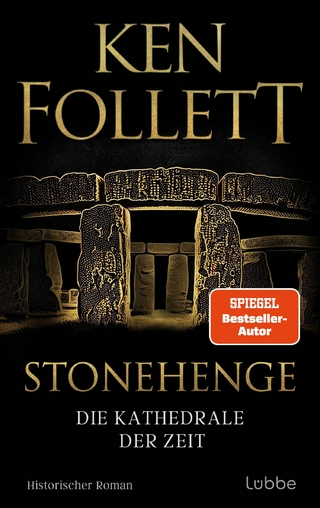
Die Kathedrale der Zeit

von Ken Follett

eBook Download (2025)
Bastei Entertainment (Verlag)
CHF 24,40
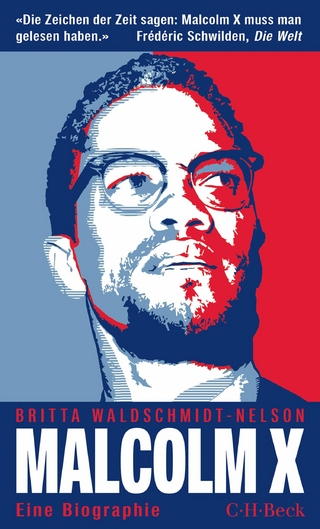
Der schwarze Revolutionär

von Britta Waldschmidt-Nelson

eBook Download (2025)
C.H.Beck (Verlag)
CHF 18,55