


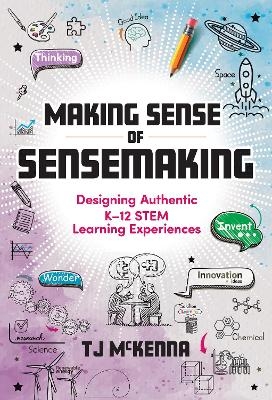
Making Sense of Sensemaking
Designing Authentic K–12 STEM Learning Experiences
Seiten
2025
Teachers' College Press (Verlag)
978-0-8077-8686-4 (ISBN)
Teachers' College Press (Verlag)
978-0-8077-8686-4 (ISBN)
Dive into the transformative world of science education with this groundbreaking guide (K– 2).
In Making Sense of Sensemaking, readers will learn how to navigate the journey from traditional teaching to a dynamic, student-centered approach that emphasizes understanding over rote learning.
Grounded in the latest educational research and aligned with the Next Generation Science Standards (NGSS), this book provides practical strategies for creating K– 2 classrooms where students actively engage in scientific practices, explore real-world problems, and build knowledge through inquiry and collaboration. Readers will learn how to design lessons that foreground sensemaking through the integration of disciplinary core ideas, crosscutting concepts, and science and engineering practices to make learning relevant and exciting.
Teachers, educational leaders, and professional development providers will find valuable insights for supporting teachers in this shift, ensuring that science education becomes more equitable and effective for all learners. Making Sense of Sensemaking provides the tools and inspiration to elevate science education and cultivate scientifically literate citizens ready to tackle the challenges of the future.
Book Features:
Describes what sensemaking is, why it is important, and how to design learning experiences that foreground sensemaking.
Provides tangible examples of sensemaking experiences that can easily be incorporated into work in K– 2 classrooms, university methods courses (preservice), and professional learning sessions (inservice).
Shows how to develop teacher capacity for sensemaking and ways to build sensemaking into a lifelong journey of learning.
Provides models, pedagogical strategies, and tangible examples that can be immediately implemented.
Offers guidance and rubrics for assessing STEM learning experiences in K– 2 classrooms.
For more resources, including a searchable phenomena library, check out ngssphenomena.com.
In Making Sense of Sensemaking, readers will learn how to navigate the journey from traditional teaching to a dynamic, student-centered approach that emphasizes understanding over rote learning.
Grounded in the latest educational research and aligned with the Next Generation Science Standards (NGSS), this book provides practical strategies for creating K– 2 classrooms where students actively engage in scientific practices, explore real-world problems, and build knowledge through inquiry and collaboration. Readers will learn how to design lessons that foreground sensemaking through the integration of disciplinary core ideas, crosscutting concepts, and science and engineering practices to make learning relevant and exciting.
Teachers, educational leaders, and professional development providers will find valuable insights for supporting teachers in this shift, ensuring that science education becomes more equitable and effective for all learners. Making Sense of Sensemaking provides the tools and inspiration to elevate science education and cultivate scientifically literate citizens ready to tackle the challenges of the future.
Book Features:
Describes what sensemaking is, why it is important, and how to design learning experiences that foreground sensemaking.
Provides tangible examples of sensemaking experiences that can easily be incorporated into work in K– 2 classrooms, university methods courses (preservice), and professional learning sessions (inservice).
Shows how to develop teacher capacity for sensemaking and ways to build sensemaking into a lifelong journey of learning.
Provides models, pedagogical strategies, and tangible examples that can be immediately implemented.
Offers guidance and rubrics for assessing STEM learning experiences in K– 2 classrooms.
For more resources, including a searchable phenomena library, check out ngssphenomena.com.
TJ McKenna is a clinical assistant professor of science education and director of the Center for STEM Professional Learning at Scale at Boston University's Wheelock College of Education and Human Development.
Contents
Introduction 1
1. Getting Started: How Do We Create a Culture of Sensemaking? 14
2. Designing Learning Experiences That Foreground Sensemaking 30
3. Pedagogical Strategies for Facilitating Sensemaking 68
4. Assessing Sensemaking 93
5. Developing Teacher Capacity for Sensemaking 129
Final Words: Building Capacity for Teacher Sensemaking 149
Conclusion: A New Vision for STEM Education: Sensemaking as a Lifelong Pursuit 151
References 153
Index 157
About the Author 163
| Erscheinungsdatum | 28.04.2025 |
|---|---|
| Verlagsort | New York |
| Sprache | englisch |
| Maße | 156 x 229 mm |
| Themenwelt | Schulbuch / Wörterbuch |
| Sozialwissenschaften ► Pädagogik | |
| ISBN-10 | 0-8077-8686-1 / 0807786861 |
| ISBN-13 | 978-0-8077-8686-4 / 9780807786864 |
| Zustand | Neuware |
| Informationen gemäß Produktsicherheitsverordnung (GPSR) | |
| Haben Sie eine Frage zum Produkt? |
Mehr entdecken
aus dem Bereich


aus dem Bereich
Grundlagen und Konzepte für Familie, Kita, Schule und Soziale Arbeit
Buch | Softcover (2025)
Kohlhammer (Verlag)
CHF 49,95
Dem Lernen Raum geben
Buch | Softcover (2024)
hep verlag
CHF 43,00
Buch | Hardcover (2025)
Vandenhoeck & Ruprecht (Verlag)
CHF 34,95


