


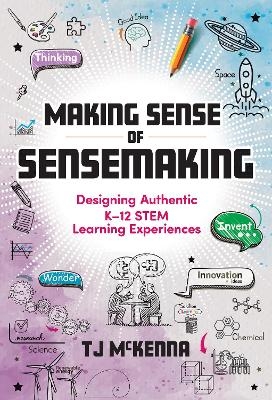
Making Sense of Sensemaking
Teachers' College Press (Verlag)
978-0-8077-8687-1 (ISBN)
Dive into the transformative world of science education with this .
In Making Sense of Sensemaking, readers will learn how to navigate the journey from traditional teaching to a dynamic, student-centered approach that emphasizes understanding over rote learning.
Grounded in the latest educational research and aligned with the Next Generation Science Standards (NGSS), this book provides practical strategies for creating K–12 classrooms where students actively engage in scientific practices, explore real-world problems, and build knowledge through inquiry and collaboration. Readers will learn how to design lessons that foreground sensemaking through the integration of disciplinary core ideas, crosscutting concepts, and science and engineering practices to make learning relevant and exciting.
Teachers, educational leaders, and professional development providers will find valuable insights for supporting teachers in this shift, ensuring that science education becomes more equitable and effective for all learners. Making Sense of Sensemaking provides the tools and inspiration to elevate science education and cultivate scientifically literate citizens ready to tackle the challenges of the future.
Book Features:
Describes what sensemaking is, why it is important, and how to design learning experiences that foreground sensemaking.
Provides tangible examples of sensemaking experiences that can easily be incorporated into work in K–12 classrooms, university methods courses (preservice), and professional learning sessions (inservice).
Shows how to develop teacher capacity for sensemaking and ways to build sensemaking into a lifelong journey of learning.
Provides models, pedagogical strategies, and tangible examples that can be immediately implemented.
Offers guidance and rubrics for assessing STEM learning experiences in K–12 classrooms.
For more resources, including a searchable phenomena library, check out ngssphenomena.com.
TJ McKenna is a clinical assistant professor of science education and director of the Center for STEM Professional Learning at Scale at Boston University's Wheelock College of Education and Human Development.
Contents
Introduction 1
A New Vision for Science Education 4
What Is Sensemaking and Why Is It Important? 5
The Roles of Phenomena and Problems 6
Helpful Misconceptions? 8
Messy Real-World Data 10
Keeping Learning Coherent From Both the Teacher's and the Students' Perspectives 12
How to Use This Book 13
1. Getting Started: How Do We Create a Culture of Sensemaking? 14
How to Introduce Sensemaking in Classrooms 16
The Complexities of Phenomena 18
The Challenges of Setting Norms for Productive Sensemaking 23
The Importance of Explanations in Science Education 26
2. Designing Learning Experiences That Foreground Sensemaking 30
Instructional Units Grounded in Sensemaking and Coherence From the Student Perspective 31
Sensemaking as a Social Endeavor 33
Sensemaking Means That Ideas Change Over Time 37
Sensemaking Builds Incrementally Over Time 38
Equitable Sensemaking 39
Sensemaking: Students as Experts 43
Sensemaking and Multilingual Learners 44
Sensemaking in Elementary Classrooms 47
The Role of Technology and Engineering in Sensemaking for Young Children 51
Sensemaking in Secondary Classrooms 56
Sensemaking in Out-of-Classroom Settings 63
Practical Strategies for Sensemaking in Out-of-School Settings 64
Embracing Sensemaking as a Path Forward 66
3. Pedagogical Strategies for Facilitating Sensemaking 68
Key Strategies to Introducing Mini-Reasoning Experiences 70
Importance of Mini-Reasoning Experiences 74
Highlighting the Three Dimensions With Sensemaking 76
Moving From Explainer to Facilitator of Learning 82
Sensemaking With Technology 88
4. Assessing Sensemaking 93
STEM Notebooks 95
Discourse Circles and Student-Driven Discussions 98
Example Rubrics for Assessing Sensemaking 100
5. Developing Teacher Capacity for Sensemaking 129
Methods Courses 132
Sensemaking Rehearsals 133
Professional Learning for Inservice Teachers 139
Leading Professional Development Programs Focused on Sensemaking for Inservice Teachers 143
Information for STEM Coaches and Administrators 147
Supporting Sensemaking at the District Level 149
Final Words: Building Capacity for Teacher Sensemaking 149
Conclusion: A New Vision for STEM Education: Sensemaking as a Lifelong Pursuit 151
References 153
Index 157
About the Author 163
| Erscheinungsdatum | 13.05.2025 |
|---|---|
| Verlagsort | New York |
| Sprache | englisch |
| Maße | 162 x 235 mm |
| Themenwelt | Schulbuch / Wörterbuch |
| Sozialwissenschaften ► Pädagogik | |
| ISBN-10 | 0-8077-8687-X / 080778687X |
| ISBN-13 | 978-0-8077-8687-1 / 9780807786871 |
| Zustand | Neuware |
| Informationen gemäß Produktsicherheitsverordnung (GPSR) | |
| Haben Sie eine Frage zum Produkt? |
aus dem Bereich


