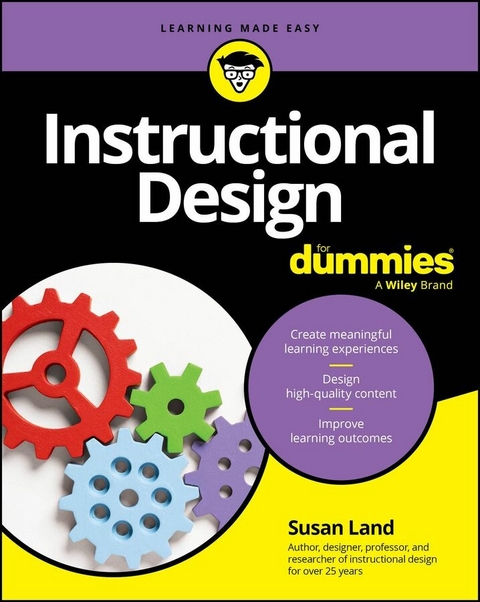
Instructional Design For Dummies (eBook)
391 Seiten
John Wiley & Sons (Verlag)
978-1-394-21159-3 (ISBN)
The streamlined, simplified, beginner-friendly introduction to instructional design
Instructional Design For Dummies will teach you how to design and build learning content to create effective, engaging learning experiences that lead to improved learning outcomes and skill development. This book breaks down the instructional design process into bite-sized pieces, so you can learn techniques and best practices without getting bogged down in theory. Learn about various instructional design models and frameworks, then discover the different options for designing learning experiences. Take into account learning foundations, goals, and contexts, then create stellar lessons for in-person or virtual delivery. This Dummies guide is your starting place for creating impactful courses, without the technical jargon.
- Learn the basics of instructional design so you can create meaningful learning experiences
- Discover techniques that will help you design high-quality content for any context
- Improve learning outcomes and deliver training content with greater efficiency
- Skip the complex theories and technical jargon and focus on the info you need to know
This book is perfect for anyone who needs to develop a course, design a curriculum or training program, or provide educational content without being formally trained in instructional design. It's also a great supplement to college-level instructional design courses. Whatever you're teaching, Instructional Design For Dummies will help you teach it better.
Dr. Susan Land is a professor in the Learning, Design, and Technology Program at Penn State and co-author of Theoretical Foundations of Learning Environments. She has published over 95 manuscripts on instructional design and technology. Susan has been identified by Google Scholar as the most cited researcher in the area of instructional design and technology.
The streamlined, simplified, beginner-friendly introduction to instructional design Instructional Design For Dummies will teach you how to design and build learning content to create effective, engaging learning experiences that lead to improved learning outcomes and skill development. This book breaks down the instructional design process into bite-sized pieces, so you can learn techniques and best practices without getting bogged down in theory. Learn about various instructional design models and frameworks, then discover the different options for designing learning experiences. Take into account learning foundations, goals, and contexts, then create stellar lessons for in-person or virtual delivery. This Dummies guide is your starting place for creating impactful courses, without the technical jargon. Learn the basics of instructional design so you can create meaningful learning experiences Discover techniques that will help you design high-quality content for any context Improve learning outcomes and deliver training content with greater efficiency Skip the complex theories and technical jargon and focus on the info you need to knowThis book is perfect for anyone who needs to develop a course, design a curriculum or training program, or provide educational content without being formally trained in instructional design. It s also a great supplement to college-level instructional design courses. Whatever you re teaching, Instructional Design For Dummies will help you teach it better.
Dr. Susan Land is a professor in the Learning, Design, and Technology Program at Penn State and co-author of Theoretical Foundations of Learning Environments. She has published over 95 manuscripts on instructional design and technology. Susan has been identified by Google Scholar as the most cited researcher in the area of instructional design and technology.
Chapter 1
Introducing Instructional Design
IN THIS CHAPTER
Getting to know the instructional design process
Discovering what instructional designers do
Introducing the ADDIE model of instructional design
Recognizing different types of instructional design models
Do you want to create educational materials, lessons, or workshops? Instructional design offers you a process for developing instruction that is rooted in principles of how people learn. Chances are, you have experienced both successful and unsuccessful instruction at some point in your lifetime. Although there are likely a number of reasons for your unsuccessful experiences, poor instructional design is likely part of the cause. The benefit of instructional design is that it gives us a process to follow to create educational experiences that lead to more successful outcomes for learners.
This chapter gives you an overview of the instructional-design process and profession. You find out how to proceed with a design process that takes you through the early steps of analyzing the need for the instruction, designing goals and activities, creating and trying out the instructional materials, and evaluating whether the instruction was successful.
What is Instructional Design?
Instructional design is situated within the field of education because its primary focus is to help people learn. At its most basic level, instructional design is both a profession and a process for creating effective instructional experiences.
The field of instructional design is described as both an art and a science. Design itself is a creative act that draws on the imagination of a designer, teacher, and/or content expert. It is also a science because it is rooted in research and scholarship from several overlapping fields, such as the educational sciences, information sciences, and communications.
Instructional design is defined simply as a systematic process of planning and creating instructional materials, activities, and technologies that support learning. Professionals in instructional design work in a variety of settings such as corporate organizations, higher education, or other educational spaces such as museums or libraries.
Instructional design as a field is also commonly referred to using different labels that reflect slight differences in focus:
- Instructional design
- Instructional technology
- Educational technology
- Learning design
- Learning technology
- Learning experience design
- Training design
- Curriculum development
Although the previous labels are slightly different from each other, each of them has a common focus on both education and design.
This book uses the term “instructional design” as it has the broadest application and is a longstanding term used to describe the field. Due to advances in technologies that make them easier to use, create content, and connect learners virtually, instructional technology has become more of a central focus to the work of instructional designers.
Here are a few examples of instructional design:
- Designing training programs for new employees to introduce company policies, regulations, compliance, or job practices
- Professional development workshops for employees to learn new skills
- Educational workshops for families visiting a library or museum
- Patient education about disease management
- Military training for equipment operation
- Video instruction on how to use new technology
- Online instruction for students taking college classes from a distance
- Exercise videos with demonstrations
These are just a small number of examples that illustrates the range of use of instruction for learning across multiple settings. In the next few sections, I explore what it is like to be an instructional designer as well as the benefits of using instructional design.
Knowing what is involved in the instructional design process
Instructional design uses a systematic process for designing instruction, which means that it uses research and theory on how people learn to help you plan effective instructional materials, activities, and assessments. As a systematic process, it translates principles of teaching and learning into structured, organized procedures that an instructional designer follows to determine the purpose of the instruction, what should be taught, how it should be taught, and if learning has occurred. Each step involves a series of planned actions that an instructional designer follows to achieve a particular instructional goal.
What are some of the different elements of the instructional design process?
- The instructional setting. A key part of the instructional design process is analyzing the context and need for the instruction. This typically involves figuring out what problems exist and clarifying if instruction is the best solution. For instance, a company can have a performance problem, such as excessive error rates from technicians, or an organization is introducing a new technology that requires employees to be trained to use it. Instruction is a good solution for problems that involve a need for new knowledge, skills, attitudes, or practices. Having a clear understanding of the organizational context, resources, and constraints is essential for all phases of the design process.
- The learners. The instructional design process hinges on understanding who the learners are, their motivations, what knowledge and skills they already have, as well as any accessibility considerations. Instruction is more likely to be effective when you seek information about your learners and tie your instructional goals and activities to your analyses of both the learners and the instructional context.
- The type of instructional goal. Instructional goals are classified into different types, ranging from remembering facts to creating new ideas and innovations. The instructional goal drives decisions about what types of activities and content to use in the instruction. It should also be aligned with the organizational context and need for the instruction.
- Technologies and materials for delivering the instruction. Instruction is delivered to learners using a specific approach — such as an instructor leading a training session in a classroom or as part of an online webinar, or learners working with videos and/or print-based materials. Our selection of materials and technologies is tied to our learning goals, characteristics of the technology, and the logistical resources and constraints of the instructional setting. Making decisions about using a specific technology needs to be considered in concert with all other instructional elements.
- Instructors and subject-matter experts (SMEs). Another critical part of the instructional design process is the instructor or subject-matter expert. Instructors are the experts who are responsible for teaching the instruction, either in the classroom or online. They have direct interaction with the learners during the instruction. Subject-matter experts (or SMEs) have expertise in the content of the instruction, but they may or may not be instructors of the course. SMEs work with an instructional designer to determine what ideal performance looks like and to develop the content of the instruction.
Recognizing the benefits of instructional design
Instructional design offers a variety of benefits to both learners and stakeholders who are involved in the instructional process. You can see the importance of instructional design in the following outcomes:
- Learning effectiveness. One of the most important benefits of instructional design is that it provides a structure for you to develop instruction that helps your learners accomplish what they need to learn. The instructional design process focuses at the outset on what the learner will be able to do after the instruction ends. By first aligning goals and outcomes and then designing instruction to line up with these goals and outcomes, you can determine if the instruction’s objectives were achieved. The instructional design process provides a framework to help you choose the most effective strategies and technologies to meet your goals.
- Potential cost savings. Although instructional design can have upfront costs in personnel and technology to design, develop, and deliver instruction, its potential payoff lies in the benefits of having effectively trained learners. This payoff can result in an increase in productivity, a decrease in errors, or an increase in customer satisfaction. Having well-designed instruction may also produce intangible benefits such as employee satisfaction due to an organization’s commitment to high quality professional development and career advancement. It can also spark new interests as well as a commitment to lifelong learning.
- Consistency and reliability. Instructional design is based on a systematic process that leads to the development of instruction tied to specific goals and objectives. After the instruction is designed, it can be used again on multiple occasions with different learners, with the reassurance that learners will experience a consistent instructional product. For instance, an instructional video created to teach learners how to use a new software program can be deployed over and over with multiple learners using the same well-designed...
| Erscheint lt. Verlag | 22.3.2024 |
|---|---|
| Sprache | englisch |
| Themenwelt | Sozialwissenschaften ► Pädagogik ► Bildungstheorie |
| Schlagworte | addie • Adult Education • adult learning • Bildungswesen • Corporate training • Education • E-Learning • e-learning design • elearning instructional design • Instructional Design • instructional design beginners • instructional design best practices • Instructional Designer • K-12 • K-12 / Technologien im Bildungswesen • Technology & Education (K-12) • Trainer |
| ISBN-10 | 1-394-21159-7 / 1394211597 |
| ISBN-13 | 978-1-394-21159-3 / 9781394211593 |
| Informationen gemäß Produktsicherheitsverordnung (GPSR) | |
| Haben Sie eine Frage zum Produkt? |
 EPUB (Adobe DRM)
Kopierschutz: Adobe-DRM
Adobe-DRM ist ein Kopierschutz, der das eBook vor Mißbrauch schützen soll. Dabei wird das eBook bereits beim Download auf Ihre persönliche Adobe-ID autorisiert. Lesen können Sie das eBook dann nur auf den Geräten, welche ebenfalls auf Ihre Adobe-ID registriert sind.
Details zum Adobe-DRM
Dateiformat: EPUB (Electronic Publication)
EPUB ist ein offener Standard für eBooks und eignet sich besonders zur Darstellung von Belletristik und Sachbüchern. Der Fließtext wird dynamisch an die Display- und Schriftgröße angepasst. Auch für mobile Lesegeräte ist EPUB daher gut geeignet.
Systemvoraussetzungen:
PC/Mac: Mit einem PC oder Mac können Sie dieses eBook lesen. Sie benötigen eine
eReader: Dieses eBook kann mit (fast) allen eBook-Readern gelesen werden. Mit dem amazon-Kindle ist es aber nicht kompatibel.
Smartphone/Tablet: Egal ob Apple oder Android, dieses eBook können Sie lesen. Sie benötigen eine
Geräteliste und zusätzliche Hinweise
Buying eBooks from abroad
For tax law reasons we can sell eBooks just within Germany and Switzerland. Regrettably we cannot fulfill eBook-orders from other countries.
aus dem Bereich