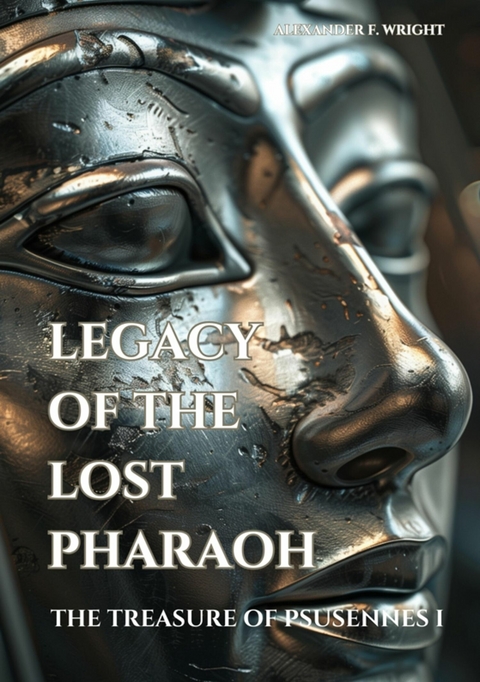
Legacy of the Lost Pharaoh (eBook)
106 Seiten
tredition (Verlag)
978-3-384-16444-5 (ISBN)
I. Psusennes I – The Pharaoh and His Kingdom
Biography and Reign
As we delve into the military endeavors of Psusennes I, we will uncover the key campaigns that shaped his reign, his strategic prowess, and his diplomatic relations with foreign powers. His role as both a military leader and a diplomatic figure will be explored, highlighting the impact of his approaches on Egypt’s standing in the ancient world.
Moving on to his architectural legacy, we will journey to the forgotten capital of Tanis and examine the construction activities that flourished under his rule. By studying the monuments and structures attributed to Psusennes I, we will gain insight into the architectural styles and innovations of the time, ultimately assessing the enduring impact of his building projects on subsequent periods.
Transitioning into his religious reforms, we will uncover the introduction of new religious ideas and practices, as well as Psusennes I’s cultural contributions to Egypt. By analyzing the advancements in art, literature, and architecture during his reign, we will paint a comprehensive picture of his religious and cultural legacy that continues to shape our understanding of ancient Egypt.
Finally, we will investigate the details of Psusennes I’s final ruling years, delving into his health state, succession plans, and the political turmoil that ensued post-reign. By examining the transfer of power and the early years of his successor’s rule, we will gain a deeper understanding of the challenges and changes that marked the end of Psusennes I’s reign and the dawn of a new era in Egyptian history.
Early life and accession to the throne
Psusennes I’s birth and family background were pivotal factors in shaping his future as a pharaoh of Egypt. Born into a prestigious lineage with ancestral ties to powerful New Kingdom pharaohs, Psusennes I inherited not only a rich heritage but also a legacy of leadership and authority. This lineage influenced his approach to rulership, instilling in him a deep sense of duty to uphold the traditions and values of his ancestors.
Before ascending to the throne, Psusennes I navigated a complex political landscape characterized by shifting alliances, family rivalries, and regional tensions. Climbing the hierarchical ladder required astute political maneuvering and strategic alliances with key figures in the Egyptian court. His ability to navigate these intricacies and build supportive alliances played a crucial role in his eventual rise to power.
Upon assuming the title of pharaoh, Psusennes I faced significant challenges in maintaining stability and asserting his authority over a diverse and sometimes fractious kingdom. Balancing the interests of powerful noble families, managing regional conflicts, and preserving the intricate political structure of the empire were among the initial hurdles he had to overcome.
Despite these obstacles, Psusennes I proved himself to be a capable and effective ruler. Known for his diplomatic skills and strategic vision, he implemented policies that fostered economic prosperity, cultural advancement, and social stability within his kingdom. Through a combination of astute governance, diplomatic finesse, and a keen understanding of the political dynamics of his time, Psusennes I successfully navigated the complexities of rulership and left a lasting legacy in ancient Egyptian history.
Military campaigns and diplomatic relations
Psusennes I’s military focus during his reign as one of Egypt’s significant pharaohs of the Twenty-First Dynasty was visibly marked by strategic campaigns that fortified his kingdom. Notable among his military campaigns was his successful stance against the Libyans and the containment of threats emanating from the eastern Mediterranean region.
His military strategies encompassed a blend of calculated actions and tactical acumen that often resulted in favorable outcomes for Egypt. Through a judicious mix of force and diplomacy, Psusennes I managed to secure beneficial relations with neighboring powers. These alliances not only aided in preserving Egypt’s stability but also acted as robust bulwarks against potential external aggressions.
Psusennes I’s prowess in both military and diplomatic spheres was a testament to his comprehensive leadership skills. His ability to deftly balance military confrontations with diplomatic negotiations solidified his standing as a revered and influential figure in the ancient world.
The lasting impact of Psusennes I’s military and diplomatic engagements resonated far beyond his reign, fundamentally shaping Egypt’s posture within the international arena. His legacy as a competent military strategist and an adept diplomat underscores the significance of his rule in safeguarding Egypt’s security and elevating its geopolitical standing.
Building projects and architectural achievements
Psusennes I, a pharaoh of the Third Intermediate Period, displayed a keen interest in architectural pursuits, leaving behind a significant mark with his constructions. At the heart of his architectural endeavors was Tanis, the forgotten capital that flourished under his reign. The city, strategically positioned in the Nile Delta, served as a bustling political and cultural hub during this period.
Psusennes I’s reign witnessed a surge in construction activities, showcasing his dedication to building monumental structures. Among the most prominent monuments attributed to him was the temple dedicated to the feline goddess Bastet, symbolizing his piety and connection to the divine. Additionally, several royal tombs, including his own, exhibited grandeur and meticulous craftsmanship, reflecting the pharaoh’s emphasis on legacy and the afterlife.
Architecturally, Psusennes I’s projects combined traditional Egyptian elements with unique innovations of the time. The structures displayed intricate carvings, elaborate hieroglyphs, and a distinctive blend of materials, showcasing a sophisticated understanding of design and aesthetics. These architectural styles not only symbolized his power and authority but also influenced subsequent building practices in ancient Egypt.
Psusennes I’s architectural legacy extended beyond his reign, shaping the architectural landscape of future periods. His constructions served as both symbols of his rule and enduring testaments to his vision, leaving an indelible mark on Egypt’s architectural history.
Religious reforms and cultural contributions
Psusennes I, known for his religious reforms, introduced new ideas and practices that deeply influenced ancient Egypt. His reign marked a pivotal period in Egyptian history, characterized by cultural contributions that reshaped the religious landscape. Under his rule, architectural advancements flourished, with grand temples and structures symbolizing divine connections. Psusennes I’s impact on art and literature was profound, reflected in intricate depictions of religious scenes and the elevation of artistic expression.
The pharaoh’s religious reforms centered on revitalizing traditional practices and incorporating new beliefs, aiming to strengthen the spiritual fabric of Egypt. These changes not only impacted religious ceremonies but also influenced societal norms and cultural practices. Psusennes I’s construction projects, including temples in Tanis, showcased architectural sophistication and the grandeur befitting a ruler of his stature.
In art and literature, Psusennes I’s reign ushered in a golden age, marked by intricate artistic motifs, refined craftsmanship, and a deep connection to religious symbolism. The pharaoh’s patronage of these creative endeavors fostered a flourishing cultural scene that continues to captivate historians and art enthusiasts.
Psusennes I’s religious and cultural legacy endures as a testament to his visionary leadership and enduring impact on ancient Egypt’s spiritual and creative realms. His reign remains a beacon of innovation and artistic expression that continues to inspire fascination and admiration.
End of the reign and succession crisis
In the twilight of his reign, Psusennes I’s health deteriorated, reflecting the toll of aging. Despite his physical decline, he maintained a firm grip on power, strategically planning for the inevitable transition of rule. As the end neared, Psusennes I took steps to ensure the smooth succession of his chosen heir, his son Amenemope, as the next pharaoh. The evidence suggests a deliberate and calculated move on Psusennes I’s part to secure his legacy through the appointment of Amenemope as his successor.
However, the transition was not without its challenges. Following Psusennes I’s passing, the political landscape in Egypt abruptly shifted, with immediate power struggles erupting among competing factions vying for control. Amid this turmoil, Amenemope assumed the throne, but the transfer of power was met with resistance and discord. The early years of Amenemope’s rule were characterized by instability and uncertainty as he navigated through the remnants of his predecessor’s reign and consolidated his own authority amidst internal dissent and external...
| Erscheint lt. Verlag | 4.3.2024 |
|---|---|
| Verlagsort | Ahrensburg |
| Sprache | englisch |
| Themenwelt | Geisteswissenschaften ► Archäologie |
| Geisteswissenschaften ► Geschichte ► Regional- / Ländergeschichte | |
| Sozialwissenschaften ► Politik / Verwaltung | |
| Schlagworte | 21th Dynasty • Archeology • Capital • Egypt • Egyptology • Excapations • Funerary Mask • Mummy • pharaoh • Pierre Montet • Psusennes • reign • Sarcophagus • Tanis • Thanis • tomb |
| ISBN-10 | 3-384-16444-X / 338416444X |
| ISBN-13 | 978-3-384-16444-5 / 9783384164445 |
| Informationen gemäß Produktsicherheitsverordnung (GPSR) | |
| Haben Sie eine Frage zum Produkt? |
 EPUB (Wasserzeichen)
DRM: Digitales Wasserzeichen
Dieses eBook enthält ein digitales Wasserzeichen und ist damit für Sie personalisiert. Bei einer missbräuchlichen Weitergabe des eBooks an Dritte ist eine Rückverfolgung an die Quelle möglich.
Dateiformat: EPUB (Electronic Publication)
EPUB ist ein offener Standard für eBooks und eignet sich besonders zur Darstellung von Belletristik und Sachbüchern. Der Fließtext wird dynamisch an die Display- und Schriftgröße angepasst. Auch für mobile Lesegeräte ist EPUB daher gut geeignet.
Systemvoraussetzungen:
PC/Mac: Mit einem PC oder Mac können Sie dieses eBook lesen. Sie benötigen dafür die kostenlose Software Adobe Digital Editions.
eReader: Dieses eBook kann mit (fast) allen eBook-Readern gelesen werden. Mit dem amazon-Kindle ist es aber nicht kompatibel.
Smartphone/Tablet: Egal ob Apple oder Android, dieses eBook können Sie lesen. Sie benötigen dafür eine kostenlose App.
Geräteliste und zusätzliche Hinweise
Buying eBooks from abroad
For tax law reasons we can sell eBooks just within Germany and Switzerland. Regrettably we cannot fulfill eBook-orders from other countries.
aus dem Bereich