
Iranian Crisis and the Birth of the Cold War (eBook)
144 Seiten
Lexington Books (Verlag)
978-1-4985-7697-0 (ISBN)
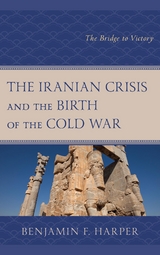
This work examines the Iranian Crisis of 1946 and its active role in shaping the Cold War that followed. It is intended to serve as a case study of how the United States was able to successfully flex its short-lived atomic monopoly and achieve its international objectives in the early postwar era. This writing engages with the robust academic field of U.S. foreign relations that over the past number of years revisited and reimagined the origins and driving forces of the Cold War. The Soviet Union's violation of a troop withdrawal agreement at the conclusion of the Second World War, coupled with its active support of Kurdish and Azeri separatist movements, aggressively tested the new and evolving international order. The primary objective of this work is to understand how the international community achieved a relatively peaceful withdrawal of Soviet forces from Iranian territory. I contend that: 1) Iran possessed, due to its wartime role and latent economic potential, a degree of leverage in negotiations with the United States and Russia that other nations did not; 2) that the Iranian prime minister, Ahmad Qavam, shrewdly manipulated both superpowers with his own brand of masterful statecraft while pursuing his own "e;Iran-centric"e; objectives; 3) that the United States used its preponderance of military, economic, and diplomatic might to effectively achieve its postwar aims; and 4) the primary actors in the crisis solidified the legitimacy of the United Nations and its Security Council, which had previously been in jeopardy. While lesser known than the Berlin Airlift or the Korean War or the Cuban Missile Crisis, the Iranian Crisis revealed for the first time what a superpower clash might look like. This event provides a stunning example of crisis management by the primary participants. The Iranian Crisis was indeed the birth of the Cold War, and it established a model for state actions during and after this long conflict. The Crisis also provides a powerful example of how third-party entities outside of Europe, despite possessing relatively meager military and economic might, had the ability to alter and occasionally manipulate superpower behavior.
Benjamin F. Harper earned his PhD in history from Florida State University.
Chapter 1: Setting the StageChapter 2: The Saber and the Star: The US Presence in Iran, 1942–46Chapter 3: Iranian Plurality and the Reemergence of Ahmad QavāmChapter 4: Crisis Ensues: Atomic Diplomacy and Qavām's Cold WarChapter 5: A New World Order: The Iranian Crisis and the Legitimacy of the United NationsConclusion: On Statesmanship and Power
| Zusatzinfo | 3 Illustrations including: - 1 Black & White Illustrations; - 2 Maps. |
|---|---|
| Sprache | englisch |
| Themenwelt | Geisteswissenschaften ► Geschichte ► Regional- / Ländergeschichte |
| Naturwissenschaften | |
| Sozialwissenschaften ► Politik / Verwaltung ► Europäische / Internationale Politik | |
| Sozialwissenschaften ► Soziologie ► Spezielle Soziologien | |
| Schlagworte | Atomic monopoly • Azerbaijan • COLD WAR HISTORY • Iranian History • nuclear weapons • postwar era • Soviet Union • Stalin • United Nations • US Foreign Policy • World War II |
| ISBN-10 | 1-4985-7697-4 / 1498576974 |
| ISBN-13 | 978-1-4985-7697-0 / 9781498576970 |
| Informationen gemäß Produktsicherheitsverordnung (GPSR) | |
| Haben Sie eine Frage zum Produkt? |
 EPUB (Adobe DRM)
Kopierschutz: Adobe-DRM
Adobe-DRM ist ein Kopierschutz, der das eBook vor Mißbrauch schützen soll. Dabei wird das eBook bereits beim Download auf Ihre persönliche Adobe-ID autorisiert. Lesen können Sie das eBook dann nur auf den Geräten, welche ebenfalls auf Ihre Adobe-ID registriert sind.
Details zum Adobe-DRM
Dateiformat: EPUB (Electronic Publication)
EPUB ist ein offener Standard für eBooks und eignet sich besonders zur Darstellung von Belletristik und Sachbüchern. Der Fließtext wird dynamisch an die Display- und Schriftgröße angepasst. Auch für mobile Lesegeräte ist EPUB daher gut geeignet.
Systemvoraussetzungen:
PC/Mac: Mit einem PC oder Mac können Sie dieses eBook lesen. Sie benötigen eine
eReader: Dieses eBook kann mit (fast) allen eBook-Readern gelesen werden. Mit dem amazon-Kindle ist es aber nicht kompatibel.
Smartphone/Tablet: Egal ob Apple oder Android, dieses eBook können Sie lesen. Sie benötigen eine
Geräteliste und zusätzliche Hinweise
Buying eBooks from abroad
For tax law reasons we can sell eBooks just within Germany and Switzerland. Regrettably we cannot fulfill eBook-orders from other countries.
aus dem Bereich