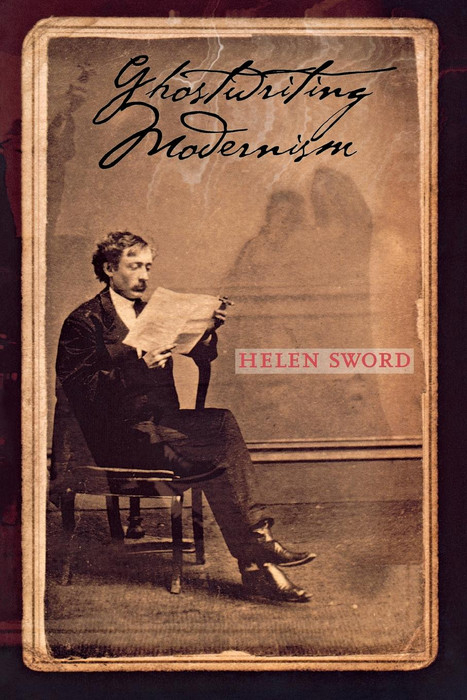
Ghostwriting Modernism (eBook)
232 Seiten
Cornell University Press (Verlag)
978-1-5017-1766-6 (ISBN)
Spiritualism is often dismissed by literary critics and historians as merely a Victorian fad. Helen Sword demonstrates that it continued to flourish well into the twentieth century and seeks to explain why. Literary modernism, she maintains, is...
Spiritualism is often dismissed by literary critics and historians as merely a Victorian fad. Helen Sword demonstrates that it continued to flourish well into the twentieth century and seeks to explain why. Literary modernism, she maintains, is replete with ghosts and spirits. In Ghostwriting Modernism she explores spiritualism's striking persistence and what she calls "the vexed relationship between mediumistic discourse and modernist literary aesthetics."Sword begins with a brief historical review of popular spiritualism's roots in nineteenth-century literary culture. In subsequent chapters, she discusses the forms of mediumship most closely allied with writing, the forms of writing most closely allied with mediumship, and the thematic and aesthetic alliances between popular spiritualism and modernist literature. Finally, she accounts for the recent proliferation of a spiritualist-influenced vocabulary (ghostliness, hauntings, the uncanny) in the works of historians, sociologists, philosophers, and especially literary critics and theorists.Documenting the hitherto unexplored relationship between spiritualism and modern authors (some credulous, some skeptical), Sword offers compelling readings of works by James Joyce, T. S. Eliot, W. B. Yeats, H.D., James Merrill, Sylvia Plath, and Ted Hughes. Even as modernists mock spiritualism's ludicrous lingo and deride its metaphysical excesses, she finds, they are intrigued and attracted by its ontological shiftiness, its blurring of the traditional divide between high culture and low culture, and its self-serving tendency to favor form over content (medium, so to speak, over message). Like modernism itself, Sword asserts, spiritualism embraces rather than eschews paradox, providing an ideological space where conservative beliefs can coexist with radical, even iconoclastic, thought and action.
Spiritualism is often dismissed by literary critics and historians as merely a Victorian fad. Helen Sword demonstrates that it continued to flourish well into the twentieth century and seeks to explain why. Literary modernism, she maintains, is replete with ghosts and spirits. In Ghostwriting Modernism she explores spiritualism's striking persistence and what she calls "the vexed relationship between mediumistic discourse and modernist literary aesthetics."
Sword begins with a brief historical review of popular spiritualism's roots in nineteenth-century literary culture. In subsequent chapters, she discusses the forms of mediumship most closely allied with writing, the forms of writing most closely allied with mediumship, and the thematic and aesthetic alliances between popular spiritualism and modernist literature. Finally, she accounts for the recent proliferation of a spiritualist-influenced vocabulary (ghostliness, hauntings, the uncanny) in the works of historians, sociologists, philosophers, and especially literary critics and theorists.
Documenting the hitherto unexplored relationship between spiritualism and modern authors (some credulous, some skeptical), Sword offers compelling readings of works by James Joyce, T. S. Eliot, W. B. Yeats, H.D., James Merrill, Sylvia Plath, and Ted Hughes. Even as modernists mock spiritualism's ludicrous lingo and deride its metaphysical excesses, she finds, they are intrigued and attracted by its ontological shiftiness, its blurring of the traditional divide between high culture and low culture, and its self-serving tendency to favor form over content (medium, so to speak, over message). Like modernism itself, Sword asserts, spiritualism embraces rather than eschews paradox, providing an ideological space where conservative beliefs can coexist with radical, even iconoclastic, thought and action.
Helen Sword is a Lecturer at the University of Auckland and the author of Engendering Inspiration: Visionary Strategies in Rilke, Lawrence, and H.D.
| Erscheint lt. Verlag | 31.5.2018 |
|---|---|
| Verlagsort | Ithaca |
| Sprache | englisch |
| Maße | 150 x 150 mm |
| Themenwelt | Literatur ► Essays / Feuilleton |
| Sachbuch/Ratgeber ► Gesundheit / Leben / Psychologie ► Esoterik / Spiritualität | |
| Geisteswissenschaften ► Religion / Theologie ► Weitere Religionen | |
| Geisteswissenschaften ► Sprach- / Literaturwissenschaft ► Anglistik / Amerikanistik | |
| Geisteswissenschaften ► Sprach- / Literaturwissenschaft ► Literaturwissenschaft | |
| Sozialwissenschaften | |
| ISBN-10 | 1-5017-1766-9 / 1501717669 |
| ISBN-13 | 978-1-5017-1766-6 / 9781501717666 |
| Informationen gemäß Produktsicherheitsverordnung (GPSR) | |
| Haben Sie eine Frage zum Produkt? |
 PDF (Adobe DRM)
Kopierschutz: Adobe-DRM
Adobe-DRM ist ein Kopierschutz, der das eBook vor Mißbrauch schützen soll. Dabei wird das eBook bereits beim Download auf Ihre persönliche Adobe-ID autorisiert. Lesen können Sie das eBook dann nur auf den Geräten, welche ebenfalls auf Ihre Adobe-ID registriert sind.
Details zum Adobe-DRM
Dateiformat: PDF (Portable Document Format)
Mit einem festen Seitenlayout eignet sich die PDF besonders für Fachbücher mit Spalten, Tabellen und Abbildungen. Eine PDF kann auf fast allen Geräten angezeigt werden, ist aber für kleine Displays (Smartphone, eReader) nur eingeschränkt geeignet.
Systemvoraussetzungen:
PC/Mac: Mit einem PC oder Mac können Sie dieses eBook lesen. Sie benötigen eine
eReader: Dieses eBook kann mit (fast) allen eBook-Readern gelesen werden. Mit dem amazon-Kindle ist es aber nicht kompatibel.
Smartphone/Tablet: Egal ob Apple oder Android, dieses eBook können Sie lesen. Sie benötigen eine
Geräteliste und zusätzliche Hinweise
Buying eBooks from abroad
For tax law reasons we can sell eBooks just within Germany and Switzerland. Regrettably we cannot fulfill eBook-orders from other countries.
aus dem Bereich