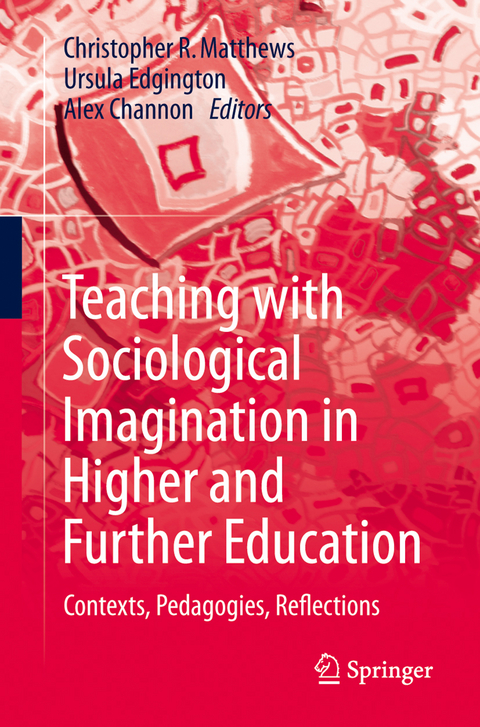
Teaching with Sociological Imagination in Higher and Further Education (eBook)
XXXV, 187 Seiten
Springer Singapore (Verlag)
978-981-10-6725-9 (ISBN)
This book uses research and personal stories from university lecturers to explore pedagogical strategies that illuminate how students' minds can be 'switched on' in order to unlock their extraordinary potential. It presents diverse ways to create inspiring learning environments, in chapters written by internationally respected experts in the broad field of the social sciences.
Each author illustrates how - through their unique teaching philosophies and practices - they seek to enhance students' experiences and promote their critical thinking, learning and development. The respective chapters provide conceptual arguments, personal insights and practical examples from a broad range of classrooms, demonstrating various ways in which students' sociological imagination can be brought to life.
As such, the book is both practical and theoretical, and is primarily aimed at educators working in both higher and further education institutions who wish to develop their understanding of classroom pedagogy as well as gain practical ideas for teaching and learning in the social sciences.
Christopher R. Matthews is a senior lecturer and course leader at the University of Brighton, UK. He teaches on a variety of modules which explore introductions to the social sciences, research methods, gender, physical cultures, social theory, deviancy and globalisation. His research has primarily focused on understanding the conjunction between gender, sexuality and sport. More recently he has developed his theoretical contribution within a project examining the rearticulation of men's power in the workplace.
Ursula Edgington is currently an international freelance teacher and researcher based in New Zealand. She had a fifteen-year career in various commercial-sector jobs in England before seizing an opportunity to pursue her passion for teaching. Ursula's educational and research efforts are chiefly connected to issues of social justice. Her specialist areas are sociology of emotions, creative assessment strategies and enhancing student-centred learning. Ursula's published academic work addresses topics ranging from aspects of emotional labour in teaching and learning, to the use of innovative research methodologies.
Alex Channon is a senior lecturer in physical education and sport studies at the University of Brighton, UK. He has taught at a number of UK-based higher education institutions, and is a specialist in the social, historical and political aspects of physical education and sport. Alex's previous research has centred on the sociological study of martial arts and combat sports, as well as gender and sexuality issues in sport.
This book uses research and personal stories from university lecturers to explore pedagogical strategies that illuminate how students' minds can be 'switched on' in order to unlock their extraordinary potential. It presents diverse ways to create inspiring learning environments, in chapters written by internationally respected experts in the broad field of the social sciences. Each author illustrates how - through their unique teaching philosophies and practices - they seek to enhance students' experiences and promote their critical thinking, learning and development. The respective chapters provide conceptual arguments, personal insights and practical examples from a broad range of classrooms, demonstrating various ways in which students' sociological imagination can be brought to life. As such, the book is both practical and theoretical, and is primarily aimed at educators working in both higher and further education institutions who wish to develop their understanding of classroom pedagogy as well as gain practical ideas for teaching and learning in the social sciences.
Christopher R. Matthews is a senior lecturer and course leader at the University of Brighton, UK. He teaches on a variety of modules which explore introductions to the social sciences, research methods, gender, physical cultures, social theory, deviancy and globalisation. His research has primarily focused on understanding the conjunction between gender, sexuality and sport. More recently he has developed his theoretical contribution within a project examining the rearticulation of men’s power in the workplace.Ursula Edgington is currently an international freelance teacher and researcher based in New Zealand. She had a fifteen-year career in various commercial-sector jobs in England before seizing an opportunity to pursue her passion for teaching. Ursula’s educational and research efforts are chiefly connected to issues of social justice. Her specialist areas are sociology of emotions, creative assessment strategies and enhancing student-centred learning. Ursula’s published academic work addresses topics ranging from aspects of emotional labour in teaching and learning, to the use of innovative research methodologies.Alex Channon is a senior lecturer in physical education and sport studies at the University of Brighton, UK. He has taught at a number of UK-based higher education institutions, and is a specialist in the social, historical and political aspects of physical education and sport. Alex’s previous research has centred on the sociological study of martial arts and combat sports, as well as gender and sexuality issues in sport.
Dedication 5
Foreword 1 6
Foreword 2 7
Preface 9
Acknowledgements 10
Introduction: Teaching in Turbulent Times 11
Drawing on the Sociological Imagination 12
Becoming ‘Genuinely Student-Centred’ 14
Christopher’s Account: ‘Yes, but What Are YOU Going to Do?’ 14
Ursula’s Account: ‘My Student-Centred World Shifted on Its Axis’ 16
Alex’s Account: Questioning the Centrality of My Own Knowledge 17
Overview of Chapters 19
References 22
Abbreviations 23
Contents 24
Notes on Contributors 26
1 Class Talk: Discussing Social Class with English Undergraduates and Sixth-Formers 31
Introduction 32
Theoretical Background 32
Methodology 35
Findings 36
Defining Social Class and Social Class Identity 36
The Complexity of Social Class 37
The Relative and Subjective Nature of Social Class Identity 39
Class(lessness) and a Conspiratorial View of Class Categorisation 41
Summary 43
A Logical Approach to Teaching about Social Class 44
Suggested Discussion Points 46
References 46
2 Inclusion in Education: ‘A Piggy Back Will Do?’ 49
Introduction 49
The Discursive Minnow of Inclusion in Education 50
Disabling School Narratives 54
David 54
Ron 56
Sally 57
Paternalistic Discrimination 59
Carole 59
James 62
The Equity Challenge of Students’ Exceptional Circumstances 63
Conclusion 64
Suggested Discussion Points 65
References 66
3 Learning Cultures, Reflexivity and Creative Subversion 68
A Learning Cultures Perspective 68
Applying a Learning Cultures Perspective to Higher Education 71
How Course Teams Can Use a Learning Cultures Perspective 74
Related Forms of Sociological Imagination 76
Conclusion 79
Suggested Discussion Points 81
References 81
4 Breaking the Silence: Critical Race Theory in Pedagogy and Practice 83
Introduction 83
Breaking Silences: Racialising Neoliberalism 87
Breaking Silences: The Master’s Tools Cannot Dismantle the Master’s House 89
Breaking Silences: Britain and Empire 92
Breaking Silences: Racialising Methodology 94
The CRT-P Eye of Discourse Model 95
Difference (Essentialism) Colonial (Inferiority) & Object (Othering)
Diversity, Decolonisation and Subject 97
Centralising Students 97
Whiteness 98
Suggested Discussion Points 99
References 99
5 Sociology, Inequality and Teaching in Higher Education – A Need to Reorient Our Critical Gaze Closer to Home? 102
Introduction 102
Teaching in Higher Education 105
What Can We Do? 108
Conceptualising Our Professional Responsibilities 112
Suggested Discussion Points 114
References 115
6 Twitter as Part of an Online Learning Cultures Approach: Exploring a Lecturer’s and a Student-Teacher’s Perspectives 118
Introduction 118
What Is a ‘Learning Cultures’ Approach? 119
Theoretical Concepts of a Learning Cultures Approach 120
Discussion 131
Conclusion 132
Suggested Discussion Points 133
References 134
7 ‘I have Felt the Tears Welling Up’: Private Troubles and Public Discussions in the Sociological Classroom 136
Introduction 136
Teaching Sensitive Issues 137
Methodology 139
Learning Is Painful 140
Emotional Learning 140
Emotional Teaching 141
Literature Is Safe 143
Emotional Objectivity? 144
Conclusion 146
Suggested Discussion Points 147
References 147
8 Pedagogy of Laughter: Using Humor to Make Teaching and Learning More Fun and Effective 149
Introduction 149
Learning and Humor 150
Humorous Pedagogies 152
Opening Day Monologue 153
Call and Response 154
Toys and Objects 155
Humorous Exemplars 156
She Who Laughs First 157
Suggested Discussion Points 158
References 158
9 Moving Lessons: Teaching Sociology Through Embodied Learning in the HE Classroom 161
Introduction: Self- and Student-Centeredness in HE Teaching 161
Moving Lessons: Learning Through Moving 164
Physical Metaphors: Practical Examples of ‘Moving Lessons’ 166
Vignette 1: Embodying Stratification 166
Vignette 2: Socially Constructed Salsa 168
Vignette 3: ‘Writing Is like Fighting’ 171
Reflections and Conclusion 175
Suggested Discussion Questions 176
References 177
10 The Sociological Imagination and Feminist Auto/Biographical Approaches 178
Introduction 178
Early Influences and Further Developments 179
The Auto/Biographical Feminist Sociological Imagination in and out of the Classroom 183
Case Study One: Travel and Transport Mobilities 185
Case Study Two: Social Theory in Action 186
Additional Creative Auto/Biographical Endeavours and Practices 187
Some Final Reflections 189
Suggested Discussion Points 190
Appendix 1 191
References 192
11 Doing Public Sociology in the Classroom 195
Introduction 195
Genuinely Student-Centred Public Sociology 196
The Process of Doing Public Sociology in the Classroom 198
Personalising the Sociological Imagination as the Basis for Public Sociology 199
Producing Ideas for Different Publics 200
Doing Sociology with Publics Beyond the University 202
Concluding Remarks 204
Suggested Discussion Points 205
References 206
Index 207
| Erscheint lt. Verlag | 30.1.2018 |
|---|---|
| Zusatzinfo | XXXV, 187 p. 9 illus. in color. |
| Verlagsort | Singapore |
| Sprache | englisch |
| Themenwelt | Sozialwissenschaften ► Pädagogik ► Bildungstheorie |
| Sozialwissenschaften ► Pädagogik ► Erwachsenenbildung | |
| Schlagworte | Assessment Strategies • Embodied learning • Learning and Instruction • Narratives of teaching • Pedagogy and sociology • Reflection in Higher Education • Sociology of Education • Sociology of Learning • sociology of teaching • Teaching in Higher Education • Tertiary teaching • University and College Teaching • virtual learning environments |
| ISBN-10 | 981-10-6725-2 / 9811067252 |
| ISBN-13 | 978-981-10-6725-9 / 9789811067259 |
| Informationen gemäß Produktsicherheitsverordnung (GPSR) | |
| Haben Sie eine Frage zum Produkt? |
 PDF (Wasserzeichen)
DRM: Digitales Wasserzeichen
Dieses eBook enthält ein digitales Wasserzeichen und ist damit für Sie personalisiert. Bei einer missbräuchlichen Weitergabe des eBooks an Dritte ist eine Rückverfolgung an die Quelle möglich.
Dateiformat: PDF (Portable Document Format)
Mit einem festen Seitenlayout eignet sich die PDF besonders für Fachbücher mit Spalten, Tabellen und Abbildungen. Eine PDF kann auf fast allen Geräten angezeigt werden, ist aber für kleine Displays (Smartphone, eReader) nur eingeschränkt geeignet.
Systemvoraussetzungen:
PC/Mac: Mit einem PC oder Mac können Sie dieses eBook lesen. Sie benötigen dafür einen PDF-Viewer - z.B. den Adobe Reader oder Adobe Digital Editions.
eReader: Dieses eBook kann mit (fast) allen eBook-Readern gelesen werden. Mit dem amazon-Kindle ist es aber nicht kompatibel.
Smartphone/Tablet: Egal ob Apple oder Android, dieses eBook können Sie lesen. Sie benötigen dafür einen PDF-Viewer - z.B. die kostenlose Adobe Digital Editions-App.
Buying eBooks from abroad
For tax law reasons we can sell eBooks just within Germany and Switzerland. Regrettably we cannot fulfill eBook-orders from other countries.
aus dem Bereich