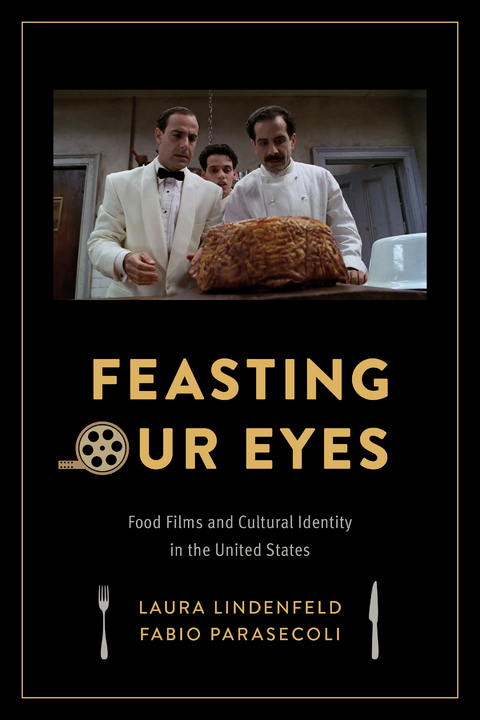
Feasting Our Eyes (eBook)
Columbia University Press (Verlag)
978-0-231-54297-5 (ISBN)
Laura Lindenfeld is director of the Alan Alda Center for Communicating Science and professor at the School of Journalism at Stony Brook University. Her work has appeared in Text & Performance Quarterly, Food & Foodways, and the Journal of International and Intercultural Communication.
Fabio Parasecoli is associate professor and director of food studies initiatives at the New School in New York City. Recent books include Bite me! Food in Popular Culture (2008); the six-volume Cultural History of Food, coedited with Peter Scholliers (2012); and Al Dente: A History of Food in Italy (2014).
Big Night (1996), Ratatouille (2007), and Julie and Julia (2009) are more than films about food-they serve a political purpose. In the kitchen, around the table, and in the dining room, these films use cooking and eating to explore such themes as ideological pluralism, ethnic and racial acceptance, gender equality, and class flexibility-but not as progressively as you might think. Feasting Our Eyes takes a second look at these and other modern American food films to emphasize their conventional approaches to nation, gender, race, sexuality, and social status. Devoured visually and emotionally, these films are particularly effective defenders of the status quo.Feasting Our Eyes looks at Hollywood films and independent cinema, documentaries and docufictions, from the 1990s to today and frankly assesses their commitment to racial diversity, tolerance, and liberal political ideas. Laura Lindenfeld and Fabio Parasecoli find women and people of color continue to be treated as objects of consumption even in these modern works and, despite their progressive veneer, American food films often mask a conservative politics that makes commercial success more likely. A major force in mainstream entertainment, American food films shape our sense of who belongs, who has a voice, and who has opportunities in American society. They facilitate the virtual consumption of traditional notions of identity and citizenship, reworking and reinforcing ingrained ideas of power.
Laura Lindenfeld is director of the Alan Alda Center for Communicating Science and professor at the School of Journalism at Stony Brook University. Her work has appeared in Text & Performance Quarterly, Food & Foodways, and the Journal of International and Intercultural Communication.Fabio Parasecoli is associate professor and director of food studies initiatives at the New School in New York City. Recent books include Bite me! Food in Popular Culture (2008); the six-volume Cultural History of Food, coedited with Peter Scholliers (2012); and Al Dente: A History of Food in Italy (2014).
IllustrationsAcknowledgmentsIntroduction1. Food Films and Consumption: Selling Big Night2. Autonomy in the Kitchen? Food Films and Postfeminism3. Magical Food, Luscious Bodies4. Culinary Comfort: The Satiating Construction of Masculinity5. When Weirdos Stir the Pot: Cooking Identity in Animated Movies6. Consuming the Other: Food Films as Culinary TourismConclusionNotesBibliographyIndex
| Erscheint lt. Verlag | 19.12.2016 |
|---|---|
| Zusatzinfo | 26 b&w illustrations |
| Verlagsort | New York |
| Sprache | englisch |
| Themenwelt | Kunst / Musik / Theater ► Film / TV |
| Kunst / Musik / Theater ► Theater / Ballett | |
| Sachbuch/Ratgeber ► Essen / Trinken | |
| Geisteswissenschaften ► Geschichte ► Regional- / Ländergeschichte | |
| Sozialwissenschaften ► Kommunikation / Medien ► Medienwissenschaft | |
| Sozialwissenschaften ► Politik / Verwaltung | |
| ISBN-10 | 0-231-54297-6 / 0231542976 |
| ISBN-13 | 978-0-231-54297-5 / 9780231542975 |
| Informationen gemäß Produktsicherheitsverordnung (GPSR) | |
| Haben Sie eine Frage zum Produkt? |
 PDF (Wasserzeichen)
Größe: 1,7 MB
DRM: Digitales Wasserzeichen
Dieses eBook enthält ein digitales Wasserzeichen und ist damit für Sie personalisiert. Bei einer missbräuchlichen Weitergabe des eBooks an Dritte ist eine Rückverfolgung an die Quelle möglich.
Dateiformat: PDF (Portable Document Format)
Mit einem festen Seitenlayout eignet sich die PDF besonders für Fachbücher mit Spalten, Tabellen und Abbildungen. Eine PDF kann auf fast allen Geräten angezeigt werden, ist aber für kleine Displays (Smartphone, eReader) nur eingeschränkt geeignet.
Systemvoraussetzungen:
PC/Mac: Mit einem PC oder Mac können Sie dieses eBook lesen. Sie benötigen dafür einen PDF-Viewer - z.B. den Adobe Reader oder Adobe Digital Editions.
eReader: Dieses eBook kann mit (fast) allen eBook-Readern gelesen werden. Mit dem amazon-Kindle ist es aber nicht kompatibel.
Smartphone/Tablet: Egal ob Apple oder Android, dieses eBook können Sie lesen. Sie benötigen dafür einen PDF-Viewer - z.B. die kostenlose Adobe Digital Editions-App.
Buying eBooks from abroad
For tax law reasons we can sell eBooks just within Germany and Switzerland. Regrettably we cannot fulfill eBook-orders from other countries.
 EPUB (Adobe DRM)
Kopierschutz: Adobe-DRM
Adobe-DRM ist ein Kopierschutz, der das eBook vor Mißbrauch schützen soll. Dabei wird das eBook bereits beim Download auf Ihre persönliche Adobe-ID autorisiert. Lesen können Sie das eBook dann nur auf den Geräten, welche ebenfalls auf Ihre Adobe-ID registriert sind.
Details zum Adobe-DRM
Dateiformat: EPUB (Electronic Publication)
EPUB ist ein offener Standard für eBooks und eignet sich besonders zur Darstellung von Belletristik und Sachbüchern. Der Fließtext wird dynamisch an die Display- und Schriftgröße angepasst. Auch für mobile Lesegeräte ist EPUB daher gut geeignet.
Systemvoraussetzungen:
PC/Mac: Mit einem PC oder Mac können Sie dieses eBook lesen. Sie benötigen eine
eReader: Dieses eBook kann mit (fast) allen eBook-Readern gelesen werden. Mit dem amazon-Kindle ist es aber nicht kompatibel.
Smartphone/Tablet: Egal ob Apple oder Android, dieses eBook können Sie lesen. Sie benötigen eine
Geräteliste und zusätzliche Hinweise
Buying eBooks from abroad
For tax law reasons we can sell eBooks just within Germany and Switzerland. Regrettably we cannot fulfill eBook-orders from other countries.
aus dem Bereich