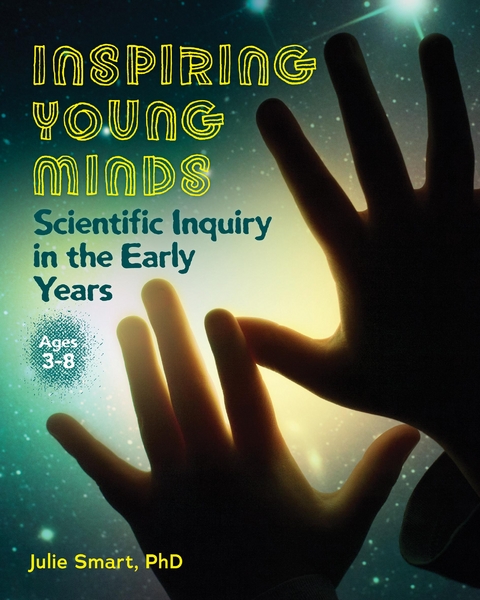
Inspiring Young Minds (eBook)
200 Seiten
Redleaf Press (Verlag)
978-1-60554-519-6 (ISBN)
Learn to use inquiry-based practice to inspire young minds through science. This book provides educators a concrete guide for using research-based principles of inquiry to help children explore their world. Using real-life examples and discussions on facilitating and guiding children, you will be able to engage and maximize STEM learning.
This book uses case studies to focus on the teacher’s interaction with children and includes how to use inquiry-based practice, in addition to why you should use this method. Web content and reproducible lesson plans make it easy to begin using proven inquiry-based instruction. Detailed accounts of conversations with children about science will help you understand different methods and tools. Enrich and inspire young minds with inquiry-based instruction.
Julie Smart holds a PhD in curriculum and instruction and is currently a professor of math and science education at Clemson University. She is also a consultant in research methodology and program accreditation with a focus on inquiry-based instruction, teacher effectiveness, and classroom management. Smart resides in Greenville, SC, with her husband and two children.
Chapter 1: Inquiring Minds Want to Know
What are the main elements of inquiry-based instruction?
Chapter 2: Feed Me
How do we select appropriate materials for children in science?
Chapter 3: Eggs in the Roses
How do we give children opportunities to explore science for themselves?
Chapter 4: Physics in the Breezeway
How can we help children conduct a simple investigation?
Chapter 5: Now You See Me
How can we ask children effective questions in science?
Chapter 6: Timber!
How can we use visual representations and models to support student learning?
Chapter 7: Stayin’ Alive
How do we adjust science instruction based on student learning?
Chapter 8: Making a List, Checking it Twice
How can we support children in representing data in developmentally appropriate ways?
Chapter 9: Baby Bird Birthday
How can we encourage children to communicate their scientific ideas in multiple ways?
Chapter 10: Shake, Rattle, and Roll
How can we make science relevant to the lives of young children?
Chapter 11: Take Cover!
How can we accumulate meaningful resources for our science instruction?
Chapter 12: Playing with Fire
How can we ensure safety for all children during science instruction?
Chapter 13: Swimming in the Deep End
How can we meet the needs of all students in science instruction?
Chapter 14: When the Train Derails
How do we respond to unexpected challenges during science instruction?
Chapter 15: Creepy Crawlies
How can we model positive attitudes about science for children?
Chapter 16: On the Road Again…
How can we maximize the learning potential of field trips in science?
Chapter 17: Flying Monkeys
How do we capture teachable moments?
Appendix A4Ex2 Instructional Model planning tools
Appendix BFormative Assessments for Science Instruction
Appendix CSample Inquiry Lesson (Life Science)
Appendix DSample Inquiry Lesson (Physical Science)
Appendix ESample Inquiry Lesson (Earth Science)
Appendix FInquiry-Based Instruction Self-Assessment
Appendix GSample Science Contracts
| Erscheint lt. Verlag | 20.3.2017 |
|---|---|
| Sprache | englisch |
| Themenwelt | Schulbuch / Wörterbuch ► Schulbuch / Allgemeinbildende Schulen |
| Sozialwissenschaften ► Pädagogik ► Vorschulpädagogik | |
| Schlagworte | child behavior management • Child Care Providers • Child Development • Child Psychology • guidance • inquiry-based practice • principles of inquiry • Science • stem |
| ISBN-10 | 1-60554-519-8 / 1605545198 |
| ISBN-13 | 978-1-60554-519-6 / 9781605545196 |
| Informationen gemäß Produktsicherheitsverordnung (GPSR) | |
| Haben Sie eine Frage zum Produkt? |
 EPUB (Adobe DRM)
Kopierschutz: Adobe-DRM
Adobe-DRM ist ein Kopierschutz, der das eBook vor Mißbrauch schützen soll. Dabei wird das eBook bereits beim Download auf Ihre persönliche Adobe-ID autorisiert. Lesen können Sie das eBook dann nur auf den Geräten, welche ebenfalls auf Ihre Adobe-ID registriert sind.
Details zum Adobe-DRM
Dateiformat: EPUB (Electronic Publication)
EPUB ist ein offener Standard für eBooks und eignet sich besonders zur Darstellung von Belletristik und Sachbüchern. Der Fließtext wird dynamisch an die Display- und Schriftgröße angepasst. Auch für mobile Lesegeräte ist EPUB daher gut geeignet.
Systemvoraussetzungen:
PC/Mac: Mit einem PC oder Mac können Sie dieses eBook lesen. Sie benötigen eine
eReader: Dieses eBook kann mit (fast) allen eBook-Readern gelesen werden. Mit dem amazon-Kindle ist es aber nicht kompatibel.
Smartphone/Tablet: Egal ob Apple oder Android, dieses eBook können Sie lesen. Sie benötigen eine
Geräteliste und zusätzliche Hinweise
Buying eBooks from abroad
For tax law reasons we can sell eBooks just within Germany and Switzerland. Regrettably we cannot fulfill eBook-orders from other countries.
aus dem Bereich