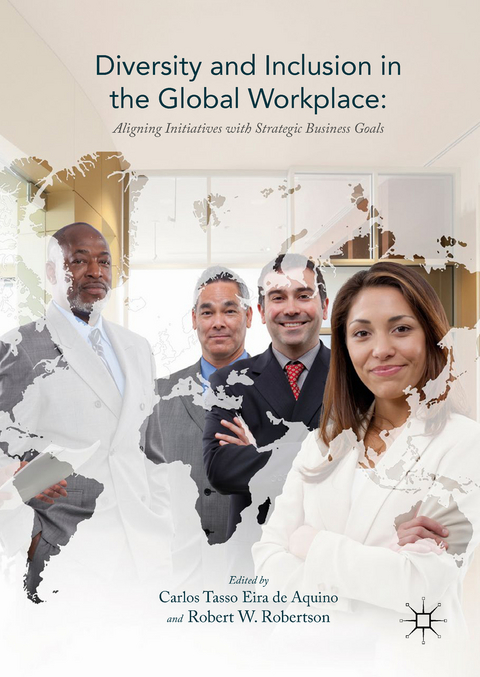
Diversity and Inclusion in the Global Workplace (eBook)
XVIII, 237 Seiten
Springer International Publishing (Verlag)
9783319549934 (ISBN)
Carlos Tasso Eira de Aquino is Senior Executive Director at The Center of Excellence in Diversity and Inclusion, Argosy University, USA.
Robert W. Robertson is President of the Bahamas Technical & Vocational Institute.
Carlos Tasso Eira de Aquino is Senior Executive Director at The Center of Excellence in Diversity and Inclusion, Argosy University, USA.Robert W. Robertson is President of the Bahamas Technical & Vocational Institute.
Acknowledgements 7
Contents 8
List of Figures 10
List of Tables 11
Introduction: The Twenty-First-Century Workplace D& I Challenge
Part I Diversity and Inclusion in the Workplace 14
Chapter 1 Diversity Across Cultures 15
Overview (Dr. Kelley A. Conrad) 15
South Africa (Dr. Herman van Niekerk) 17
Diversity Management and Competitiveness 18
Learning, Change, and Reward Structures in a Multicultural Work Environment 21
India (Subodh Simon Karmarkar, MBA) 21
Diversity Influences on Commitment to the Organization 22
Perceptions of Fairness and Respect 24
Frustrations in the Work Environment 25
Summary 25
Germany (Dr. Susanne Beier, LPC, NCC, NCCC) 26
Summary 28
Mexico (Dr. Francisco Javier Reyes Avila) 28
Summary 30
African Americans—Continental USA (Debra Jenkins, MS, MA) 30
Diversity Management Issues 31
Strategic Approaches to Managing Diversity 32
Summary 33
Asian Americans—Hawaii, USA (Violet Nxedhlana, MHA) 33
Commitment to the Organization 36
Perceptions of Fairness and Respect 37
Frustrations in the Work Environment 37
Afterword (Dr. Kelley A. Conrad) 38
References 38
Chapter 2 Age Diversity in the Workplace 43
Overview 43
Aging Workforce 44
Life Span Aging Theories 44
Age Stereotypes and Biases 45
Baby Boomers 45
Generation X 46
Millennials 46
Age Discrimination 47
Cat’s Paw Theory 48
Diversity Climate 49
Practical Applications for an Age-Inclusive Workplace 51
Analysis of Organizational Culture and Practices 51
Communication Initiatives 52
Recruitment Practices 52
Job Dimension Analysis 53
Training and Mentoring 53
Assessment of Commonalities 54
Summary 54
References 55
Chapter 3 Race, Ethnicity, and Religion in the Workplace 60
Overview 60
Drivers of Diversity 61
Demographic Changes 61
Demographic Changes 62
Need for Skilled Workers 63
Benefits of a Racially and Ethnically Diverse Workforce 64
Challenges 65
Discrimination Based on Race and Ethnicity 65
Indigenous Peoples 67
The Case of Migrant Workers 67
Religious Diversity 68
International Perspectives 69
France 69
Legislative Approaches—Brazil, South Africa, and the USA 70
India 72
Strategies 73
Summary 75
References 75
Chapter 4 Sexual Orientation and Gender Diversity in the Workplace 79
Overview 79
Role of Intersectionality 80
Microaggressions 81
Power and Privilege 83
Heterocentrism 84
Stigma and Minority Stress 84
Global Implications 85
Case Examples 86
Summary 87
References 88
Chapter 5 Diversity and Workplace Spirituality 90
Overview 90
Businesses as Engines of Social Change 91
Valuing a Culture of Relational Performance 96
Organizational Conscience 99
Sustaining Organizational Conscience 103
Summary 107
References 108
Chapter 6 Design Thinking: Problem Solving in the Diverse Workplace 117
Overview 117
Design Thinking for the Diverse Workplace 118
Definition 119
Human-Centered Design and Wicked Problems 119
Human-Centered Design and Wicked Problems 120
Design Thinking Case Studies 121
Design Thinking and Collaboration: Edison 122
A Corporate Commitment: Infosys in India Trained 97,000 in DT 122
Exercises in Culture Learning 123
Design Thinking: The Gateway to Human-Centered Innovation 124
A Wicked Problem, a Lack of Workplace Diversity 124
Design Thinking in the Danish Government: Mindlab 127
Nonprofit Workplaces and Volunteers 127
Summary 128
References 128
Chapter 7 Diversity in Learning 131
Overview 131
Learning Organizations 132
Learning Disciplines 132
Situational Context 132
How Employees Learn 133
Learning Strategies 133
Multiple Intelligences 136
Employee Abilities 136
What Environmental Relations Are Experienced? 137
Diversity Zones 137
Intersection of Diversity and Culture 137
Culture Zones 139
Where Theoretical Learning Foundations Exist 140
Behaviorism 140
Cognitive Constructivist 142
Social Learning Theory 142
Summary 143
Discussion Questions 143
References 143
Part II Applying D& I in the Workplace
Chapter 8 Embracing People with Special Needs and Disabilities 146
Overview 146
People with Special Needs and Disabilities 147
Benefits of Inclusion in the Workplace 148
Laws that Govern the Workplace 148
ADA—A Historical Background 149
Who Is a Person with a Disability? 150
Accommodations 152
Service Animals 153
Other Laws Covering Disabilities in the Workplace 153
Federal Government Training and Selected Corporate Workforce Development 154
Unique Corporate Initiatives: Persons with ASD in Business Innovation 155
References 157
Chapter 9 D& I and Leadership in Organizations
Overview 160
Leadership and Organizational Diversity 161
Leadership Challenge 162
Inclusive Leadership 162
Leadership Challenge 163
Authentic Leadership Diversity and Inclusion 164
Leadership Challenge 165
Conceptual and Theoretical Support for D& I Leadership
D& I Resistance to Change
A Change Model for D& I
Leadership Challenge 168
Case Scenario 168
Leadership Challenge 169
Minorities, Diversity, and Inclusion 169
Leadership Challenge 171
Women Leadership Diversity and Inclusion 171
Challenges for Leaders of Color 172
Leadership Challenge 172
Leaders of Color—Reflections 173
Wise Strategies for Leadership Diversity Initiatives 173
Global Considerations for D& I
Leadership Challenge 175
Conclusion 175
References 175
Chapter 10 D& I and Effective Global Citizenship
Overview 178
Defining and Assessing 179
Transformative Learning 183
Creating and Measuring the Transformation 184
Conclusion 189
References 189
Chapter 11 Work-Life Balance in the Workplace 192
Overview 192
History of Work-Life Balance 193
National Policies and Organizational Programs 195
One-Size-Fits-All—Not a Diversity Proponent 195
Inclusion is the Problem 196
Unconscious Bias 197
Practical Applications for a Family-Friendly Work Culture 198
Analysis of WLB Formal Policies, Benefits, and Usage 199
Design a Cross-Cultured, Diversified WLB Advisory Team 200
Redesign WLB Benefits for Implementation 200
Train and Support Supervisors on Liberal Use of Policies and Benefits 200
Explore Advance Supervisor Training—Implicit Association Test 202
Summary 203
References 203
Chapter 12 D& I Framework: Diagnostics, Gap Analysis, and Action Plan
Overview 208
Historical Background 209
Motivation for the Development of a New Approach 211
The Framework 212
Phase I—Diagnostics 212
Level 212
Internal Stakeholders’ Level 214
External Stakeholders’ Level 217
Phase II: Gap Analysis 218
Phase III: Action Plan and Professional Development Plan 218
Summary 220
References 220
Author Index 224
Subject Index 235
| Erscheint lt. Verlag | 17.8.2017 |
|---|---|
| Zusatzinfo | XVIII, 237 p. 11 illus. |
| Verlagsort | Cham |
| Sprache | englisch |
| Themenwelt | Sozialwissenschaften ► Soziologie |
| Wirtschaft ► Betriebswirtschaft / Management | |
| Schlagworte | Ageism • Disability • Disability Studies • Diversity Management • Faith, Spirituality and Business • Gender Diversity • Globalization • LGBT • Performance • Problem Solving • Sexual orientation • Stigma • Talent Management • work-life balance • Workplace spirituality |
| ISBN-13 | 9783319549934 / 9783319549934 |
| Informationen gemäß Produktsicherheitsverordnung (GPSR) | |
| Haben Sie eine Frage zum Produkt? |
 PDF (Wasserzeichen)
DRM: Digitales Wasserzeichen
Dieses eBook enthält ein digitales Wasserzeichen und ist damit für Sie personalisiert. Bei einer missbräuchlichen Weitergabe des eBooks an Dritte ist eine Rückverfolgung an die Quelle möglich.
Dateiformat: PDF (Portable Document Format)
Mit einem festen Seitenlayout eignet sich die PDF besonders für Fachbücher mit Spalten, Tabellen und Abbildungen. Eine PDF kann auf fast allen Geräten angezeigt werden, ist aber für kleine Displays (Smartphone, eReader) nur eingeschränkt geeignet.
Systemvoraussetzungen:
PC/Mac: Mit einem PC oder Mac können Sie dieses eBook lesen. Sie benötigen dafür einen PDF-Viewer - z.B. den Adobe Reader oder Adobe Digital Editions.
eReader: Dieses eBook kann mit (fast) allen eBook-Readern gelesen werden. Mit dem amazon-Kindle ist es aber nicht kompatibel.
Smartphone/Tablet: Egal ob Apple oder Android, dieses eBook können Sie lesen. Sie benötigen dafür einen PDF-Viewer - z.B. die kostenlose Adobe Digital Editions-App.
Buying eBooks from abroad
For tax law reasons we can sell eBooks just within Germany and Switzerland. Regrettably we cannot fulfill eBook-orders from other countries.
aus dem Bereich