


Sacred Languages of the World (eBook)
John Wiley & Sons (Verlag)
978-1-118-97075-1 (ISBN)
A fascinating comparative account of sacred languages and their role in and beyond religion -written for a broad, interdisciplinary audience
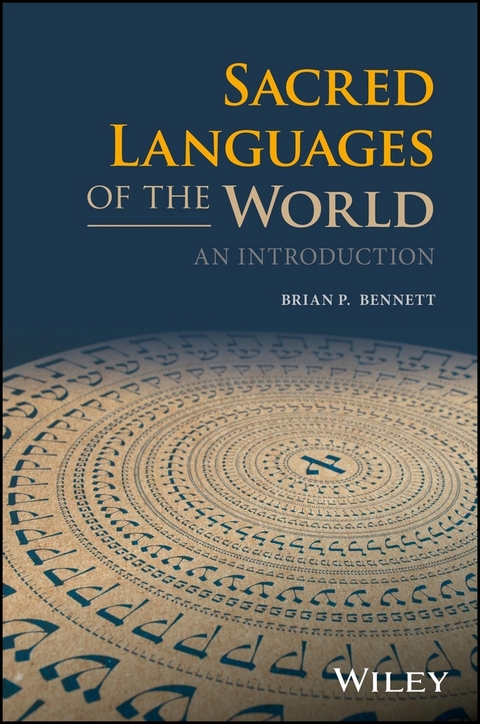
Sacred languages have been used for foundational texts, liturgy, and ritual for millennia, and many have remained virtually unchanged through the centuries. While the vital relationship between language and religion has been long acknowledged, new research and thinking across an array of disciplines including religious studies, sociolinguistics, sociology, linguistics, and even neurolinguistics has resulted in a renewed interest in the area. This fascinating and informative book draws on Christian, Islamic, Hindu, Judaic, and Buddhist traditions to provide a concise and accessible introduction to the phenomenon of sacred languages.
The book takes a strongly comparative, wide-ranging approach to exploring ways in which ancient religious languages, such as Latin, Pali, Church Slavonic, and Hebrew continue to shape the beliefs and practices of religious communities around the world. Informed by both comparative religion and sociolinguistics, it traces the histories of sacred languages, the myths and doctrines that explain their origin and value, the various ways they are used, the sectarian debates that shadow them, and the technological innovations that propel them forward in the twenty-first century.
- A comprehensive but succinct account of the role and importance of language within religion
- Takes an interdisciplinary approach which will appeal to students and scholars across an array of disciplines, including religious studies, sociology of religion, sociolinguistics, and linguistics
- Provides a strongly comparative exploration, drawing on Christian, Islamic, Hindu, Judaic, and Buddhist traditions
- Uses numerous examples and ties historic debates with contemporary situations
- Satisfies the rapidly growing demand for books on the subject among both academics and general readers
Sacred Languages of the World is a must-read for students of religion and language, scripture, religious literacy, education and language, the sociology of religion, sociolinguistics. It will also have strong appeal among general readers with an interest comparative religion, history, cultural criticism, communication studies, and more.
Brian P. Bennett is Professor of Religious Studies and Chair of the Religious Studies Department at Niagara University, New York, USA. He is a comparatist whose research focuses on sacred languages.
A fascinating comparative account of sacred languages and their role in and beyond religion written for a broad, interdisciplinary audience Sacred languages have been used for foundational texts, liturgy, and ritual for millennia, and many have remained virtually unchanged through the centuries. While the vital relationship between language and religion has been long acknowledged, new research and thinking across an array of disciplines including religious studies, sociolinguistics, sociology, linguistics, and even neurolinguistics has resulted in a renewed interest in the area. This fascinating and informative book draws on Christian, Islamic, Hindu, Judaic, and Buddhist traditions to provide a concise and accessible introduction to the phenomenon of sacred languages. The book takes a strongly comparative, wide-ranging approach to exploring ways in which ancient religious languages, such as Latin, Pali, Church Slavonic, and Hebrew continue to shape the beliefs and practices of religious communities around the world. Informed by both comparative religion and sociolinguistics, it traces the histories of sacred languages, the myths and doctrines that explain their origin and value, the various ways they are used, the sectarian debates that shadow them, and the technological innovations that propel them forward in the twenty-first century. A comprehensive but succinct account of the role and importance of language within religion Takes an interdisciplinary approach which will appeal to students and scholars across an array of disciplines, including religious studies, sociology of religion, sociolinguistics, and linguistics Provides a strongly comparative exploration, drawing on Christian, Islamic, Hindu, Judaic, and Buddhist traditions Uses numerous examples and ties historic debates with contemporary situations Satisfies the rapidly growing demand for books on the subject among both academics and general readers Sacred Languages of the World is a must-read for students of religion and language, scripture, religious literacy, education and language, the sociology of religion, sociolinguistics. It will also have strong appeal among general readers with an interest comparative religion, history, cultural criticism, communication studies, and more.
Brian P. Bennett is Professor of Religious Studies and Chair of the Religious Studies Department at Niagara University, New York, USA. He is a comparatist whose research focuses on sacred languages.
Title Page 5
Copyright Page 6
Contents 7
Preface 8
Acknowledgments 14
Chapter 1 What Exactly Is a Sacred Language? 17
Sacred Choices 20
Who Says It’s a Sacred Language? 25
Historical Relics? 27
Religious revivals 30
Neotraditionalist movements 31
Technological innovations 32
Globalizing spiritualities 33
References 34
Further Reading 36
Chapter 2 Sacred Languages, Past and Present 37
The Global Language System 39
A Very Short History of the World 44
Ancient 45
Axial 45
Premodern 48
Modern 50
Postmodern 51
Bits and Pieces 54
The Arabic Scriptworld 56
References 61
Further Reading 63
Chapter 3 Not Dead Yet:: Latin as Test Case 64
Framing Sacred Languages 69
Beliefs 70
Practices 73
Institutions 78
Communities 81
Dead or Alive? 88
References 90
Further Reading 92
Chapter 4 Beliefs about Sacred Languages 93
Powerful Beliefs 95
Revelatory 99
Interventionist 102
Vehicular 103
Cultural 103
Good Vibrations 104
The sonic dimension 107
The graphic dimension 109
References 115
Further Reading 117
Chapter 5 Practices:: Religious, Political, Artistic 118
How to Do Things with Sacred Languages 123
Liturgical practices 123
Somatological practices 128
Thaumaturgical practices 130
Discursive practices 132
Political practices 134
Artistic practices 138
References 142
Further Reading 144
Chapter 6 Learning a Sacred Language 145
The ABCs of Faith 150
Restricted Literacy 155
What, Who, Why, and How 157
Ritual repetition 159
Targeted study 161
State involvement 167
References 168
Further Reading 170
Chapter 7 Communities and Controversies 171
United We Stand 176
Liturgical 178
Visual 180
Conversational 183
Divided We Fall 185
Church Slavonic 188
Avestan 191
References 195
Further Reading 198
Chapter 8 Borderlines:: Sacred Languages, Fundamentalism, and Globalization 199
The World of Sanskrit 205
My Sweet Lord 215
(Almost) Anything Goes 220
References 222
Further Reading 225
Chapter 9 Conclusion 226
Codices 226
Code-Switching 227
Codifications 228
Secret Codes 228
Codes of Conduct 228
Decoding 229
Insider Codes 229
Legacy Codes? 230
Unicode 231
References 234
Index 235
EULA 241
"Bennett has done scholars of religion and of their various scriptures a great service by focusing our attention on the contemporary phenomenon of sacred languages, their variety, and their continuing power in the lives of millions of people worldwide. His book should prompt us to more self-reflection about our roles as teachers of sacred languages." - RBL 04/2022 by the Society of Biblical Literature
| Erscheint lt. Verlag | 10.7.2017 |
|---|---|
| Sprache | englisch |
| Themenwelt | Geschichte ► Teilgebiete der Geschichte ► Religionsgeschichte |
| Geisteswissenschaften ► Religion / Theologie ► Weitere Religionen | |
| Geisteswissenschaften ► Sprach- / Literaturwissenschaft ► Sprachwissenschaft | |
| Sozialwissenschaften ► Ethnologie | |
| Sozialwissenschaften ► Soziologie | |
| Schlagworte | Anthropologie • Anthropologie der Religion • Anthropology • Anthropology of Religion • brian bennett • Church Slavonic • Comparative & World Religions • Comparative Religion • comparative study of latin • education and language • God talk • Hebrew • history of ecclesiastical latin • history of sacred languages • Language and Religion • language in religious practice • language in religious practices • latin doxology • Linguistics • neurolinguistics and sacred languages • Pali • pali and church slavonic • pali and its influence on the practice of buddhism • PhD • relationships between language and religion • Religion • Religion & Theology • Religionsanthropologie • Religion u. Theologie • religious literacy • religious practices and sacred languages • Religious Studies • sacred languages cultural significance • sacred languages geopolitical implications • sacred languages social impact • sanskrit and hinduism • Scripture • Sociolinguistics • sociolinguistics and religion • Sociology of Language • sociology of language and religion • Sociology of Religion • Soziolinguistik • Sprachwissenschaften • Vergleichende Religionswissenschaft |
| ISBN-10 | 1-118-97075-6 / 1118970756 |
| ISBN-13 | 978-1-118-97075-1 / 9781118970751 |
| Informationen gemäß Produktsicherheitsverordnung (GPSR) | |
| Haben Sie eine Frage zum Produkt? |
 PDF (Adobe DRM)
Kopierschutz: Adobe-DRM
Adobe-DRM ist ein Kopierschutz, der das eBook vor Mißbrauch schützen soll. Dabei wird das eBook bereits beim Download auf Ihre persönliche Adobe-ID autorisiert. Lesen können Sie das eBook dann nur auf den Geräten, welche ebenfalls auf Ihre Adobe-ID registriert sind.
Details zum Adobe-DRM
Dateiformat: PDF (Portable Document Format)
Mit einem festen Seitenlayout eignet sich die PDF besonders für Fachbücher mit Spalten, Tabellen und Abbildungen. Eine PDF kann auf fast allen Geräten angezeigt werden, ist aber für kleine Displays (Smartphone, eReader) nur eingeschränkt geeignet.
Systemvoraussetzungen:
PC/Mac: Mit einem PC oder Mac können Sie dieses eBook lesen. Sie benötigen eine
eReader: Dieses eBook kann mit (fast) allen eBook-Readern gelesen werden. Mit dem amazon-Kindle ist es aber nicht kompatibel.
Smartphone/Tablet: Egal ob Apple oder Android, dieses eBook können Sie lesen. Sie benötigen eine
Geräteliste und zusätzliche Hinweise
Buying eBooks from abroad
For tax law reasons we can sell eBooks just within Germany and Switzerland. Regrettably we cannot fulfill eBook-orders from other countries.


