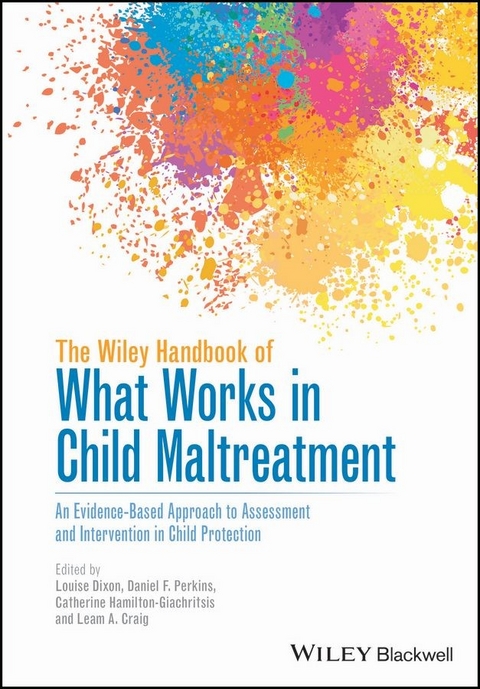
The Wiley Handbook of What Works in Child Maltreatment (eBook)
John Wiley & Sons (Verlag)
978-1-118-97614-2 (ISBN)
A comprehensive guide to empirically supported approaches for child protection cases
The Wiley Handbook of What Works in Child Maltreatment offers clinicians, psychologists, psychiatrists and other professionals an evidence-based approach to best professional practice when working in the area of child protection proceedings and the provision of assessment and intervention services in order to maximize the well-being of young people. It brings together a wealth of knowledge from expert researchers and practitioners, who provide a comprehensive overview of contemporary work informing theory, assessment, service provision, rehabilitation and therapeutic interventions for children and families undergoing care proceedings. Coverage includes theoretical perspectives, insights on the prevalence and effects of child neglect and abuse, assessment, children's services, and interventions with children, victims and families.
Louise Dixon is a Registered Forensic Psychologist and Senior Lecturer in Forensic Psychology at the University of Birmingham, UK. In addition to her practice and teaching activities, she is an active researcher. She is Chair for the West Midlands Branch of the British Association for the Study and Prevention of Child Abuse and Neglect (BASPCAN) and sits on the board of the journals Child Maltreatment and Partner Abuse. Her research interests centre on the prevention and assessment of family aggression and aggression in young people.
Daniel Perkins is Professor of Family and Youth Resiliency and Policy at the Pennsylvania State University, USA. His scholarship integrates practice and research around positive youth development, healthy family development and community collaboration. He received a grant from the US Department of Defense for the development of the Penn State Clearinghouse, an interactive platform helping professionals working with military families to support their implementation and assessment activities. He is currently studying the transition of evidence-based programs and practices into real-world settings.
Leam Craig is a Consultant Forensic Clinical Psychologist, Partner at Forensic Psychology Practice Ltd. and Honorary Professor at the University of Birmingham, UK. His current practice includes direct services to forensic NHS Adult Mental Health Trusts, consultancy to Prison and Probation Services and expert witness work. The bulk of his psycho-legal work is family assessments in child care proceedings, assessing parents, other carers and children. He is the recipient of the 2013 Senior Academic Award from the BPS Division of Forensic Psychology, and has published seven books with Wiley-Blackwell.
Catherine Hamilton-Giachritsis is a Registered Forensic and Clinical Psychologist and has practised in both Children's Services and the NHS. She is Senior Lecturer and Assistant Director of the Centre for Forensic and Criminological Psychology at the University of Birmingham, UK. Her research focuses on child maltreatment and family violence, including risk assessment, impact of early institutionalisation and long-term outcomes from and resilience to abuse and neglect. She has been co-PI on three EU Daphne/ World Health Organisation funded projects on young children in institutions across Europe.
A comprehensive guide to empirically supported approaches for child protection cases The Wiley Handbook of What Works in Child Maltreatment offers clinicians, psychologists, psychiatrists and other professionals an evidence-based approach to best professional practice when working in the area of child protection proceedings and the provision of assessment and intervention services in order to maximize the well-being of young people. It brings together a wealth of knowledge from expert researchers and practitioners, who provide a comprehensive overview of contemporary work informing theory, assessment, service provision, rehabilitation and therapeutic interventions for children and families undergoing care proceedings. Coverage includes theoretical perspectives, insights on the prevalence and effects of child neglect and abuse, assessment, children s services, and interventions with children, victims and families.
Louise Dixon is a Registered Forensic Psychologist and Senior Lecturer in Forensic Psychology at the University of Birmingham, UK. In addition to her practice and teaching activities, she is an active researcher. She is Chair for the West Midlands Branch of the British Association for the Study and Prevention of Child Abuse and Neglect (BASPCAN) and sits on the board of the journals Child Maltreatment and Partner Abuse. Her research interests centre on the prevention and assessment of family aggression and aggression in young people. Daniel Perkins is Professor of Family and Youth Resiliency and Policy at the Pennsylvania State University, USA. His scholarship integrates practice and research around positive youth development, healthy family development and community collaboration. He received a grant from the US Department of Defense for the development of the Penn State Clearinghouse, an interactive platform helping professionals working with military families to support their implementation and assessment activities. He is currently studying the transition of evidence-based programs and practices into real-world settings. Leam Craig is a Consultant Forensic Clinical Psychologist, Partner at Forensic Psychology Practice Ltd. and Honorary Professor at the University of Birmingham, UK. His current practice includes direct services to forensic NHS Adult Mental Health Trusts, consultancy to Prison and Probation Services and expert witness work. The bulk of his psycho-legal work is family assessments in child care proceedings, assessing parents, other carers and children. He is the recipient of the 2013 Senior Academic Award from the BPS Division of Forensic Psychology, and has published seven books with Wiley-Blackwell. Catherine Hamilton-Giachritsis is a Registered Forensic and Clinical Psychologist and has practised in both Children's Services and the NHS. She is Senior Lecturer and Assistant Director of the Centre for Forensic and Criminological Psychology at the University of Birmingham, UK. Her research focuses on child maltreatment and family violence, including risk assessment, impact of early institutionalisation and long-term outcomes from and resilience to abuse and neglect. She has been co-PI on three EU Daphne/ World Health Organisation funded projects on young children in institutions across Europe.
Title Page 5
Copyright Page 6
Contents 9
About the Editors 12
Notes on Contributors 15
Foreword 25
Acknowledgements 27
Chapter 1 Overview and Structure of the Book 29
Introduction 29
Structure of the Book 31
References 39
Part I Research and Theoretical Perspectives 41
Chapter 2 Child Abuse and Neglect: Prevalence and Incidence 43
Introduction 43
Conceptual and Methodological Challenges 43
Who is Missing from the Prevalence Research? 46
Cases Known to Services 47
Community Prevalence Surveys 49
Implications for Practice 53
References 54
Chapter 3 Child Abuse and Neglect: Ecological Perspectives 57
Child Abuse and Neglect: Ecological Perspectives 57
Historical Single-Factor Approaches 57
Developmental Theories 58
The Multi-Factor (Ecological) Model 60
Risk and Protective Factors 63
Ecological Approaches to Prevention 69
Future Directions 70
References 70
Chapter 4 Fatal Child Maltreatment 76
Incidence of Fatal Child Maltreatment 76
The Nature of Fatal Child Maltreatment 77
Risk Factors for Fatal Child Maltreatment 83
Learning from Child Maltreatment Fatalities 90
Preventing Child Maltreatment Fatalities 92
References 93
Chapter 5 Psychological, Economic and Physical Health Consequences of Child Maltreatment 99
Psychological Health 99
Economic Health 104
Physical Health 105
Maltreatment Research in Perspective 105
Conclusion 107
References 108
Chapter 6 The Neurobiology and Genetics of Childhood Maltreatment 113
The Impact of Maltreatment on Brain Development 113
Structural Differences 114
Functional Differences 117
References 121
Chapter 7 Intimate Partner Violence and Child Maltreatment 125
Co-occurrence 126
Effects on the Child 128
Risk Factors 129
Implications for Research, Practice and Policy 132
Conclusion 134
References 134
Part II Children’s Services and Public Health Approaches to Prevention 139
Chapter 8 Implications of Children’s Services Policy on Child Abuse and Neglect in England 141
Children Growing Up in a World Free from Violence 141
Children in the UK 142
Children in Need in England 143
Children Who are the Subject of Child Protection Plans 143
Looked-After Children 144
International Legal Context 145
Legislative Framework in the UK 145
What Is the State of Child Welfare Services in England in 2016? 149
Financing the Prevention of Child Abuse and Neglect 150
A Public Health Approach to Prevention 151
Ending Violence Against Children 154
References 154
Chapter 9 Children’s Services: Toward Effective Child Protection 159
Introduction 159
Family Preservation: Does It Work? 161
Principles to Guide the Decision to Remove Children from Their Parents 164
Building Partnerships with Parents 170
Conclusion 173
References 173
Chapter 10 Using the Formal Pre-Proceedings Process to Prevent or Prepare for Care Proceedings in the UK 178
Introduction 178
The Pre-Proceedings Process for Care Proceedings 179
Researching the Pre-Proceedings Process – Method and Main Findings 180
Case Studies 181
How and Why Does the Pre-Proceedings Process Work? 182
Where the Plan Is Care by Others 185
Not a Golden Solution – Negative Aspects of the Pre-Proceedings Process 186
Conclusions 187
Pre-Proceedings and Care Proceedings Under the Children and Families Act 2014 187
References 188
Chapter 11 The Prevention of Child Maltreatment: The Case for a Public Health Approach to Behavioural Parenting Intervention 191
Why Parenting is so Important 191
Parenting and Child Maltreatment 192
The Triple P System of Population-Level Parenting Intervention 193
Adopting a Public Health Approach to Child Maltreatment 198
Implications and Challenges 199
Conclusion 199
References 200
Chapter 12 What Works to Prevent the Sexual Exploitation of Children and Youth 204
Child-Focused Approaches: Educating Youth to Avoid Sexual Victimisation 205
Parent-Focused Prevention Strategies 208
Preventing Sexual Exploitation in Youth-Serving Organisations 211
Societal-Level Prevention Strategies 213
Conclusion 217
References 218
Part III Assessment 227
Chapter 13 Evidence-Based Assessments of Children and Families: Safeguarding Children Assessment and Analysis Framework 229
Purpose and Principles of SAAF 229
The SAAF Seven-Stage Model 231
Evaluation of SAAF 247
Conclusion 247
References 248
Chapter 14 Utilising an Attachment Perspective in Parenting Assessment 250
What is Attachment? 250
Parenting: An Attachment Theory Perspective 252
Patterns of Caregiving and Attachment 253
The Attachment Component in Evaluating Parenting 259
Parent and Parent–Child Interaction Measures 262
Conclusions 262
References 262
Chapter 15 Evidence-Based and Developmentally Appropriate Forensic Interviewing of Children 267
The Need to Conduct Developmentally Appropriate Interviews 267
Children’s Cognitive Competencies and Limitations 268
Interviewing Strategies 274
Training 278
Conclusions 280
References 280
Chapter 16 Considering Parental Risk in Parenting (Child Custody) Evaluation Cases Involving Child Sexual Exploitation Material 286
Introduction 286
Investigative, Legal and Empirical Context of the Offending Behaviour 287
Considering Parental Risk 290
Clinical Analysis of CSEM Offending and Risk in Family Settings: Two Case Studies 293
Conclusion 300
References 301
Chapter 17 Assessments in Child Care Proceedings: Observations in Practice 306
Introduction 306
The Context 306
Children and Family Court Advisory and Support Service (CAFCASS) 308
Lack of Protection for Practitioners 309
Evidence-Based Practice: Challenges and Consequences 310
Elevated Expectations 311
Transforming Social Workers 311
Ideas for a Framework for Assessment 312
Forensic Approach to Assessment 315
Risk Assessment 317
Conclusions 320
References 320
Part IV Interventions with Children and Families 323
Chapter 18 Evidence-Based Approaches to Empower Children and Families at Risk for Child Physical Abuse to Overcome Abuse and Violence 325
Review of Evidence-Based Therapies (EBTs) to Address CPA 326
Summary of CPC-CBT Components: A Case Illustration 331
Conclusion 338
References 338
Chapter 19 Effective Therapies for Children and Non-offending Caregivers in the Aftermath of Child Sexual Abuse or Other Traumas 341
Brief Review of Research for Treatments in the Supported by and Well-Supported by Research Evidence Categories 342
Review of TF-CBT Research 344
Description of TF-CBT 346
TF-CBT Case Study 348
Conclusion 353
References 353
Chapter 20 Effectiveness of Cognitive and Behavioural Group-Based Parenting Programmes to Enhance Child Protective Factors and Reduce Risk Factors for Maltreatment 356
Effectiveness of Cognitive and Behavioural Group-Based Parenting Programmes 356
In Focus: Incredible Years (IY) 370
Parenting Programme Moderators and Limitations 372
Conclusions 373
References 374
Chapter 21 Critical Factors in the Successful Implementation of Evidence-Based Parenting Programmes: Fidelity, Adaptation and Promoting Quality 377
Introduction 377
Parenting Interventions 378
Fidelity 379
Fidelity and Adaptation 382
Parenting Interventions and Fidelity 383
Promoting Quality Implementation 386
Conclusions 389
References 391
Chapter 22 School-Based Prevention of and Intervention in Child Maltreatment: Current Practice in the United States and Future Directions 395
Perspectives on the Role of School Personnel 397
The IOM Protractor: A Conceptual Framework from Public Health 398
Prevention: School- and Community-Based Educational Programming for Child Maltreatment 399
Treatment: Child Maltreatment Detection and Reporting as First Steps 403
Treatment: School-Based Interventions for Survivors of Child Maltreatment 404
Maintenance: Long-Term Care and After-Care 406
Conclusions: How Schools Can Help Moving Forward 407
Further Resources 409
References 409
Chapter 23 Using Assessment of Attachment in Child Care Proceedings to Guide Intervention 413
The Dynamic-Maturational Model (DMM) of Attachment and Adaptation 413
IASA Family Attachment Court Protocol 418
DMM Integrative Treatment 419
The Real World: Case Study 421
Summary 426
Conclusion 427
References 428
Part V Novel Interventions with Families 431
Chapter 24 Working Systemically with Families with Intimate Partner Violence 433
Setting the Scene 434
Our Safety Methodology for Safe Practice: Risk, Responsibility and Collaboration 436
Contra-Indications for Safe Relational Therapeutic Practice with Couples and Families 441
Working in the Territory: Looking After Ourselves 441
References 442
Chapter 25 Working with Non-Offending Parents in Cases of Child Sexual Abuse 443
Disclosure-Related Challenges for Non-Offending Parents 444
Non-Offending Parents Facing Their Child’s Social and Judicial Experience 444
Responding to the Needs of the Family: Child Advocacy Programmes 446
Parents Becoming Aware of the Consequences of Abuse on Their Child 447
Child’s Sexual Abuse and Its Impact on Non-Offending Parents 448
Providing Support: The Profiles of Parents of Sexually Abused Children 450
Working with Non-Abusing Parents in Assessing the Child’s Needs 452
Working with Non-Abusing Parents in Therapy: How to Help Parents Play an Active Role in Providing a Secure and Understanding Environment 454
Conclusions 455
References 456
Chapter 26 Working with Parents with Intellectual Disabilities in Child Care Proceedings 461
Definition 461
Additional Issues for Parents with IDD and Outcomes for Their Children 462
Involvement of Children’s Services 463
Parental Service Engagement 464
Best-Practice Guidelines in the UK 464
Identifying Parents with IDD 465
Ongoing Support for Parents with IDD 466
Case Example of a Parent Support Service: Valuing Parents Support Service 474
Conclusion 476
References 476
Chapter 27 Working with Parents with a Diagnosis of Personality Disorder 480
Personality Disorders 480
Parents Diagnosed with a Personality Disorder 482
Interventions 486
Case Example: Working with Narcissistic Clients 489
Conclusions 490
References 490
Chapter 28 Working with Parents Who Misuse Alcohol and Drugs 494
Introduction 494
Substance Use and the Child Welfare System 496
How Should the Child Welfare System Respond? 499
Looking Ahead 513
Conclusion 514
References 514
Index 521
EULA 538
| Erscheint lt. Verlag | 11.4.2017 |
|---|---|
| Sprache | englisch |
| Themenwelt | Geisteswissenschaften ► Psychologie |
| Sozialwissenschaften ► Pädagogik ► Sozialpädagogik | |
| Sozialwissenschaften ► Soziologie | |
| Schlagworte | assessment in child protection • at risk youth best practise • Candice Feiring</p> • Catherine Hamilton‐Giachritsis • Cathy Widom • child protection best practise • child protection in court settings • child protection professionals • child protection safeguarding strategies • Child welfare • Chris Goddard • Clinical psychology • Daniel Perkins • Eileen Munro • Forensic Psychology • Forensische Psychologie • frameworks for intervention for child protection • guide for working with child protection • Kindesmisshandlung • Klinische Psychologie • Leam A. Craig • Louise Dixon • <p>evidence-based approach to child protection • Michael Lamb • professionals working with at risk youth • Psychologie • Psychology • Signs of Safety approach to casework • Social Policy & Welfare • Sozialpolitik u. Wohlfahrt • Wohlfahrt • Wohlfahrt / Kinder • working with children at risk |
| ISBN-10 | 1-118-97614-2 / 1118976142 |
| ISBN-13 | 978-1-118-97614-2 / 9781118976142 |
| Informationen gemäß Produktsicherheitsverordnung (GPSR) | |
| Haben Sie eine Frage zum Produkt? |
 PDF (Adobe DRM)
Kopierschutz: Adobe-DRM
Adobe-DRM ist ein Kopierschutz, der das eBook vor Mißbrauch schützen soll. Dabei wird das eBook bereits beim Download auf Ihre persönliche Adobe-ID autorisiert. Lesen können Sie das eBook dann nur auf den Geräten, welche ebenfalls auf Ihre Adobe-ID registriert sind.
Details zum Adobe-DRM
Dateiformat: PDF (Portable Document Format)
Mit einem festen Seitenlayout eignet sich die PDF besonders für Fachbücher mit Spalten, Tabellen und Abbildungen. Eine PDF kann auf fast allen Geräten angezeigt werden, ist aber für kleine Displays (Smartphone, eReader) nur eingeschränkt geeignet.
Systemvoraussetzungen:
PC/Mac: Mit einem PC oder Mac können Sie dieses eBook lesen. Sie benötigen eine
eReader: Dieses eBook kann mit (fast) allen eBook-Readern gelesen werden. Mit dem amazon-Kindle ist es aber nicht kompatibel.
Smartphone/Tablet: Egal ob Apple oder Android, dieses eBook können Sie lesen. Sie benötigen eine
Geräteliste und zusätzliche Hinweise
Buying eBooks from abroad
For tax law reasons we can sell eBooks just within Germany and Switzerland. Regrettably we cannot fulfill eBook-orders from other countries.
aus dem Bereich