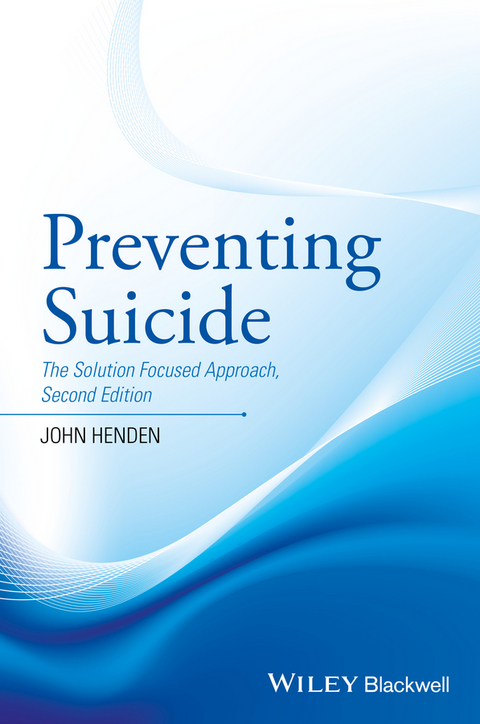
Preventing Suicide (eBook)
John Wiley & Sons (Verlag)
978-1-119-16294-0 (ISBN)
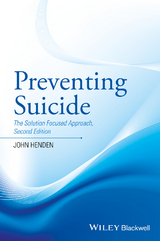
- Offers invaluable guidance for suicide prevention by showing 'what works' in treating those struggling with suicidal thoughts
- Provides straightforward ways to deal frankly with the subject of suicide, along with a range of tools and techniques that are helpful to clients
- Includes actual dialogue between practitioners and clients to allow readers to gain a better understanding of how to work with suicidal clients
- Compares and contrasts a ground-breaking approach to suicide prevention with more traditional approaches to risk assessment and management
- Features numerous updates and revisions along with brand new sections dealing with the international landscape, blaming the suicided person, Dr Alys Cole-King's 'Connecting with People', and telephone work with the suicidal, Human Givens Therapy, and zero suicide
New edition of an acclaimed manual which uses the solution focused approach to take an empathetic and validating approach to working with individuals considering suicide. Offers invaluable guidance for suicide prevention by showing what works in treating those struggling with suicidal thoughts Provides straightforward ways to deal frankly with the subject of suicide, along with a range of tools and techniques that are helpful to clients Includes actual dialogue between practitioners and clients to allow readers to gain a better understanding of how to work with suicidal clients Compares and contrasts a ground-breaking approach to suicide prevention with more traditional approaches to risk assessment and management Features numerous updates and revisions along with brand new sections dealing with the international landscape, blaming the suicided person, Dr Alys Cole-King s Connecting with People , and telephone work with the suicidal, Human Givens Therapy, and zero suicide
John Henden is Managing Director of the John Henden Consultancy and an internationally acclaimed trainer, author, therapist and performance coach. He has more than 40 years of experience working within mental health services as both a practitioner and manager.
About the author vii
Foreword ix
Acknowledgments xi
1 How to use this book 1
2 The book's style and purpose 4
3 Defining suicide and self-injury 24
4 Current service provision: risk assessment, management and medication 32
5 Other approaches to helping the suicidal 49
6 What is Solution Focused Brief Therapy? 70
7 Suicide encounters: the crucial first ten minutes 112
8 The solution focused approach in working with the suicidal 123
9 Case study: Reg and 'the demons calling from the deep' 152
10 Some more case vignettes 175
11 Connecting with people by Alys Cole-King 185
12 Working on the phone with the suicidal person 199
13 Blaming those who took their lives 208
14 International solution focused applications to suicide prevention 215
15 Zero suicide: should this be our goal? 245
16 Where do we go from here? 253
Appendix 1: Flow diagram for an episode of treatment 264
Appendix 2: Specialist solution focused training workshops 268
Appendix 3: Evidence base for solution-focused working 270
References 278
Index 314
John Henden's approach to suicide prevention marks a pivotal moment in the treatment of suicidal clients and, by extension, of depressed clients in general. Full of practical, ready-to-use advice, it should be read by every practitioner who wants to help these clients turn despair into hope. Preventing Suicide is a hands-on guide for the practitioner who is confronted with a depressed and suicidal client and who despairs of finding the right words, the right attitude to turn their heart and their mind towards renewed hope and a life worth living. If ever you have felt, like I did many times, as hopeless as the client before you who has attempted suicide and was saved, and who still sees no other way out but to end their lives, this is the book for you. Scientifically sound and eminently practical, this book will guide you through what in my experience are the most challenging moments a practitioner has to go through. --Dr. Luc Isebaert, Honorary Head of Department of Psychiatry, Sint-Jan Brugge-Oostende Hospital
This extensively revised second edition is a worthy successor to the original version. It addresses the place of counselling and psychological therapies in the attempt to reduce suicidal behaviours. After a clear and logical description of the problem, the text describes the solution-focused method of working, including case examples and a discussion of effectiveness. There is an excellent review of suicide around the world, quoting from the author's personal knowledge of many countries. Finally, it summarises the progress so far of the Zero Suicide programme as presented in the United Kingdom. --Dr. Alasdair MacDonald, MB ChB, Consultant Psychiatrist and author of Solution-focused Therapy: Theory, Research and Practice
John's ground-breaking book is a must have for practitioners who work with suicide. It has international appeal as a practical guide and offers a collection of best practices in the field, case vignettes, tools and tips, and a compelling case for the "zero suicide" initiative. --Debbie Hogan, MS, Therapist, Trainer, Director, Academy of Solution Focused Training, Singapore
Solution Focused Therapy is a radical and vital non-pathologizing approach for helping people who are suicidal, giving them hope, a positive caring relationship and a set of tools for moving onward. In this new, expanded edition, John Henden looks at wider issues concerning suicide and presents Solution Focused Therapy in the context of other recognised approaches, including a review of all the latest evidence of effectiveness. Strongly recommended. --Harry Procter, Professor of Clinical Psychology, University of Hertfordshire, UK
2
The book’s style and purpose
It is the quality of the personal encounters which, in the end, are the essential factors in creating positive change.
(John Eldrid)
Before people kill themselves, many have had recent contact with a helping agency. Two‐thirds of those who contact their family doctor have received medication, which about half use to poison themselves.
(David Aldridge, 1998)
Suicide remains the leading cause of death in England and Wales for men aged 20–34.
(The Daily Telegraph, 19 February 2015)
The book – in a nutshell
For decades, health professionals and policy makers have resorted to head‐scratching, chest‐beating and hand‐wringing over high suicide rates. Questions were, and are still asked today, such as:
Could we have asked the right question?
Shouldn’t we have recognised the signs?
Wasn’t there a clue somewhere in what he/she said?
(Aldridge, 1998)
The issue of resolving the problem of suicide has taxed intelligent minds across many disciplines for a very long time. Camus (1942) in referring to it said, ‘There is but one truly serious philosophical problem and that is suicide.’ In spite of the vast increase in research into the problem, nearly two‐thirds of a century later it seems, worldwide, we are little further forward. Another main purpose of this book is to shed new light and make in‐roads such that there is a real focus amongst both clinicians and researchers on ‘what works’ in face‐to‐face suicide prevention, rather than focusing on statistics, demographies, risk factors and restricting access to methods. My hope is that we will reach a point when the following statement applies: Simon’s (2002) statement (‘There are two kinds of psychiatrist: those who have had patients commit suicide and those who will.’), can be revised to something more wide ranging along the lines of: ‘There are two kinds of mental health care‐givers: those who used to have clients take their lives and those who do not.’
More recently, conversations have shifted from finding ways to reduce suicide further within healthcare agencies to ‘zero suicide rates’ (see Chapter 15). From what we know now, about effective interventions and discussions with other compassionate practitioners, I believe this is achievable.
Much has been written about the subject of suicide, but little on the specific ‘how‐to‐do’ or ‘what works’ in the 1:1 relationship between worker and suicidal person.
This book concentrates on how lives are saved; what workers do and say that is effective; and, what clients have said they found helpful.
The book’s style
I have aimed to make the style of this book clear, easy to read, and jargon‐free, wherever possible. The principle of ‘Occam’s Razor’ is applied: that is, if more straightforward words or stories can be used to describe something, then it is those which will be chosen.
Reasons for writing
An approach which is effective
The many tools and techniques outlined in later chapters were field‐tested over the past 20 years or so. They have been demonstrated to work both efficiently and effectively. Students of training workshops have reported similar success rates over the past six years or so. There is a growing body of practice‐based evidence which shows significant reductions in suicide rates both in individual caseloads and within teams. It is my hope that soon, researchers will conduct a randomised control trial to demonstrate a clear evidence‐base for SF suicide prevention, to be added to the seminal work of Franklin et al. (2012).
A shortage in the literature of effective brief therapy treatments for suicidal clients
From my extensive literature review, it seems the vast majority of research, review, and discussion material on the subject of suicide, is concerned with matters other than the matter of central concern: the verbal and non‐verbal communication that occurs in a 1:1 relationship with a suicidal person. Instead, writers become lost in national suicide trends and statistics, methods used in completed suicide, community attitudes, and beliefs towards suicidal behaviour, and so on. There are numerous research and discussion topics on suicide, generally, and these are dealt with more than adequately elsewhere. Should readers be interested in following up any of these, there are various avenues of inquiry. My concern is to emphasise the crucial matter of how to manage the one‐to‐one encounter with someone experiencing strong suicidal thoughts and ideas. There is a strong case for how the first ten minutes is conducted to make a significant difference to the outcome (see Chapter 7). This is the central focus of the book.
Personal involvement in the territory
My personal interest in this subject can be traced back to my early childhood years when I tried suffocating myself on many occasions, under the bed covers, in order to escape severe and enduring emotional abuse and neglect. On other occasions I prayed to God that he would take me away in my sleep. I am pleased to realise now that He had other plans! It is only in recent years, while talking to my brother, two years my junior that I learnt that he hoped to die too, as a way out.
No doubt another source of my interest is that my cousin, John Neil Henden, took his life by carbon monoxide poisoning some 15 years ago, as a result of various personal and employment difficulties. (He had been diagnosed earlier as being ‘clinically depressed’.) His death impacted on me both in that I lost a cousin, but also the less‐than‐satisfactory treatment he received when asking for help. Both my personal experience of suicidal thinking and the experience of close family members, has given me a heightened empathy towards suicidal people.
The connections I have had with helping agencies, both statutory and voluntary, over the past 40 years or so, have opened my eyes to what works; what helps a little; and, what patently fails those whose problems and difficulties are such that they experience recurrent suicidal thoughts and ideas.
During the course of my life, to date, I have taken various calculated risks to achieve personal objectives. On some occasions these did not work out. At those times, I considered the suicide option, albeit briefly. I know now that this type of thinking is quite normal. At a time in the mid‐1990s, I found myself in a changed job situation, where job satisfaction was deteriorating by the week. I began to have regular thoughts about how I might be able to set up an elaborate suicide in the cellars of the building in which I worked, and not be found for some time. I mentioned this to a very non‐directive person‐centred counsellor friend of mine, who responded in no uncertain terms by saying, ‘John, you must leave as soon as possible!’ My career, my contributions to the wider mental health field, and, my job satisfaction have progressed immeasurably since.
A How‐to‐do book
Practical guide
As you navigate through this book, you will get a clearer understanding of what is important to bring to the therapeutic encounter with a suicidal person, whether that be for ten minutes in an Accident and Emergency (A&E) Department, an Emergency Room (ER), or for a standard counselling session.
It is about how to be with the suicidal person. Much is taught about risk assessment and management: spotting the signs, applying various protocols and ensuring a rigid care programme is often set in place, but little mention is made about how, compassionately, to get alongside the person and their pain. This book is about just that.
All professionals undergo comprehensive training courses but, sadly, many graduates feel ill‐equipped to deal with overt expressions of suicidal thinking or intent. Trimble, Jackson, and Harvey (2000) found that the majority of psychologists working with clients who are suicidal, questioned the adequacy of their training in this area. This book addresses the shortfall of many courses, when it comes to working with the suicidal. A central aim is to increase confidence when working with such clients and also, to increase workers’ sense of their own competence.
Help with ‘the jitters’
In addition to feeling that their training has been inadequate in terms of what questions to ask and how to conduct themselves, and so on, workers can feel jittery or uncertain in a variety of ways. Richards (2000) when interviewing psychotherapists working with suicidal clients, found them to be deeply affected, both personally and professionally, by accompanying feelings of hopelessness and helplessness, and a sense of failure. I, and close colleagues, have found that this can result from particular lines of questioning – particularly those which go into excessive problem or despair‐delving. This book enables workers to replace hopelessness and helplessness with hopefulness and a sense of feeling equipped.
Milton (2001), in an American study, reviewed several articles which addressed assessment and response to suicidal risk in clinical practice. He found many reasons...
| Erscheint lt. Verlag | 30.1.2017 |
|---|---|
| Sprache | englisch |
| Themenwelt | Geisteswissenschaften ► Psychologie ► Persönlichkeitsstörungen |
| Medizin / Pharmazie ► Medizinische Fachgebiete | |
| Sozialwissenschaften ► Pädagogik ► Sozialpädagogik | |
| Sozialwissenschaften ► Soziologie | |
| Schlagworte | Clinical psychology • Klinische Psychologie • <p>Suicide, suicide prevention, suicide mitigation, preventing suicide, suicide therapy, depression, depression therapy, psychotherapy, solution-focused brief therapy, SFBT</p> • Medical Science • Medizin • Psychiatrie • Psychiatry • Psychologie • Psychology • Psychotherapie • Psychotherapie u. Beratung • Psychotherapy & Counseling • Selbstmord • Selbsttötung • Selbsttötung • Suizid • Suizidprävention • Suizidprävention |
| ISBN-10 | 1-119-16294-7 / 1119162947 |
| ISBN-13 | 978-1-119-16294-0 / 9781119162940 |
| Informationen gemäß Produktsicherheitsverordnung (GPSR) | |
| Haben Sie eine Frage zum Produkt? |
 EPUB (Adobe DRM)
Kopierschutz: Adobe-DRM
Adobe-DRM ist ein Kopierschutz, der das eBook vor Mißbrauch schützen soll. Dabei wird das eBook bereits beim Download auf Ihre persönliche Adobe-ID autorisiert. Lesen können Sie das eBook dann nur auf den Geräten, welche ebenfalls auf Ihre Adobe-ID registriert sind.
Details zum Adobe-DRM
Dateiformat: EPUB (Electronic Publication)
EPUB ist ein offener Standard für eBooks und eignet sich besonders zur Darstellung von Belletristik und Sachbüchern. Der Fließtext wird dynamisch an die Display- und Schriftgröße angepasst. Auch für mobile Lesegeräte ist EPUB daher gut geeignet.
Systemvoraussetzungen:
PC/Mac: Mit einem PC oder Mac können Sie dieses eBook lesen. Sie benötigen eine
eReader: Dieses eBook kann mit (fast) allen eBook-Readern gelesen werden. Mit dem amazon-Kindle ist es aber nicht kompatibel.
Smartphone/Tablet: Egal ob Apple oder Android, dieses eBook können Sie lesen. Sie benötigen eine
Geräteliste und zusätzliche Hinweise
Buying eBooks from abroad
For tax law reasons we can sell eBooks just within Germany and Switzerland. Regrettably we cannot fulfill eBook-orders from other countries.
aus dem Bereich