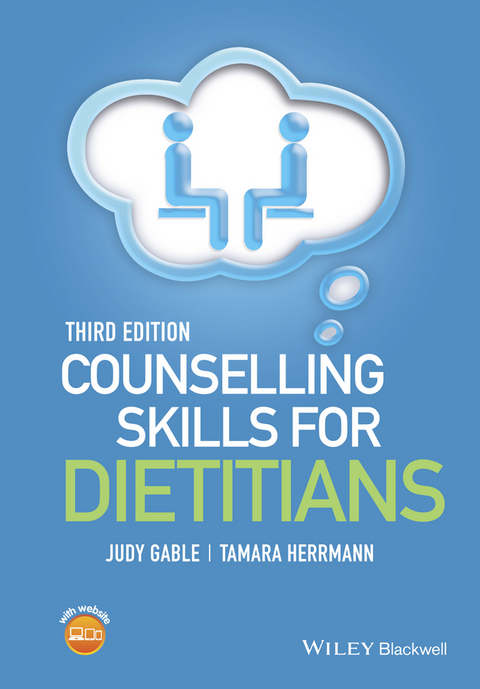
Counselling Skills for Dietitians (eBook)
John Wiley & Sons (Verlag)
978-1-118-94379-3 (ISBN)
- Includes examples from daily practice to illustrate the difficulties encountered by dietitians and demonstrate the application of counselling skills
- Clearly explains theoretical models of accepted counselling practice underpinning the skills described
- Has been updated to include additional information on topics such as assertiveness skills and eating distress
- Addresses practical and psychological issues faced by dietitians and patients
- Includes the latest research evidence for counselling skills in dietetic practice
- Draws upon research evidence, theory and experience from the fields of psychotherapy and counselling
- Now provides access to a range of supportive online material including videos of consultations, case studies and resources for trainers
Judy Gable worked as a dietitian for many years, specialising in paediatrics in the 1970s and diabetes research in the 1980s. In the early 1990s she established the course in communication skills for dietetic students at King's College and during the next ten years also facilitated introductory courses in counselling skills and assertiveness for dietitians. She continued to work as a counsellor in primary care until 2010.
Tamara Herrmann has worked for many years as a GP/Community dietitian and during this time developed her interest in obesity, eating disorders and communication skills. Tamara now works in private practice as a registered dietitian and registered psychotherapist.
The third edition Counselling Skills for Dieticians has been fully revised and updated to reflect the recent developments, research and interests in the field. It explores the skills required for dietetic counselling, and includes frequent examples of dialogue from patient consultations, as well as exercises and activities so that the reader can undergo experiential learning relevant to their practice. Includes examples from daily practice to illustrate the difficulties encountered by dietitians and demonstrate the application of counselling skills Clearly explains theoretical models of accepted counselling practice underpinning the skills described Has been updated to include additional information on topics such as assertiveness skills and eating distress Addresses practical and psychological issues faced by dietitians and patients Includes the latest research evidence for counselling skills in dietetic practice Draws upon research evidence, theory and experience from the fields of psychotherapy and counselling Now provides access to a range of supportive online material including videos of consultations, case studies and resources for trainers
Judy Gable worked as a dietitian for many years, specialising in paediatrics in the 1970s and diabetes research in the 1980s. In the early 1990s she established the course in communication skills for dietetic students at King's College and during the next ten years also facilitated introductory courses in counselling skills and assertiveness for dietitians. She continued to work as a counsellor in primary care until 2010. Tamara Herrmann has worked for many years as a GP/Community dietitian and during this time developed her interest in obesity, eating disorders and communication skills. Tamara now works in private practice as a registered dietitian and registered psychotherapist.
Title Page 5
Copyright Page 6
Contents 7
Foreword 16
About the authors 18
Preface to the third edition 19
Acknowledgements 22
Introduction 23
About the companion website 27
Part 1 Using a counselling approach in patient-centred practice 29
Chapter 1 The dietitian 31
The role of the dietitian 31
Using a prescriptive approach 32
Control, compliance and responsibility 33
Changing approaches to providing health care 33
Developing a patient-centred approach 35
Introducing counselling skills 36
Developing a counselling approach 38
Portrait of a dietitian using a counselling approach 38
Qualities for a dietitian to develop 39
Providing care 40
Personal and professional development 40
Self-awareness 41
Frame of reference 41
Self-worth 41
Reflective practice 42
Benefits of reflective practice 42
Use of the word ‘reflection’ 43
Different approaches to counselling and psychotherapy 43
Psychoanalytic approach 43
Behavioural and cognitive approaches 44
Humanistic approach 44
Transactional Analysis 45
Systemic therapy 45
Neuro-linguistic programming 45
Mindfulness 46
Overview of the evidence concerning the use of communication skills in dietetic practice 46
References 47
Chapter 2 The patient 50
Using a patient-centred approach 50
The concerns of the patient 51
The feelings of the patient 52
The expectations of the patient 53
The nature of change 54
Change has a ripple effect 54
Change occurs in a number of ways 54
People react and adapt to change in various ways 55
Change is paradoxical, in that we both want it and do not want it 55
Change can have implications of which we are not aware 55
Reactions to change 55
Shock 56
Release of emotion 56
Talking about it 56
Ambivalence 57
Bargaining 57
Doubt about being able to cope 57
Blame 58
Distancing 58
Adapting to change 58
Patient satisfaction 59
References 60
Chapter 3 The relationship between dietitian and patient 61
Circumstances surrounding the dietitian’s relationship with the patient 61
Core conditions for a helping relationship 62
Empathy 62
Acceptance 65
Genuineness 67
Issues arising between patient and dietitian: power, dependency, transference and counter-transference 68
Power 68
Dependency 69
Transference and counter-transference 69
The working alliance 70
A therapeutic bond 70
Goals 71
Tasks 71
Further points to consider 72
References 72
Chapter 4 Aspects of the helping process 73
The dietitian’s concerns 74
Keeping boundaries: how the dietitian can manage time, confidentiality and referral 74
Establishing a time boundary 75
Maintaining confidentiality 75
Recognising professional and personal limitations: when, how and where to make a referral 78
Recognising the different developmental stages of the helping process 79
Stage 1: Listening to the patient’s story 79
Stage 2: Clarifying what the patient wants 80
Stage 3: Planning ways to achieve goals 82
Looking at the psychological process of change 83
Putting it into practice 83
Coping with ambivalence 85
Incorporating systemic awareness 86
Examples of questions to ask about diet and the home situation 87
How to end 87
Support for the dietitian 89
References 89
Chapter 5 Conducting a structured interview 90
A framework for the interview 90
Beginnings 91
The interview setting 91
Preparing to provide a helping relationship 92
Opening the interview 93
Forming first impressions 93
Making introductions 96
Finding a starting point 96
Middles 97
Setting the agenda 97
Assessing motivation 99
Making a contract 100
Taking a diet history 101
Giving dietary advice 103
Monitoring the relationship 107
Endings 109
Acknowledging the ending 109
Summarising what has taken place 109
What next? 110
Saying goodbye 110
After the interview 111
References 112
Part 2 The skills 113
Chapter 6 Active listening 115
The process of listening 115
Attending: a way of demonstrating acceptance 116
Attending is giving someone our attention as fully as we can 116
A listener who conveys acceptance is someone who is safe to talk to 117
Barriers to attending 118
Eye contact 118
Environment 118
Events and emotions 118
Echoes within 119
Attending to non-verbal communication 119
Voice 119
Eye contact 120
Facial expression 120
Appearance 121
Posture 121
Gesture 121
Discrepancies and incongruities 121
Developing powers of observation 122
Distinguishing between observation and interpretation 122
Managing silences 123
Mirroring 124
Touching 125
References 126
Chapter 7 Ways of responding 127
The effects of responding 127
Types of response 128
Low-risk responses 129
Moderate-risk responses 129
High-risk responses 129
Very high-risk responses 131
Self-disclosure 131
The purpose behind a response 132
The power of language 133
Use of ‘we’, ‘you’ and ‘I’ 133
Language of success or failure 134
Language of doubt 134
Language of negativity 134
Reflective responding 135
The technique of reflecting 136
The skill of reflecting 137
Focusing on feelings 139
Mirroring language 140
When to use reflective responding 141
When reflective responding is not helpful 141
References 142
Chapter 8 Making helpful interventions 143
Moving towards a helping conversation 143
Helpful interventions 144
Examining attitudes 145
Providing the core conditions when making a helpful intervention 146
Timing and level of intervention 147
Ways to intervene 149
Asking questions 149
Open questions 150
Closed questions 151
Highlighting paradoxes, discrepancies and inconsistencies 151
Confronting absolutes 151
Choosing a focus 152
Addressing sensitive issues 153
When the dietitian does not believe the patient 153
Helping someone towards clearer thinking using CBT 154
Recognising thoughts and distinguishing them from feelings 154
‘What’s going through your mind when you think that?’ 154
References 158
Chapter 9 Conveying a clear message: assertiveness in action 159
Counselling skills and assertiveness 159
What is assertive communication? 160
Developing assertiveness 160
Self-awareness and assertiveness 160
Self-esteem and assertiveness 161
Communicating feelings 161
Aggression 161
Passivity 162
Manipulation 162
Advantages and disadvantages of assertiveness 162
Advantages 162
Disadvantages 163
Delivering a clear message 163
Preparation and reflection 163
Rehearsal 163
Delivery 163
Examples of assertiveness skills in practice 164
With a patient 164
With a GP practice manager 165
Confronting difficult situations 166
Confrontation from a colleague 167
Confrontation from a patient 167
Confronting a patient 168
Confronting a colleague 169
Handling criticism and praise 170
Criticism 170
Praise 172
Support with handling criticism and praise 173
Dealing with aggressive behaviour 173
Assessing risks 174
Taking care of yourself 174
Defusing the situation 175
Be A DEFUSER 175
Coping with the after-effects 176
An ABC for conveying a clear message 176
References 178
Part 3 Putting skills into practice: further considerations 179
Chapter 10 Working with more than one person 181
When others are in the room 181
Reasons for others to be present 181
Context of the interview 182
Risks and benefits of involving another person 182
Issues to consider when others are present 183
Dynamics between those present 183
Agendas of those present 184
Relationships between those present 184
Language and culture of those present 185
Maintaining equity and creating structure and boundaries 186
Maintaining equity 186
Creating structure and boundaries 187
Family meetings 187
Example 188
Who is responsible for finding a solution? 189
Who is leading the consultation? 189
Group work 190
Group size 190
Group demographics 190
Group dynamics 190
Group process 191
Using counselling skills with a group 192
References 193
Chapter 11 Coping with loss and bereavement 194
How loss concerns dietitians 194
The need to grieve 196
Our reactions to grief 196
The process of grieving 196
How the dietitian can help 197
Loss of weight: a loss or a gain? 199
Loss of self-esteem 199
Loss of health: living under threat of death 200
Loss of appetite 201
Support for the patient and the dietitian 202
References 203
Chapter 12 Developing cultural awareness 204
What is culture? 204
Cultural changes within dietetics and the NHS 205
Move away from tradition and hierarchy 205
Prevention of disease and the rise of nutrition 206
Growth of the profession and an increase in diversity 206
Introducing a patient-centred approach 207
Evidence-based practice and CPD 207
Stress from change and limited resources 208
Developing cultural awareness 208
Prejudice and its development 209
Attitudes and expectations 210
Effect of prejudice on the helping relationship 210
Towards more effective communication 211
Example 211
Making introductions and establishing credentials 211
Language 212
Boundaries and goal setting 213
Social rituals and customs 214
Making effective use of an interpreter 214
Who is the interpreter? 214
Preparing for the interview 215
Working with an asylum seeker 216
Coping with difficulties 216
Ways of building bridges 216
References 217
Chapter 13 Working with parents and children 218
Challenges for the dietitian 218
The needs of the child 219
Meeting the family 220
Background 220
Interview 220
Reflections 221
Considerations 221
Making a plan 222
Next meeting 222
Summary of how Sue worked with Peter 223
When a child withdraws 223
Guidelines for handling this situation 224
The angry child 224
Guidelines for handling this situation 224
The well-behaved child 225
Guidelines for handling this situation 225
Overprotective parents 225
Guidelines for handling this situation 226
Aggressive parents 226
Guidelines for handling this situation 226
The absent parent 226
Guidelines for handling this situation 227
The dying child 227
Guidelines for handling this situation 227
Reference 228
Chapter 14 Working with difficulties in physical and mental health 229
Minority needs as part of society 229
Effect on patient and dietitian 230
The patient 230
The dietitian 231
Resources for the dietitian to develop 231
Internal resources 231
External resources 232
Physical difficulties 232
Hearing 233
Sight 233
Speech 234
Mobility and movement 235
Appearance 235
Invisible disabilities 236
Mental health 236
Recognising anxiety and depression 236
How the dietitian can help 237
Helping those with eating distress: disordered eating and eating disorders 239
Hearing suicidal thoughts: how can I bear it? 245
Maintaining confidentiality when making a referral 246
References 247
Part 4 Areas for personal and professional development 249
Chapter 15 Developing self-awareness 251
Why self-awareness is important 251
Ways to develop self-awareness 252
Time for ourselves 252
Becoming more mindful 252
Self-esteem 253
Ways to build self-esteem 254
Acknowledgement 254
Tips for building self-esteem 255
Coping with stress 255
Ways to unwind 257
Keeping a reflective diary 259
References 259
Chapter 16 Giving and receiving support 261
When support is needed 261
Knowing your limits 262
Supporting yourself 263
Reflecting on practice 263
Creating a dialogue 263
Building a support network 264
Asking for support 265
Tips for asking for support 265
Giving support 266
Tips for giving support 267
Giving constructive support 267
Support from training, assessment and monitoring 268
Training in communication skills 269
Training in counselling skills 270
Supportive peer discussion 271
Making arrangements 271
Managing the session 271
Supervision 272
Personal counselling 272
What does counselling involve? 273
Who seeks counselling? 274
References 275
Index 276
EULA 284
| Erscheint lt. Verlag | 22.12.2015 |
|---|---|
| Sprache | englisch |
| Themenwelt | Medizin / Pharmazie ► Gesundheitsfachberufe ► Diätassistenz / Ernährungsberatung |
| Medizin / Pharmazie ► Medizinische Fachgebiete | |
| Sozialwissenschaften ► Pädagogik ► Sozialpädagogik | |
| Sozialwissenschaften ► Soziologie | |
| Schlagworte | clients diet lifestyle • consultations patients • Counselling skills dieticians • Diätetik • dialogue communication • Diätetik • Dietetics • dietetics nutrition • Ernährung • Ernährung u. Diätetik • Ernährung • Ernährung u. Diätetik • Gesundheits- u. Sozialwesen • Health & Social Care • Nutrition & Dietetics General • Psychologie • Psychology • Psychotherapie • Psychotherapie u. Beratung • Psychotherapy & Counseling |
| ISBN-10 | 1-118-94379-1 / 1118943791 |
| ISBN-13 | 978-1-118-94379-3 / 9781118943793 |
| Informationen gemäß Produktsicherheitsverordnung (GPSR) | |
| Haben Sie eine Frage zum Produkt? |
 PDF (Adobe DRM)
Kopierschutz: Adobe-DRM
Adobe-DRM ist ein Kopierschutz, der das eBook vor Mißbrauch schützen soll. Dabei wird das eBook bereits beim Download auf Ihre persönliche Adobe-ID autorisiert. Lesen können Sie das eBook dann nur auf den Geräten, welche ebenfalls auf Ihre Adobe-ID registriert sind.
Details zum Adobe-DRM
Dateiformat: PDF (Portable Document Format)
Mit einem festen Seitenlayout eignet sich die PDF besonders für Fachbücher mit Spalten, Tabellen und Abbildungen. Eine PDF kann auf fast allen Geräten angezeigt werden, ist aber für kleine Displays (Smartphone, eReader) nur eingeschränkt geeignet.
Systemvoraussetzungen:
PC/Mac: Mit einem PC oder Mac können Sie dieses eBook lesen. Sie benötigen eine
eReader: Dieses eBook kann mit (fast) allen eBook-Readern gelesen werden. Mit dem amazon-Kindle ist es aber nicht kompatibel.
Smartphone/Tablet: Egal ob Apple oder Android, dieses eBook können Sie lesen. Sie benötigen eine
Geräteliste und zusätzliche Hinweise
Buying eBooks from abroad
For tax law reasons we can sell eBooks just within Germany and Switzerland. Regrettably we cannot fulfill eBook-orders from other countries.
aus dem Bereich