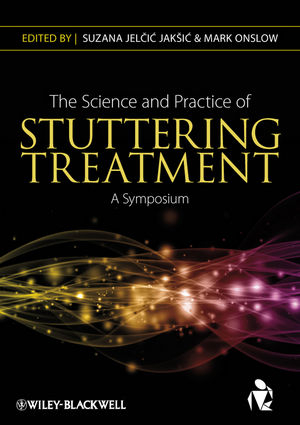
The Science and Practice of Stuttering Treatment (eBook)
John Wiley & Sons (Verlag)
978-1-118-34163-6 (ISBN)
Written by an international team of clinical and research leaders in the field of speech and language pathology, as well as scientists from the fields of epidemiology and neurology, the book offers a truly comprehensive coverage of contemporary stuttering management.
Each chapter provides information on the 'Theoretical Basis of the Treatment', 'Outline of the Treatment', 'Scientific Evidence for the Treatment', 'Advantages and Disadvantages of the Treatment', 'Planned Future Empirical Development', and conclude with an in-depth critical review.
This book is a must-have resource for speech and language pathologists, researchers and educators worldwide.
FEATURES:
- Offers a rigorous critical review of each treatment
- Written by leading international experts in the field
- Completely up to date with the latest clinical and scientific research
“This book is the output from the Research Symposium held in Croatia in 2010. This text is unusual in that it not only reflects the content of the Symposium presentations, but also reports the discussion that the presentations generated. The discussions that ensued were recorded and transcribed… The consistent organisation of each paper in the collection allows the reader to quickly access the critical information and to make direct comparisons across therapies… (and) provides the reader with a comprehensive overview of a variety of speech restructuring programs... The advantages/disadvantages and the discussion sections in each chapter help the reader with appraisal of the material presented and to make some judgements about generality and value…
The reader feels exposed to the atmosphere and dynamics of the Symposium in a way that is rarely captured outside the conference auditorium.”
- A review from Sharon Millard (PhD., MRCSLT), Research Lead and Expert Speech and Language Therapist, The Michael Palin Centre, Whittington Health, London, UK
About the editors
Suzana Jelcic Jaksic is a Speech pathologist at the Children's Hospital Zagreb, Croatia. She is President of the Croatian Association for People Who Stutter 'Hinko Freund' and Director of Logopedski Centar, Zagreb.
Mark Onslow is Professor and Founding Director of the Australian Stuttering Research Centre at The University of Sydney. He is a clinical researcher and leads a team that develops treatments for adults and children who stutter.
The Science and Practice of Stuttering Treatment: A Symposium is a comprehensive resource for practitioners and researchers that spans the scientific basis and clinical management of stutters in people of all ages, from preschoolers to adults. Written by an international team of clinical and research leaders in the field of speech and language pathology, as well as scientists from the fields of epidemiology and neurology, the book offers a truly comprehensive coverage of contemporary stuttering management. Each chapter provides information on the 'Theoretical Basis of the Treatment', 'Outline of the Treatment', 'Scientific Evidence for the Treatment', 'Advantages and Disadvantages of the Treatment', 'Planned Future Empirical Development', and conclude with an in-depth critical review. This book is a must-have resource for speech and language pathologists, researchers and educators worldwide. FEATURES: Offers a rigorous critical review of each treatment Written by leading international experts in the field Completely up to date with the latest clinical and scientific research This book is the output from the Research Symposium held in Croatia in 2010. This text is unusual in that it not only reflects the content of the Symposium presentations, but also reports the discussion that the presentations generated. The discussions that ensued were recorded and transcribed The consistent organisation of each paper in the collection allows the reader to quickly access the critical information and to make direct comparisons across therapies (and) provides the reader with a comprehensive overview of a variety of speech restructuring programs... The advantages/disadvantages and the discussion sections in each chapter help the reader with appraisal of the material presented and to make some judgements about generality and value The reader feels exposed to the atmosphere and dynamics of the Symposium in a way that is rarely captured outside the conference auditorium. - A review from Sharon Millard (PhD., MRCSLT), Research Lead and Expert Speech and Language Therapist, The Michael Palin Centre, Whittington Health, London, UK
About the editors Suzana Jelcic Jaksic is a Speech pathologist at the Children's Hospital Zagreb, Croatia. She is President of the Croatian Association for People Who Stutter "Hinko Freund" and Director of Logopedski Centar, Zagreb. Mark Onslow is Professor and Founding Director of the Australian Stuttering Research Centre at The University of Sydney. He is a clinical researcher and leads a team that develops treatments for adults and children who stutter.
List of Contributors vii
Preface xi
1 Modifying Phonation Interval Stuttering Treatment Program
1
Jason H. Davidow
2 The Camperdown Program 15
Sue O'Brian and Brenda Carey
3 Assessment and Treatment of Stuttering Using Altered Auditory
Feedback 29
Tim Saltuklaroglu
4 The Lidcombe Program 43
Rosemarie Hayhow
5 Lidcombe Program with School-Age Children 57
Rosalee C. Shenker and Sarita Koushik
6 Intensive Speech Restructuring Treatment for School-Age
Children 71
Elizabeth A. Cardell
7 Student-Delivered Treatment for Stuttering: Multiday Intensive
Speech Restructuring 87
Susan Block
8 Review of the Successful Stuttering Management Program
99
Michael Blomgren
9 The Comprehensive Stuttering Program and Its Evidence Base
115
Marilyn Langevin and Deborah Kully
10 Telehealth Treatments for Stuttering Control 131
Brenda Carey and Sue O'Brian
11 A Multidimensional, Integrated, Differentiated, Art-Mediated
Stuttering Programme 147
D. Tomaiuoli, F. Del Gado, E. Lucchini and M. G.
Spinetti
12 Self-Modelling for Chronic Stuttering 159
Angela Cream and Sue O'Brian
13 Multifactorial Treatment for Preschool Children 171
Mirjana Lasan
14 Cognitive Behaviour Therapy 183
Dave Rowley
15 The Westmead Program 195
Natasha Trajkovski
16 Conscious Synthesis of Development: A Holistic Approach to
Stuttering 207
Jelena Tadi´c and Darinka ¡Soster
17 The Gradual Increase in Length and Complexity of Utterance
Program 221
Bruce Ryan
18 Innovations, Watersheds and Gold Standards: Concluding
Symposium Reflections 233
Mark Onslow
Index 249
Chapter 1
Modifying Phonation Interval Stuttering Treatment Program
Jason H. Davidow
Hofstra University, Hempstead, NY, USA
Overview
Modification of phonation intervals
The Modifying Phonation Interval (MPI) Stuttering Treatment Program is a computer-aided, biofeedback programme based on reducing the occurrence of short intervals of phonation during speech production. Clients proceed through a series of performance-contingent steps, requiring the completion of several speech tasks in various situations. The goal of the programme is self-managed, stutter-free, natural-sounding and effortless speech in beyond-clinic settings. The MPI programme is intended for adults, adolescents and school-age children.
A phonation interval (PI) is a measure of the duration of vibration measured from the surface of the throat (via an accelerometer) in between breaks of 10 milliseconds (ms) or more. PIs are collected via the MPI system (Ingham et al., 2007), which runs in a Windows environment and consists of an accelerometer, a signal conditioning system, computer software and related hardware (see Davidow et al., 2009 for technical details). The software allows for the recording of all PIs and allows for PIs within a specified ms range (e.g. 30–120 ms) to be fed back (audio-visually) to the client in real time. Perceptually based measures of percent syllables stuttered (%SS), syllables per minute (SPM), speech naturalness (1–9 scale; 1 = highly natural, 9 = highly unnatural; Martin et al., 1984) and speech effort (1–9 scale; 1 = highly effortless, 9 = highly effortful) can also be gathered using the MPI software. Speech effort targets, however, are not part of the MPI treatment protocol outlined by Ingham et al. (2007).1
Pre-establishment
The MPI programme includes Pre-establishment, Establishment, Transfer and Maintenance Phases. The purpose of the Pre-establishment Phase is to collect baseline %SS, SPM and speech naturalness data, and to find the PI range that the client will manipulate (called the Functional or Target PI Range). The Target PI Range is found via several steps. First, the MPI software collects all of the client's PIs across 3-minute speaking tasks repeated on at least three occasions over the 2–3 month Pre-establishment Phase. PIs during normal speaking situations (reading, monologue, conversation) typically range from 10 to 1000 ms (very few PIs are longer than 1000 ms); however, PIs below 30 ms are discarded since they have been found to be too difficult to control and may be confounded by head and neck movements. Second, the software categorises the PIs into quintiles; that is, the software identifies the ms PI range that contains the lowest 20% of PIs (e.g. 30–60 ms PIs), the lowest 40% of PIs (e.g. 30–150 ms PIs), the lowest 60% of PIs (e.g. 30–290 ms PIs), and so on. Third, the client attempts to reduce the number of PIs by 50% in the lowest quintile range, which is now the Target PI Range, and tries to exert control of Target Range PIs (produce them on demand and produce longer PIs on demand) across several speaking tasks. If the client can accomplish this, the lowest 20% is used as the Target PI Range for the remainder of the treatment programme. If control is not shown over the 20% quintile range, the Target PI Range is increased in 10% increments (lowest 30%, then lowest 40%) until the client can reduce the number of PIs by 50% and exert control of them. The creators of the programme state that no participant has needed to go beyond the 40% quintile range to exert control (Ingham et al., 2007). No speaking style or speech rate is prescribed during this process; that is, the speaker needs to discover how to control PIs.
Establishment
The remaining phases of the programme are designed as performance-contingent schedules. The Establishment Phase consists of a series of speaking tasks of different lengths of time (see Ingham, 1999 for the complete treatment schedule), progressing from reading tasks to conversational tasks. Each speaking situation requires 1-minute, 2-minute and 3-minute trials. A trial is ‘passed’ if there is zero self-judged stuttering, self-judged naturalness of below 3 and target PIs are reduced by 50%. If these criteria are not met, the client repeats the trial or regresses in the treatment schedule. Additionally, the clinician judges the final speaking trial for each speaking situation and the criteria just mentioned must be met for progression to the next speaking situation. Clients are encouraged to attend daily 2–3 hour sessions within the clinic, but clients completing bi-daily sessions have had success with the programme (Ingham et al., 2007).
Transfer
The Transfer Phase, initiated at the completion of the Establishment Phase, includes several 3-minute beyond-clinic speaking tasks selected to reflect situations in the client's natural environment that are important to the client. Six different situations are required with three 3-minute trials passed for each situation. This results in eighteen 3-minute trials that must be passed. The progression includes telephone conversation, general conversation and self-selected tasks. A trial is ‘passed’ if it is judged stutter free and natural sounding (below 3 on the 1–9 scale) by the client, with the last trial for each task judged by the clinician. If these criteria are not met, the client repeats the trial or regresses in the treatment schedule.
Maintenance
The final phase, the Maintenance Phase, involves increased time between clinical visits as the reward for meeting ‘pass’ criteria. Three 3-minute speaking tasks are completed, and two of the tasks are scored and must be judged as stutter free and natural sounding by the client, while one is scored and must be judged as stutter free and natural sounding by the clinician. The duration of the Maintenance Phase in the current MPI manual (Ingham et al., 2007) is 22 weeks if no step is ‘failed’. If any step is ‘failed’, the client returns to the beginning of the Maintenance Phase.
Theoretical basis
Research into PIs began as an empirically grounded search to operationalise the characteristics of prolonged speech (Ingham et al., 1983); see Preface for a definition of this term. Previous literature had shown that stutter-free speech was accompanied by increases in phonation time during delayed auditory feedback/prolonged speech (Goldiamond, 1965, 1967), in addition to other so-called fluency-inducing conditions (FICs), such as singing (Colcord and Adams, 1979) and chorus reading (Adams and Ramig, 1980), as researchers examined Wingate's ‘Modified Vocalization Hypothesis’ (Wingate, 1969, 1970). However, the effect on stuttering of directly manipulating any specific element of phonation time had not been studied.
Along with the idea that increased phonation time can decrease stuttering, two studies provided the initial motivation for focusing on reducing the occurrence of short PIs, rather than directly extending phonation. The first was a study by Adams and Hayden (1976) showing that adults who stutter had slower laryngeal reaction times than normally fluent controls. Although there were some findings to the contrary, the majority of subsequent studies confirmed this initial finding (see Bloodstein and Ratner, 2008, Chapter 5 for a review). The other study by Manning and Coufal (1976) provided ‘additional evidence that stuttering is increased during speech that requires the rapid alternation of phonated and non-phonated sounds’ (Ingham et al., 2001, p. 1229). These findings taken together compelled Gow and Ingham (1992) to conclude, ‘… it should follow that training to control the frequency of short intervals of phonation (presumably they require faster and more frequent initiation/termination of phonation) should control the frequency of stuttering …’ (p. 495).
The early PI studies were single-subject investigations (Gow and Ingham, 1992; Ingham and Devan, 1987; Ingham et al., 1983) validating the use of reducing the frequency of short PIs as a stuttering reduction agent. When participants reduced the frequency of short PIs (30–200 ms) in their speech by 50%, stuttering was reduced to zero or near-zero levels. In addition, when people who stutter (PWS) increased the number of short PIs in their speech back to baseline or above baseline levels, stuttering returned, although this was not a consistent finding (Gow and Ingham, 1992). In general, however, these studies showed that manipulating short PIs could control stuttering frequency. Speakers were also able to reduce the number of short PIs (accompanied by stuttering reductions) while receiving naturalness ratings between 3 and 6 on the 1–9 naturalness scale (Martin et al., 1984) using normal speaking rates. These latter findings revealed that attaining another goal of the MPI research line was possible, which was overcoming the problem of unnatural-sounding speech following speech-pattern style treatments such as prolonged speech that involved directly increasing phonation time.
Research into PIs was also motivated by a need to find a replicable procedure for manipulating phonation time (Ingham et al., 1983). The use of a computer and accompanying hardware to measure PIs was important for this purpose. Most prolonged speech programmes require perceptual judgment of task compliance by clinicians, a task that clinicians do with questionable reliability (Onslow and O’Brian, 1998). An objective measurement of the treatment target could aid in this...
| Erscheint lt. Verlag | 7.6.2012 |
|---|---|
| Sprache | englisch |
| Themenwelt | Medizin / Pharmazie ► Gesundheitsfachberufe ► Logopädie |
| Sozialwissenschaften ► Soziologie | |
| Schlagworte | Basis • Book • Clinical • Comprehensive • Contemporary • Coverage • epidemiology • Field • Fields • Gesundheits- u. Sozialwesen • Health & Social Care • international team • Practice • Practitioners • Preschoolers • Research • resource • Science • scientists • Stottern • stuttering • Symposium • Treatment |
| ISBN-10 | 1-118-34163-5 / 1118341635 |
| ISBN-13 | 978-1-118-34163-6 / 9781118341636 |
| Informationen gemäß Produktsicherheitsverordnung (GPSR) | |
| Haben Sie eine Frage zum Produkt? |
 EPUB (Adobe DRM)
Kopierschutz: Adobe-DRM
Adobe-DRM ist ein Kopierschutz, der das eBook vor Mißbrauch schützen soll. Dabei wird das eBook bereits beim Download auf Ihre persönliche Adobe-ID autorisiert. Lesen können Sie das eBook dann nur auf den Geräten, welche ebenfalls auf Ihre Adobe-ID registriert sind.
Details zum Adobe-DRM
Dateiformat: EPUB (Electronic Publication)
EPUB ist ein offener Standard für eBooks und eignet sich besonders zur Darstellung von Belletristik und Sachbüchern. Der Fließtext wird dynamisch an die Display- und Schriftgröße angepasst. Auch für mobile Lesegeräte ist EPUB daher gut geeignet.
Systemvoraussetzungen:
PC/Mac: Mit einem PC oder Mac können Sie dieses eBook lesen. Sie benötigen eine
eReader: Dieses eBook kann mit (fast) allen eBook-Readern gelesen werden. Mit dem amazon-Kindle ist es aber nicht kompatibel.
Smartphone/Tablet: Egal ob Apple oder Android, dieses eBook können Sie lesen. Sie benötigen eine
Geräteliste und zusätzliche Hinweise
Buying eBooks from abroad
For tax law reasons we can sell eBooks just within Germany and Switzerland. Regrettably we cannot fulfill eBook-orders from other countries.
aus dem Bereich