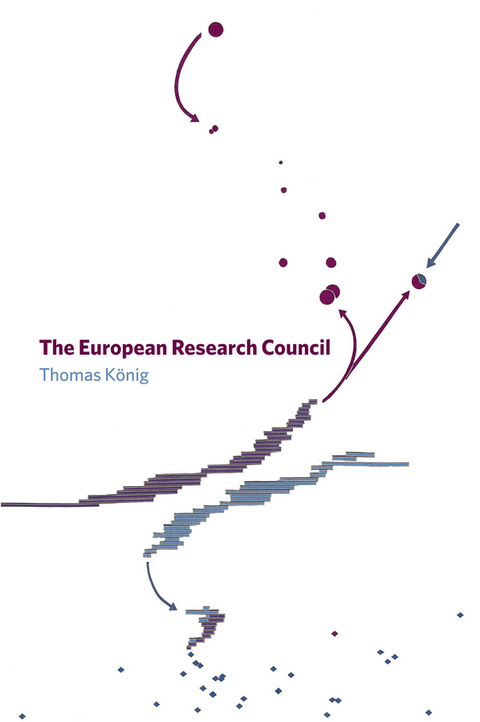
The European Research Council (eBook)
John Wiley & Sons (Verlag)
978-0-7456-9128-2 (ISBN)
This book is the first comprehensive history of the creation and development of the ERC. Drawing on first-hand knowledge, Thomas König gives a detailed account of how a group of strong-minded European scientists succeeded in creating the ERC by pushing for a single goal: more money for scientific research with fewer strings attached. But he also shows how this campaign would have failed had it not been taken up by skilful officials of the European Commission, who recognized the ERC as a way to gain more influence in shaping European science policy. Once established, the ERC developed a carefully crafted self-image that emphasized its reliance on peer review and its differences from all other EU research programmes.
In addition to analysing the creation and development of the ERC, this book critically examines its achievements and its claims. It also explores the implications of the rise of the ERC and the challenges and threats that it faces today, engaging with broader questions concerning the relationship of politics, science, and money at the beginning of the 21st century. It will be essential reading for all scholars and students of science policy, for decision-makers and administrators across Europe, and for researchers and academics looking to engage with and understand the ERC.
Thomas König is a Senior Researcher at the Vienna Institute for Advanced Studies
Founded in 2007 to fund basic research, the European Research Council (ERC) has become the most revered instrument in European science policy and one of the world s most important focal points for the funding of scientific research. Its grants are much sought-after by researchers and scholars and it is widely considered to have had a major impact on research communities and institutions across Europe. How did this remarkable organization, the creation of which was widely regarded as a miracle , come into being, what has it achieved and how is it likely to adapt in the face of current and future challenges? This book is the first comprehensive history of the creation and development of the ERC. Drawing on first-hand knowledge, Thomas K nig gives a detailed account of how a group of strong-minded European scientists succeeded in creating the ERC by pushing for a single goal: more money for scientific research with fewer strings attached. But he also shows how this campaign would have failed had it not been taken up by skilful officials of the European Commission, who recognized the ERC as a way to gain more influence in shaping European science policy. Once established, the ERC developed a carefully crafted self-image that emphasized its reliance on peer review and its differences from all other EU research programmes. In addition to analysing the creation and development of the ERC, this book critically examines its achievements and its claims. It also explores the implications of the rise of the ERC and the challenges and threats that it faces today, engaging with broader questions concerning the relationship of politics, science, and money at the beginning of the 21st century. It will be essential reading for all scholars and students of science policy, for decision-makers and administrators across Europe, and for researchers and academics looking to engage with and understand the ERC.
Thomas König is a Senior Researcher at the Vienna Institute for Advanced Studies
List of tables and figures
Abbreviations
Acknowledgements
Preface
1. 'The future of scientific research in Europe'
2. 'A radical proposal'
2.1 '"Not-yet-born" sector actors'
2.2 'Maybe it is time for a European Research Council in some form?'
2.3 'Everybody is talking about something different'
3. 'European Value Added'
3.1 'Clear ownership'
3.2 'Lack of sufficient competition'
3.3 'Credible to the scientific world'
4. 'The most promising opportunities'
4.1 'What the ERC will need'
4.2 'Internal policies'
5. 'State of crisis'
5.1 'Deep Commission'
5.2 'We are not there yet'
5.3 'Flawed recommendation'
6. 'A rather conventional system'
6.1 'A broader palette'
6.2 'To promote interdisciplinarity and breadth of viewpoints'
6.3 'Preventive and dissuasive actions'
7. 'Wide-ranging effects'
7.1 'Justifying to stakeholders'
7.2 'i-conomy'
7.3 'Symbolic value'
8. Summary and personal postscript
Annex 1: List of archival collections used
Annex 2: List of interviews
"This is so far the most thoroughly researched investigation on how the ERC came into existence and of the first seven years of its institutional life. The analysis of the different layers of what the author calls the ERC aura and its inevitable routinization - the EU formalized structures, the personalities involved, initial and current policy ambitions and the accomplishments of the ERC for science in Europe - opens a wide conceptual space to re-think the relationship between science and policy." - Helga Nowotny, Former President of the European Research Council
"In just ten years since its creation, the European Research Council has made a profound mark on Europe's scientific landscape. And through a combination of mimicry, adaptation and innovation, it has risen with remarkable speed into the premier league of research funders worldwide. Drawing on his unique access to the ERC's inner workings, as a former adviser to its president, Thomas Konig has produced a definitive account of its first decade, packed with revealing insights into the political and budgetary battles that were fought along the way. Thoughtful, engaging, and rich in both data and anecdotes, it's a book that will be of interest to scientists, policymakers, funders, and anyone seeking to understand the future of global research." - James Wilsdon, Professor of Research Policy, University of Sheffield
"In this first comprehensive history, Thomas König -- former scientific adviser to ERC president Helga Nowotny -- offers a multifaceted perspective. ... A story of big scientific personalities and struggles for autonomy and accountability in the charged space between policy and science." - Nature
"König's keen eyes take in everything from inspirational words about discovery printed on "cheap looking woven fabric" on a wall in its Brussels headquarters to key players' optimism, arrogance, high ideals and wounded pride." - Times Higher Education
1
THE FUTURE OF SCIENTIFIC RESEARCH IN EUROPE
On a sunny, mild Tuesday in October 2005, Slovenian politician Janez Potočnik addressed a small audience in the University Foundation of Brussels. Potočnik, then still a rather fresh member of the European Commission’s political cabinet, the College of Commissioners, had taken up responsibility over the science and research portfolio six months ago. Now he was standing in front of twenty-two eminent scientists and scholars from across Europe, all of them highly decorated in their fields (including three Nobel Laureates), and many of them also long-standing advocates of science funding in Europe. Before that summer they had been invited to become members of the ‘independent Scientific Council’ that was about to steer an exclusive new funding instrument at European level, oddly called ‘European Research Council’, or ERC.1
The ERC, as the Commissioner briefly outlined it in the speech, would become a smallish part of one of many of the European Union’s policy instruments, namely its research funding programme (in legal terms, this instrument is called the Framework Programme for Research and Technological Development). Of course, that’s not how the Commissioner pitched it. One of the necessary skills of experienced politicians and their speechwriters is to find the right tone for each of the many occasions where they are asked to contribute some meaningful scores. In front of eminent researchers, Potočnik seemingly did not want to appear timid. Right at the beginning he called the meeting ‘historic’, and, a bit later: ‘I can safely say that at stake is the future of scientific research in Europe.’2 This kind of language pleased his handpicked audience, many of whom had been actively engaged in campaigning for the very organization that was now formally introduced to them.
Today, there is almost uniform consensus among social scientists and policy-makers on the assumption that ‘economic growth is fueled by upstream research – research that is years away from leading to new products and processes’. Once this assumption is accepted, however, it poses a political problem, because new knowledge is a public, non-rival good (to speak in terms of economics) with the ‘potential of having multiple uses’; consequently, there are no ‘economic incentives’ for ‘any one individual, company, or industry’ to support it.3 On the whole, innovation policy aims to solve this perceived problem and to achieve economic growth (as well as other socio-economic benefits) mostly by distributing public funds to research and by making sure that the new knowledge produced through this research is transferred to the marketplace.
Historically, the importance of scientific research for economic growth can be traced back to two developments in the second half of the twentieth century, one being ideational, the other institutional.4 The first is an opaque concept around the term innovation becoming a major study object on its own in economics as well as in other social scientific disciplines.5 At the same time while its meaning was considerably narrowed down to, more or less, technological advancement, the public attention to it made it near to ‘the a priori solution to every problem of society’.6 Of course, those two trends were deeply intertwined, for it would not have occurred without the work of social scientists, and economists in particular, that the idea of economic growth based on knowledge (transferred in technology) would have become a political mantra; and, without the links to public policy, ‘innovation studies’ would not have become its own academic tribe.
The second development was closely related to the new belief: ever since the United States discussed, and eventually created, the National Science Foundation (NSF) with the intention of enabling scientific research at universities, the link to innovation was only increasing. In one of the Annexes to the constitutive report ‘Science – the endless frontier’, it predicted that ‘[i]n the next generation, technological advance and basic scientific discovery will be inseparable; a nation which borrows its basic knowledge will be hopelessly handicapped in the race for innovation’.7 Consequently, the distribution of public funds became a key factor in the relation between science and policy (albeit not the only one).
There exist different convictions of how best to use public resources in order to stimulate innovation, and what kind of investments would yield the best results; those convictions, despite their differences, usually have two common strands. One is that, while they are often based on well-reasoned arguments, and sometimes even analytical models and economic theories, once they are brought into the arena of innovation policy, they can hardly be separated from the vested interests of those speaking for them. The second is that they rely on a catalogue of labels such as ‘basic’, ‘applied’, or ‘frontier’ research, or ‘interdisciplinarity’, or even ‘innovation’ itself.8 Those are labels that, by default, cannot fully do justice to the complex and highly diverse set of practices carried out in very different situations (academic, profit-oriented), spaces (labs, libraries, research facilities), and along different disciplinary as well as epistemological precedents.
Over the decades, however, the priorities of the policy discourse have been changing quite substantially.9 If, in the beginning, it was generally believed that funding ‘basic’ (i.e. academic) research would do the trick, governments would later concentrate on more strategic investments; and from the 1990s onwards, it was common to speak of a portfolio of diversified instruments to foster innovation from research carried out at universities to give support to industries and businesses.10 An important consequence is that innovation policy is diverted into different subsets of secondary goals supposedly tackling different aspects that contribute to (that is, help stimulate) innovation.
While common-sense today, this upscale version of the shotgun-approach indicates a specific problem of innovation policy (and, more specifically, the distribution of funds for scientific research): effective input. Innovation policy is not alone with problems such as that there are unintended consequences (that is, regulatory or distributive policies will be made use of in ways that cannot be foreseen), or that public funds are a scarce resource, as demand is always higher than supply (science is expensive, but so is defence, social welfare, and so on). However, what is so difficult to pin down is how to actually make innovation happen; or, to be more precise, how to make people (or companies, or businesses) innovative. In other words, the realm of innovation policy consists of a plethora of programmes, instruments, and institutions, most of which distribute public funds in a way that is based on a certain mission and the service of their particular clientele.
In the case of European integration, research funding has been an undercurrent for quite a while,11 and in the broader contest of the so-called Lisbon Strategy in the year 2000 it gained special attention. The Union probably never came close to achieving the long-term goals set out in that document; nonetheless, the strategy had been ‘an extraordinary process of intellectual mobilization across Europe and beyond’12 and remained of high political significance. It was in the light of this strategy that the vague idea of an independent funding body named ERC was becoming a tangible goal for a group of fervent, influential advocates; and ‘the well-known objectives’ of the strategy were a reference point that Commissioner Potočnik could not miss in his speech to some of those advocates now13.
Research funding takes a special role in the entire portfolio of tasks that the European Commission is required to fulfil. One reason is that its volume is fast growing, with the latest edition of the Framework Programme for Research and Technological Development (FP), called ‘Horizon 2020’, having € 80 billion committed over seven years (2014–2020). Around the time of Potočnik’s speech, political negotiations for its predecessor, the seventh edition of the Framework Programme (commonly known as ‘FP7’), were in full swing and the European Commission could make good use of the ERC to argue why it asked EU member states to increase its overall budget. In the end, the seventh edition was at approximately € 54 billion from 2007 to 2013; between 15 and 17 per cent of that budget was allotted to the ERC, and all of it was ‘fresh funding’, as the Commission had demanded.14
The numbers are dwarfish in relation to other significant EU policy areas of (re-)distribution, such as the agricultural subsidies (Common Agricultural Policy, or CAP) or the structural funds. Other than them, however, the research funding budget is managed directly by the Commission by ‘allocating grants to private and public beneficiaries’. This requires heavy machinery and comes with risks of being politically exposed for wasteful spending. As a report on the European Commission’s annual fiscal conduct during the phase of establishing the ERC, ingenuously put it:
The principal...
| Erscheint lt. Verlag | 27.2.2017 |
|---|---|
| Sprache | englisch |
| Themenwelt | Schulbuch / Wörterbuch |
| Geisteswissenschaften | |
| Sozialwissenschaften ► Pädagogik ► Bildungstheorie | |
| Sozialwissenschaften ► Pädagogik ► Erwachsenenbildung | |
| Schlagworte | Bildungswesen • Education • Europäische Forschungsrat • europe, eu, the european union, science, research, scientific research, peer review, the European Research Council • Lehrpläne / Naturwissenschaften • Research Methodologies • Science • Sociology • Sociology of Science & Technology • Soziologie • Soziologie d. Naturwissenschaft u. Technik • Soziologische Forschungsmethoden |
| ISBN-10 | 0-7456-9128-5 / 0745691285 |
| ISBN-13 | 978-0-7456-9128-2 / 9780745691282 |
| Informationen gemäß Produktsicherheitsverordnung (GPSR) | |
| Haben Sie eine Frage zum Produkt? |
 EPUB (Adobe DRM)
Kopierschutz: Adobe-DRM
Adobe-DRM ist ein Kopierschutz, der das eBook vor Mißbrauch schützen soll. Dabei wird das eBook bereits beim Download auf Ihre persönliche Adobe-ID autorisiert. Lesen können Sie das eBook dann nur auf den Geräten, welche ebenfalls auf Ihre Adobe-ID registriert sind.
Details zum Adobe-DRM
Dateiformat: EPUB (Electronic Publication)
EPUB ist ein offener Standard für eBooks und eignet sich besonders zur Darstellung von Belletristik und Sachbüchern. Der Fließtext wird dynamisch an die Display- und Schriftgröße angepasst. Auch für mobile Lesegeräte ist EPUB daher gut geeignet.
Systemvoraussetzungen:
PC/Mac: Mit einem PC oder Mac können Sie dieses eBook lesen. Sie benötigen eine
eReader: Dieses eBook kann mit (fast) allen eBook-Readern gelesen werden. Mit dem amazon-Kindle ist es aber nicht kompatibel.
Smartphone/Tablet: Egal ob Apple oder Android, dieses eBook können Sie lesen. Sie benötigen eine
Geräteliste und zusätzliche Hinweise
Buying eBooks from abroad
For tax law reasons we can sell eBooks just within Germany and Switzerland. Regrettably we cannot fulfill eBook-orders from other countries.
aus dem Bereich