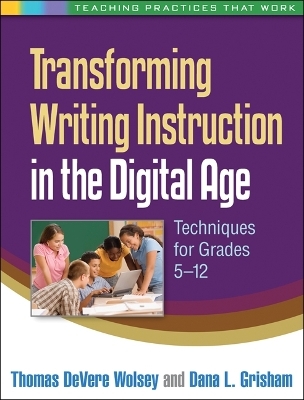
Transforming Writing Instruction in the Digital Age
Guilford Press (Verlag)
978-1-4625-0465-7 (ISBN)
Thomas DeVere Wolsey, EdD, teaches graduate courses in research and literacy and leads professional development for teachers throughout the United States, including on the Hopi Reservation in Arizona, as well as in Egypt, Guatemala, Mexico, China, and elsewhere. He is the author or coauthor of numerous books for teachers and teacher educators, most recently on the topic of teaching refugees and displaced students. Dr. Wolsey has developed training materials for the California Department of Education, TextProject, San Diego State University, and other institutions and programs. His research and writing explore the intersections of literacy and technology, middle grades and secondary literacy practices, teacher preparation, and green school design. Dana L. Grisham, PhD, is Professor (retired) at the California State University and is noted for her research on teaching, particularly concerning the intersection of literacy and technology. She has over 80 publications, including books, book chapters, and articles in national and international journals. Dr. Grisham is a past editor of Reading and Writing Quarterly, Reading Online, and The California Reader.
Introduction Hashtags by Technique I. Getting Started with Tools and Teaching Technique 1. Resources: Anytime, Anywhere Technique 2. Management: Computers in the Classroom Technique 3. Management: The Hardware Technique 4. Direct Instruction Technique 5. A Word about Differentiation II. Writing and Thinking Technique 6. Embracing Writing: Knowledge-Transforming Writing Technique 7. Why Writing Is a Process, and How Technology Can Help Technique 8. Working with Sources: Keeping Track of Learning, and Leaving a Path for Others to Follow Technique 9. Working with Sources: Using Style Guides III. Writing to Understand: It’s All about the Discipline Technique 10. Discussion and Writing Technique 11. Writing Short Pieces Technique 12. Short Writing: Electronic Journals Technique 13. Blogs and Classroom Websites for Writing Technique 14. Online Literature Discussion (Threaded Discussion) Technique 15. Vocabulary and Writing Technique 16. Collaborative Writing Technique 17. Are Those Kids Texting Again? IV. Inquiry and Long Thinking Meet the Disciplines Technique 18. FAQs about Writing in the Disciplines Technique 19. It’s All the Same, or Maybe Not? Technique 20. What Was That Essential Question Again? Technique 21. Learning Because I’m Writing: Logs and Journals Technique 22. Writing Is (Hard) Cognitive Work: Bloom’s Taxonomy Matters Technique 23. Internet Inquiry Technique 24. Prompts Technique 25. Prewriting: Composing before Writing with Pen or Keyboard Technique 26. Prewriting with Graphic Organizers Technique 27. Feedback, Assessment, and Technology V. What about Literature and English Language Arts? Technique 28. Short Writing: Summaries in Response to Reading Technique 29. The Zen of Writing about Literature Technique 30. Persuasion: In This Essay, I’m Going to Convince You… Technique 31. Prompts for Writing: Language Arts VI. Composing with Multimedia Technique 32. Visualize It! Technique 33. Podcasting: It’s Ear-resistible VII. Wrapping It Up Technique 34. Advocacy for Technology and New Literacies Technique 35. High-Stakes Writing Assessments Technique 36. Automated Tools Technique 37. Publication Appendix: Common Core Content Standards for Writing, Grades 6–12 Glossary
| Erscheint lt. Verlag | 12.6.2012 |
|---|---|
| Reihe/Serie | Teaching Practices That Work |
| Verlagsort | New York |
| Sprache | englisch |
| Maße | 203 x 267 mm |
| Gewicht | 534 g |
| Themenwelt | Schulbuch / Wörterbuch |
| Geisteswissenschaften ► Sprach- / Literaturwissenschaft ► Literaturwissenschaft | |
| Sozialwissenschaften ► Pädagogik | |
| ISBN-10 | 1-4625-0465-5 / 1462504655 |
| ISBN-13 | 978-1-4625-0465-7 / 9781462504657 |
| Zustand | Neuware |
| Informationen gemäß Produktsicherheitsverordnung (GPSR) | |
| Haben Sie eine Frage zum Produkt? |
aus dem Bereich