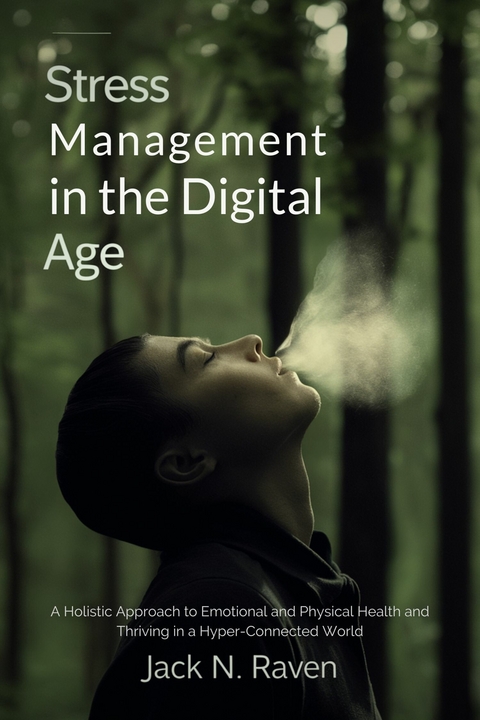
Stress Management in the Digital Age (eBook)
77 Seiten
JNR Publishing (Verlag)
978-0-00-113749-3 (ISBN)
Are you feeling overwhelmed, anxious, or burnt out in today's fast-paced, technology-driven world? Do you find it difficult to unplug, unwind, and prioritize your well-being? If so, you're not alone. Millions of people are struggling to cope with the unique stressors of the digital age.
But there's hope. 'Stress Management in the Digital Age' offers a comprehensive, evidence-based guide to reclaiming your health, happiness, and peace of mind. This book is your roadmap to thriving in a hyper-connected world, providing practical tools and strategies to manage stress, build resilience, and create a more balanced life.
Inside, you'll discover:
The science of stress: Understand how stress affects your mind, body, and emotions, and learn why traditional stress management techniques often fall short in the digital age.
Mindfulness and meditation for the modern mind: Discover simple yet powerful practices to cultivate present-moment awareness, reduce anxiety, and improve focus.
Digital detox strategies: Learn how to set healthy boundaries with technology, reclaim your time and attention, and create space for rest and rejuvenation.
Nutrition and exercise for stress resilience: Discover the foods and movement practices that can boost your mood, energy, and overall well-being.
Sleep optimization in a 24/7 world: Learn how to improve your sleep quality, even in the face of constant notifications and blue light exposure.
Financial stress solutions: Develop practical strategies for managing money, reducing debt, and building financial security.
Relationship and family stress management: Learn communication techniques, boundary-setting skills, and self-care practices to nurture healthy relationships.
Work-life balance in the digital age: Navigate the challenges of remote work, always-on culture, and workplace stress with proven strategies.
Personalized stress management plans: Create a tailored approach that addresses your unique stressors and supports your individual needs.
Don't let stress control your life. Take charge of your well-being and thrive in the digital age. Order your copy of 'Stress Management in the Digital Age' today!
3
Part II: Building Your Stress Management Toolkit
3. Cognitive Behavioral Techniques (CBT)
Cognitive Behavioral Therapy (CBT) is a highly effective, evidence-based approach to managing stress and anxiety. Rooted in the understanding that our thoughts, feelings, and behaviors are deeply interconnected, CBT empowers individuals to identify and alter negative thought patterns, thereby influencing their emotional and behavioral responses. In this section, we will delve into how to apply CBT techniques to effectively manage stress in your daily life, providing you with practical tools to foster resilience and emotional well-being.
Understanding CBT
At its core, CBT operates on the principle that our thoughts influence our emotions and behaviors. By transforming negative or unhelpful thoughts, we can create positive changes in how we feel and act. This proactive approach not only addresses current stressors but also equips individuals with strategies to handle future challenges more effectively.
Reframing Negative Thought Patterns
One of the fundamental principles of CBT is the identification and challenging of negative thought patterns, often referred to as cognitive distortions. These distortions can magnify stress and lead to maladaptive behaviors. Understanding and reframing these thoughts is crucial for reducing stress and enhancing mental well-being.
Common Cognitive Distortions and Reframing Strategies
- All-or-Nothing Thinking
- Description: Viewing situations in black-and-white terms without recognizing any middle ground.
- Example: “If I don’t get this project perfect, I’m a complete failure.”
- Reframe: “While I strive for excellence, perfection isn’t realistic. I can learn and improve from any outcome.”
- Overgeneralization
- Description: Drawing broad conclusions from a single negative event.
- Example: “I messed up this presentation. I’ll never be good at public speaking.”
- Reframe: “This presentation didn’t go as well as I’d hoped, but it’s one instance. With practice, I can improve.”
- Catastrophizing
- Description: Assuming the worst possible outcome in any situation.
- Example: “If I’m late to this meeting, I’ll probably get fired.”
- Reframe: “Being late isn’t ideal, but it’s unlikely to have such severe consequences. I’ll apologize and do my best to catch up.”
- Emotional Reasoning
- Description: Believing that because you feel a certain way, it must be true.
- Example: “I feel overwhelmed, so I must be incompetent.”
- Reframe: “Feeling overwhelmed is a normal response to stress. It doesn’t define my abilities or worth.”
- Mind Reading
- Description: Assuming you know what others are thinking without concrete evidence.
- Example: “She didn’t reply to my message; she must be angry with me.”
- Reframe: “I don’t have enough information to know why she hasn’t replied. There could be many reasons.”
- Fortune Telling
- Description: Predicting negative outcomes without sufficient evidence.
- Example: “I’ll never be able to handle this workload.”
- Reframe: “I can manage my workload by organizing my tasks and seeking support if needed.”
Exercise: Practicing Reframing
- Identify a Stressful Situation: Reflect on a current situation that is causing you stress.
- Write Down Automatic Thoughts: Note the immediate thoughts that arise in response to this situation.
- Spot Cognitive Distortions: Analyze these thoughts to identify any cognitive distortions.
- Challenge the Thoughts:
- Evidence: Is there evidence supporting or contradicting this thought?
- Alternative Perspectives: What would I tell a friend in this situation?
- Alternative Explanations: Are there other ways to interpret this situation?
- Create a Balanced Thought: Formulate a more balanced and realistic thought to replace the distorted one.
Practical CBT Exercises for Daily Use
Incorporating CBT techniques into your daily routine can significantly enhance your ability to manage stress. Below are practical exercises designed to help you implement CBT strategies effectively:
- Thought Record
- Purpose: To track and analyze stressful situations, automatic thoughts, and emotional responses.
- How to Use: Keep a journal where you document:
- The stressful event
- Your automatic thoughts
- Your emotional and behavioral responses
- Evidence supporting and contradicting your thoughts
- A reframed, balanced thought
- Behavioral Activation
- Purpose: To combat avoidance and procrastination driven by stress.
- How to Use: Break down overwhelming tasks into smaller, manageable steps. Commit to completing at least one small action each day, no matter how minor it seems. This gradual approach can reduce feelings of being overwhelmed and increase productivity.
- Worry Time
- Purpose: To contain and manage worry thoughts.
- How to Use: Allocate a specific time each day (e.g., 15 minutes) solely for worrying. During this period, allow yourself to focus on your worries. Outside of this designated time, practice postponing worry thoughts until the next “worry time,” thereby preventing them from intruding throughout your day.
- Cognitive Rehearsal
- Purpose: To build confidence and reduce anxiety in challenging situations.
- How to Use: Mentally rehearse upcoming stressful events, imagining yourself responding calmly and effectively. Visualize each step of the situation and how you will handle it, reinforcing a sense of preparedness and control.
- Gratitude Practice
- Purpose: To shift focus from stressors to positive aspects of life.
- How to Use: Each evening, write down three things you are grateful for. This practice helps cultivate a positive mindset and reduces the impact of stress by highlighting the good in your life.
- Progressive Muscle Relaxation (PMR)
- Purpose: To alleviate physical tension and promote relaxation.
- How to Use: Systematically tense and then relax different muscle groups in your body, starting from your toes and moving up to your head. This practice can help interrupt the physiological stress response and induce a state of calm.
- Mindfulness Meditation
- Purpose: To enhance present-moment awareness and reduce stress.
- How to Use: Set aside time each day to practice mindfulness meditation. Focus on your breath, bodily sensations, or a specific mantra, allowing thoughts to pass without judgment. This practice can increase emotional regulation and decrease stress levels.
- Activity Scheduling
- Purpose: To ensure a balanced and fulfilling daily routine.
- How to Use: Plan your day to include a mix of work, leisure, and self-care activities. Scheduling enjoyable and meaningful activities can enhance mood and reduce stress by providing structure and purpose.
Using Apps and Technology to Reinforce CBT Skills
In today’s digital age, numerous apps and online tools can support your CBT practice, making it easier to integrate these techniques into your daily life. Below are some valuable technological resources:
- Mood Tracking Apps
- Examples: MoodKit, Moodnotes
- Benefits: These apps help you monitor your moods, identify triggers, and challenge negative thoughts through structured prompts and exercises.
- CBT-Based Meditation Apps
- Examples: Headspace, Calm
- Benefits: Offering guided meditations that incorporate CBT principles, these apps help you develop mindfulness and stress management skills.
- Online CBT Programs
- Examples: MoodGYM, This Way Up
- Benefits: These platforms provide structured CBT courses that you can complete at your own pace, offering lessons, exercises, and interactive modules.
- Virtual Reality Exposure Therapy
- Examples: Bravemind
- Benefits: For specific phobias or anxiety triggers, VR apps create safe, controlled environments for exposure therapy, helping you confront and manage fears effectively.
- AI Chatbots
- Examples: Woebot, Wysa
- Benefits: These AI-driven chatbots engage in CBT-based conversations, offering support and guiding you through reframing techniques and emotional regulation strategies.
- Habit-Tracking...
| Erscheint lt. Verlag | 10.1.2026 |
|---|---|
| Sprache | englisch |
| Themenwelt | Sachbuch/Ratgeber ► Beruf / Finanzen / Recht / Wirtschaft |
| ISBN-10 | 0-00-113749-2 / 0001137492 |
| ISBN-13 | 978-0-00-113749-3 / 9780001137493 |
| Informationen gemäß Produktsicherheitsverordnung (GPSR) | |
| Haben Sie eine Frage zum Produkt? |
 EPUB (Adobe DRM)
Kopierschutz: Adobe-DRM
Adobe-DRM ist ein Kopierschutz, der das eBook vor Mißbrauch schützen soll. Dabei wird das eBook bereits beim Download auf Ihre persönliche Adobe-ID autorisiert. Lesen können Sie das eBook dann nur auf den Geräten, welche ebenfalls auf Ihre Adobe-ID registriert sind.
Details zum Adobe-DRM
Dateiformat: EPUB (Electronic Publication)
EPUB ist ein offener Standard für eBooks und eignet sich besonders zur Darstellung von Belletristik und Sachbüchern. Der Fließtext wird dynamisch an die Display- und Schriftgröße angepasst. Auch für mobile Lesegeräte ist EPUB daher gut geeignet.
Systemvoraussetzungen:
PC/Mac: Mit einem PC oder Mac können Sie dieses eBook lesen. Sie benötigen eine
eReader: Dieses eBook kann mit (fast) allen eBook-Readern gelesen werden. Mit dem amazon-Kindle ist es aber nicht kompatibel.
Smartphone/Tablet: Egal ob Apple oder Android, dieses eBook können Sie lesen. Sie benötigen eine
Geräteliste und zusätzliche Hinweise
Buying eBooks from abroad
For tax law reasons we can sell eBooks just within Germany and Switzerland. Regrettably we cannot fulfill eBook-orders from other countries.
aus dem Bereich