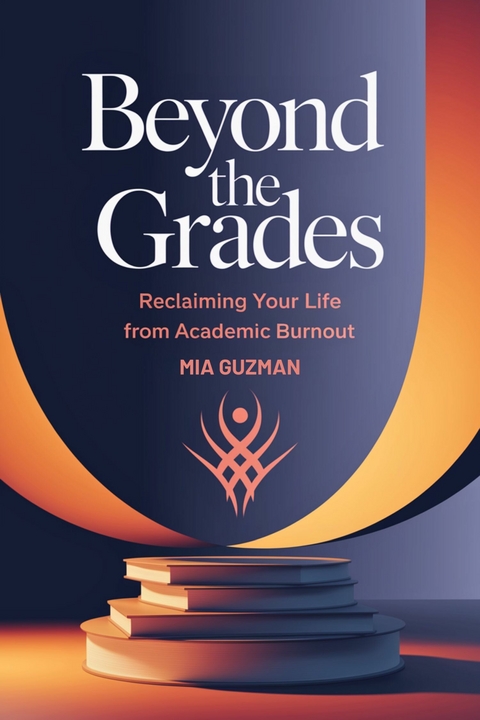
Beyond the Grades (eBook)
201 Seiten
JNR Publishing (Verlag)
978-0-00-113144-6 (ISBN)
Beyond the Grades: Reclaiming Your Life from Academic Burnout
By Mia Guzman
Step away from the pressure of grades and rediscover your passion for learning with “Beyond the Grades.” In this transformative guide, Mia Guzman shows you how to break free from the cycle of burnout and reclaim a balanced, fulfilling academic life.
Key Benefits & Features:
* Identify and overcome the hidden signs of academic burnout.
* Follow proven, step-by-step strategies to restore energy and focus.
* Utilize interactive self-assessment and reflection tools tailored for students.
* Learn practical techniques to improve study habits and reduce stress.
* Rebuild confidence with inspiring real-life examples and case studies.
* Experience a holistic approach that nurtures both academic performance and overall well-being.
* Embrace mindfulness and self-care practices that empower lasting change.
* Transform negative self-talk into a resilient, positive mindset.
* Gain the tools to turn academic challenges into opportunities for growth.
* Create a sustainable, balanced lifestyle that supports lifelong success.
Delve into in-depth chapters covering burnout identification, resilience training, actionable recovery strategies, and comprehensive self-care routines. Take the first step today—reclaim your life beyond the grades and unlock your full potential.
2
Chapter 1: Defining Academic Burnout: More Than Just Stress
Okay, let’s get down to brass tacks. What exactly is this thing called burnout, especially in the context of being a student? Is it just feeling tired after pulling an all-nighter? Is it the frustration of getting a bad grade on a paper you worked hard on? Is it the pre-exam jitters? While those experiences are definitely part of student life, and certainly not pleasant, they aren’t burnout in themselves. Burnout is deeper, more chronic, and more corrosive.
Pioneering researchers like Christina Maslach define burnout not just by one feeling, but as a syndrome characterized by three key dimensions. Understanding these dimensions is crucial for recognizing burnout and differentiating it from temporary stress.
1.1 The Burnout Triad: Emotional Exhaustion, Cynicism/Detachment, and Reduced Efficacy
Imagine a three-legged stool. If one leg is wobbly, the stool might still stand, but it’s unstable. If two legs are weak, it’s precarious. If all three legs give way, the stool collapses. Burnout works similarly, resting on these three core components:
1. Emotional Exhaustion: This is the feeling of being completely drained, depleted, and overextended. It’s not just physical tiredness; it’s an emotional fatigue where you feel you have nothing left to give. In an academic context, this might manifest as: * Feeling overwhelmed by your coursework, even tasks you used to handle easily. * Dreading going to class, labs, or study sessions. * Lacking the energy to engage emotionally with peers, professors, or even friends and family. * Feeling like you’re constantly running on fumes, with no chance to recharge. * Waking up tired, even after a full night’s sleep (if you can even get one).
Example: Sarah, a pre-med student, used to love her biology labs. Now, the thought of pipetting solutions and writing lab reports fills her with a profound sense of weariness. She drags herself there, goes through the motions, and feels utterly depleted by the end, lacking the energy to even chat with her lab partners.
2. Cynicism/Detachment (or Depersonalization): This dimension involves developing a negative, cynical, or excessively detached attitude towards your studies, your field, your peers, your instructors, or the academic institution itself. It’s a psychological distancing mechanism, a way to cope with the overwhelming demands or disillusionment. In academia, this can look like: * Losing enjoyment or interest in your subjects, even those you were once passionate about. * Feeling irritable or impatient with classmates, group project members, or professors. * Developing a “what’s the point?” attitude towards assignments or learning. * Referring to coursework or academic requirements in sarcastic or derogatory terms. * Feeling disconnected from the purpose or value of your education. * Seeing interactions with faculty or advisors as burdensome chores rather than opportunities.
Example: David, a history PhD candidate, initially loved archival research. Now, he finds himself internally mocking the historical figures he studies, rolling his eyes during seminars, and complaining bitterly about departmental requirements to anyone who will listen. He feels a growing distance from the passion that initially drew him to the field.
3. Reduced Efficacy (or Sense of Ineffectiveness/Diminished Accomplishment): This is the feeling that you’re no longer effective in your academic pursuits. It’s a sense of inadequacy, a lack of achievement, and a growing doubt in your own competence. Despite your efforts, you feel like you’re not making progress or accomplishing anything meaningful. This might show up as: * Feeling like your work doesn’t matter or isn’t good enough, regardless of actual grades or feedback. * Difficulty concentrating and experiencing decreased productivity. * Doubting your abilities and skills, even in areas where you previously excelled. * Feeling like you’re just “going through the motions” without real learning or contribution. * A persistent sense that you’re falling behind or failing, even if objective evidence suggests otherwise.
Example: Maria, a graphic design student, used to feel proud of her projects. Lately, even when she receives positive critiques, she dismisses them, feeling like she’s fooling everyone and that her work is fundamentally flawed. She spends hours staring at a blank screen, convinced she’s lost her creative spark and isn’t cut out for design.
It’s important to note that you might experience one dimension more strongly than others, or they might ebb and flow. However, the presence of all three, particularly over a sustained period, points strongly towards burnout. It’s this combination that makes burnout so debilitating, affecting not just your performance but your entire relationship with your academic life.
1.2 Distinguishing Burnout from Everyday Stress, Anxiety, and Depression
This is a critical distinction. While these states can overlap and even coexist (burnout can certainly increase the risk of anxiety and depression), they aren’t the same thing. Mislabeling burnout as “just stress” can prevent you from seeking the right kind of help or implementing the most effective strategies.
Stress vs. Burnout:
- Stress is often characterized by over-engagement. You feel urgency, hyperactivity, and a sense of pressure. Problems feel overwhelming, but there’s still a belief that if you can just get things under control, you’ll be okay. Stress is often short-term, related to specific demands (e.g., exam week stress). It can even be motivating sometimes (think “eustress” or positive stress). Physically, it might manifest as tension, headaches, or stomach issues, but these often subside when the stressor is removed.
- Burnout, conversely, is characterized by disengagement. Instead of hyperactivity, you feel helplessness and hopelessness. Emotions are blunted, motivation evaporates, and you feel detached. Burnout is a chronic state resulting from prolonged, unresolved stress. It feels like emptiness, a loss of meaning, and a sense that nothing you do matters. The physical symptoms (like exhaustion) are often deeper and more persistent.
Think of it this way: Stress is like drowning in responsibilities, while burnout is like being all dried up. Stress involves too much; burnout involves not enough (energy, motivation, care).
Anxiety vs. Burnout:
- Anxiety often involves excessive worry, fear, and apprehension, frequently focused on future events or potential negative outcomes. Physical symptoms like rapid heartbeat, sweating, trembling, and restlessness are common. While stress can trigger anxiety, anxiety disorders are distinct conditions often involving persistent, irrational fears that interfere with daily life. Someone with anxiety might be hyper-aware and hyper-vigilant.
- Burnout, while potentially co-occurring with anxiety, is primarily rooted in exhaustion, cynicism, and inefficacy related to the specific domain (in this case, academics). While someone experiencing burnout might feel anxious about their performance, the core feeling is often one of depletion and detachment rather than active fear or worry about everything.
Depression vs. Burnout:
- Depression is a mood disorder characterized by pervasive low mood, loss of interest or pleasure in most activities (not just academics), feelings of guilt or worthlessness, changes in sleep or appetite, low energy, and potentially thoughts of death or suicide. Depression affects one’s entire outlook on life.
- Burnout is typically context-specific, initially tied to the source of the chronic stress (e.g., school). While burnout can certainly lead to depressive symptoms or increase vulnerability to depression, the core features of cynicism and inefficacy related to the specific domain (academics) are central. Someone might feel burned out from school but still find enjoyment in hobbies or social life (though severe burnout can bleed into other areas). However, the overlap can be significant, and distinguishing them often requires professional assessment. If you suspect depression, seeking help from a healthcare professional is crucial.
Why does this matter? Understanding the difference helps tailor the response. Managing acute stress might involve short-term coping mechanisms or tackling a specific project. Managing anxiety might require therapy (like CBT) or medication. Managing depression almost always requires professional intervention. Managing burnout involves addressing the root causes of chronic stress in the academic environment, rebuilding resources (energy, engagement, sense of efficacy), and implementing sustainable practices – which is precisely what this book aims to help you do.
1.3 The Spectrum of Burnout: Recognizing Mild, Moderate, and Severe Stages
Burnout isn’t an on/off switch. It’s more like a dimmer switch, progressing along a spectrum. Recognizing where you might fall on this spectrum can help you gauge the urgency and type of intervention...
| Erscheint lt. Verlag | 1.1.2026 |
|---|---|
| Sprache | englisch |
| Themenwelt | Sachbuch/Ratgeber ► Gesundheit / Leben / Psychologie ► Esoterik / Spiritualität |
| ISBN-10 | 0-00-113144-3 / 0001131443 |
| ISBN-13 | 978-0-00-113144-6 / 9780001131446 |
| Informationen gemäß Produktsicherheitsverordnung (GPSR) | |
| Haben Sie eine Frage zum Produkt? |
 EPUB (Adobe DRM)
Größe: 1,7 MB
Kopierschutz: Adobe-DRM
Adobe-DRM ist ein Kopierschutz, der das eBook vor Mißbrauch schützen soll. Dabei wird das eBook bereits beim Download auf Ihre persönliche Adobe-ID autorisiert. Lesen können Sie das eBook dann nur auf den Geräten, welche ebenfalls auf Ihre Adobe-ID registriert sind.
Details zum Adobe-DRM
Dateiformat: EPUB (Electronic Publication)
EPUB ist ein offener Standard für eBooks und eignet sich besonders zur Darstellung von Belletristik und Sachbüchern. Der Fließtext wird dynamisch an die Display- und Schriftgröße angepasst. Auch für mobile Lesegeräte ist EPUB daher gut geeignet.
Systemvoraussetzungen:
PC/Mac: Mit einem PC oder Mac können Sie dieses eBook lesen. Sie benötigen eine
eReader: Dieses eBook kann mit (fast) allen eBook-Readern gelesen werden. Mit dem amazon-Kindle ist es aber nicht kompatibel.
Smartphone/Tablet: Egal ob Apple oder Android, dieses eBook können Sie lesen. Sie benötigen eine
Geräteliste und zusätzliche Hinweise
Buying eBooks from abroad
For tax law reasons we can sell eBooks just within Germany and Switzerland. Regrettably we cannot fulfill eBook-orders from other countries.
aus dem Bereich