PTSD Path Beyond Pain (eBook)
171 Seiten
JNR Publishing (Verlag)
978-0-00-113127-9 (ISBN)
Find Your Way Back: A Compassionate Guide to Healing from Trauma
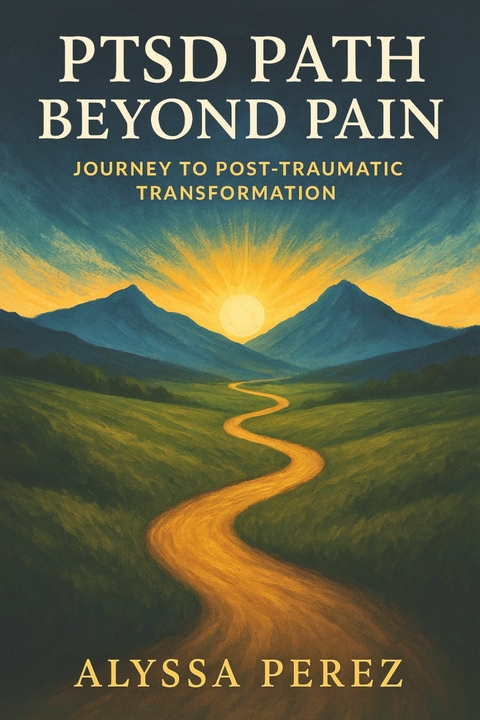
Living with Post-Traumatic Stress Disorder (PTSD) can feel like being trapped in a cycle of past pain, hypervigilance, and emotional exhaustion. In PTSD Path Beyond Pain, Alyssa Perez offers a gentle yet powerful roadmap for those seeking to reclaim their lives from the grip of trauma.
This comprehensive guide moves beyond clinical definitions to provide real-world strategies for emotional regulation and long-term recovery. Whether you are dealing with recent trauma or have been struggling for years, this book provides the tools necessary to move from surviving to thriving.
Inside, you will discover:
* Proven techniques for managing flashbacks, anxiety, and intrusive thoughts.
* The science of how trauma affects the brain and body—and how to heal both.
* Practical exercises for mindfulness, grounding, and distress tolerance.
* Strategies for rebuilding trust in yourself and your relationships.
* A step-by-step approach to developing a personalized resilience plan.
Healing is not a linear journey, but it is possible. Let PTSD Path Beyond Pain be your companion as you navigate the complexities of recovery and rediscover your strength. Take the first step toward a future no longer defined by your past.
4
Chapter 2: Unpacking the Trauma
Alright, let’s roll up our sleeves. Chapter 1 was about understanding the potential for transformation, the light at the end of the tunnel. This chapter is about acknowledging the tunnel itself. Before we can truly transform the impact of trauma, we need to understand its shape, its texture, its weight. “Unpacking” is the right word here – it suggests carefully taking things out, looking at them, understanding what they are, rather than just dumping everything on the floor in a chaotic mess (though sometimes it feels like that initially!).
This process isn’t about dwelling unnecessarily on the past or getting stuck in the pain. It’s about clarity. It’s like needing to understand the nature of an injury before you can effectively treat it. Trying to heal without understanding what needs healing is like trying to navigate a dark room – you might bump into things, get frustrated, and maybe even hurt yourself more. Turning on the light, even if what you see is difficult, allows you to move with more awareness and intention. This chapter is about turning on that light, gently and compassionately.
Identifying the Traumatic Event(s)
First things first: what was the trauma? Sometimes this is glaringly obvious – a specific event like a car accident, a natural disaster, a physical assault, or combat experience. The date, time, and place might be seared into your memory.
But often, it’s not so clear-cut.
- Complex or Relational Trauma: Trauma isn’t always a single, isolated incident. It can be ongoing, repeated exposure to abuse, neglect, domestic violence, or profound emotional invalidation, especially during childhood. This is often called Complex PTSD (C-PTSD). Because it was woven into the fabric of daily life, it can be harder to pinpoint as “trauma.” It might have felt “normal” at the time, or you might have been told it wasn’t a big deal.
- Childhood Trauma: Events that happen when we are young and dependent on caregivers for survival have a particularly profound impact. This can include physical, emotional, or sexual abuse, neglect (failure to provide basic physical or emotional needs), witnessing violence, or growing up in a chaotic or unsafe environment. The child’s developing brain adapts to survive, but these adaptations can cause problems later in life.
- Betrayal Trauma: This occurs when the person or institution that hurt you was someone you depended on for safety and survival – a parent, caregiver, partner, trusted leader, or institution. The violation of trust adds another layer of deep pain and confusion.
- Less Obvious Traumas: Sometimes events aren’t immediately recognized as traumatic but can still have a lasting impact. This might include serious medical procedures (especially in childhood), the sudden death of a loved one, a difficult breakup or divorce, job loss, bullying, or experiencing systemic oppression like racism or homophobia.
The Subjectivity of Trauma: It’s crucial to understand that trauma is less about the objective facts of the event and more about your subjective experience of it. Two people can go through the exact same event, and one might be traumatized while the other isn’t, or they might be traumatized in different ways. What makes an event traumatic is its capacity to overwhelm your ability to cope, shattering your sense of safety and control. If you felt helpless, terrified, or that your life (or the life of someone else) was in danger, it likely registered as trauma in your nervous system, regardless of how someone else might label it.
So, identifying the trauma involves looking back, perhaps with new eyes, and acknowledging the events or circumstances that overwhelmed your coping capacity. It might be one big T (Trauma) or a series of smaller t’s (traumas) that accumulated over time. Give yourself permission to name it, even if only to yourself right now. Your experience is valid.
Example: Sarah always felt vaguely anxious and had trouble trusting people, but she couldn’t point to one “big” traumatic event. In therapy, exploring her childhood, she realized her parents, while providing food and shelter, were emotionally unavailable and highly critical. There was constant tension, unpredictable yelling, and a sense that she could never do anything right. While there was no overt physical abuse, the chronic emotional neglect and invalidation constituted a form of complex trauma that profoundly shaped her sense of self and her ability to form secure relationships. Identifying this “invisible” trauma was the first step in understanding her present-day struggles.
Exploring the Emotional Impact
Trauma doesn’t just happen to us; it happens inside us. The emotional aftermath can feel like a tsunami – powerful, unpredictable, and overwhelming. Or sometimes, paradoxically, it can feel like a vast, empty desert – a profound lack of feeling. There’s no “right” way to feel after trauma.
Common emotional responses include:
- Fear and Anxiety: A pervasive sense of dread, hypervigilance (being constantly on edge), panic attacks, specific phobias related to the trauma. The world no longer feels safe.
- Anger and Irritability: Rage at the perpetrator, at the injustice, at the world, or even at yourself. This can manifest as outbursts, simmering resentment, or general irritability.
- Sadness and Grief: Mourning the losses associated with the trauma – loss of safety, loss of innocence, loss of trust, loss of the life you had before, loss of loved ones. Deep sadness and despair are common.
- Shame and Guilt: Feeling inherently flawed, damaged, or dirty because of what happened. Guilt might involve blaming yourself for the event (“I should have fought back,” “I shouldn’t have been there”) or survivor’s guilt (“Why did I survive when others didn’t?”). Shame often feels like “I am bad,” while guilt feels like “I did something bad.”
- Numbness and Detachment: Feeling emotionally flat, disconnected from others, or like you’re watching your life from the outside (dissociation). This is often a protective mechanism to avoid overwhelming pain, but it can interfere with connection and joy.
- Confusion: Difficulty concentrating, memory problems (especially regarding the trauma itself), feeling disoriented.
- Betrayal: A deep sense of having been violated by someone or something you trusted.
These emotions often don’t come one at a time. You might feel intense anger one moment, profound sadness the next, and then terrifying anxiety, or perhaps a confusing mix of all three. Sometimes, you might feel emotions that seem contradictory. It’s also common to experience secondary emotions – for example, feeling ashamed about feeling angry, or anxious about feeling numb.
Understanding the emotional impact means allowing yourself to acknowledge the presence of these feelings without judgment. They are natural responses to unnatural events. They are signals from your inner world trying to process what happened.
Example: After a serious car accident caused by a drunk driver, Mark experienced intense fear whenever he got into a car, especially at night. He also felt furious at the driver who had upended his life. Alongside this, he felt deep sadness for the physical capabilities he lost due to his injuries. Confusingly, he also felt guilty, wondering if he could have somehow avoided the crash, even though logically he knew it wasn’t his fault. Sometimes, he just felt numb, unable to connect with his family, which then made him feel ashamed. Recognizing this complex tapestry of emotions helped Mark understand he wasn’t “going crazy”; he was having a normal human reaction to trauma.
Understanding the Physiological Responses
Trauma isn’t just “in your head”; it’s deeply embedded in your body. When faced with a perceived threat, your nervous system kicks into survival mode. Dr. Stephen Porges’ Polyvagal Theory gives us a great map for this. Think of it like a ladder:
- Ventral Vagal (Safe & Social): At the top, you feel safe, connected, calm, and curious. Your body is relaxed, breathing is easy, you can connect with others. This is the state we ideally live in most of the time.
- Sympathetic (Mobilization - Fight/Flight): When danger is detected, you shift into this state. Adrenaline and cortisol flood your system. Your heart races, muscles tense, breathing quickens, digestion slows. You’re ready to either fight off the threat or run away from it. This is meant to be a short-term state.
- Dorsal Vagal (Immobilization - Freeze/Shutdown): If fighting or fleeing isn’t possible, or the threat is overwhelming, the system can slam on the brakes, leading to a state of freeze or collapse. You might feel numb, disconnected, heavy, exhausted, spaced out. This is the body’s oldest survival mechanism, conserving energy when escape seems impossible. Sometimes people describe feeling...
| Erscheint lt. Verlag | 1.1.2026 |
|---|---|
| Sprache | englisch |
| Themenwelt | Sachbuch/Ratgeber ► Gesundheit / Leben / Psychologie ► Esoterik / Spiritualität |
| ISBN-10 | 0-00-113127-3 / 0001131273 |
| ISBN-13 | 978-0-00-113127-9 / 9780001131279 |
| Informationen gemäß Produktsicherheitsverordnung (GPSR) | |
| Haben Sie eine Frage zum Produkt? |
 EPUB (Adobe DRM)
Größe: 2,1 MB
Kopierschutz: Adobe-DRM
Adobe-DRM ist ein Kopierschutz, der das eBook vor Mißbrauch schützen soll. Dabei wird das eBook bereits beim Download auf Ihre persönliche Adobe-ID autorisiert. Lesen können Sie das eBook dann nur auf den Geräten, welche ebenfalls auf Ihre Adobe-ID registriert sind.
Details zum Adobe-DRM
Dateiformat: EPUB (Electronic Publication)
EPUB ist ein offener Standard für eBooks und eignet sich besonders zur Darstellung von Belletristik und Sachbüchern. Der Fließtext wird dynamisch an die Display- und Schriftgröße angepasst. Auch für mobile Lesegeräte ist EPUB daher gut geeignet.
Systemvoraussetzungen:
PC/Mac: Mit einem PC oder Mac können Sie dieses eBook lesen. Sie benötigen eine
eReader: Dieses eBook kann mit (fast) allen eBook-Readern gelesen werden. Mit dem amazon-Kindle ist es aber nicht kompatibel.
Smartphone/Tablet: Egal ob Apple oder Android, dieses eBook können Sie lesen. Sie benötigen eine
Geräteliste und zusätzliche Hinweise
Buying eBooks from abroad
For tax law reasons we can sell eBooks just within Germany and Switzerland. Regrettably we cannot fulfill eBook-orders from other countries.
aus dem Bereich