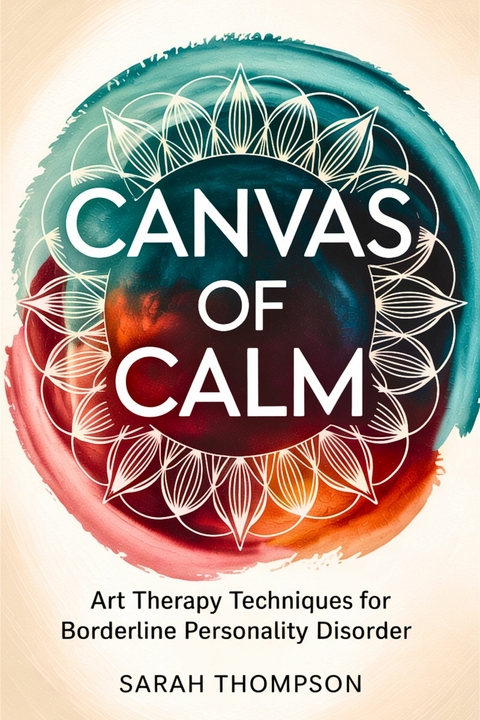
Canvas of Calm (eBook)
115 Seiten
JNR Publishing (Verlag)
978-0-00-113111-8 (ISBN)
Find Your Center in a Chaotic World.
In Canvas of Calm, acclaimed author Sarah Thompson provides a compassionate and practical roadmap for individuals seeking relief from the relentless pace of modern life. Specifically designed with the neurodiverse brain in mind, this book offers more than just standard meditation advice; it provides a comprehensive toolkit for emotional regulation and mental clarity.
Inside you will discover:
Science-backed mindfulness techniques adapted for ADHD and sensory sensitivities.
Practical strategies to identify and manage emotional triggers before they lead to burnout.
Guided exercises to cultivate a 'Canvas of Calm' within your daily environment.
Insightful ways to leverage neuroplasticity to build lasting resilience.
Holistic approaches to balancing productivity with essential self-care.
Whether you are navigating the challenges of a neurodiverse diagnosis or simply looking for effective ways to manage stress and anxiety, Canvas of Calm empowers you to reclaim your peace and live with intention.
Take the first step toward a more balanced and tranquil life today.
2
CHAPTER 1: UNDERSTANDING EMOTIONS IN BPD
Why We’re Talking About BPD
Borderline Personality Disorder, or BPD for short, is often described in dramatic terms, and sometimes with good reason. People with BPD can experience intense mood shifts that seem to erupt from nowhere; relationships can feel like a relentless tug-of-war between closeness and fear of abandonment; and self-image can morph like quicksand. However, BPD is not a character flaw or a moral failing. It’s a valid mental health condition that has gained substantial recognition among professionals and the public alike in recent years. It’s marked by a core difficulty in regulating emotions, an issue that can affect everything from how you handle a coworker’s mildly critical email to how you interpret a partner’s delayed text reply.
And guess what? You’re not alone in these struggles. BPD affects a significant portion of the population worldwide. The good news is that over the past few decades, clinicians and researchers have developed increasingly effective treatments—like Dialectical Behavior Therapy (DBT) and certain Cognitive Behavioral Therapy (CBT) approaches—to help people find balance, hope, and healthy ways of relating to themselves and others. While talk therapy remains indispensable, creative therapies have been making waves by complementing existing evidence-based treatments with a dash (or a big splash) of color, music, motion, and expressive writing.
Emotional Dysregulation: The “Heartbeat” of BPD
At the epicenter of BPD lies emotional dysregulation. Think of it like a radio dial that can’t quite land on the right frequency; you’ll either get blasted by screechy static or find yourself with an earful of mismatched tunes. This dysregulation leads to extreme emotional highs and lows that can transform a minor annoyance (someone forgot to text you back for half an hour) into an emotional earthquake (you feel abandoned, unloved, and ready to send 15 consecutive texts in a panic). It’s not about “overreacting.” It’s about having an emotional system that is wired differently, turning the emotional volume up to 11. The storms feel real because they are real—physically, emotionally, and even neurobiologically.
Now, if you’re reading this and thinking, “Yes, that’s me—I feel it in my bones,” know that there are specific reasons why your system responds so strongly. Some theories point to a combination of genetic predispositions, environmental factors, early attachments, or traumatic experiences that leave your emotion regulation hardware extra sensitive. Another key concept is that your fight-or-flight system might be hyperactive, making stressors loom bigger than they are for someone else. That’s all the more reason to bring in creative outlets that help you discharge some of that emotional build-up in constructive ways, rather than letting it blow up in your relationships or internal sense of self.
The Role of Hypersensitivity
When you have BPD, it can feel as though your emotional volume dial is locked on “max.” The slightest piece of criticism, or even a slightly grumpy tone of voice from a friend, can trigger massive waves of distress, self-doubt, or anger. Think of it like having skin that’s been sunburnt; a light pat on the back that might be okay for someone else can be excruciating to you.
This hypersensitivity can cause misunderstandings and tension in relationships. You might “read between the lines” in a text or an email, and conclude that someone is angry or disappointed, even if they genuinely aren’t. Sound familiar? Don’t worry—throughout this book, we’ll look at ways to channel that heightened emotional awareness into something productive and creative, rather than let it become a self-sabotaging force. Hypersensitivity can be your superpower if you learn how to handle it with compassion and skill.
Why Creativity Helps (A Teaser for the Magic!)
Allow me a short soapbox moment: creativity is not an optional extra in our lives, like nice throw pillows on the couch. It is essential. When you draw, paint, write, craft, or dance, you’re giving form to feelings that might otherwise implode inside of you. Emotions get externalized onto the page, the canvas, or your movement, making them more tangible and manageable. It’s like releasing steam from a pressure cooker. If you ignore the steam, well, you can imagine the messy kitchen explosion that might ensue.
In fact, neuroscientists have found that creative processes activate reward pathways in the brain, lead to improved mood, and even lower stress hormones. It can also forge new neural connections that support better emotion regulation. The best part? You don’t need to be Michelangelo to benefit. The power lies in the process, not the product. If you think your art or writing “looks terrible,” that’s okay. Release that perfectionism—no one is grading you here! The objective is to let your emotional energy find new forms of expression and transformation.
A Brief Peek at DBT and CBT Magic
Before we march on, let’s just mention that DBT (Dialectical Behavior Therapy) and CBT (Cognitive Behavioral Therapy) are proven approaches that revolve around identifying negative thought patterns, practicing more balanced ways of seeing the world, regulating emotions, and building healthier relationships. DBT, famously invented by psychologist Marsha Linehan, focuses on teaching specific skills in four areas: mindfulness, distress tolerance, emotion regulation, and interpersonal effectiveness. Meanwhile, CBT hones in on spotting “cognitive distortions” and reevaluating them in a more rational, less catastrophic light. Guess what? These approaches pair beautifully with art, journaling, and other expressive mediums.
If you’ve ever tried to talk your way out of a meltdown and found yourself stuck in the same hamster wheel, creative strategies might help you circumvent that loop by shifting from pure intellect to embodied, tangible, sensory-based engagement. That’s the big “aha” we’re going to explore in this workbook!
Using This Book: Where to Start and What to Expect
This big, juicy, expanded workbook is divided into parts that will guide you from basic concepts to advanced applications. Consider each part as a stepping stone across a beautiful stream. Some stepping stones might be slippery, and you’ll need a moment to find your balance. That’s normal. Just take things at your pace. If you find a particular activity too triggering, it’s okay to skip it for the moment—maybe come back later with more support from a therapist or trusted friend.
There will be chapters on setting up your personal art sanctuary (no, you don’t need a giant studio, just some dedicated corner or even a shoebox of supplies can do wonders), harnessing different creative modalities like writing, drawing, movement, and music, integrating DBT/CBT concepts into your creative practice, exploring trauma in a cautious but meaningful way, and continuing to maintain your new creative coping skills. I’ll even encourage you to collaborate with friends or in groups, if that’s your thing, so you can practice interpersonal effectiveness while having a paintbrush in your hand.
And, for the icing on the cake, we’ll close with appendices that share extra prompts, reading lists, safety resources, and possible future directions for your creative growth. You’ll see, we’ve got it all covered (and if we don’t, you might well have improvised a brand-new method by the time you’re done—congratulations!).
At the Heart of It All: A Note on Emotional Safety
Emotional safety is the foundation of this journey. Please, please remember: if at any point you find yourself overwhelmed, triggered, or in a state of distress that feels too big to handle alone, pause. Close the workbook. Do some grounding exercises—like deep breathing, holding an ice cube, feeling your feet on the floor—and reach out to someone you trust. That might be a therapist, a hotline, or a close friend who understands your struggles. If you’re in therapy, let your therapist know which exercises you’re attempting here. Support is everything, folks!
It’s okay to give yourself permission to rest, to skip or postpone an exercise, or to do it in smaller chunks. Healing is not a race. It’s a carefully navigated process, unique to each person, and definitely not meant to be forced or rushed.
Exercise (Optional) – My Personal “Why”
At the end of each chapter, I’d like to give you a chance to put these ideas into practice. Here’s a brief one to kick us off:
Exercise: Take 10-15 minutes to write, doodle, or create a mini collage around the question: “Why do I want to explore creative methods for regulating my emotions?” You might use words, images, symbols—whatever feels meaningful. Let your heart speak; nobody’s grading or criticizing your approach. Then, reflect on how you feel afterward. Did you notice any shifts in your emotional state?
This exercise or brief reflection can serve as your personal manifesto—a small declaration to yourself about why you’re embarking on this creative healing journey. Keep it somewhere you can revisit when motivation flags or emotional turbulence strikes. It can...
| Erscheint lt. Verlag | 1.1.2026 |
|---|---|
| Sprache | englisch |
| Themenwelt | Sachbuch/Ratgeber ► Gesundheit / Leben / Psychologie ► Esoterik / Spiritualität |
| ISBN-10 | 0-00-113111-7 / 0001131117 |
| ISBN-13 | 978-0-00-113111-8 / 9780001131118 |
| Informationen gemäß Produktsicherheitsverordnung (GPSR) | |
| Haben Sie eine Frage zum Produkt? |
 EPUB (Adobe DRM)
Größe: 2,1 MB
Kopierschutz: Adobe-DRM
Adobe-DRM ist ein Kopierschutz, der das eBook vor Mißbrauch schützen soll. Dabei wird das eBook bereits beim Download auf Ihre persönliche Adobe-ID autorisiert. Lesen können Sie das eBook dann nur auf den Geräten, welche ebenfalls auf Ihre Adobe-ID registriert sind.
Details zum Adobe-DRM
Dateiformat: EPUB (Electronic Publication)
EPUB ist ein offener Standard für eBooks und eignet sich besonders zur Darstellung von Belletristik und Sachbüchern. Der Fließtext wird dynamisch an die Display- und Schriftgröße angepasst. Auch für mobile Lesegeräte ist EPUB daher gut geeignet.
Systemvoraussetzungen:
PC/Mac: Mit einem PC oder Mac können Sie dieses eBook lesen. Sie benötigen eine
eReader: Dieses eBook kann mit (fast) allen eBook-Readern gelesen werden. Mit dem amazon-Kindle ist es aber nicht kompatibel.
Smartphone/Tablet: Egal ob Apple oder Android, dieses eBook können Sie lesen. Sie benötigen eine
Geräteliste und zusätzliche Hinweise
Buying eBooks from abroad
For tax law reasons we can sell eBooks just within Germany and Switzerland. Regrettably we cannot fulfill eBook-orders from other countries.
aus dem Bereich