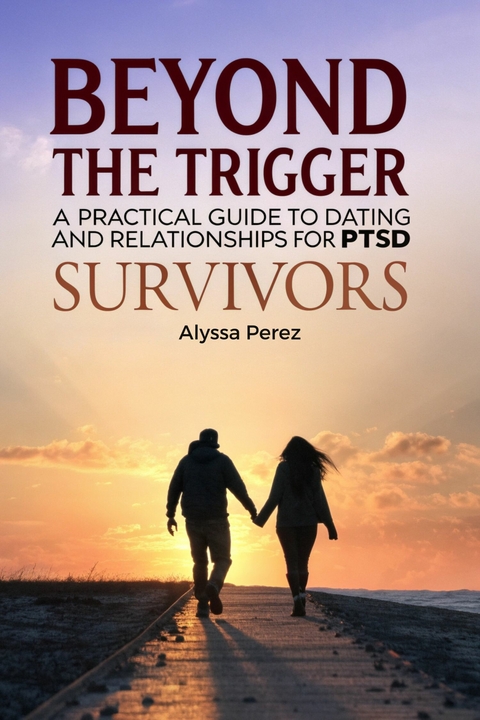
Beyond the Trigger (eBook)
131 Seiten
JNR Publishing (Verlag)
978-0-00-113094-4 (ISBN)
Are dating triggers hijacking your chance at connection?
If you're a PTSD survivor, the vulnerability of dating can feel like walking through a known danger zone. Sudden anxiety, mistrust, flashbacks, or feeling numb can derail even promising connections, leaving you feeling exhausted and hopeless.
Beyond the Trigger offers a practical and compassionate guide specifically for you. Alyssa Perez acknowledges the reality of living with an internal alarm system that is hardwired for threat, often misfiring in moments of potential intimacy. This book moves past simple trigger warnings into actionable strategies for understanding, managing, and ultimately moving beyond them in the context of dating and relationships.
Learn how to navigate the dating landscape with more confidence and less fear. Discover techniques to ground yourself, communicate effectively, and build the secure, loving connection you deserve, without letting triggers call all the shots.
This isn't about erasing your past or pretending triggers don't exist.
It's about equipping yourself with the tools to lessen their power and reclaim your ability to connect authentically. Beyond the Trigger blends understanding of PTSD's neurological impact with practical, real-world relationship skills.
In this essential guide, you will find:
Clear explanations of how common PTSD symptoms (hypervigilance, dissociation, intrusion) manifest in dating scenarios.In-the-moment grounding techniques to use when triggered during a date or intimate encounter.Scripts and strategies for explaining triggers and needs to a potential partner without oversharing too soon.Guidance on differentiating between a trauma response and a genuine incompatibility or red flag.Exercises to rebuild trust and foster emotional safety within a developing relationship.Insights into how techniques like Written Exposure Therapy (WET) can help process underlying trauma impacting your relationships.Practical steps for cultivating self-compassion when setbacks inevitably occur.How to move towards secure attachment patterns and build lasting, healthy intimacy.
Stop letting the fear of the next trigger keep you isolated. Beyond the Trigger provides the practical steps and compassionate support needed to build relationships that honor both your past experiences and your future hopes.
Ready to date with more peace and confidence? Order your copy now and start your journey beyond the trigger today!
4
Chapter 2: Assessing Your Readiness: Are You Prepared to Date?
Okay, so we’ve established that PTSD throws some serious curveballs into the dating game. Seeing those challenges laid out might feel a bit daunting. You might be thinking, “Given all that, should I even be trying to date? Am I ‘ready’?”
This is a valid and important question. But let’s reframe it slightly. The goal isn’t to reach some mythical state of being “completely healed” or “PTSD-free” before you’re “allowed” to seek connection. Healing is not linear, and waiting for perfection is a recipe for perpetual waiting. Instead, readiness is about assessing your current capacity, resources, and intentions in a realistic and self-compassionate way. It’s about asking: “Do I have enough stability and tools right now to navigate the potential stresses of dating without significantly destabilizing my recovery?”
It's Not About Being "Cured": Defining Readiness on Your Terms
Let’s bust a myth right here: You do not need to be symptom-free to date. Many people with ongoing PTSD symptoms build fulfilling, healthy relationships. Readiness isn’t an endpoint; it’s a starting point based on self-awareness and preparation.
Think of it like deciding whether you’re ready to start training for a 5k race. You don’t wait until you can already run the full distance effortlessly. You assess your current fitness level, make sure you have decent running shoes (your coping skills!), and commit to a training plan (your dating strategy). You expect some aches and pains (triggers and setbacks) along the way, but you feel equipped to manage them and keep progressing.
Readiness for dating with PTSD means:
- You have a basic understanding of your trauma triggers and PTSD symptoms.
- You possess some coping skills to manage distress when it arises (even if they’re not perfect).
- You have a degree of stability in other areas of your life (e.g., housing, work, basic self-care).
- You have realistic expectations about the ups and downs of dating.
- You have some form of support system in place.
- You are choosing to date from a place of wanting connection, not just desperation or external pressure.
Readiness is fluid. You might feel ready one month and need to pull back the next due to increased life stress or a symptom flare-up. That’s okay. It’s about checking in with yourself honestly and regularly.
Checking In: Current Symptom Management and Stability
Let’s get practical. How are you actually doing right now? Consider these areas:
- Symptom Frequency and Intensity: Are your PTSD symptoms (flashbacks, panic attacks, severe dissociation, intense mood swings) currently overwhelming you daily? Are they so intense that they significantly impair your ability to function in basic life tasks? If you’re in a period of acute crisis, actively destabilized, or just beginning intensive trauma processing therapy, it might be wise to focus on stabilization first before adding the stress of dating. However, if your symptoms are present but generally manageable with your current coping strategies, dating might be feasible.
- Coping Skills: Do you have go-to strategies when you feel triggered or overwhelmed? These could include grounding techniques, breathing exercises, mindfulness, reaching out to support, physical activity, journaling, etc. (We’ll cover these more in Chapter 5). You don’t need a PhD in coping, but you need something in your toolkit besides avoidance or shutting down. Are you able to use these skills with some consistency?
- Basic Functioning: Are you generally able to manage daily responsibilities like work or school (if applicable), basic hygiene, feeding yourself, and maintaining your living space? If these basics feel overwhelming, adding the emotional energy required for dating might be too much right now.
- Self-Care: Are you engaging in any activities that nourish you, however small? Getting enough sleep (as much as possible with PTSD)? Eating relatively balanced meals? Moving your body occasionally? Basic self-care provides the foundation of resilience needed to handle dating stress.
- Current Stress Levels: Are you dealing with other major life stressors right now (e.g., job loss, illness, grief, financial crisis, legal battles)? Dating requires emotional bandwidth. If your bandwidth is already maxed out, consider waiting until things calm down a bit.
This isn’t about judging yourself. It’s about an honest assessment of your current capacity. If you feel like you’re barely keeping your head above water, adding dating might feel like being tossed an anchor. If you feel like you’re treading water and have a life vest (coping skills) and maybe a floatie (support system), you might be ready to start paddling towards the shore of connection.
Identifying Your "Why": What are you seeking in a connection?
Why do you want to date? Your motivation matters. Explore your underlying reasons:
- Are you seeking companionship and shared experiences?
- Are you hoping for emotional intimacy and mutual support?
- Are you interested in exploring physical intimacy in a safe context?
- Are you looking for fun and lighthearted connection?
- Are you hoping a relationship will “fix” you or make your PTSD go away? (Spoiler: it won’t, though a supportive partner can help).
- Are you feeling pressured by friends, family, or societal expectations?
- Are you trying to avoid loneliness at all costs, even if it means settling?
- Are you seeking validation or trying to prove you’re “normal”?
Be honest with yourself. Dating is more likely to be a positive experience if your “why” comes from a place of genuine desire for connection and growth, rather than solely from a place of fear, obligation, or trying to escape yourself. Wanting to not be lonely is a valid human need, but if it’s the only driver, it can lead to overlooking red flags or accepting unhealthy dynamics.
Knowing your “why” helps you stay grounded and make choices aligned with your values. If you’re primarily seeking fun and companionship, you might approach dating differently than if you’re seeking a deeply committed long-term partnership right now.
Resource Check: Do You Have Adequate Support?
Navigating dating with PTSD is rarely a solo mission. Having support is crucial for processing experiences, getting reality checks, and receiving encouragement.
- Therapy: Are you currently working with a therapist, particularly one knowledgeable about trauma? Therapy provides a safe space to explore fears, process triggers related to dating, practice communication skills, and challenge negative beliefs. If you’re not in therapy, is it something you could access or consider? (See Appendix D for resources). Group therapy for trauma survivors can also be incredibly validating.
- Friends and Family: Do you have trusted friends or family members you can talk to? People who listen without judgment, offer encouragement, and respect your boundaries? Identify who these people are. It’s important they are genuinely supportive, not people who dismiss your feelings, pressure you, or offer unsolicited, unhelpful advice (“Just get over it!”).
- Support Groups: Peer support groups (online or in-person) for trauma survivors can be invaluable. Connecting with others who “get it” reduces isolation and provides a space to share experiences and coping strategies related to dating and relationships.
- Self-Care Routines: Consider your self-care practices part of your support system. These are the things you do for yourself to recharge and regulate.
If your support system feels thin, consider strengthening it before or while you start dating. This might involve reconnecting with supportive friends, seeking therapy, finding a support group, or intentionally building new connections through hobbies or activities (more on this in Chapter 6). You need people in your corner.
Self-Assessment Exercise: Readiness Checklist
Read the following statements and reflect honestly on where you stand right now. This isn’t a test with a pass/fail grade, but a tool for self-reflection. Use a scale like: (1) Not at all, (2) Somewhat, (3) Mostly, (4) Definitely.
- I have a basic understanding of how my PTSD symptoms (like triggers, avoidance, hypervigilance) might show up in dating situations. (1-4)
- I have at least 1-2 coping skills I can try to use when I feel overwhelmed or triggered (e.g., breathing, grounding, taking space). (1-4)
- I am generally able to manage my basic daily responsibilities (work/school, hygiene, meals). (1-4)
- I am engaging in some form of basic self-care, even if small. (1-4)
- My overall life stress level feels manageable enough to add something new like dating. (1-4)
- My primary motivation for dating comes from a desire for connection/growth, not just...
| Erscheint lt. Verlag | 27.12.2025 |
|---|---|
| Sprache | englisch |
| Themenwelt | Sachbuch/Ratgeber ► Gesundheit / Leben / Psychologie ► Esoterik / Spiritualität |
| ISBN-10 | 0-00-113094-3 / 0001130943 |
| ISBN-13 | 978-0-00-113094-4 / 9780001130944 |
| Informationen gemäß Produktsicherheitsverordnung (GPSR) | |
| Haben Sie eine Frage zum Produkt? |
 EPUB (Adobe DRM)
Größe: 1,8 MB
Kopierschutz: Adobe-DRM
Adobe-DRM ist ein Kopierschutz, der das eBook vor Mißbrauch schützen soll. Dabei wird das eBook bereits beim Download auf Ihre persönliche Adobe-ID autorisiert. Lesen können Sie das eBook dann nur auf den Geräten, welche ebenfalls auf Ihre Adobe-ID registriert sind.
Details zum Adobe-DRM
Dateiformat: EPUB (Electronic Publication)
EPUB ist ein offener Standard für eBooks und eignet sich besonders zur Darstellung von Belletristik und Sachbüchern. Der Fließtext wird dynamisch an die Display- und Schriftgröße angepasst. Auch für mobile Lesegeräte ist EPUB daher gut geeignet.
Systemvoraussetzungen:
PC/Mac: Mit einem PC oder Mac können Sie dieses eBook lesen. Sie benötigen eine
eReader: Dieses eBook kann mit (fast) allen eBook-Readern gelesen werden. Mit dem amazon-Kindle ist es aber nicht kompatibel.
Smartphone/Tablet: Egal ob Apple oder Android, dieses eBook können Sie lesen. Sie benötigen eine
Geräteliste und zusätzliche Hinweise
Buying eBooks from abroad
For tax law reasons we can sell eBooks just within Germany and Switzerland. Regrettably we cannot fulfill eBook-orders from other countries.
aus dem Bereich