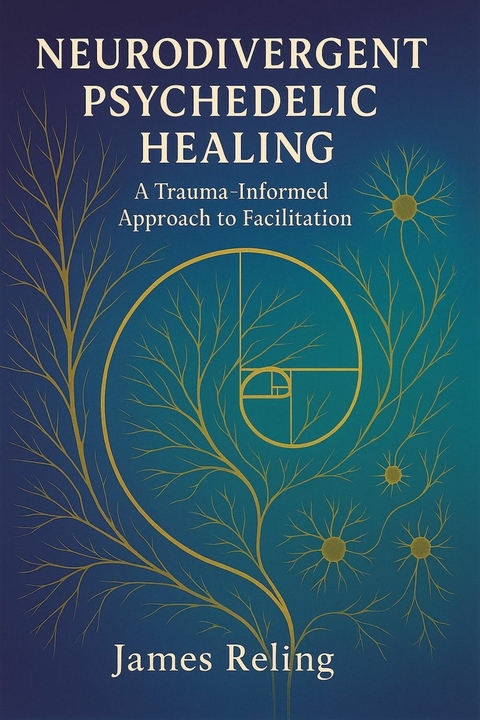
Neurodivergent Psychedelic Healing (eBook)
288 Seiten
Bookbaby (Verlag)
979-8-3178-1579-0 (ISBN)
James Reling is a licensed professional counselor based in Oregon who specializes in somatic psychotherapy and Autism/ADHD assessments for neurodivergent adults. He is certified as a trauma-informed Somatic Experiencing® Practitioner and trained in Hakomi, a mindfulness-centered approach to body-based psychotherapy. James holds a dual master's degree in Mental Health Counseling and Clinical Rehabilitation Counseling, focusing on supporting people with disabilities. He is also a graduate of the InnerTrek Psilocybin Facilitator Training program in Oregon, one of the first state-licensed programs for psilocybin services in the United States. With a professional background that bridges clinical expertise and lived experience, James approaches psychedelic healing through a trauma-informed and neurodiversity-affirming lens. His work integrates body awareness, emotional attunement, and systems thinking with deep respect for how people process, heal, and make meaning. In his practice, he creates supportive, adaptive environments that honor individual needs and cultivate safety, curiosity, and self-discovery. Through his writing, teaching, and facilitation, James is committed to expanding the accessibility of psychedelic healing and helping others engage these experiences with intention, care, and dignity.
A practical guide to creating safe, adaptive, and inclusive psychedelic healing spaces for neurodivergent adults. Psychedelic healing offers profound possibilities for transformation, yet for Autistic, ADHD, and other neurodivergent people, traditional approaches can miss the mark or even be traumatizing. Sensory sensitivities, communication differences, executive function, and pacing needs often go unaddressed, leaving clients feeling unsafe or unseen. Neurodivergent Psychedelic Healing: A Trauma-Informed Approach to Facilitation bridges that gap with perspectives, tools, and accommodations designed to honor the full spectrum of human neurodiversity. Written by licensed professional counselor James Reling, a certified Somatic Experiencing Practitioner with extensive experience in neurodivergent assessment and therapy, this book integrates trauma-informed principles, somatic psychotherapy, and a neurodiversity-affirming lens. It offers both the "e;why"e; and the "e;how"e; of adapting psychedelic facilitation, from preparation to journey to integration, so clients can fully engage the process in ways that feel safe, supportive, and empowering. Inside, you'll find:The four core principles of neurodiversity-affirming psychedelic care and how to apply them in any settingStrategies for accommodating sensory, cognitive, and emotional differences at every stage of psychedelic workApproaches to informed consent, pacing, and transitions that reduce overwhelm and build trustGuidance for music, movement, and communication choices that reflect diverse processing stylesSupport for navigating neurodivergent burnout and its impact on readiness for psychedelic workPractical tools for assessing and planning accommodations in collaboration with clientsMethods for adapting preparation, journey, and integration to meet individual needsTechniques for creating safe, sensory-aware spaces during and after the psychedelic experienceConsiderations for facilitating group psychedelic work with neurodivergent participantsCase studies that illustrate these principles in real-world practiceAdvocacy and ethical frameworks for promoting neurodivergent inclusion in psychedelic careWorksheets, checklists, and facilitator reflection prompts for ongoing growth and skill-building. Accessible to licensed therapists, ceremonial space-holders, underground guides, and curious learners alike, Neurodivergent Psychedelic Healing invites facilitators to move beyond one-size-fits-all methods toward an adaptive, relationship-centered approach. Reling shows how adapting your existing practice to meet neurodivergent needs is not only possible, but a pathway to deeper connection, richer meaning-making, and more transformative outcomes for all clients. Whether you are an experienced facilitator or new to psychedelic support, this book will expand your toolkit, challenge your assumptions, and help you create environments where every client, neurodivergent or not, can enter the journey with agency, safety, and dignity.
Introduction: Creating an Inclusive Path to Psychedelic Healing
Psychedelic healing is about connection to oneself, to others, to the world, and to something greater. Intentionality creates openings for authenticity, self-discovery, and transformation by softening the barriers that often keep people from fully benefiting from medicine work.
Neurodivergent people often navigate challenges shaped not only by their internal differences, but also by systems and spaces never built with them in mind. Let’s build a world that truly reflects the truth: healing belongs to everyone.
As interest in psychedelic healing expands, the field is rapidly evolving. Psychedelic-assisted healing and facilitated medicine journeys are becoming recognized as powerful tools for addressing trauma, depression, anxiety, and existential distress. And yet, these clinical outcomes may only reflect a fraction of what these medicines make possible. The ability of these medicines to foster deep introspection, emotional release, and a connection to something larger is supported by growing research and lived experience. For many, psychedelic experiences offer relief from long-standing suffering and an opportunity to rewire deeply held patterns of thought, emotion, and behavior.
For neurodivergent individuals, *Autistic, ADHD, those with sensory processing differences, and others with cognitive variations, accessing healing in conventional spaces often comes with extra barriers. Many therapeutic models, including those used in psychedelic facilitation, are designed around neurotypical norms. As a result, neurodivergent people are often left to navigate systems that may feel mismatched, overwhelming, or inaccessible.
When facilitators adapt their approach to honor a wider range of needs, the burden no longer falls on clients to mask, translate, or fit in. True accessibility invites us to create spaces that respect and affirm the many ways people experience consciousness, embodiment, emotion, and connection.
*‘Autistic’ and ‘Autism’ are capitalized throughout this text to reflect their use as cultural and identity terms, in alignment with many self-advocates and neurodiversity-affirming communities.
Why This Book Matters
The psychedelic healing movement is still in its early stages of mainstream adoption. Training in neurodiversity-affirming techniques is still lacking for many facilitators. Often, therapists and guides may not realize when a client is masking, overwhelmed, or unable to communicate their needs directly.
This can lead to moments of sensory overload, communication breakdown, or emotional withdrawal during the healing process. These are not signs of personal failure. They are openings to deepen awareness and expand the capacity to care. Most people called to this work bring enormous compassion and presence. By learning more about neurodivergent experiences, facilitators can develop practices that are safer, more inclusive, and better attuned to those they serve.
What You’ll Find in This Book
This book offers guidance for facilitators, therapists, sitters, and psychedelic practitioners who want to create affirming, accessible healing spaces. It follows the full arc of a psychedelic experience (from intake to integration) through the lens of neurodivergent support.
Topics include:
Layout of book:
Each chapter builds upon the last, beginning with foundational values, tools, and expanding into specific areas of facilitator education and client support.
After introducing the core principles in Chapter 1, the book moves into essential background knowledge in Chapters 2 and 3, highlighting common neurodivergent traits, strengths, challenges, and communication patterns, along with skills facilitators can cultivate to offer inclusive and affirming care.
Chapters 4 through 6 explore how trauma, burnout, and medical complexity intersect with neurodivergence in the context of psychedelic work. These chapters also outline ways to adapt preparation, dosing, and safety protocols accordingly.
Chapter 7 shares practices centered on interoception, mindfulness, and embodied awareness. Chapter 8 introduces practical tools and assessments facilitators can use to determine client-specific accommodations.
In chapters 9 to 15, the focus shifts to the structure of the facilitation process itself, from intake and preparation to the journey, comedown, and integration. These chapters provide concrete tools, examples, and sample scripts for adjusting language, pacing, environment, and relational dynamics to meet diverse needs. A dedicated chapter also explores best practices for supporting neurodivergent participants in group psychedelic settings.
Chapter 16 offers real-world derived composite case studies to help bring the concepts of this book to life.
Chapter 17 closes the main body of the book by addressing advocacy, policy, and the ethical responsibilities of psychedelic facilitators in creating accessible systems of care.
The book concludes with a collection of printable tools and resources, including a client accommodations worksheet, reading list, and a robust glossary of terms. These materials are designed to be referenced again and again as you grow your practice.
This is not a book to be read all at once or in perfect order. You are invited to begin wherever your curiosity calls. Whether you are just getting started or refining years of practice, may this be a companion to your learning, unlearning, and remembering.
Although this book centers on neurodivergent clients, the approaches offered tend to benefit nearly everyone. Clear communication, sensory-aware design, and flexible structures create conditions where depth of healing becomes more accessible. Without these adaptations, we risk reserving transformative experiences only for those whose nervous systems already match the default mold. Inclusive practices widen the circle, making space for more bodies, more ways of processing, and more ways of being to fully participate in the healing process.
Let’s imagine, together, what it means to hold space for the full diversity of human minds.
A Note about Limitations of this Book
This book is primarily about supporting neurodivergent people with lower support needs, those who are often able to live independently, communicate effectively, and self-direct their healing process, even if they face significant internal, cognitive, or sensory challenges. Many of the tools and accommodations shared here reflect the needs and experiences of individuals who have access to verbal or written communication, a high degree of agency, and relatively consistent motor control.
This book does not yet include focused guidance on working with neurodivergent individuals who also have intellectual disabilities, significant learning disabilities, or minimal motor control. These are important areas where more research, community wisdom, and lived-experience leadership are needed. At the time of writing, there is little available guidance on how to offer psychedelic support safely, ethically, and accessibly in these contexts.
I hope to revise and expand this work as those conversations deepen. Every neurodivergent person deserves access to healing spaces that recognize their full humanity, agency, and complexity. May this book be one step toward that broader vision.
About the Author
James Reling is a licensed professional counselor based in Oregon who specializes in somatic psychotherapy and Autism/ADHD assessments for neurodivergent adults. He is a certified Somatic Experiencing® Practitioner and has training in Hakomi, a mindfulness-centered approach to body-based psychotherapy.
James holds a dual master’s degree in Mental Health Counseling and Clinical Rehabilitation Counseling, with a focus on helping people with disabilities. He is also a graduate of the InnerTrek Psilocybin Facilitator Training program in Oregon.
His approach to psychedelic healing is grounded in both lived experience, formal training, and clinical practice. Drawing on a trauma-informed and neurodiversity-affirming lens, James integrates body awareness,...
| Erscheint lt. Verlag | 26.9.2025 |
|---|---|
| Sprache | englisch |
| Themenwelt | Sachbuch/Ratgeber ► Gesundheit / Leben / Psychologie ► Esoterik / Spiritualität |
| ISBN-13 | 979-8-3178-1579-0 / 9798317815790 |
| Informationen gemäß Produktsicherheitsverordnung (GPSR) | |
| Haben Sie eine Frage zum Produkt? |
 EPUB (Ohne DRM)
Größe: 1,1 MB
Digital Rights Management: ohne DRM
Dieses eBook enthält kein DRM oder Kopierschutz. Eine Weitergabe an Dritte ist jedoch rechtlich nicht zulässig, weil Sie beim Kauf nur die Rechte an der persönlichen Nutzung erwerben.
Dateiformat: EPUB (Electronic Publication)
EPUB ist ein offener Standard für eBooks und eignet sich besonders zur Darstellung von Belletristik und Sachbüchern. Der Fließtext wird dynamisch an die Display- und Schriftgröße angepasst. Auch für mobile Lesegeräte ist EPUB daher gut geeignet.
Systemvoraussetzungen:
PC/Mac: Mit einem PC oder Mac können Sie dieses eBook lesen. Sie benötigen dafür die kostenlose Software Adobe Digital Editions.
eReader: Dieses eBook kann mit (fast) allen eBook-Readern gelesen werden. Mit dem amazon-Kindle ist es aber nicht kompatibel.
Smartphone/Tablet: Egal ob Apple oder Android, dieses eBook können Sie lesen. Sie benötigen dafür eine kostenlose App.
Geräteliste und zusätzliche Hinweise
Buying eBooks from abroad
For tax law reasons we can sell eBooks just within Germany and Switzerland. Regrettably we cannot fulfill eBook-orders from other countries.
aus dem Bereich