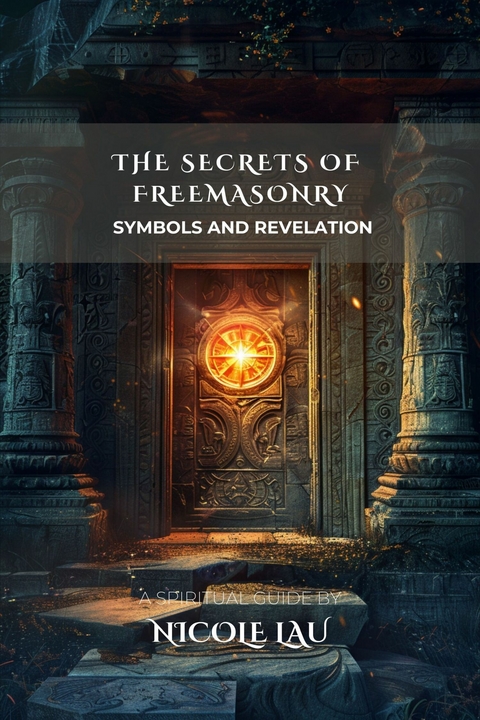
The Secrets of Freemasonry (eBook)
282 Seiten
Publishdrive (Verlag)
978-0-00-105841-5 (ISBN)
Beneath the stone and mortar of history lies a hidden brotherhood.
The Secrets of Freemasonry: Symbols and Revelation uncovers the symbolic language, rituals, and esoteric traditions of the world's most famous secret society. Nicole Lau explores the origins, myths, and enduring influence of Freemasonry, revealing how its symbols and ideals have shaped philosophy, politics, and culture.
This book is not about conspiracy theories. It is about the symbolic architecture of a tradition that has fascinated seekers for centuries.
Inside this book, you will discover:
⚒️ The historical roots and myths of Freemasonry
Part I: History and Origins of Freemasonry
1.1 Medieval Stonemason Guilds
1.1.1 Cathedral Architecture and the Social Status of Craftsmen
Throughout history, the European Middle Ages unfolds like a mystical and magnificent canvas, and Gothic cathedrals are undoubtedly its most dazzling cultural monuments. Standing before a Gothic cathedral, the first thing that strikes your eye is its towering spires, seemingly a bridge connecting earth and heaven, reaching the heavens, radiating a solemn and inviolable aura. Stepping inside, the vibrant stained glass, illuminated by sunlight, shimmers with a dreamlike, divine light. Each piece of glass is a delicate storytelling medium, revealing religious legends and mysteries. Observing the exquisite reliefs and arches, every line and pattern is so vividly crafted, as if embodying the painstaking efforts and ingenuity of the artisans. These architectural elements not only vividly embody the supreme glory of religion but also embody the pinnacle of stonemasonry, representing the pinnacle of architectural art of the era.
Stonemasons held a unique position in medieval Europe. In a society dominated by land-based ties, most people were serfs, bound to the land. Stonemasons, however, stood apart. They escaped this land-based servitude and instead served as skilled freemen. This unique status afforded them a degree of mobility. Rather than being tied to a single location, they were able to travel freely between cities, carrying their exquisite skills with them. Their exceptional stonemasonry earned them respect and generous rewards. During the long process of church construction, bishops, nobles, and citizens alike placed high expectations on them and relied on them. Only they, with their own hands, could transform these magnificent buildings, symbols of faith, from blueprints to reality, ensuring the eternal legacy of religious faith in these towering churches.
In medieval Europe, a society steeped in feudal hierarchy, social stratification was extremely rigid, with individuals clearly defined within different classes. Stonemasons, however, held a unique position. They were neither entirely part of the aristocracy, possessing the inherited wealth and prestigious status of nobles; nor were they like ordinary laborers, who often performed simple, laborious, and unskilled manual labor. With their unique skills, stonemasons, in a sense, formed a "gray group" outside the social hierarchy. They were neither completely constrained by traditional class rules nor, thanks to their professional expertise, held a niche in society. This unique status allowed them to maintain a high degree of independence, allowing them to choose their own work locations and projects, rather than being subject to the dictates of a single class. This special status also paved the way for the later concept of "freemasons." Over time, "freemasons" evolved into a group with a distinct culture and organizational structure, leaving a significant mark in history.
1.1.2 Skill Inheritance and the Function of Secret Symbols
Throughout history, stonemason guilds have held a unique and crucial position, centered on the strict secrecy and orderly transmission of their skills. The exquisite craftsmanship mastered by these stonemasons is the foundation of their livelihood and the key to their survival in a fiercely competitive society. To effectively maintain their monopoly and prevent the leakage of their skills, they meticulously developed a unique system of secret symbols and passwords. This system, like a tight network, closely connects those within the guild while clearly demarcating those outside. These seemingly simple symbols hold profound meaning. They serve not only as professional codes but also as symbols of the stonemasons' identity and honor. Over time, these symbols have acquired a richer meaning, becoming a vital component of stonemason culture.
For example, the compass and square are, in the eyes of the general public, merely practical tools for measuring stone and ensuring architectural precision. However, within the unique context of the stonemason's guild, they assume a deeper meaning, symbolizing "order" and "standard." In the stonemason's work, every cut of stone and every erection of a building component requires precise measurement and rigorous planning, and the compass and square are crucial tools for achieving this. They represent the stonemason's dedication to their work and their rigorous pursuit of quality, as well as their reverence for cosmic order and the laws of nature. Similarly, in the hands of stonemasonry, elements such as arches, geometric patterns, and numerical proportions become more than just engineering calculations; they are seen as vivid reflections of cosmic harmony. By employing these elements, stonemasonry believes they can create architectural works that harmoniously coexist with nature, embodying the mystery and balance of the universe.
The transmission of skills is a crucial process within the Stonemason Guild, often accomplished through a strict master-apprentice system. When apprentices join the guild, they embark on a journey of growth filled with challenges and opportunities. While undergoing systematic training, they are repeatedly taught to maintain the guild's secrets. This is not only a requirement of professional ethics but also a crucial safeguard for the guild's interests and dignity. During this process, masters thoroughly examine apprentices. Only after they demonstrate loyalty, diligence, and mastery of the necessary skills are they allowed to advance to higher ranks. This system, centered on "knowledge + secrets + ethics," represents the valuable experience accumulated by the Stonemason Guild over the years, ensuring the purity of skills and the continuity of their inheritance. This system later had a profound impact on modern Masonic rituals, becoming an important model for modern Masonic ceremonies and laying a solid foundation for the development and growth of Freemasonry.
1.1.3 Guild Ethics and Brotherhood
In medieval society, guilds were more than simply professional organizations; they were closely connected ethical communities. Within these communities, members addressed each other as brothers. This address was more than just a simple title; it carried deep emotions and responsibility. Members emphasized loyalty and mutual assistance—loyalty to the guild as a whole and to each of their brothers. Mutual assistance permeated every aspect of life and work. Imagine a stonemason in an unfamiliar city, facing numerous difficulties and challenges. However, by presenting a specific symbol or password, it was as if they possessed a key to a warm and welcoming environment. They would receive the protection of their guildmates, perhaps offering temporary shelter from the harsh realities of street life or job opportunities, enabling them to survive in this unfamiliar land through their craft. This network of mutual assistance, transcending geographical boundaries, served as an invisible web, connecting stonemasons from all corners of the world and greatly strengthening their cohesion, enabling them to unite and overcome external pressures and challenges.
To maintain their positive image and sustainable development, guilds have established strict codes of ethics. Craftsmen are expected not only to maintain the excellence of their craft, but also to continually refine and improve their skills to produce high-quality work. They must also uphold the honesty and integrity that are fundamental to being a qualified guild member. In daily work, fraud, laziness, or leaking secrets are strictly prohibited. Any member who violates these rules will be punished accordingly. This punishment can range from financial fines to reputational damage, or even expulsion from the guild in serious cases. These strict codes safeguard the guild's reputation, ensuring confidence in its products and services. They also guarantee the guild's long-term survival, enabling it to continue to grow and prosper throughout history.
Over time, the ethics and brotherhood inherent in the guild underwent a remarkable transformation, transcending professional boundaries to become a profound "spiritual contract." This contract was more than a verbal promise; it became a deeply embedded belief and code. In later Masonic developments, this contract evolved into oaths, rituals, and symbolic language. The oath is a solemn commitment to Masonic ideals and values, representing a sacred duty and mission. The ritual is a solemn expression, allowing members to more deeply experience the power of this spiritual contract through specific procedures and gestures. The symbolic language, like a mysterious code, understood only by Freemasons, imbues members with a sense of spiritual belonging that transcends the mundane, allowing them to find their own value and meaning within this unique community.
1.2 From Artisan Guilds to Spiritual Communities
1.2.1 The Concept of “Free Mason”: Travel and Knowledge
As history slowly rolled into the late Middle Ages, every aspect of society was quietly changing. Against this backdrop, the ancient profession of stonemasonry gradually acquired a unique identity: "freemason." So, what exactly did this "freedom" mean? First, it represented a radically different state of existence. In the early Middle Ages, most people, especially serfs, were bound to the land, shackled to the very soil and lacking any sense of freedom. Freemasonry, however, broke free from this shackle. No longer confined to a...
| Erscheint lt. Verlag | 16.9.2025 |
|---|---|
| Sprache | englisch |
| Themenwelt | Sachbuch/Ratgeber ► Gesundheit / Leben / Psychologie ► Esoterik / Spiritualität |
| ISBN-10 | 0-00-105841-X / 000105841X |
| ISBN-13 | 978-0-00-105841-5 / 9780001058415 |
| Informationen gemäß Produktsicherheitsverordnung (GPSR) | |
| Haben Sie eine Frage zum Produkt? |
 EPUB (Adobe DRM)
Größe: 1,2 MB
Kopierschutz: Adobe-DRM
Adobe-DRM ist ein Kopierschutz, der das eBook vor Mißbrauch schützen soll. Dabei wird das eBook bereits beim Download auf Ihre persönliche Adobe-ID autorisiert. Lesen können Sie das eBook dann nur auf den Geräten, welche ebenfalls auf Ihre Adobe-ID registriert sind.
Details zum Adobe-DRM
Dateiformat: EPUB (Electronic Publication)
EPUB ist ein offener Standard für eBooks und eignet sich besonders zur Darstellung von Belletristik und Sachbüchern. Der Fließtext wird dynamisch an die Display- und Schriftgröße angepasst. Auch für mobile Lesegeräte ist EPUB daher gut geeignet.
Systemvoraussetzungen:
PC/Mac: Mit einem PC oder Mac können Sie dieses eBook lesen. Sie benötigen eine
eReader: Dieses eBook kann mit (fast) allen eBook-Readern gelesen werden. Mit dem amazon-Kindle ist es aber nicht kompatibel.
Smartphone/Tablet: Egal ob Apple oder Android, dieses eBook können Sie lesen. Sie benötigen eine
Geräteliste und zusätzliche Hinweise
Buying eBooks from abroad
For tax law reasons we can sell eBooks just within Germany and Switzerland. Regrettably we cannot fulfill eBook-orders from other countries.
aus dem Bereich