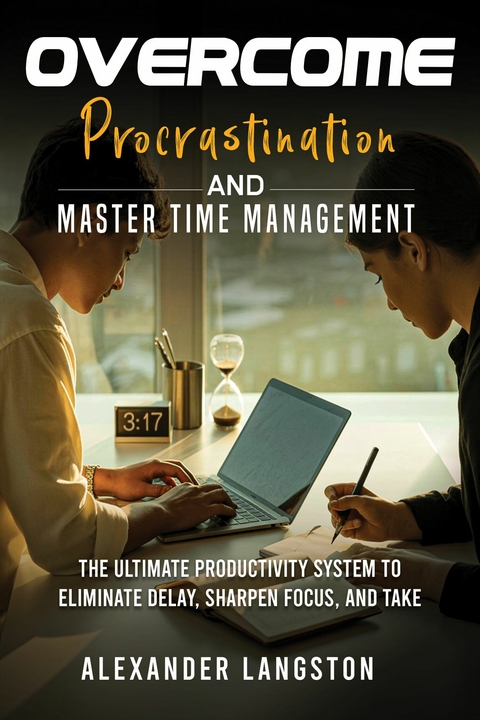
Overcome Procrastination and Master Time Management (eBook)
310 Seiten
Publishdrive (Verlag)
978-1-918223-08-8 (ISBN)
Stop Delaying. Start Doing. Take Control of Your Life Today.
Do you struggle with procrastination, wasted time, and unfinished goals? You're not lazy-you just need the right system.
Overcome Procrastination and Master Time Management is the ultimate guide to breaking free from delay and unlocking your highest productivity. Unlike quick-fix tips or motivational quotes, this book gives you a proven, step-by-step roadmap to reset your mindset, sharpen your focus, and finally get things done.
Inside, you'll discover:
✅ The hidden psychology of procrastination-and how to break free from it
✅ The 7 procrastinator types (and how to defeat each one)
✅ The 3-step anti-procrastination formula to regain momentum instantly
✅ Focus-building techniques to eliminate distractions and sharpen attention
✅ Daily routines, prioritization methods, and productivity systems that stick
✅ Time management tools for busy professionals, students, and creatives
✅ How to overcome perfectionism, stress, and mental blocks that keep you stuck
With 25 practical chapters packed with real strategies, this book helps you design your personal productivity system-so you can stop relying on willpower and start creating results.
Whether you want to excel at school, grow your career, or simply take back control of your time, this book is your blueprint for lasting success.
✨ Perfect for anyone who wants to stop procrastinating, manage time effectively, and build unstoppable focus.
Your time is your life-don't waste it. Break the cycle today.
Stop Delaying. Start Doing. Take Control of Your Life Today.Do you struggle with procrastination, wasted time, and unfinished goals? You're not lazy-you just need the right system.Overcome Procrastination and Master Time Management is the ultimate guide to breaking free from delay and unlocking your highest productivity. Unlike quick-fix tips or motivational quotes, this book gives you a proven, step-by-step roadmap to reset your mindset, sharpen your focus, and finally get things done.Inside, you'll discover:? The hidden psychology of procrastination-and how to break free from it? The 7 procrastinator types (and how to defeat each one)? The 3-step anti-procrastination formula to regain momentum instantly? Focus-building techniques to eliminate distractions and sharpen attention? Daily routines, prioritization methods, and productivity systems that stick? Time management tools for busy professionals, students, and creatives? How to overcome perfectionism, stress, and mental blocks that keep you stuckWith 25 practical chapters packed with real strategies, this book helps you design your personal productivity system-so you can stop relying on willpower and start creating results.Whether you want to excel at school, grow your career, or simply take back control of your time, this book is your blueprint for lasting success.? Perfect for anyone who wants to stop procrastinating, manage time effectively, and build unstoppable focus.Your time is your life-don't waste it. Break the cycle today.
Chapter 1
Understanding the Psychology of Delay
Procrastination isn’t just about poor time management or laziness—it’s a deeply rooted psychological dance between our desire for instant gratification and the discomfort that comes with tackling important but often challenging tasks. When faced with a looming deadline or an unpleasant chore, our brains instinctively seek to avoid stress by opting for activities that offer immediate pleasure or relief, even if it means pushing crucial work further down the line. This self-sabotaging cycle is driven by habits formed over time, where the temporary relief of delay tricks us into believing it’s the best solution, even as it quietly chips away at our confidence and goals. Understanding this internal tug-of-war is the first step toward reclaiming control, because once you recognize why delay feels so tempting, you can begin to build practical strategies that realign your actions with your true intentions—setting you up for a future where progress feels as natural as resistance once did.
What Science Says About Procrastination
Procrastination isn’t just a harmless delay in getting things done—it’s a deeply studied psychological phenomenon that many researchers have tried to understand over decades. Science reveals that procrastination is much more than laziness or poor time management. At its core, it’s a complex interplay of emotion regulation, decision-making, and brain functioning. By understanding what’s actually happening inside your mind when you choose to put off tasks, you can start to dismantle the hold procrastination has on your life.
One of the key discoveries from neuroscience is how procrastination links to the way our brains handle immediate versus delayed rewards. Our brains are wired to seek instant gratification. When faced with a demanding or unpleasant task, the tempting alternative—checking social media, scrolling through emails, or even daydreaming—activates the brain’s reward centers much more quickly. This creates a tug-of-war between the prefrontal cortex, which plans and weighs long-term consequences, and the limbic system, which pushes us toward quick pleasures. Procrastination often wins because the immediate relief from discomfort feels so much stronger in the moment.
Understanding procrastination as a self-regulation failure sheds light on why willpower alone rarely solves the problem. The mental battle is exhausting. It’s not just about motivation; it’s about managing emotions—not just laziness. According to research, procrastinators often delay tasks because they want to avoid negative feelings, such as anxiety, fear of failure, or self-doubt, that arise when facing the task.
This avoidance is a powerful force. It’s not that procrastinators don’t care about their goals—they might deeply want to succeed—but the emotional response triggered by starting or working on a task can lead to a kind of paralysis. This aligns with findings from emotional psychology that explain procrastination as an emotion-focused coping strategy. You delay work not because you don’t want the result, but because you want to escape discomfort now. However, that short-term escape winds up creating more stress and guilt later, fueling a vicious cycle.
Interestingly, studies show that people who procrastinate tend to have lower levels of self-compassion. They often harshly judge themselves for delaying, which increases stress and further erodes motivation. The key insight here is how important it is to cultivate a kinder internal voice. Science backs this up—people who practice self-compassion bounce back more quickly from setbacks and are less likely to spiral into avoidant behaviors.
Another vital piece of the puzzle lies in the role of time perception. Research into how we mentally represent time explains why deadlines can feel simultaneously like a distant threat and an urgent stressor. Those who procrastinate often perceive future consequences as too abstract or emotionally disconnected from the present moment. In contrast, immediate distractions provide palpable relief. This difference in temporal focus explains why intentions to work on a task often fade as the moment approaches.
Studies examining brain activity reveal that procrastinators show different patterns of neural connectivity between emotion and cognitive control regions. This means they may experience greater difficulty in overriding emotional impulses, even when their logical brain understands the benefits of completing work early. The frontal lobe’s role in planning and impulse control battles with more primal emotional brain areas, making procrastination a neurological tug-of-war, not simply a matter of choice.
Environmental factors also play a critical role, as shown in behavioral science research. Our surroundings influence whether we resist or succumb to procrastination. For example, cluttered and distracting workspaces—often full of gadgets and multiple open tabs—activate more sensory inputs that pull attention away from demanding tasks. In contrast, controlled environments that reduce temptation support better focus and reduce procrastination triggers. The science here points to the importance of designing your environment thoughtfully, not relying solely on your willpower.
Researchers have also discovered different types of procrastination patterns linked to personality traits. Some procrastinate because they seek perfection and fear starting unless conditions are flawless, while others delay because they thrive under pressure or lack clear goals. Understanding that procrastination manifests differently in each individual helps remove shame and opens the door for more personalized strategies.
Finally, the science of habit formation reveals why procrastination can feel so relentless. Like any behavior, procrastination becomes a habit loop—a repeated cycle of trigger, behavior, and reward. When the “reward” is the immediate relief from discomfort, the brain’s reward system reinforces this cycle, making procrastination automatic over time. This means breaking procrastination doesn’t just involve motivation boosts. It requires disrupting established neural and behavioral patterns with deliberate, consistent action and new habits that reward progress rather than avoidance.
It may sound daunting, but knowing these scientific realities is empowering. You’re not simply facing a lack of discipline or strength; you’re facing an intricate biological and psychological system that’s been shaped for survival. The good news is that this system is also adaptable. With science-backed approaches, such as emotional regulation techniques, environment design, self-compassion, and habit restructuring, you can retrain your brain to create new pathways that sidestep procrastination.
In essence, procrastination is rooted in how your brain balances emotion and rational thinking, how you perceive time and reward, and how your environment and habits shape your behavior. Every moment you spend delaying is also an opportunity to understand and apply what science has uncovered. This isn’t about blaming yourself; it’s about becoming the architect of your own behavior, redesigning your reaction to discomfort, and finding practical strategies that align with how your brain actually works.
As you move forward, keep in mind that science doesn’t offer quick fixes, but it does provide a map. Understanding procrastination’s roots grounds you in reality and reveals the why behind what feels frustrating and often defeating. More importantly, this knowledge equips you with specific leverage points to take control. You can transform procrastination from a seemingly invincible adversary into a challenge that you understand, manage, and ultimately overcome. The next sections will build on this foundation with practical tools based on these scientific insights to help you reclaim your time and productivity.
The Habit Loop and Instant Gratification Trap
To truly understand why procrastination grips us so tightly, we need to dive into the mechanics of habit itself. At the heart of delay lies a powerful pattern psychologists call the habit loop. This loop is a three-step process our brains cycle through without us even realizing it: a cue, a routine, and a reward. These elements together create habits that feel automatic, shaping how we behave day after day. Whether it’s scrolling through social media instead of starting your work, or binge-watching videos rather than tackling a project, these behaviors loop on repeat because they fulfill some kind of immediate craving. Recognizing the habit loop is the first step to disrupting procrastination’s hold on your life.
Imagine you sit down at your desk with the goal of writing an important report. A notification lights up on your phone (the cue), and instead of diving into your work, you pick up the phone and start browsing. The act of browsing—your routine—gives you a small emotional lift or a hit of dopamine, your brain’s chemical for pleasure and reward. This quick payoff (the reward) feels good, so your brain remembers and reinforces this loop. Over time, this pattern becomes ingrained, making it even harder to resist the temptation next time. The instant gratification trap isn’t just about distractions; it’s about the brain’s craving for immediate, predictable pleasure over delayed, uncertain benefits.
Why is immediate gratification so tempting? It’s simple: the brain is wired to seek rewards that feel rewarding right now rather than those that pay off later. Delayed rewards—like finishing a report, going for a run, or learning a new...
| Erscheint lt. Verlag | 22.7.2025 |
|---|---|
| Überarbeitung | Alexander Langston |
| Sprache | englisch |
| Themenwelt | Sachbuch/Ratgeber ► Freizeit / Hobby ► Sammeln / Sammlerkataloge |
| Wirtschaft ► Betriebswirtschaft / Management | |
| Schlagworte | how to overcome procrastination laziness and overt • overcome procrastination and master time managemen • overcome procrastination and sharpen focus • overcome procrastination build focus and achieve • stop procrastinating and start achieving your goal |
| ISBN-10 | 1-918223-08-4 / 1918223084 |
| ISBN-13 | 978-1-918223-08-8 / 9781918223088 |
| Informationen gemäß Produktsicherheitsverordnung (GPSR) | |
| Haben Sie eine Frage zum Produkt? |
 EPUB (Ohne DRM)
Digital Rights Management: ohne DRM
Dieses eBook enthält kein DRM oder Kopierschutz. Eine Weitergabe an Dritte ist jedoch rechtlich nicht zulässig, weil Sie beim Kauf nur die Rechte an der persönlichen Nutzung erwerben.
Dateiformat: EPUB (Electronic Publication)
EPUB ist ein offener Standard für eBooks und eignet sich besonders zur Darstellung von Belletristik und Sachbüchern. Der Fließtext wird dynamisch an die Display- und Schriftgröße angepasst. Auch für mobile Lesegeräte ist EPUB daher gut geeignet.
Systemvoraussetzungen:
PC/Mac: Mit einem PC oder Mac können Sie dieses eBook lesen. Sie benötigen dafür die kostenlose Software Adobe Digital Editions.
eReader: Dieses eBook kann mit (fast) allen eBook-Readern gelesen werden. Mit dem amazon-Kindle ist es aber nicht kompatibel.
Smartphone/Tablet: Egal ob Apple oder Android, dieses eBook können Sie lesen. Sie benötigen dafür eine kostenlose App.
Geräteliste und zusätzliche Hinweise
Buying eBooks from abroad
For tax law reasons we can sell eBooks just within Germany and Switzerland. Regrettably we cannot fulfill eBook-orders from other countries.
aus dem Bereich