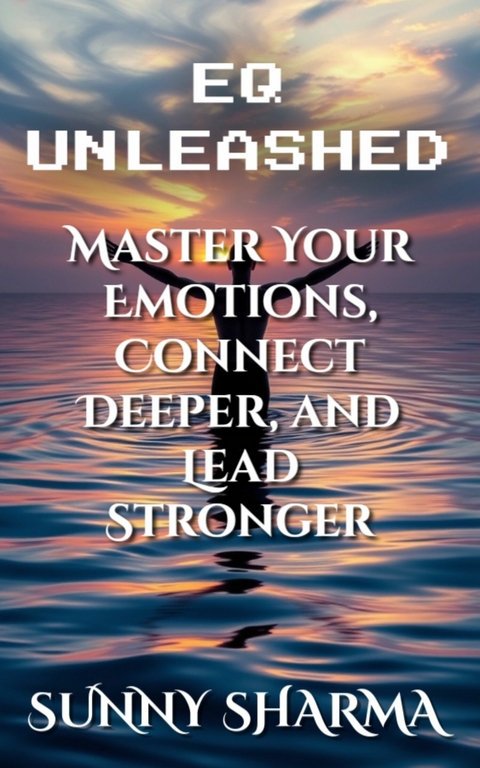
EQ Unleashed (eBook)
92 Seiten
Publishdrive (Verlag)
978-1-0671019-8-5 (ISBN)
EQ Unleashed: Master Your Emotions, Connect Deeper, and Lead Stronger by Sunny Sharma is your blueprint for mastering the emotional side of success-where real leadership, deep connection, and inner peace begin. Emotional intelligence is not about suppressing emotions; it's about owning them, reading them, and channeling them with precision. This book helps you navigate emotional storms, strengthen relationships, and lead with clarity and compassion-even under pressure. Through chapters like 'Emotions as Messengers,' 'Respond, Don't React,' and 'The Power of Emotional Boundaries,' you'll gain the tools to decode your feelings, empathize without losing yourself, and transform emotional chaos into leadership clarity. Whether you're managing teams, building relationships, or simply trying to understand yourself better, EQ Unleashed gives you the emotional mastery to thrive in every area of life. Let this be the moment you stop avoiding emotion and start leading with it.
EQ Unleashed: Master Your Emotions, Connect Deeper, and Lead Stronger by Sunny Sharma is your blueprint for mastering the emotional side of success-where real leadership, deep connection, and inner peace begin. Emotional intelligence is not about suppressing emotions; it's about owning them, reading them, and channeling them with precision. This book helps you navigate emotional storms, strengthen relationships, and lead with clarity and compassion-even under pressure. Through chapters like "e;Emotions as Messengers,"e; "e;Respond, Don't React,"e; and "e;The Power of Emotional Boundaries,"e; you'll gain the tools to decode your feelings, empathize without losing yourself, and transform emotional chaos into leadership clarity. Whether you're managing teams, building relationships, or simply trying to understand yourself better, EQ Unleashed gives you the emotional mastery to thrive in every area of life. Let this be the moment you stop avoiding emotion and start leading with it.
Chapter 1: Emotions as Messengers
Imagine standing at the edge of a vast, uncharted forest. The trees are dense, the paths are unclear, and the air hums with the sounds of unseen creatures. Now, think of your emotions as the whispers of that forest—each one carrying a message, a clue, a direction. They are not random or chaotic, as they might sometimes feel. Instead, they are the language of your inner world, speaking to you in tones of joy, anger, sadness, fear, and love. Emotions are not just fleeting sensations; they are messengers, here to guide you, warn you, and illuminate the deeper truths of your life.
Often, we treat emotions as if they are obstacles to overcome or distractions to ignore. We push them aside, suppress them, or drown them out with busyness. But what if, instead of resisting them, we leaned in and listened? What if we saw them not as enemies but as allies, each one offering a piece of wisdom? Anger might be signaling a boundary that’s been crossed. Sadness might be pointing to a loss that needs acknowledgment. Fear might be highlighting a risk that requires attention. Even joy, that radiant and often fleeting emotion, is a reminder of what truly matters to you. By tuning into these messages, you can unlock a deeper understanding of yourself and your needs.
The journey of embracing emotions as messengers is not always easy. It requires courage to sit with discomfort, curiosity to explore the unknown, and compassion to honor your own humanity. But the rewards are profound. When you learn to listen to your emotions, you begin to navigate life with greater clarity and purpose. You stop being a passive recipient of your feelings and start becoming an active participant in your own growth. This chapter invites you to step into that forest, to listen closely to the whispers, and to discover the wisdom that lies within. Your emotions are not here to overwhelm you—they are here to guide you home.
1.1 Understanding the Language of Emotions
Emotions are not random bursts of feeling—they are messengers, delivering vital information about your needs, values, and boundaries. Think of them as signposts on the road of life, guiding you toward growth and alignment. To truly understand their language, you must first learn to listen without judgment.
Here’s how to decode their messages:
- Anger: Often signals a violation of your boundaries or values. It’s a call to action, urging you to stand up for yourself or address an injustice.
- Sadness: Indicates a loss or unmet need. It invites you to process grief, reflect, and seek comfort or closure.
- Fear: Acts as a protective mechanism, warning you of potential danger. It encourages you to assess risks and prepare for challenges.
- Joy: Reflects alignment with your values and desires. It’s a reminder to celebrate, savor the moment, and pursue what truly fulfills you.
Imagine your emotions as a symphony: each one plays a distinct note, contributing to the harmony of your inner world. When you silence one, the entire melody suffers. By embracing all emotions—even the uncomfortable ones—you gain a deeper understanding of yourself and your path forward.
A helpful metaphor: emotions are like weather patterns. Some days are sunny and bright, while others are stormy and gray. Just as you wouldn’t blame the sky for its weather, don’t judge yourself for your emotions. Instead, observe them with curiosity and compassion. Ask yourself, “What is this emotion trying to tell me?” This simple question can unlock profound insights and guide you toward meaningful action.
1.2 Transforming Emotions into Growth Opportunities
Once you’ve learned to listen to your emotions, the next step is to use them as catalysts for growth. Emotions are not just signals—they are tools for transformation. By responding thoughtfully rather than reacting impulsively, you can turn even the most challenging feelings into opportunities for self-improvement.
Consider this three-step process:
1. Pause and Reflect: When an emotion arises, take a moment to breathe and observe it. Ask yourself, “What triggered this feeling? What does it mean?”
2. Choose Your Response: Decide how you want to act. Instead of lashing out in anger or shutting down in fear, opt for a response that aligns with your values and goals.
3. Take Action: Use the energy of the emotion to drive positive change. If you’re feeling frustrated at work, channel that energy into finding solutions or setting boundaries.
Real-life example: Sarah felt overwhelmed with anxiety before a big presentation. Instead of letting it paralyze her, she paused and reflected. She realized her fear stemmed from a lack of preparation. She used that awareness to practice her speech, boosting her confidence and ultimately delivering a successful presentation.
Remember: Emotions are not the problem—it’s how you respond to them that matters. By viewing them as allies rather than enemies, you can harness their power to create a more fulfilling and authentic life.
Call to action: The next time a strong emotion arises, don’t push it away or let it take control. Instead, greet it as a trusted friend, listen to its message, and use it as a stepping stone toward growth. As the saying goes, “What you resist, persists. What you embrace, you can transform.”
In the end, emotions are not just messengers—they are teachers. They show you where you’re stuck, what you value, and where you need to grow. By embracing their wisdom, you can navigate life with greater clarity, courage, and purpose.
1.3 Understanding the Language of Emotions
Emotions are not random; they are messengers, each carrying a unique piece of wisdom. Think of them as letters delivered to your doorstep, waiting to be opened and understood. When you ignore them, they pile up, creating a cluttered and overwhelming space within you. But when you listen, they reveal profound insights about your needs, values, and the world around you. To decode this language, start by pausing and asking yourself: What is this emotion trying to tell me? Anger, for instance, often signals a boundary being crossed, while sadness might point to a loss or unmet need. Joy, on the other hand, is a beacon guiding you toward what truly fulfills you. By tuning in, you transform emotions from chaotic storms into clear, actionable messages.
Here’s how to begin understanding the language of your emotions:
- Identify the emotion: Name it. Is it frustration, fear, excitement, or something else?
- Locate it in your body: Emotions often manifest physically. Is your chest tight? Are your shoulders tense?
- Ask the deeper question: What triggered this feeling? What does it reveal about your current situation?
- Respond, don’t react: Use the emotion as a guide to take thoughtful action rather than impulsive decisions.
Consider this metaphor: Your emotions are like a compass, pointing you toward your true north. When you feel lost, the compass doesn’t lie—it simply tells you where you are and nudges you toward where you need to go. Trust it.
Let’s take a real-life example. Imagine you’re in a meeting, and a colleague dismisses your idea. You feel a surge of anger. Instead of lashing out or suppressing it, pause. What is the emotion saying? Perhaps it’s highlighting a need for respect or validation. Use that insight to calmly express your perspective later, turning the emotion into a constructive force.
Emotions are not the enemy; they are allies. They remind us of our humanity, our desires, and our boundaries. When we learn to listen, we unlock a deeper understanding of ourselves and the world. So, the next time an emotion knocks on your door, welcome it. Sit with it. Let it speak. And then, let it guide you toward a more aligned and authentic life.
1.4 Listening to the Language of Emotions
Emotions are not just fleeting feelings—they are messengers, each carrying a unique piece of wisdom. To truly understand them, we must learn to listen. Think of emotions as whispers in a crowded room; if you don’t pay attention, their messages will be drowned out by the noise of daily life. The first step is to pause and acknowledge what you’re feeling. This simple act of recognition can be transformative.
Here’s how to start:
1. Name the emotion: Are you feeling anger, sadness, joy, or fear? Labeling it helps to bring clarity.
2. Identify its source: What triggered this feeling? Was it a conversation, a memory, or a situation?
3. Understand its purpose: What is this emotion trying to tell you? For example, anger often signals a boundary has been crossed, while sadness may indicate a need for healing.
Consider this: A wave of frustration at work might seem like just another bad day, but if you dig deeper, it could be a sign that you’re undervaluing your skills or that your passion is waning. Emotions are like breadcrumbs, leading you to the heart of what truly matters.
A powerful metaphor to remember: Emotions are the body’s way of sending a letter to the mind. Ignoring them is like leaving the envelope unopened. Open it. Read it. Let it guide you.
1.5 Transforming Emotional Messages into Action
Once you’ve decoded the message, the next step is to act on it. Emotions are not meant to be stored away; they are catalysts for change. Think of them as tools in your personal growth toolkit. If fear is holding you back, it might be nudging you to prepare better or to face what’s...
| Erscheint lt. Verlag | 6.8.2025 |
|---|---|
| Sprache | englisch |
| Themenwelt | Sachbuch/Ratgeber ► Gesundheit / Leben / Psychologie ► Esoterik / Spiritualität |
| Sachbuch/Ratgeber ► Gesundheit / Leben / Psychologie ► Lebensdeutung | |
| Schlagworte | communication skills • Emotional Intelligence • Emotional Mastery • Empathy • leadership development • self-awareness • stress management |
| ISBN-10 | 1-0671019-8-5 / 1067101985 |
| ISBN-13 | 978-1-0671019-8-5 / 9781067101985 |
| Informationen gemäß Produktsicherheitsverordnung (GPSR) | |
| Haben Sie eine Frage zum Produkt? |
 EPUB (Adobe DRM)
Größe: 501 KB
Kopierschutz: Adobe-DRM
Adobe-DRM ist ein Kopierschutz, der das eBook vor Mißbrauch schützen soll. Dabei wird das eBook bereits beim Download auf Ihre persönliche Adobe-ID autorisiert. Lesen können Sie das eBook dann nur auf den Geräten, welche ebenfalls auf Ihre Adobe-ID registriert sind.
Details zum Adobe-DRM
Dateiformat: EPUB (Electronic Publication)
EPUB ist ein offener Standard für eBooks und eignet sich besonders zur Darstellung von Belletristik und Sachbüchern. Der Fließtext wird dynamisch an die Display- und Schriftgröße angepasst. Auch für mobile Lesegeräte ist EPUB daher gut geeignet.
Systemvoraussetzungen:
PC/Mac: Mit einem PC oder Mac können Sie dieses eBook lesen. Sie benötigen eine
eReader: Dieses eBook kann mit (fast) allen eBook-Readern gelesen werden. Mit dem amazon-Kindle ist es aber nicht kompatibel.
Smartphone/Tablet: Egal ob Apple oder Android, dieses eBook können Sie lesen. Sie benötigen eine
Geräteliste und zusätzliche Hinweise
Buying eBooks from abroad
For tax law reasons we can sell eBooks just within Germany and Switzerland. Regrettably we cannot fulfill eBook-orders from other countries.
EPUB (Ohne DRM)Digital Rights Management: ohne DRM
Dieses eBook enthält kein DRM oder Kopierschutz. Eine Weitergabe an Dritte ist jedoch rechtlich nicht zulässig, weil Sie beim Kauf nur die Rechte an der persönlichen Nutzung erwerben.
Dateiformat: EPUB (Electronic Publication)
EPUB ist ein offener Standard für eBooks und eignet sich besonders zur Darstellung von Belletristik und Sachbüchern. Der Fließtext wird dynamisch an die Display- und Schriftgröße angepasst. Auch für mobile Lesegeräte ist EPUB daher gut geeignet.
Systemvoraussetzungen:
PC/Mac: Mit einem PC oder Mac können Sie dieses eBook lesen. Sie benötigen dafür die kostenlose Software Adobe Digital Editions.
eReader: Dieses eBook kann mit (fast) allen eBook-Readern gelesen werden. Mit dem amazon-Kindle ist es aber nicht kompatibel.
Smartphone/Tablet: Egal ob Apple oder Android, dieses eBook können Sie lesen. Sie benötigen dafür eine kostenlose App.
Geräteliste und zusätzliche Hinweise
Buying eBooks from abroad
For tax law reasons we can sell eBooks just within Germany and Switzerland. Regrettably we cannot fulfill eBook-orders from other countries.
aus dem Bereich