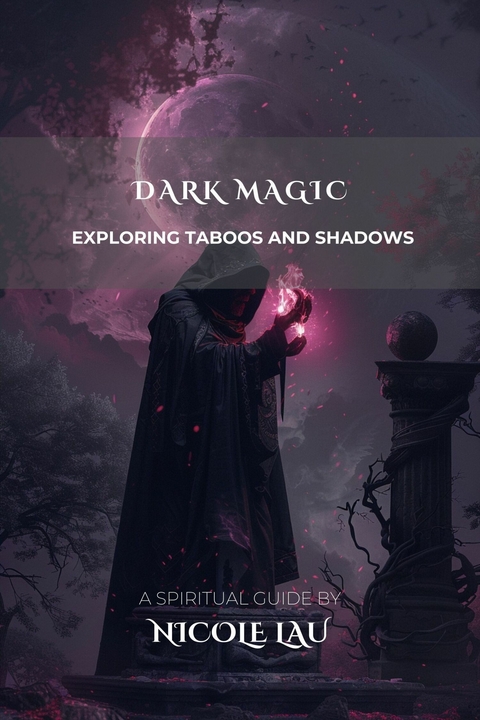
Dark Magic (eBook)
390 Seiten
Publishdrive (Verlag)
978-0-00-100214-2 (ISBN)
What lies in the shadows of magic?
Dark Magic: Exploring Taboos and Shadows takes you into the forbidden realms of the occult, where power, fear, and transformation converge. Nicole Lau examines the historical roots, psychological underpinnings, and spiritual functions of dark magical practices - from the demonized rituals of the past to the shadow work of modern mystics.
Far from simple superstition, dark magic holds up a mirror to the parts of ourselves and society we prefer to deny. It is in these unlit corridors of the soul that profound change often begins.
In this book, you will:
Trace the history of taboo magic and its cultural repression
Understand the ethics and responsibilities of working with shadow forces
Explore rituals involving baneful magic, curses, and protection
Learn shadow work techniques for integrating the hidden self
Examine case studies of historical and modern dark magic practitioners
Discover how darkness can serve as a catalyst for self-mastery and liberation
Dark Magic is for those who dare to question, explore, and transform through the power of the shadow.
To me, mysticism is not merely a set of practices-it is a philosophical language about existence and the architecture of consciousness.
This book is for those who seek to understand the essence of the esoteric through structure, principles, and symbolic systems.
If you're looking for a hands-on magical manual with quick results, this may not be the book for you.
But if you're ready to dive into deeper thought and co-create a map of the mystical universe with me, welcome to the journey.
Preface: The Boundaries and Exploration of Dark Magic
- The Dual Face of Dark Magic:
Why is Dark Magic Both Fascinating and Terrifying? How has It Cultivated Its Unique Cultural Appeal Throughout History?
The Dual Face of Dark Magic: Charm and Fear
Dark magic has been a taboo topic in human culture since ancient times. It exudes a mysterious allure, inspiring countless people to explore the unknown and the taboo; yet, at the same time, it often carries a strong negative energy, causing unease and fear. Why has dark magic survived and persisted amid such conflicting emotions?
Dark magic captivates people because it taps into some primal impulse deep within the human heart. It's not just a quest for knowledge, but also a desire for power and supernatural might. This power seems to transcend the constraints of reality, allowing people to experience a sense of existence beyond the ordinary. However, this power often comes at a heavy price, potentially bringing unforeseen consequences and even the destruction of individuals and society.
- The temptation of taboo
Humans are naturally drawn to the forbidden, a pull that stems from a rebellious spirit deep within. Dark magic often pushes the boundaries of society, challenging traditional ethics and order, making it a highly intriguing object. We possess an inexplicable attraction to things we shouldn't do, much like the allure of "forbidden fruit," which constantly tempts everyone.
From a psychological perspective, taboos allow us to experience a sense of pleasure that transcends convention, a pleasure filled with the allure of the unknown and freedom. Dark magic is precisely the collection of these "taboo behaviors," allowing people to feel they are challenging and transcending traditional social norms.
Furthermore, dark magic is also linked to humanity's fascination with the supernatural. People long to use magic to explain phenomena that cannot be explained by science, or to use the power of magic to fulfill certain wishes. This pursuit of supernatural powers makes dark magic both mysterious and desirable.
- Symbiosis of fear
On the other hand, the power of dark magic is often associated with evil, fear, and even death. In most cultures, dark magic is often associated with negative elements such as demons, curses, and spirits. It can make people feel unsafe and touch upon their deepest fears: the fear of losing control, being harmed, and even death.
The "rebellion" of dark magic often signifies a power that transcends the laws of nature, a power that itself symbolizes the uncontrollable. Much like the demon-summoning rituals of history, magic itself represents a subversion of the "normal world," carrying with it a sense of unknown fear that makes people both irresistible and hesitant to touch it.
Furthermore, dark magic is often closely tied to one's moral choices and spiritual state. Using dark magic often comes at a price, which can include one's conscience, the purity of one's soul, or even one's life. This heavy price makes dark magic a dangerous yet alluring presence, threatening not only the user but also those around them.
The Historical Interweaving of Dark Magic and Culture: From Myth to Religion
The cultural appeal of dark magic isn't simply a product of illusion. It's deeply intertwined with the origins of human civilization, having already manifested its unique qualities in ancient mythology and religious systems. The mystery and power of dark magic have not only played a crucial role throughout history, but have also been imbued with diverse meanings and uses across diverse cultures and belief systems. From ancient myths and legends to medieval religious conflicts and the mysticism of the Renaissance, dark magic has always been a crucial avenue for humans to explore the unknown and pursue supernatural powers.
- Origins of Ancient Civilizations:
Magic and Deities in Egypt and Mesopotamia: In these early civilizations, dark magic was often seen as a means of communicating with the gods, a symbol of power, and a manifestation of mystical knowledge. In many ancient Egyptian rituals, deities such as Hecate were considered the goddess of darkness and the dead, whose power was both awe-inspiring and captivating. These ancient myths often involved the mysterious forces of the afterlife, the summoning of souls, and the conquest of death, shaping people's early understanding of the concept of "darkness." In these civilizations, dark magic was not only part of religious ritual but also an important part of daily life, closely linked to medicine, divination, and protection from evil forces.
Ancient Greek Mysticism and Witchcraft: Hecate was not only the ancient Greek goddess of darkness, but also closely associated with witchcraft and magical rituals. Her worship embodied the ancient Greeks' dual attitude toward dark forces: a reverence for the unknown and a pursuit of supernatural powers. Hecate's symbols and rituals have been passed down to this day, still deeply captivating those who yearn to connect with the mystical world. Ancient Greek philosophers and scholars also delved deeply into dark magic, seeking to understand the mysteries of the universe and applying this knowledge to magical practices, thereby promoting the development of science and philosophy.
- The Middle Ages and the Encounter with Religion:
The conflict between the Church and magic: During the Middle Ages, the Christian Church's strong opposition to dark magic posed another cultural conflict. On the one hand, the Church firmly opposed any form of dark magic, viewing it as a pact with the devil and a symbol of evil and depravity. On the other hand, this taboo and opposition only piqued people's curiosity, making dark magic a part of underground culture. Especially within the traditions of folk witchcraft and pagan beliefs, dark magic assumed a particularly mysterious air. Dark magic became a marginalized form of knowledge in medieval European society, but it also became a means of resisting authority and tradition.
Witch Hunts: This period of history not only demonstrates the fear of dark magic but also reveals a deep cultural rejection of heretical thought. While the Church used fear and religious authority to suppress the practice of magic, its taboos and fear also made dark magic a hidden force among the people. Witch Hunts further associated dark magic with sin and taboo, but they also inadvertently strengthened its cultural appeal, making it a symbol of resistance and rebellion. During this period, dark magic became closely linked to the self-identity and resistance of oppressed groups, becoming a tool for them to fight oppression and pursue freedom.
- The Renaissance and the Revival of Dark Magic:
The intertwining of alchemy and mysticism: With the advent of the Renaissance, dark magic experienced a resurgence, particularly the integration of alchemy and the occult. While many viewed alchemy as a scientific and philosophical exploration, a significant number of practitioners delved into the realm of dark magic, exploring how to control natural forces and human destiny through the summoning of spirits, the use of mystical symbols, and magical rituals. The practice of dark magic during this period was not merely a pursuit of knowledge; it also incorporated a desire for supernatural control. Through dark magic, alchemists sought to uncover the secrets of the universe, achieve the transformation of matter, and even pursue immortality. These pursuits were considered a means of communicating with the divine.
The Appeal of Dark Magic in Modern Culture
In modern society, dark magic has not disappeared. Instead, it has gained unprecedented popularity through films, novels, and popular culture. It has become more than just a symbol of taboo and fear, but also a sign of personal empowerment and self-awakening. The mystery and power of dark magic have ignited a deep-seated desire for the unknown and a curiosity about the supernatural. This appeal transcends age and cultural boundaries, becoming a global cultural phenomenon.
- Dark magic in film and fiction:
From "Harry Potter" to "The Lord of the Rings," dark magic has always been a vital part of modern culture. The demons, dark wizards, and evil forces depicted in these films often spark audience interest and curiosity. These works showcase the immense allure of dark magic: its ability to not only manipulate minds but also alter the order of the world. This understanding and acceptance of magic is deeply rooted in both people's worship and fear of the supernatural.
Modern Black Magic and Self-Awakening: Today, dark magic has found a new place in the exploration of self-awakening and personal power. No longer simply a tool for "evil," many practitioners view it as a source of energy, enabling personal growth, emotional release, and spiritual purification. Practitioners of dark magic believe that by engaging with and communicating with dark forces, they can better understand themselves and overcome their inner fears and limitations.
- Social platforms and digital magic:
In the internet age, the spread of dark magic has become much easier. Various esoteric communities have flourished online, and dark magic is no...
| Erscheint lt. Verlag | 11.8.2025 |
|---|---|
| Sprache | englisch |
| Themenwelt | Sachbuch/Ratgeber ► Gesundheit / Leben / Psychologie ► Esoterik / Spiritualität |
| ISBN-10 | 0-00-100214-7 / 0001002147 |
| ISBN-13 | 978-0-00-100214-2 / 9780001002142 |
| Informationen gemäß Produktsicherheitsverordnung (GPSR) | |
| Haben Sie eine Frage zum Produkt? |
 EPUB (Adobe DRM)
Größe: 1,0 MB
Kopierschutz: Adobe-DRM
Adobe-DRM ist ein Kopierschutz, der das eBook vor Mißbrauch schützen soll. Dabei wird das eBook bereits beim Download auf Ihre persönliche Adobe-ID autorisiert. Lesen können Sie das eBook dann nur auf den Geräten, welche ebenfalls auf Ihre Adobe-ID registriert sind.
Details zum Adobe-DRM
Dateiformat: EPUB (Electronic Publication)
EPUB ist ein offener Standard für eBooks und eignet sich besonders zur Darstellung von Belletristik und Sachbüchern. Der Fließtext wird dynamisch an die Display- und Schriftgröße angepasst. Auch für mobile Lesegeräte ist EPUB daher gut geeignet.
Systemvoraussetzungen:
PC/Mac: Mit einem PC oder Mac können Sie dieses eBook lesen. Sie benötigen eine
eReader: Dieses eBook kann mit (fast) allen eBook-Readern gelesen werden. Mit dem amazon-Kindle ist es aber nicht kompatibel.
Smartphone/Tablet: Egal ob Apple oder Android, dieses eBook können Sie lesen. Sie benötigen eine
Geräteliste und zusätzliche Hinweise
Buying eBooks from abroad
For tax law reasons we can sell eBooks just within Germany and Switzerland. Regrettably we cannot fulfill eBook-orders from other countries.
aus dem Bereich