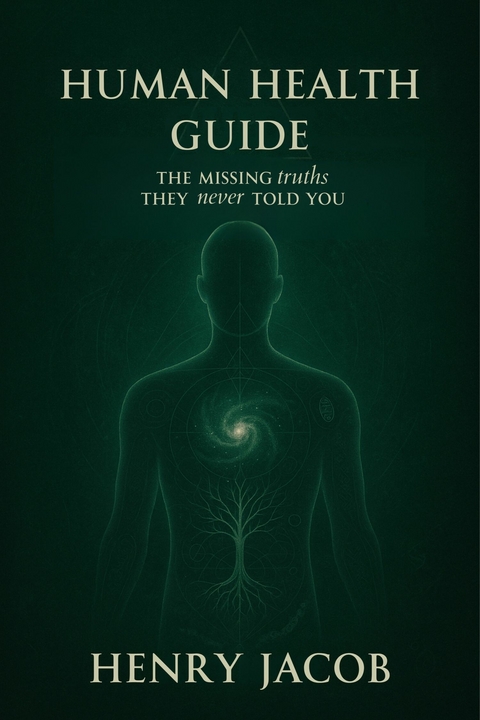
Human Health Guide (eBook)
135 Seiten
Publishdrive (Verlag)
978-0-00-097861-5 (ISBN)
Do you ever wonder why you're doing everything 'right' but still feel tired, bloated, foggy, or unwell?
Have you sensed that there are truths about health nobody is telling you?
Are you looking for a clear, no-nonsense guide to reclaim your energy, vitality, and happiness?
If you answered YES to any of these questions, keep reading...
Introducing: Human Health Guide - The Missing Truths They Never Told You
This is not your average wellness book.
Inside this eye-opening guide, you'll uncover what mainstream health advice won't tell you - and why your food, habits, and products might be quietly working against your body instead of for it.
After years of research, testing, and digging through nutritional noise, this book reveals:
1.2 The Microbiome-Disease Connection That Medicine Ignores
Despite the explosion of research around the microbiome in the past two decades, conventional medicine has been slow to integrate its insights into everyday clinical practice. There is still a large gap between what science now knows and what doctors actually apply in treatment rooms. As a result, countless patients continue to suffer from chronic conditions that are treated with prescriptions rather than understood at their roots. The truth is, many of the disorders that plague modern societies—from autoimmune diseases and allergies to depression and metabolic syndromes—are not mysterious afflictions that arise from nowhere. They are symptoms of an internal ecosystem in collapse.
One of the most underrecognized contributors to this collapse happens long before adulthood—often at birth. Cesarean deliveries, while sometimes medically necessary, are far more common than they need to be. In bypassing the birth canal, a child misses the first essential microbial bath: exposure to the mother’s vaginal and fecal microbiota. Instead, they are colonized by the sterile environment of a hospital operating room—an initial microbial imprint that lacks the diversity and immune-regulating species nature intended. Add to this the fact that many of these newborns are given antibiotics in their first few days of life, often as a preventive measure, and you begin to see a pattern of disruption that can echo for decades.
Early-life antibiotic exposure is particularly problematic. The microbiome in infancy is not just a passive collection of bacteria; it is an architect of immune development. It trains the body to differentiate friend from foe, to tolerate harmless antigens while remaining vigilant against genuine threats. When this microbial education is cut short by antibiotics, the immune system becomes confused. It may begin to attack benign particles—like pollen, gluten, or even the body’s own tissues. This is one reason why early antibiotic use is now associated with a heightened risk of autoimmune conditions, including type 1 diabetes, celiac disease, Crohn’s, and multiple sclerosis, as well as allergic diseases like eczema and asthma.
This connection between microbial disruption and immune dysfunction is rarely discussed in the exam room. Instead, autoimmune diseases are treated as if they are unfortunate accidents—random misfirings of a faulty immune system, often addressed with immunosuppressants that silence symptoms without correcting the cause. But what if the immune system isn’t broken at all? What if it’s responding exactly as it was programmed to, by a microbiome that was shaped in dysbiosis from the very beginning?
This miscalibration continues throughout life. The widespread use of antibiotics for minor infections, the consumption of ultra-processed foods that starve beneficial bacteria, the over-sanitization of environments—all of these factors create the perfect storm for gut barrier breakdown. Known as “leaky gut,” or more formally, increased intestinal permeability, this condition is at the heart of a modern epidemic of inflammation.
Under normal circumstances, your gut lining acts as a selective barrier, allowing nutrients to enter your bloodstream while keeping toxins, pathogens, and undigested food particles out. But when the microbiome is damaged—through poor diet, stress, toxins, or medications—the gut lining becomes compromised. Tight junctions between intestinal cells loosen, allowing substances that were never meant to circulate systemically to slip through the cracks.
This triggers an immune response. Your body recognizes these invaders as threats and mounts an attack, releasing inflammatory cytokines and activating white blood cells. Over time, this chronic, low-grade inflammation becomes systemic, affecting the brain, joints, skin, hormones, and virtually every organ system. It doesn’t always cause digestive symptoms—many people with leaky gut experience no bloating or discomfort at all—but the downstream consequences are profound.
Depression, for instance, is increasingly understood as an inflammatory condition. Elevated markers like C-reactive protein and interleukin-6 are common in people with major depressive disorder. This has led researchers to investigate the “gut-immune-brain” axis, where microbial imbalances trigger gut permeability, which leads to inflammation, which then disrupts neurotransmitter function and mood regulation. It’s a far more holistic and accurate model than the old “chemical imbalance” theory of serotonin deficiency.
Diabetes and obesity, too, are not just the result of overeating or laziness, as conventional wisdom once claimed. They are deeply influenced by the microbiome. Certain bacterial strains promote insulin sensitivity and energy balance, while others encourage fat storage and blood sugar spikes. When beneficial species are diminished—often by high-sugar, low-fiber diets—the metabolic system goes haywire. Insulin resistance takes root, fat accumulates, and hunger signals become distorted.
This is where the role of microbial metabolites becomes vital. Far from being passive byproducts, the substances produced by your gut bacteria are biochemically active. Short-chain fatty acids (SCFAs), such as butyrate, propionate, and acetate, are generated when fiber is fermented in the colon. These molecules reduce inflammation, strengthen the gut barrier, enhance insulin sensitivity, and even protect against cancer. They also influence the activity of regulatory T-cells, the peacekeepers of the immune system, which help prevent autoimmune flare-ups.
Bacteria also synthesize neurotransmitters like GABA, dopamine, and serotonin, all of which have powerful effects on mood, cognition, and stress resilience. In fact, some bacterial strains are now being researched as “psychobiotics”—organisms that can influence mental health through gut-mediated pathways. Vitamins like B12, folate, and K2 are likewise produced by a healthy microbiome, reinforcing the idea that your internal ecosystem isn’t just an accessory to health—it is foundational to it.
Yet modern medicine often bypasses this connection entirely. When you present with depression, you're given a selective serotonin reuptake inhibitor. When you’re diagnosed with an autoimmune disease, you’re placed on corticosteroids or immune-modulating biologics. If you’re pre-diabetic, you’re put on metformin. In none of these scenarios is your microbiome tested, your diet examined, or your early microbial exposures considered. It is a blindness that costs lives.
But as with all revolutions, the tide is turning. Functional and integrative practitioners are now leading the way in connecting these dots, offering protocols that treat the microbiome as central, not peripheral. Patients are beginning to demand deeper answers. They are no longer satisfied with temporary relief. They want root cause resolution. And that resolution begins where few are taught to look—deep in the gut, in the lost kingdom of microbes that modern life has nearly forgotten.
1.3 Rebuilding Your Inner Ecosystem for Optimal Health
Once you understand how crucial your microbiome is to every aspect of your health, the next logical question is: how do I fix it? Unfortunately, the answer is not as simple as popping a probiotic pill or switching to Greek yogurt. While the supplement industry would have you believe otherwise, rebuilding a damaged microbial ecosystem requires intention, time, and an approach that goes far beyond surface-level fixes.
Let’s start with probiotics. Most commercial probiotic supplements are composed of a few strains of Lactobacillus or Bifidobacterium, freeze-dried and encapsulated for convenience. While these can be helpful in certain scenarios—like recovering from a round of antibiotics—they often fail to colonize the gut long-term. The strains used are typically not human-native, and they pass through the digestive system like tourists rather than settlers.
More promising are spore-forming and soil-based organisms (SBOs), which have a natural resilience that allows them to survive the harsh acidity of the stomach and reach the colon intact. These microbes are more akin to the kinds our ancestors would have encountered regularly through contact with dirt, wild plants, and unchlorinated water sources. Today, we scrub our vegetables, sanitize our hands, and filter our environments to the point that these beneficial organisms are nearly extinct in urban populations. Reintroducing them—whether through specific SBO supplements or exposure to natural environments—is one of the most effective ways to diversify the gut.
Fermented foods are another potent tool. But not the pasteurized, vinegar-laden pickles and yogurts found on grocery shelves. We’re talking about traditional, wild ferments: raw sauerkraut, kimchi, kefir, kombucha, miso, natto. These foods teem with live cultures, many of which are yet to be fully identified by science but have co-evolved with human digestion for thousands of years. Regular consumption of these foods can help reseed the gut with transient but therapeutically active microbes, while also providing enzymes and bioactive compounds that support digestion and immune function.
However, restoring the microbiome isn’t just about adding bacteria. It’s also about feeding the ones you already have. This is where prebiotics come in—non-digestible fibers that act as food for beneficial microbes. But not all prebiotics are created equal. Some, like resistant starch found in cooked-and-cooled potatoes or green bananas, selectively nourish butyrate-producing bacteria. Others, like polyphenols in berries and dark...
| Erscheint lt. Verlag | 25.7.2025 |
|---|---|
| Sprache | englisch |
| Themenwelt | Sachbuch/Ratgeber ► Beruf / Finanzen / Recht / Wirtschaft |
| ISBN-10 | 0-00-097861-2 / 0000978612 |
| ISBN-13 | 978-0-00-097861-5 / 9780000978615 |
| Informationen gemäß Produktsicherheitsverordnung (GPSR) | |
| Haben Sie eine Frage zum Produkt? |
 EPUB (Adobe DRM)
Größe: 4,8 MB
Kopierschutz: Adobe-DRM
Adobe-DRM ist ein Kopierschutz, der das eBook vor Mißbrauch schützen soll. Dabei wird das eBook bereits beim Download auf Ihre persönliche Adobe-ID autorisiert. Lesen können Sie das eBook dann nur auf den Geräten, welche ebenfalls auf Ihre Adobe-ID registriert sind.
Details zum Adobe-DRM
Dateiformat: EPUB (Electronic Publication)
EPUB ist ein offener Standard für eBooks und eignet sich besonders zur Darstellung von Belletristik und Sachbüchern. Der Fließtext wird dynamisch an die Display- und Schriftgröße angepasst. Auch für mobile Lesegeräte ist EPUB daher gut geeignet.
Systemvoraussetzungen:
PC/Mac: Mit einem PC oder Mac können Sie dieses eBook lesen. Sie benötigen eine
eReader: Dieses eBook kann mit (fast) allen eBook-Readern gelesen werden. Mit dem amazon-Kindle ist es aber nicht kompatibel.
Smartphone/Tablet: Egal ob Apple oder Android, dieses eBook können Sie lesen. Sie benötigen eine
Geräteliste und zusätzliche Hinweise
Buying eBooks from abroad
For tax law reasons we can sell eBooks just within Germany and Switzerland. Regrettably we cannot fulfill eBook-orders from other countries.
aus dem Bereich