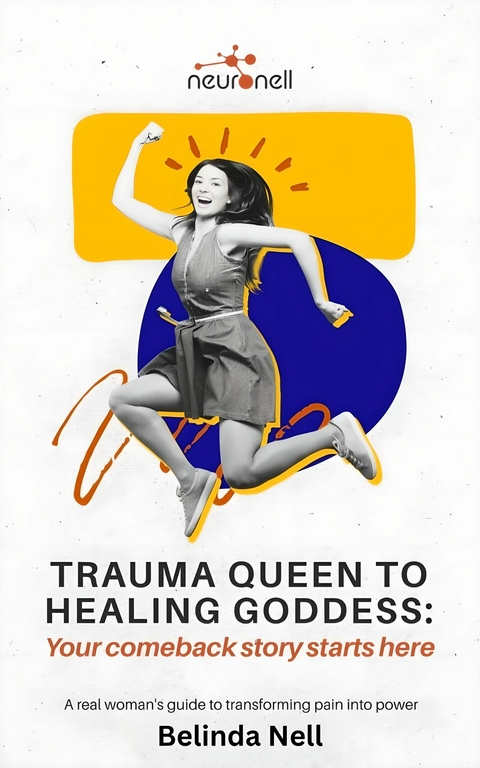
Trauma Queen To Healing Goddess (eBook)
237 Seiten
Publishdrive (Verlag)
978-0-00-095817-4 (ISBN)
Your Comeback Story Starts Here!
This isn't another 'love and light' healing manual written by someone who had their life sorted from birth. This is for the women who've been knocked down so many times they've memorised the taste of dirt yet somehow keep getting back up.
Written by someone who's collected traumas like vintage wine (except hers wasn't ageing gracefully), this brutally honest guide is for every woman who's Googled 'how to heal from trauma' at 3 AM and then closed the laptop because it all felt too overwhelming.
From surviving sexual assault and narcissistic abuse to losing sisters to cystic fibrosis and battling eating disorders, author Belinda proves that you can go through hell and come out holding flowers. Her 'trauma resume' reads like a dark comedy, but her transformation story shows that resilience isn't bouncing back -it's jumping forward into a version of yourself you never knew was possible.
This book exists because healing isn't linear, pretty, or Instagram-worthy most of the time. It's messy, uncomfortable, and requires permission slips you never knew you needed.
What you won't find here:
Toxic positivity disguised as healing advice
Promises of quick fixes or magic bullets
Shame about taking time to heal
Pressure to forgive your abusers
What you will find here:
Real talk about the messy middle of healing
Tools that actually work (tested in the real world, not just theory)
Permission to feel angry, sad, scared, and everything in between
Strategies for dealing with specific types of trauma
A roadmap from trauma queen to healing goddess
The journey from Trauma Queen to Healing Goddess isn't about erasing your past - it's about integrating it. It's about taking the fire meant to burn you down and using it to forge yourself into something unbreakable.
3
Chapter 1: The Permission Slip You Never Knew You Needed
“You have been assigned this mountain to show others it can be moved.” - Mel Robbins
Let’s start with something revolutionary: You have permission to heal at your own pace. I know, groundbreaking stuff, right? But here’s the thing, most of us have been waiting for someone to hand us an official permission slip to start our healing journey, and spoiler alert: it’s not coming.
Society has trained us to ask for permission for everything: permission to take up space, to have feelings, to prioritise ourselves, to say no, and to be angry about what happened to us. Well, consider this chapter your official permission slip for all of it.
The Permission You’ve Been Waiting For
Permission to be angry.
Your anger is valid. It’s not ugly, unladylike, or wrong. It’s information. It tells you that boundaries were crossed, that you were harmed, and that something wasn’t okay. Don’t rush to forgiveness because someone else is uncomfortable with your anger.
Permission to grieve what never was.
Grieve the childhood you didn’t have, the mother who couldn’t love you properly, the absent father, the safety you never felt, the innocence that was stolen. You can mourn these losses even if they weren’t technically “real.”
Permission to take up space.
Stop apologizing for existing. Stop making yourself smaller to make others comfortable. Stop dimming your light because someone else can’t handle your brightness.
Permission to start over at any age.
Forty isn’t too late. Fifty isn’t too late. Hell, eighty isn’t too late if you’re still breathing. Your life isn’t over because you made mistakes or took wrong turns. Every day is a chance to begin again.
Gem #5: “Your healing doesn’t need anyone else’s approval or timeline.”
The Myth of the Perfect Victim
Let’s talk about something that keeps so many of us stuck: the myth of the perfect victim. We think we must be completely innocent, blameless, and helpless to deserve healing and support.
But here’s the truth: You don’t have to be the perfect person to deserve healing. You don’t have to be innocent to deserve love. You don’t have to be helpless to deserve support.
Maybe you stayed in the abusive relationship longer than you “should have.” Maybe you went back to the narcissist multiple times. Perhaps you made choices that put you in harm’s way. Maybe you weren’t completely honest about what happened. Maybe you even enjoyed some parts of the experiences that were harmful overall.
None of this disqualifies you from healing. None of this makes the abuse your fault. None of this means you deserved what happened to you.
Gem #6: “Imperfect victims are still victims. Complicated stories are still true stories.”
Permission to Feel Everything
One of the biggest lies we’ve been told is that we should only feel “positive” emotions, that anger, sadness, fear, and pain are somehow wrong or bad, and that we should “get over it” and “move on” as quickly as possible.
But emotions aren’t good or bad, they are information. They’re messengers. And when we constantly shut them down or push them away, we’re essentially shooting the messenger instead of listening to the message.
Your emotions are valid, even the uncomfortable ones. Especially the uncomfortable ones. They’re trying to tell you something important about your experience, needs, and boundaries.
The Emotional Permission Slips
Permission to be sad without being told to “cheer up” or “look on the bright side.” Your sadness is honouring what you’ve lost. It’s appropriate. It’s healthy. It’s necessary.
Permission to be scared without being called weak or dramatic. Fear is your nervous system trying to keep you safe. Sometimes it’s accurate or outdated, but it’s always worth listening to.
Permission to be angry without being told to “calm down” or “let it go.” Your anger is pointing to injustice. It’s fuel for change. It’s power waiting to be channelled.
Permission to be numb when feeling everything becomes too much. Sometimes numbness is a protective mechanism. Don’t judge yourself for it.
Permission to feel joy even in the middle of your healing journey. You don’t have to wait until you’re “fully healed” to experience happiness. Joy and pain can coexist.
Gem #7: “Your feelings are not up for debate. They’re data, not drama.”
Permission to Set Boundaries
Boundaries aren’t walls built to keep people out - they’re gates with you as the gatekeeper, deciding who gets access to what parts of you and when.
You have permission to:
Say no without explaining yourself
Limit contact with toxic family members
End friendships that drain you
Leave conversations that make you uncomfortable
Block people on social media who trigger you
Change your mind about commitments
Put yourself first sometimes (or all the time, if needed)
The Boundary Permission Slip Exercise
Now, think of one boundary you’ve wanted to set but haven’t because you were afraid of hurting someone’s feelings or being seen as selfish. Write it down:
“I give myself permission to _________________________________.”
Now read it out loud. Feel the power in those words. That’s your voice reclaiming your right to protect yourself.
Gem #8: “Boundaries aren’t mean. They’re clear.”
Permission to Heal Differently
Your healing journey doesn’t have to look like anyone else’s. Maybe therapy works for you, perhaps it doesn’t. Maybe medication helps, maybe it doesn’t. Maybe you need to talk about your trauma, or you need to stop talking about it for a while.
Maybe you heal through art, music, movement, nature, spirituality, or none of the above. Perhaps you need to change your life completely, or maybe you need to find peace within your current circumstances.
There’s no right way to heal. There’s only your way.
Permission to Not Forgive
This is the big one. The one that makes people uncomfortable. You have permission not to forgive your abusers, your neglecters, your trauma-causers. Forgiveness is not a requirement for healing.
Forgiveness is a gift you give when and if you want to, not an obligation you owe to anyone. And if you never want to give that gift, that’s completely valid too.
You can heal, move on, find peace, and live a beautiful life without forgiving the people who hurt you. Anyone who tells you otherwise is trying to bypass your process for their own comfort.
Gem #9: “Forgiveness is not a prerequisite for freedom.”
Permission to Trust Yourself Again
Maybe you’ve been told you’re too sensitive, too dramatic, too much. Maybe you’ve been gaslit so much that you no longer trust your perceptions. Maybe you second-guess every decision, every feeling, every memory.
You have permission to trust yourself again. Your instincts didn’t break because they were trained out of you. Your intuition is still there, waiting for you to listen.
Start small. Notice what feels good in your body and what doesn’t. Pay attention to who energises you and who drains you. Trust your gut reactions before your head talks you out of them.
Your Permission Slip Ritual
Here’s what I want you to do: Get a piece of paper and write yourself an official permission slip. Include whatever permissions you need most right now. It might look something like this:
“I, [your name], give myself permission to heal at my own pace, feel all my feelings, set boundaries, take up space, and trust my experience. I permit myself to be imperfect, make mistakes, change my mind, and put my healing first. I give myself permission to write my own rules for my own life.”
Sign it. Date it. Keep it somewhere you can see it when you need reminding.
Gem #10: “You don’t need anyone’s permission to be who you are, but sometimes you need to give it to yourself.”
Moving Forward with Permission
This permission slip isn’t a one-time thing. You’ll need to renew it, update it, and remind yourself of it regularly....
| Erscheint lt. Verlag | 3.7.2025 |
|---|---|
| Sprache | englisch |
| Themenwelt | Sachbuch/Ratgeber ► Gesundheit / Leben / Psychologie ► Esoterik / Spiritualität |
| ISBN-10 | 0-00-095817-4 / 0000958174 |
| ISBN-13 | 978-0-00-095817-4 / 9780000958174 |
| Informationen gemäß Produktsicherheitsverordnung (GPSR) | |
| Haben Sie eine Frage zum Produkt? |
 EPUB (Adobe DRM)
Größe: 1,5 MB
Kopierschutz: Adobe-DRM
Adobe-DRM ist ein Kopierschutz, der das eBook vor Mißbrauch schützen soll. Dabei wird das eBook bereits beim Download auf Ihre persönliche Adobe-ID autorisiert. Lesen können Sie das eBook dann nur auf den Geräten, welche ebenfalls auf Ihre Adobe-ID registriert sind.
Details zum Adobe-DRM
Dateiformat: EPUB (Electronic Publication)
EPUB ist ein offener Standard für eBooks und eignet sich besonders zur Darstellung von Belletristik und Sachbüchern. Der Fließtext wird dynamisch an die Display- und Schriftgröße angepasst. Auch für mobile Lesegeräte ist EPUB daher gut geeignet.
Systemvoraussetzungen:
PC/Mac: Mit einem PC oder Mac können Sie dieses eBook lesen. Sie benötigen eine
eReader: Dieses eBook kann mit (fast) allen eBook-Readern gelesen werden. Mit dem amazon-Kindle ist es aber nicht kompatibel.
Smartphone/Tablet: Egal ob Apple oder Android, dieses eBook können Sie lesen. Sie benötigen eine
Geräteliste und zusätzliche Hinweise
Buying eBooks from abroad
For tax law reasons we can sell eBooks just within Germany and Switzerland. Regrettably we cannot fulfill eBook-orders from other countries.
aus dem Bereich