You Are the Temple (eBook)
260 Seiten
Publishdrive (Verlag)
978-0-00-095603-3 (ISBN)
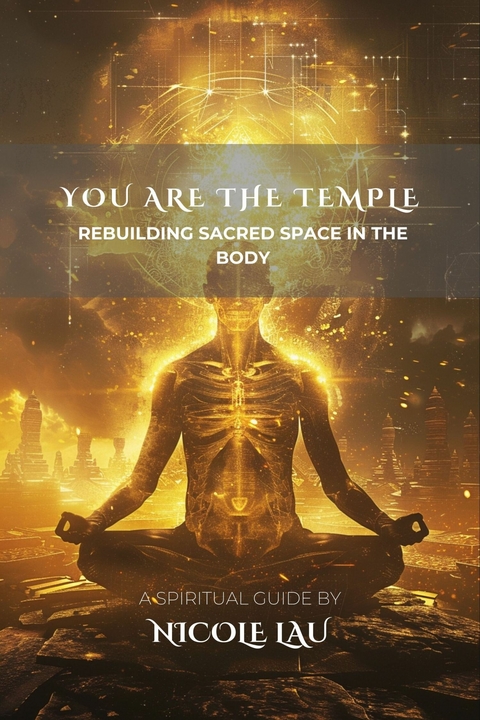
Your body is not just a vessel. It is a temple - sacred, intelligent, and ready to be rebuilt.
You Are the Temple guides you through the process of reclaiming your body as a sacred site for spirit, intention, and energetic alignment. Drawing from ritual theory, somatic awareness, esoteric anatomy, and architectural symbolism, this book invites you to reimagine your flesh, breath, and posture as ritual infrastructure.
Inside you'll discover:
The temple blueprint: mapping chakras, meridians, and ritual zones
Sacred posture and movement as architectural activation
How to cleanse, consecrate, and dedicate bodily space
Designing daily practices as micro-rituals of embodiment
Chapter 1|Forgetting and Calling Sacred Space
1.1 Physical Exile and Spiritual Separation
We are not naturally alienated from our bodies. In fact, in primitive tribes, early natural religions and female priest traditions, the body was once the most important divine container. Menstruation, pregnancy, moaning, dancing, touching, these natural phenomena and behaviors are the language of divine presence and the bridge between people and the mysterious power of the universe. In those times, every part of the body was given sacred meaning, and people experienced and understood the world through the perception and expression of the body. The concepts of "body shame", "sexual repression" and "unclean flesh" that we are accustomed to today are actually scars left over from a long and complex history of exile. The formation of these concepts is closely related to the changes in religion, culture and social structure. They reflect human fear and control of their own nature. Over time, these concepts have gradually solidified into social norms, affecting our behavior and thoughts. However, with the rise of modern thought, people have begun to re-examine these traditional concepts, explore the harmonious unity of body and spirit, and try to find those forgotten sacred connections with the body.
1. The Binary Split of Religion: The Oppositional Structure between Spirit and Flesh
In many patriarchal religious systems, spirituality is often endowed with "noble" attributes and is considered a sacred existence belonging to heaven. At the same time, the physical body is degraded to "inferior" and labeled as "full of original sin." In the Bible, Eve ate the forbidden fruit in the Garden of Eden. This behavior not only made her "know that she was naked," but also made nakedness a symbol of sin and shame. This metaphor is deeply rooted in the culture and has formed a profound cultural code: the natural state of the body not only needs to be covered up, but also needs to be corrected and judged in various ways.
In medieval church doctrine, "desire" was portrayed as the gateway to depravity, while asceticism was deified as the only way to divine salvation. Under the guidance of this religious system, the soul must "overcome" the temptations of the flesh in order to approach divinity. Therefore, the flesh became a synonym for obstacles, temptations, and dangers, and must be restrained, whipped, and tamed by various means to ensure the purity and sublimation of the soul.
However, behind all this is actually the operation of a collective power structure. The control of the body is essentially the control of individual will, gender energy, and creativity. When the sacredness of the body is deprived, the individual cannot establish a connection with the divinity on his own initiative, so that the divinity is monopolized by external authority. This authority further consolidates its dominant position in society and religion through the concept of controlling the body, making the individual strictly bound both spiritually and materially.
Furthermore, this degradation and control of the body is also reflected in the special restrictions on women. In many religious traditions, women's bodies are seen as particularly prone to sin, so they are required to dress more conservatively and their behavior is more regulated. This gender inequality is not limited to the religious field, but also has a profound impact on social structure and cultural concepts, limiting the status and power of women in society.
Furthermore, the control of the body is closely tied to the maintenance of class and power. In feudal society, the nobility and ruling class controlled the bodies and behaviors of ordinary people by enacting strict moral codes and laws. These codes and laws were often based on religious doctrines, making the control of the body a tool of social control. In this way, the ruling class was able to maintain its social status and power while suppressing resistance and dissatisfaction among the lower classes.
In modern society, although religious control over the body has weakened, its influence still exists. In some cultures, the sense of shame and guilt about the natural state of the body is still deeply rooted, affecting people's lifestyles and values. Although modern science and humanistic thought advocate the naturalness of the body and individual freedom, the remnants of traditional concepts still play a role in some corners, reminding us that the relationship between body and mind is a complex and delicate topic.
2. Patriarchal Institutional Design: The Divinity of Women’s Bodies is Suppressed
Throughout human history, women's bodies have been endowed with extremely important symbolic significance and sacred status. They are not only the bearers of life, but also the bridge connecting nature and the universe. Women's bodies symbolize the door to fertility, and their lunar cycle - menstruation, is seen as a symbol of the endless cycle of nature and a medium for dialogue between Mother Earth and the vast universe. However, with the establishment and consolidation of patriarchy, this sacredness of women's bodies has undergone a fundamental change.
From the perspective of patriarchal society, women's bodies are no longer seen as sacred portals, but have become objects that need to be strictly disciplined and controlled. Women's uteruses, once a mysterious place regarded as the source of life, have been redefined by the medical community as potential "lesion areas". Menstruation, a natural physiological phenomenon, has been stigmatized as "unclean". Childbirth, a natural reproductive process, has been medicalized and institutionalized, losing its original natural and sacred attributes. Sex, as part of human instinct, has also been labeled with shame and even reduced to an object of trade.
In this process, the guardians of traditional knowledge such as witchcraft and priestesses have been marginalized or even persecuted, and their knowledge and wisdom have been systematically erased. Women's body knowledge, once a precious treasure passed down from generation to generation, has become fragmented. Many women know little about their body structure and menstrual cycle, and even feel ashamed when talking about these topics.
This misunderstanding and control of women's bodies is not just an individual problem, it reflects a deeper social structural problem. This is a manifestation of a civilization's systematic blockade of the divinity of the body, and a systematic elimination of the original wisdom of "body perception". This elimination not only deprives women of their understanding and control over their own bodies, but also deprives them of their due status and dignity in society and culture.
In ancient societies, women's body knowledge and fertility were worshipped and respected. For example, in ancient Egypt, the goddess Isis symbolized fertility and magic, and her image and story were widely circulated. In Greek mythology, the goddess Demeter was in charge of agriculture and fertility, and her story also reflected the sacredness of the female body. However, as history evolved, these myths and beliefs that symbolized women's power were gradually marginalized, replaced by the control and devaluation of women's bodies.
In medieval Europe, the church and medical authorities joined forces to further consolidate negative views of women's bodies. Women's physical characteristics were seen as weaknesses and defects, and their menstruation was seen as a source of evil, and was even used to explain why women were inherently inferior to men. The spread of this concept further reduced women's status in society, and their voices and choices were ignored or even deprived.
To this day, this negative view of women’s bodies remains deeply rooted in certain cultures and societies. Women still face misunderstandings and prejudices from society when it comes to physiological processes such as menstruation, pregnancy and childbirth. This prejudice not only affects women’s self-perception, but also their status and opportunities in education, the workplace and the family.
Therefore, to change this situation, we need to conduct a profound reflection and change in culture and social structure. We need to rediscover and respect the female body and restore its sacredness and power. We need education and advocacy to give women a deeper understanding and control over their bodies, so that they can proudly talk about their menstrual cycles without shame. We need to break the stereotypes that restrict women's development and give women equal status and respect in society.
This is not only a personal problem, but a structural problem. It is a civilization that is systematically blocking the divinity of the body and systematically eliminating the original wisdom of "body perception". Only through comprehensive social and cultural changes can we truly liberate women's bodies and allow their physiology and psychology to be fully respected and free.
3. The Modern Medical System and the Downgraded Model of the “Mechanical Body”
After the spirituality was driven out of the body, modern medicine further deepened the concept of the body as a "disassembled machine." We are trained to "rely on experts" and let experts tell us what is happening in the body, rather than listening to and trusting the messages sent by the body itself.
Pain, the wisdom of the body in transmitting signals, is no longer valued...
| Erscheint lt. Verlag | 30.6.2025 |
|---|---|
| Sprache | englisch |
| Themenwelt | Sachbuch/Ratgeber ► Gesundheit / Leben / Psychologie ► Esoterik / Spiritualität |
| ISBN-10 | 0-00-095603-1 / 0000956031 |
| ISBN-13 | 978-0-00-095603-3 / 9780000956033 |
| Informationen gemäß Produktsicherheitsverordnung (GPSR) | |
| Haben Sie eine Frage zum Produkt? |
 EPUB (Adobe DRM)
Größe: 1,2 MB
Kopierschutz: Adobe-DRM
Adobe-DRM ist ein Kopierschutz, der das eBook vor Mißbrauch schützen soll. Dabei wird das eBook bereits beim Download auf Ihre persönliche Adobe-ID autorisiert. Lesen können Sie das eBook dann nur auf den Geräten, welche ebenfalls auf Ihre Adobe-ID registriert sind.
Details zum Adobe-DRM
Dateiformat: EPUB (Electronic Publication)
EPUB ist ein offener Standard für eBooks und eignet sich besonders zur Darstellung von Belletristik und Sachbüchern. Der Fließtext wird dynamisch an die Display- und Schriftgröße angepasst. Auch für mobile Lesegeräte ist EPUB daher gut geeignet.
Systemvoraussetzungen:
PC/Mac: Mit einem PC oder Mac können Sie dieses eBook lesen. Sie benötigen eine
eReader: Dieses eBook kann mit (fast) allen eBook-Readern gelesen werden. Mit dem amazon-Kindle ist es aber nicht kompatibel.
Smartphone/Tablet: Egal ob Apple oder Android, dieses eBook können Sie lesen. Sie benötigen eine
Geräteliste und zusätzliche Hinweise
Buying eBooks from abroad
For tax law reasons we can sell eBooks just within Germany and Switzerland. Regrettably we cannot fulfill eBook-orders from other countries.
aus dem Bereich