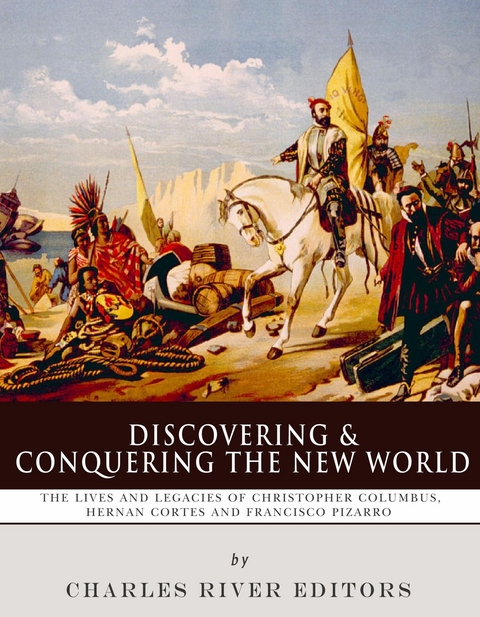
Discovering and Conquering the New World (eBook)
110 Seiten
Charles River Editors (Verlag)
978-1-4753-2912-4 (ISBN)
The most seminal event of the last millennium might also be its most controversial. As schoolchildren have been taught for over 500 years, 'In 1492 Columbus sailed the ocean blue.' In October of that year, the Italian Christopher Columbus immortalized himself by landing in the New World and beginning the process of European settlement in the Americas for Spain, bringing the Age of Exploration to a new hemisphere with him. Ironically, the Italian had led a Spanish expedition, in part because the Portugese rejected his offers in the belief that sailing west to Asia would take too long.
Columbus had better luck with the Spanish royalty, successfully persuading Queen Isabella to commission his expedition. In August 1492, Columbus set west for India at the helm of the Nina, Pinta and Santa Maria. Befitting a legendary trip, the journey was star-crossed from the beginning. The Pinta's rudder broke early on, and just days into the journey Columbus' compass stopped pointing due north and started pointing to the Earth's magnetic north pole, something the Europeans knew nothing about. Columbus knew that the uncertainty of the expedition's destination made his crew nervous, so he hid his compass' 'malfunction' from his crew. Additionally, after 30 days of sailing, the expedition still had not sighted land, so Columbus started lying to his crew about the distance they sailed each day, telling them they had sailed fewer miles than they actually had so as not to scare them even more.
On October 7, 1492, the three ships spotted flocks of birds, suggesting land was nearby, so Columbus followed the direction in which the birds flew. On the night of October 11, the expedition sighted land, and when Columbus came ashore the following day in the Bahamas, he thought he was in Japan, but the natives he came into contact with belied the descriptions of the people and lands of Asia as wealthy and resourceful. Instead, the bewildered Columbus would note in his journal that the natives painted their bodies, wore no clothes and had primitive weapons, leading him to the conclusion they would be easily converted to Catholicism. When he set sail for home in January 1493, he brought several imprisoned natives back to Spain with him.
During the Age of Exploration, some of the most famous and infamous individuals were Spain's best known conquistadors. Naturally, as the best known conquistador, Hernán Cortés (1485-1547) is also the most controversial. Like Christopher Columbus before him, Cortés was lionized for his successes for centuries without questioning his tactics or motives, while indigenous views of the man have been overwhelmingly negative for the consequences his conquests had on the Aztecs and other natives in the region. Just about the only thing everyone agrees upon is that Cortés had a profound impact on the history of North America.
If Columbus and Cortés were the pioneers of Spain's new global empire, Pizarro consolidated its immense power and riches, and his successes inspired a further generation to expand Spain's dominions to unheard of dimensions. Furthermore, he participated in the forging of a new culture: like Cortés, he took an indigenous mistress with whom he had two mixed-race children, and yet the woman has none of the lasting fame of Cortés's Doña Marina. With all of this in mind, it is again remarkable that Pizarro remains one of the less well-known and less written about of the explorers of his age.
On the other hand, there are certain factors that may account for the conqueror of Peru's relative lack of lasting glory. For one, he was a latecomer in more than one sense. Cortés's reputation was built on being the first to overthrow a great empire, so Pizarro's similar feat, even if it bore even greater fruit in the long run, would always be overshadowed by his predecessor's precedent.
The most seminal event of the last millennium might also be its most controversial. As schoolchildren have been taught for over 500 years, "e;In 1492 Columbus sailed the ocean blue."e; In October of that year, the Italian Christopher Columbus immortalized himself by landing in the New World and beginning the process of European settlement in the Americas for Spain, bringing the Age of Exploration to a new hemisphere with him. Ironically, the Italian had led a Spanish expedition, in part because the Portugese rejected his offers in the belief that sailing west to Asia would take too long.Columbus had better luck with the Spanish royalty, successfully persuading Queen Isabella to commission his expedition. In August 1492, Columbus set west for India at the helm of the Nina, Pinta and Santa Maria. Befitting a legendary trip, the journey was star-crossed from the beginning. The Pinta s rudder broke early on, and just days into the journey Columbus compass stopped pointing due north and started pointing to the Earth s magnetic north pole, something the Europeans knew nothing about. Columbus knew that the uncertainty of the expedition s destination made his crew nervous, so he hid his compass malfunction from his crew. Additionally, after 30 days of sailing, the expedition still had not sighted land, so Columbus started lying to his crew about the distance they sailed each day, telling them they had sailed fewer miles than they actually had so as not to scare them even more. On October 7, 1492, the three ships spotted flocks of birds, suggesting land was nearby, so Columbus followed the direction in which the birds flew. On the night of October 11, the expedition sighted land, and when Columbus came ashore the following day in the Bahamas, he thought he was in Japan, but the natives he came into contact with belied the descriptions of the people and lands of Asia as wealthy and resourceful. Instead, the bewildered Columbus would note in his journal that the natives painted their bodies, wore no clothes and had primitive weapons, leading him to the conclusion they would be easily converted to Catholicism. When he set sail for home in January 1493, he brought several imprisoned natives back to Spain with him.During the Age of Exploration, some of the most famous and infamous individuals were Spain s best known conquistadors. Naturally, as the best known conquistador, Hernan Cortes (1485-1547) is also the most controversial. Like Christopher Columbus before him, Cortes was lionized for his successes for centuries without questioning his tactics or motives, while indigenous views of the man have been overwhelmingly negative for the consequences his conquests had on the Aztecs and other natives in the region. Just about the only thing everyone agrees upon is that Cortes had a profound impact on the history of North America.If Columbus and Cortes were the pioneers of Spain s new global empire, Pizarro consolidated its immense power and riches, and his successes inspired a further generation to expand Spain s dominions to unheard of dimensions. Furthermore, he participated in the forging of a new culture: like Cortes, he took an indigenous mistress with whom he had two mixed-race children, and yet the woman has none of the lasting fame of Cortes s Dona Marina. With all of this in mind, it is again remarkable that Pizarro remains one of the less well-known and less written about of the explorers of his age.On the other hand, there are certain factors that may account for the conqueror of Peru s relative lack of lasting glory. For one, he was a latecomer in more than one sense. Cortes s reputation was built on being the first to overthrow a great empire, so Pizarro s similar feat, even if it bore even greater fruit in the long run, would always be overshadowed by his predecessor s precedent.
| Erscheint lt. Verlag | 20.6.2025 |
|---|---|
| Sprache | englisch |
| Themenwelt | Literatur ► Biografien / Erfahrungsberichte |
| Sachbuch/Ratgeber ► Freizeit / Hobby ► Sammeln / Sammlerkataloge | |
| Schlagworte | aztec • Genocide • Inca • Indigenous • Maya • Native American • Spain |
| ISBN-10 | 1-4753-2912-1 / 1475329121 |
| ISBN-13 | 978-1-4753-2912-4 / 9781475329124 |
| Informationen gemäß Produktsicherheitsverordnung (GPSR) | |
| Haben Sie eine Frage zum Produkt? |
 EPUB (Ohne DRM)
Digital Rights Management: ohne DRM
Dieses eBook enthält kein DRM oder Kopierschutz. Eine Weitergabe an Dritte ist jedoch rechtlich nicht zulässig, weil Sie beim Kauf nur die Rechte an der persönlichen Nutzung erwerben.
Dateiformat: EPUB (Electronic Publication)
EPUB ist ein offener Standard für eBooks und eignet sich besonders zur Darstellung von Belletristik und Sachbüchern. Der Fließtext wird dynamisch an die Display- und Schriftgröße angepasst. Auch für mobile Lesegeräte ist EPUB daher gut geeignet.
Systemvoraussetzungen:
PC/Mac: Mit einem PC oder Mac können Sie dieses eBook lesen. Sie benötigen dafür die kostenlose Software Adobe Digital Editions.
eReader: Dieses eBook kann mit (fast) allen eBook-Readern gelesen werden. Mit dem amazon-Kindle ist es aber nicht kompatibel.
Smartphone/Tablet: Egal ob Apple oder Android, dieses eBook können Sie lesen. Sie benötigen dafür eine kostenlose App.
Geräteliste und zusätzliche Hinweise
Buying eBooks from abroad
For tax law reasons we can sell eBooks just within Germany and Switzerland. Regrettably we cannot fulfill eBook-orders from other countries.
aus dem Bereich