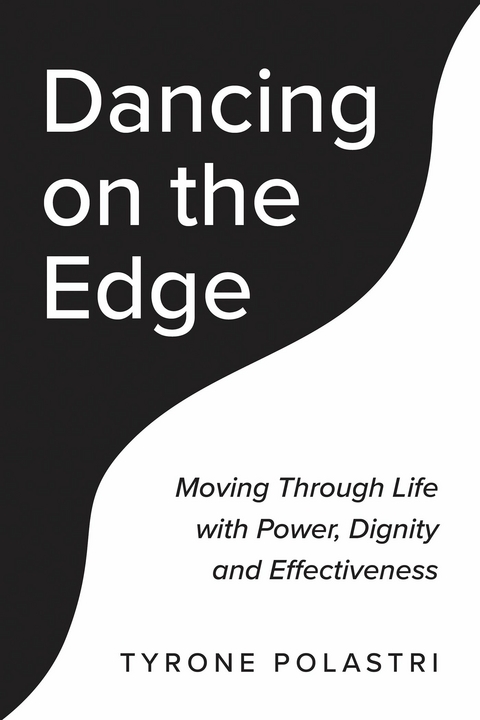
Dancing on The Edge (eBook)
288 Seiten
Bookbaby (Verlag)
979-8-3509-5966-6 (ISBN)
Ty Polastri is a ski coach, personal mastery trainer, and sports business professional. Over forty years ago, skiing led him to join a small group of media professionals to become one of the first Americans to ski in the USSR. Soon after, Polastri built his EnterSki ski schools and began co-producing a popular Northern California TV ski series and developing sales promotions for leading companies. His business grew with the formation of Entersport, producing special events and offering sport marketing consultancy for business-to-business and business-to-consumer applications. At the University of California Berkeley Extension, Business Department, Ty helped with curriculum design and taught sport, special event, sponsorship marketing, and publicity. Working with human potential pioneers, George Leonard and Michael Murphy of Aikido of Tamalpais and Esalen Institute respectively, and continuing his education in somatics and leadership, Polastri launched the Institute for Integral Living in Tiburon, California, leading personal mastery programs, workshops, and retreats for the public and organizations. Polastri returned to Lake Tahoe to help transform the region into a bicycle-friendly community and became a ski school manager. He co-founded the Lake Tahoe Bicycle Coalition and continues coaching skiing today at Heavenly Mountain Resort. When not on the snow, he directs Team Tahoe, a regional nonprofit promoting eco-friendly programs and initiatives (BikeTahoe.org) and rides his bike. He is currently working on his next book. If you would like to contact Ty, you can reach him on LinkedIn and through his website, biketahoe.org.
An adventure for a lifetime in three parts. It metaphorically draws a fascinating parallel with the skier's progression of edge control mastery: discovering your edge, tuning your edge, and dancing on your edge. In each part are chapters inviting the reader to participate in experiential exercises, find inspiration through personal stories, and gain valuable insights about ways to navigate successfully with uncertainty, conflicts, or opportunities. Skiers and individuals that develop this ability can make choices that align with their values, goals, and destination. A time of social, economic, and political tension caused by issues fueling extremism, disrespect, and divisiveness in societies, leaving us with feelings of instability and uncertainty about the future. These feelings can shake us to our core, having us seeking balance and challenging us to stay, reclaim or redefine our life's path. How do we navigate in this unsettling environment? What competencies are best suited for these dynamics of change around us and within us? Where do we go to learn these skills and from whom?Dancing on the Edge is a guiding resource available to anyone wanting to increase their capacities during times of change or adopting the personal mastery competencies for becoming the best version of themselves. Along this journey, the reader travels a path awakening their self-knowledge by clarifying their values and what is important to them. They will encounter invitations to revisit the source of their voice, the power of their words, and their listening to understand and resolve conflict. These experiences foster resiliency during adversity, and actively build essential body mind competencies, such as emotional intelligence, authentic communication, creative curiosity, and overall balance.
Preface
Life and all the vast experiences we encounter can feel like riding on a roller coaster. Sometimes we hold our breath out of fear of the unknown. Other times, we shout with joy as we move along our path. We will experience these opposing realities intermittently throughout our life’s journey.
Clearly, life is fun and wonderful when everything is flowing our way. It can feel effortless when our visions, actions, and relationships all coalesce in a harmonious movement. In these moments, life is good, like an expansive breath full of confidence, creativity, and possibility. Along with this ride are also the unexpected events and situations that can significantly interrupt our joy ride. These can be the results from actions we’ve taken or avoided, illness, loss of work, or losing loved ones, to name a few.
There is a space of time, though, a gap that occurs between life’s interruptions and the subsequent decisions we make. That gap is called the edge of uncertainty, where we dance back and forth about what our next moves could be. Some of us ponder what to do, how to do it, and what the consequences of our decisions could be. And others may feel alone and ill-equipped to know what questions to ask, what resources are available, or what steps to take.
In this place between knowing and not knowing, this edge, is a dynamic tension for potential change. It is a tension of excitable energy common when on the edge of decision-making. That change depends upon the integrity of our decisions and the passing of time before making them. The time between deciding and taking action holds tremendous power to affect us—positively and negatively. Some decisions are quick and easy to make; others can cause us to ponder over time or even freeze us into indecision.
I have danced on that edge of tension. Actually, no one is free of it. Events happen, and our response to them makes us who we are, which defines our journey.
Sometimes while on the edge I’ve felt deflated, alone, and in fear. There were edges of conflict, such as deciding whether to go to war. Or standing up for truth against power. Many years ago, the unexpected breakup of a long-term relationship left me feeling numb and caused me to act without regard to the consequences. I carried on with behaviors my inner wisdom told me were risky and unhealthy, yet I chose not to listen and did them, anyway.
During these times, I felt I had lost my way and didn’t have a map to get on course toward a destination I hadn’t yet envisioned. It felt like I was on a bobbing sailboat in the middle of the Pacific Ocean during a moonless night, where the shifting winds had power over me. I was drifting without a hand on the helm or the power to course-correct.
Through these challenging periods, I felt overwhelmed and unprepared to make productive decisions. I wondered where I could go and with whom could I learn from. What were the resources or skills I need to empower myself with clarity of purpose? And which tools would help me manifest my purpose?
One day, a dear friend sent me a life preserver for my birthday. It was an invitation to attend a weekend self-improvement workshop. I had never attended such a workshop before, so I was apprehensive. But I trusted my friend’s wisdom, who had previously attended, and said it had been beneficial to her.
One exercise at the workshop directed me to declare my intention to the person standing in front of me, while two people stood behind, whispering in each ear. Their whispers were not encouragement; they represented the negative self-talk we can have about our ideas. I ignored the negative chatter and instead focused on my intention.
My declaration was to work with George Leonard and Michael Murphy, the two guys who coined the phrase “human potential.” Over the years, I had followed their writings and felt deeply aligned with their vision of humanity’s potential to grow and serve.
George’s background included serving as the senior editor of Look magazine, co-founding Aikido of Tamalpais, and serving as president of Esalen Institute in Big Sur, California. Michael is the cofounder of the Esalen Institute. Both of them are prolific authors and workshop leaders on human potential. They lived in Marin County, north of San Francisco, where I was also a resident, but we had never met.
Three months following the exercise, out of nowhere, a letter from George and Michael arrived at my house. It startled me. It was an invitation to participate in a ten-month program they were developing to test their hypothesis. Over the years, they saw workshop participants experiencing breakthroughs, only to slip back into old habits just days later.
They believed people could not make sustainable change through a weekend retreat but through long-term daily practice. They called the program Integral Transformative Practice (ITP). For ten months, forty-plus invitees would meet every Saturday for two hours and then practice the Kata during the week. The Kata was a thirty-five-minute routine composed of yoga and aikido moves, visualization, mediation, and saying affirmations.
The Saturday sessions were powerful experiential processes, provoking insights and deepening our practice. George developed these processes with a couple of his aikido colleagues. They adapted aikido moves by changing their context to apply to daily life and called them Leonard Energy Training (LET).
Following two years of the ten-month sessions, they discontinued leading the program to write a book about it called The Life We Are Given. I became an LET and ITP trainer and assumed leadership with a couple of colleagues. We continued the program for several years. During that time, my knowledge grew. I attended trainings in emotional intelligence, coaching, ministry, somatics, and leadership. I also continued my sport marketing efforts and teaching at UC Berkeley Extension Business Department.
That period in my life was pivotal in helping clarify my gifts and build the competencies for being a more authentic and effective leader. In many respects, the personal mastery tools and practices learned during that time strengthened what I intuitively realized during my development of the EnterSki Learning Approach and the EnterSki Training Centers. But it was now validated by well-known authorities in the fields of psychology, somatics, emotional intelligence, aikido, meditation, and kinesiology. This validation did two things: One, it deepened my confidence to use and offer these powerful tools to others. Two, I began noticing the synergy of these practices in my personal and professional relationships and endeavors.
It immediately became clear that I could authentically connect with my ski students and build trusting relationships. These relationships enabled me to move them out of their comfort zones and experience a new version of themselves as a skier, and possibly more. Through their vulnerability and trust, I gained empathic insights into their human story. Stories filled with excitement, expectation, fear, and self-doubt—all being held and expressed through their body.
As ski instructors, we train to assess the effective movement patterns of our students. We call it movement analysis. This requires developing a keen eye for identifying specific skills, then coaching our students to further develop their skiing as we build a lesson plan to accomplish it. For most instructors, this is a biomechanical process for coaching efficiencies of movement for a dance-like sport called skiing. But for me, it’s different.
As a personal mastery trainer, I see and understand each person as having a unique story living in and through their body. While not fully known at the outset, I see somatic indicators such as body rigidness, breath holding, moving away from fear, and the use of negative self-assessment words. These indicators can lead me to inquire about what the person is experiencing so I can bring their awareness to what may impede their learning and skill building.
These body stories are the living history of experiences, habits, and beliefs that travel with us wherever we go and in whatever we do. They most often reveal themselves when we move out of our comfort zone and onto the edge of vulnerability and uncertainty. Learning to ski, or undertaking any new skill or endeavor, is certain to activate and reveal how a person’s stories can influence their actions—consciously and unconsciously.
Over decades of teaching thousands of students on and off the mountain, I compassionately understand the dynamics of human behavior when people move to an edge of change. The change to learn something new, to adapt to unforeseen situations, and to become the best version of themselves.
Having a tool box with powerful tools and practices to draw upon for the growth and fulfillment of one’s goals and aspirations is one of the most valuable resources on this journey. I like to call them “the tools of personal mastery.” They are useful whether you are a skier, business professional, student, or someone envisioning their next moves.
I trust and rely on the effectiveness of these tools to affect positive personal and professional growth, and I want to make them available to you in the following chapters. For fun, I’m using skiing, as a change of context, to appeal to your curiosity and desire to learn new competencies with a fresh set of eyes.
It’s a...
| Erscheint lt. Verlag | 25.11.2024 |
|---|---|
| Sprache | englisch |
| Themenwelt | Sachbuch/Ratgeber ► Beruf / Finanzen / Recht / Wirtschaft |
| ISBN-13 | 979-8-3509-5966-6 / 9798350959666 |
| Informationen gemäß Produktsicherheitsverordnung (GPSR) | |
| Haben Sie eine Frage zum Produkt? |
 EPUB (Ohne DRM)
Größe: 1,0 MB
Digital Rights Management: ohne DRM
Dieses eBook enthält kein DRM oder Kopierschutz. Eine Weitergabe an Dritte ist jedoch rechtlich nicht zulässig, weil Sie beim Kauf nur die Rechte an der persönlichen Nutzung erwerben.
Dateiformat: EPUB (Electronic Publication)
EPUB ist ein offener Standard für eBooks und eignet sich besonders zur Darstellung von Belletristik und Sachbüchern. Der Fließtext wird dynamisch an die Display- und Schriftgröße angepasst. Auch für mobile Lesegeräte ist EPUB daher gut geeignet.
Systemvoraussetzungen:
PC/Mac: Mit einem PC oder Mac können Sie dieses eBook lesen. Sie benötigen dafür die kostenlose Software Adobe Digital Editions.
eReader: Dieses eBook kann mit (fast) allen eBook-Readern gelesen werden. Mit dem amazon-Kindle ist es aber nicht kompatibel.
Smartphone/Tablet: Egal ob Apple oder Android, dieses eBook können Sie lesen. Sie benötigen dafür eine kostenlose App.
Geräteliste und zusätzliche Hinweise
Buying eBooks from abroad
For tax law reasons we can sell eBooks just within Germany and Switzerland. Regrettably we cannot fulfill eBook-orders from other countries.
aus dem Bereich