


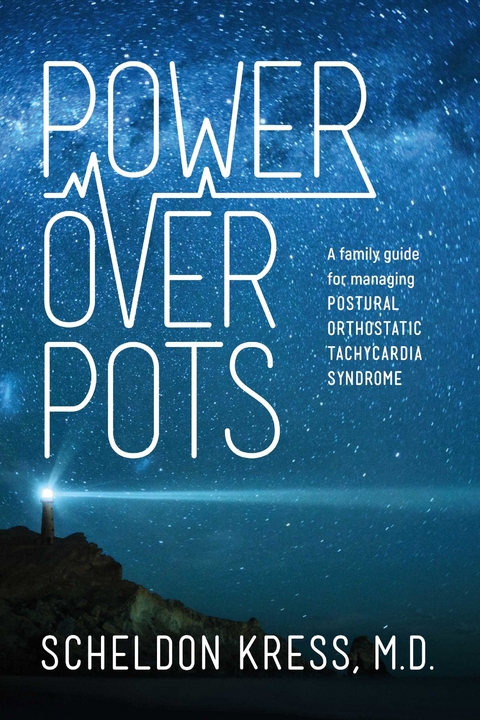
Power Over POTS (eBook)
238 Seiten
Bookbaby (Verlag)
978-1-5439-1158-9 (ISBN)
While POTS is among one of the most common medical disorders affecting adolescents and young adults, both health care professionals and patients generally know very little about this strange condition. The majority of POTS (postural orthostatic tachycardia syndrome) patients suffer with mysterious and frightening symptoms while searching for a diagnosis for many years. Without a proper diagnosis, there is no possibility of treatment. Otherwise healthy appearing adolescents, primarily females, frequently report racing hearts, headaches, fatigue, weakness, dizziness, "e;brain fog,"e; visual and abdominal disturbances when upright. Such symptoms play havoc on one's lifestyle by curtailing one's daily activities. Most frequently the onset of POTS symptoms coincides with the puberty growth spurt of adolescence. Adolescence is an important period of developmental change. Puberty is associated with maturing of many biological systems including sexual, brain and nervous systems. POTS can be compared to an adolescent with a newly acquired skyscraper body (tall structure) that has grown quickly - but, the building's electrical wiring system (autonomic functions) has not yet matured fully and is malfunctioning. Rapid growth spurts test the ability of an immature autonomic (automatic bodily functions) system to cope with a rapidly enlarging physical structure. The autonomic processes, by necessity, must keep making adjustments to keep up with the latest skyscraper-like growth. What worked well last year must adjust further for today's taller body. Peak incidence of POTS occurs in the 10-30 year age group. During the past 15 years, many medical centers have studied POTS patients and have determined the mechanisms responsible for this bizarre condition. The body's difficulty adjusting to the upright position has been proven to be due to gravitational shifting of blood to the lower body while upright which results in decreased heart outflow. If you or a loved one has POTS, this book is for you. Every page is packed with facts you need to know. Not only is it enlightening, it will help you take back your life and achieve POWER over POTS.
Chapter 1:
What is POTS?
Why Is It Called POTS?
Postural Orthostatic Tachycardia Syndrome (POTS) may sound like a mouthful, but when broken down, it refers to a common medical condition that is rarely recognized even by well-trained and experienced physicians. Postural (relates to posture), orthostatic (relates to being upright), tachycardia (relates to rapid heart rate) and syndrome (relates to a collection of symptoms). POTS is not a disease. POTS is a recognized chronic medical condition identified with increasing frequency among otherwise healthy appearing adolescents and young adults. Like so many others, you must have lots of questions you want to ask. Let’s get started, this book has the answers you’re looking for.
It has been estimated that as many as 3 million young Americans share the symptoms of this bizarre condition. More are discovered daily. POTS has even been recognized world-wide. It has been recognized primarily among children, teenagers and young adults. Most cases go unrecognized and undiagnosed. Even though symptoms most frequently start around adolescence, they can be present for decades before the diagnosis is recognized. Currently almost fifty articles appear in medical journals each year reporting on studies of POTS by medical investigators from around the world. While the sudden appearance of so many articles dealing with POTS suggests a worldwide epidemic - actually all it confirms is growing recognition and interest in this disorder.
POTS is characterized by rapid heartbeat when standing upright. The primary symptom complex consists of orthostatic (standing upright) intolerance - the body’s difficulty adjusting to the upright position. Rapid heart rate occurs upon assuming an upright posture or standing position and slowly reverses when sitting or reclining. When considering the presence of POTS, dehydration, medications and many debilitating diseases need to be excluded, as their symptoms can mimic POTS.
All symptoms of POTS are related to an excessive gravitational shifting of blood from the upper to the lower body - decreased refilling of the heart - decreased cardiac output - and sympathetic nervous system over-activity. Among the most common symptoms are fatigue, headaches, light-headedness, “brain fog,” eye and abdominal disturbances. Symptoms may be constant or vary from day to day or week to week, but need to be present for at least 3-6 months to establish the diagnosis.
POTS is best recognized by the absolute heart rate rising by greater than 30 beats per minute (BPM) or exceeding 120 BPM without a fall in blood pressure within 8 to 10 minutes of going from the supine (lying flat) position to an orthostatic (upright or head-up) posture in the absence of another chronic disorder. Typically, the rise in heart rate occurs within the first 2 minutes of assuming an upright position. Among children and teens the absolute heart rate rises by greater than 40 beats per minute (BPM) and may exceed 130 BPM, more than among young adults. While fatigue, lightheadedness and feeling faint are common components, low blood pressure (hypotension) is not a common finding characteristic of POTS.
Lack of the presence of a known single cause does not diminish the severe physical, mental and social incapacitation experienced by those who have POTS and the strain on their families.
How Common Is POTS?
Imagine a high achieving middle school student, who suddenly has severe headaches most mornings, cannot recall homework assignments or significant recent events. Imagine a teenager who gets exhausted after minimal activity. Imagine a teenager who declines to participate in favorite activities such as parties with friends, shopping or attending a favorite team’s sporting event. Imagine athletes who are suddenly too fatigued to get out of bed and forced to restrict their activities. POTS can be this debilitating! It’s estimated that as many as 3 million Americans suffer with POTS, with millions more worldwide. The incidence is estimated at up to 170/100,000, primarily female Caucasians. The highest incidence is among teens, twenty and thirty year olds. Most frequently the initial symptoms start around adolescence, with peak onset between 10 and 19 years of age. Many POTS patients are aware of a family member who recalls having similar POTS-like symptoms when they were younger.
When Did POTS Start?
When Homo sapiens (earliest man) first assumed an upright posture, the circulatory system was presented with a new physiological challenge. The circulatory system had to figure out how to move blood from the legs “upward against gravity,” all the way up to that all-important brain. When the body is upright, both during standing and walking, the circulatory system is most stressed. How can the body move blood up the legs against gravity? Returning blood from the legs back to the heart is a challenge even among normal individuals. Rather than having diseased organs, POTS represents autonomic dysfunction (failure of several automatic bodily functions). Automatic processes are responsible for maintaining upward circulation while upright. Normal complex biologic processes (automatic bodily functions) are responsible for ensuring return of blood from the lower body to critical organs like the heart and brain.
What the upright body requires is a reliable autonomic nervous system – a survival system able to immediately respond to this relative volume shift - step-in and set in process mechanisms to increase heart rate, tension of the leg blood vessels and cardiac output to protect brain blood flow.
Why POTS Picks On Teenagers?
Most frequently the onset of POTS symptoms coincides with the puberty growth spurt of adolescence. Adolescence is an important period of developmental change. Puberty is associated with maturing of many biological systems including sexual, brain and nervous systems. POTS can be compared to an adolescent with a newly acquired skyscraper body (tall structure) that has grown quickly – but, the building’s electrical wiring system (autonomic functions) has not yet matured fully and is malfunctioning. Rapid growth spurts test the ability of an immature autonomic (automatic bodily functions) system to cope with a rapidly enlarging physical structure. The autonomic processes, by necessity, must keep making adjustments to keep up with the latest skyscraper growth. What worked well last year must adjust further for today’s taller body. Peak incidence of POTS occurs in the 10-30 year age group.
While the onset of POTS usually peaks at puberty, symptoms may only be present for a short term, last for a few years or persist for many decades. Of great importance in distinguishing POTS from other disorders, the symptoms of POTS did not exist during childhood.
Complex physiological processes (automatic bodily functions) - cardiovascular, neurological and muscular are required to perform efficiently and in harmony to correct the excessive pooling of blood to the lower body and maintain normal return of blood to the heart when upright. As the body grows taller, the task becomes more complex.
Why Does It Take So Long To Get Diagnosed With POTS?
While POTS cases are diagnosed daily, most patients go unrecognized and undiagnosed - suffering for years or decades before being diagnosed. When POTS patients initially seek help, they present with a laundry list of symptoms and no observable abnormal physical findings. They complain of symptoms like headaches, fatigue, being lightheaded, confused at times, rapid heartbeats, blurry vision and possibly abdominal pain. And, even after an extensive physical examination and routine screening laboratory testing - nothing abnormal is found. Therefore, most frequently they get pegged as being psychologically stressed out and they leave the doctor’s office without a diagnosis and without treatment. Most often they are told, “There’s nothing wrong with you. It’s all in your head!” Many are referred to additional specialists and even psychiatrists. Again, without useful answers.
POTS is a relatively new medical condition. Unfortunately, the majority of physicians in America know nothing about this puzzling condition known as POTS including: what is it, what causes it, how to treat it, and how to help patients recover! With time, the ability to function while standing becomes limited, fatigue worsens and these youngsters spend greater portions of the day in bed. Now, school, work and social activities become disrupted. Then even friends and relatives begin to suspect that these young POTS patients are “faking it” to get attention.
On average, POTS patients consult with 2 to 7 physicians before the diagnosis of POTS is even suspected. According to Dysautonomia International, on average POTS patients struggle with this frustrating and debilitating illness for almost 6 years before obtaining a diagnosis.
Adam,* age 16, presented with a complex diagnostic picture. He suffered with headaches, blurred vision, exhaustion and severe short-term memory loss for 15 months. He had been evaluated by no less than 6 specialists, a pediatrician, diagnostician, neurologists and cardiologists and none had determined the cause of his symptoms. Each specialist ordered more tests,...
| Erscheint lt. Verlag | 17.8.2017 |
|---|---|
| Sprache | englisch |
| Themenwelt | Sachbuch/Ratgeber ► Beruf / Finanzen / Recht / Wirtschaft |
| ISBN-10 | 1-5439-1158-7 / 1543911587 |
| ISBN-13 | 978-1-5439-1158-9 / 9781543911589 |
| Informationen gemäß Produktsicherheitsverordnung (GPSR) | |
| Haben Sie eine Frage zum Produkt? |
 EPUB (Ohne DRM)
Größe: 10,6 MB
Digital Rights Management: ohne DRM
Dieses eBook enthält kein DRM oder Kopierschutz. Eine Weitergabe an Dritte ist jedoch rechtlich nicht zulässig, weil Sie beim Kauf nur die Rechte an der persönlichen Nutzung erwerben.
Dateiformat: EPUB (Electronic Publication)
EPUB ist ein offener Standard für eBooks und eignet sich besonders zur Darstellung von Belletristik und Sachbüchern. Der Fließtext wird dynamisch an die Display- und Schriftgröße angepasst. Auch für mobile Lesegeräte ist EPUB daher gut geeignet.
Systemvoraussetzungen:
PC/Mac: Mit einem PC oder Mac können Sie dieses eBook lesen. Sie benötigen dafür die kostenlose Software Adobe Digital Editions.
eReader: Dieses eBook kann mit (fast) allen eBook-Readern gelesen werden. Mit dem amazon-Kindle ist es aber nicht kompatibel.
Smartphone/Tablet: Egal ob Apple oder Android, dieses eBook können Sie lesen. Sie benötigen dafür eine kostenlose App.
Geräteliste und zusätzliche Hinweise
Buying eBooks from abroad
For tax law reasons we can sell eBooks just within Germany and Switzerland. Regrettably we cannot fulfill eBook-orders from other countries.
aus dem Bereich


