


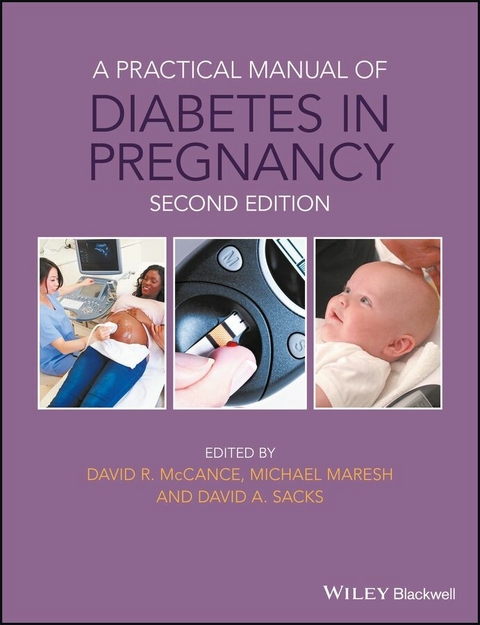
A Practical Manual of Diabetes in Pregnancy (eBook)
John Wiley & Sons (Verlag)
978-1-119-04379-9 (ISBN)
The revised and updated second edition of a multidisciplinary, evidence-based clinical guide for the care of pregnant women with diabetes
The second edition of A Practical Manual of Diabetes in Pregnancy offers a wealth of new evidence, new material, new technologies, and the most current approaches to care. With contributions from a team of international experts, the manual is highly accessible and comprehensive in scope. It covers topics ranging from preconception to postnatal care, details the risks associated with diabetic pregnancy, and the long-term implications for the mother and baby. The text also explores recent controversies and examines thorny political pressures.
The manual's treatment recommendations are based on the latest research to ensure pregnant women with diabetes receive the best possible care. The text takes a multi-disciplinary approach that reflects best practice in the treatment of diabetes in pregnancy. The revised second edition includes:
- New chapters on the very latest topics of interest
- Contributions from an international team of noted experts
- Practical, state-of-the-art text that has been fully revised with the latest in clinical guidance
- Easy-to-read, accessible format in two-color text design
- Illustrative case histories, practice points, and summary boxes, future directions, as well as pitfalls and what to avoid boxes
- Multiple choice questions with answers in each chapter
Comprehensive and practical, the text is ideal for use in clinical settings for reference by all members of the multi-disciplinary team who care for pregnant women with diabetes. The manual is also designed for learning and review purposes by trainees in endocrinology, diabetes, and obstetrics.
David R. McCance, Endocrinologist, Royal Victoria Hospital, Belfast, UK
Michael Maresh, Obstetrician, St Mary's Hospital, Manchester, UK
David A. Sacks, Obstetrician, Kaiser Permanente Southern California, Pasadena, USA
A PRACTICAL MANUAL OF DIABETES IN PREGNANCY The second edition of A Practical Manual of Diabetes in Pregnancy offers a wealth of new evidence, new material, new technologies, and the most current approaches to care. With contributions from a team of international experts, the manual is highly accessible and comprehensive in scope. It covers topics ranging from preconception to postnatal care, details the risks associated with diabetic pregnancy, and the long-term implications for the mother and baby. The text also explores recent controversies and examines thorny political pressures. The manual s treatment recommendations are based on the latest research to ensure pregnant women with diabetes receive the best possible care. The text takes a multi-disciplinary approach that reflects best practice in the treatment of diabetes in pregnancy. The revised second edition includes: New chapters on the very latest topics of interest Contributions from an international team of noted experts Practical, state-of-the-art text that has been fully revised with the latest in clinical guidance Easy-to-read, accessible format in two-color text design Illustrative case histories, practice points, and summary boxes, future directions, as well as pitfalls and what to avoid boxes Multiple choice questions with answers in each chapter Comprehensive and practical, the text is ideal for use in clinical settings for reference by all members of the multi-disciplinary team who care for pregnant women with diabetes. The manual is also designed for learning and review purposes by trainees in endocrinology, diabetes, and obstetrics.
David R. McCance, Endocrinologist, Royal Victoria Hospital, Belfast, UK Michael Maresh, Obstetrician, St Mary's Hospital, Manchester, UK David A. Sacks, Obstetrician, Kaiser Permanente Southern California, Pasadena, USA
Contributors ix
Foreword xiii
Preface xv
Section I Introduction 1
1 Epidemiology of Diabetes in Pregnancy 3
David Simmons
2 Pathophysiology of Diabetes in Pregnancy 17
Francine Hughes Einstein
3 The Placenta in a Diabetic Pregnancy 31
Ursula Hiden and Gernot Desoye
Section II Gestational Diabetes 47
4 Screening for Gestational Diabetes 49
David A. Sacks
5 Diagnostic Criteria for Hyperglycemia in Pregnancy 61
Robert S. Lindsay
6 Lifestyle Treatment 73
Christina Anne Vinter and Dorte Møller Jensen
7 Obesity and Diabetes in Pregnancy 87
H. David McIntyre, Marloes Dekker Nitert, Helen L. Barrett and Leonie K. Callaway
8 Metabolic Abnormalities in Gestational Diabetes 105
Ravi Retnakaran
9 Maternal Risk After the Gestational Diabetes Mellitus Pregnancy 115
Lisa Chasan-Taber and Catherine Kim
Section III Diabetes Preceding Pregnancy 127
10 Pre-Pregnancy Care in Type 1 and Type 2 Diabetes 129
Rosemary C. Temple and Katharine P. Stanley
11 Malformations 141
Montserrat Balsells, Apolonia García-Patterson, Juan María Adelantado and Rosa Corcoy
12 Provision of Pregnancy Care 153
Jenny Myers, Susan Quinn, Gretta Kearney, Susan Curtis, Prasanna Rao-Balakrishna and Michael Maresh
13 Problems Encountered More Frequently in Women with Type 1 Diabetes 167
Una M. Graham, Michael Maresh and David R. McCance
14 Problems Encountered More Frequently in Women with Type 2 Diabetes 179
Lorie M. Harper
15 Advances in Oral Anti-Diabetes Drugs in Pregnancy 189
Geetha Mukerji and Denice S. Feig
16 Advances in Insulin Therapy 203
Gioia N. Canciani, Zoe A. Stewart and Helen R. Murphy
17 Putting Pregnant Women with Diabetes on the Pump 215
Peter Hammond
18 Pregnancy, Perinatal, and Fertility Outcomes Following Bariatric Surgery 227
Aubrey R. Raimondi and Eyal Sheiner
19 Fetal Surveillance 243
Dipanwita Kapoor and Nia Jones
20 Complications in Pregnancy: Hypertension and Diabetic Nephropathy in Diabetes in Pregnancy 257
Elisabeth R. Mathiesen, Lene Ringholm and Peter Damm
21 Retinopathy in Diabetic Pregnancy 269
Jesia Hasan and Emily Y. Chew
Section IV Delivery and Postnatal Care 285
22 Delivery and Postdelivery Care: Obstetric Management of Labor, Delivery, and the Postnatal Period for Women with Type 1, Type 2, or Gestational Diabetes Mellitus 287
Jacques Lepercq
23 Diabetic Management in Labor, Delivery, and Postdelivery 297
Una M. Graham and David R. McCance
24 Delivery and Postdelivery Care: Care of the Neonate 309
Jane M. Hawdon
25 Postpartum Contraception for Women with Diabetes 325
Anita L. Nelson
26 Breastfeeding and Diabetes 341
Elizabeth Stenhouse
Section V Implications for the Future 353
27 Implications for the Mother with Diabetes 355
Ewa Wender-Ozegowska and David A. Sacks
28 Diabetes in Pregnancy: Implications for the Offspring 367
Anne P. Starling and Dana Dabalea
29 From the Bench to the Bedside: Potential Future Therapies for Gestational Diabetes-The Enhancement of beta-Cell Mass and Function During Pregnancy 377
David J. Hill
Index 393
1
Epidemiology of Diabetes in Pregnancy
David Simmons
School of Medicine, Western Sydney University, Campbelltown, New South Wales, Australia
PRACTICE POINTS
- The World Health Organization (WHO) (3) has recommended that hyperglycemia first detected at any time during pregnancy should be classified as either:
- – diabetes mellitus in pregnancy (DIP), or
- – gestational diabetes mellitus (GDM).
- Pre‐gestational diabetes is diabetes that had been diagnosed before pregnancy.
- The prevalence of pre‐gestational diabetes has been increasing across the world over >40 years and has a prevalence of 1–5%. Approximately 0.3–0.8% of pregnancies are complicated by type 1 diabetes; the rest are type 2 diabetes, and a small fraction have rare forms of diabetes.
- DIP has a prevalence of 0.2–0.4%, mostly type 2 diabetes postpartum.
- WHO (3) criteria for GDM have now changed, involving a much lower fasting criterion (≥5.1 mmol/l), the introduction of a 1 h value after a 75 g oral load (≥10.0 mmol/l), and an increased diagnostic cutoff 2 h post load (≥8.5 mmol/l). These criteria substantially increase the prevalence of GDM, in some populations to over 35%.
- Non‐European ethnicity and obesity are the major risk factors for hyperglycemia in pregnancy; others such as a family history of diabetes, previous GDM, polycystic ovarian syndrome, age, and previous stillbirth or macrosomic infant are important.
- Pre‐gestational diabetes and DIP contribute significantly to malformations.
- Total hyperglycemia in pregnancy contributes to adverse pregnancy outcomes on a population level, particularly shoulder dystocia.
- GDM is a precursor of up to 34% of type 2 diabetes in women.
- There is an association between maternal hyperglycemia in pregnancy and obesity, diabetes, and metabolic syndrome in the offspring.
Case History
A 32‐year‐old woman, G3P2, with no significant past medical history and no family history of diabetes, had a random glucose of 7.8 mmol/l at 8 weeks gestation with a normal oral glucose tolerance test (OGTT) (4.3, 7.6, and 7.4 mmol/l) at 11 weeks (1). Her pre‐pregnancy BMI was 19.9 kg/m2. At 28 weeks, she presented acutely, afebrile but with severe general fatigue. A random plasma glucose was 27.2 mmol/l, blood pressure was 110/84 mmHg, and heart rate 106 beats/min. Ketones were 3+, arterial pH was 7.45, bicarbonate 12.1 mmol/l, and base excess −9.8 mmol/l (i.e., compensated metabolic acidosis). HbA1c was 125 mmol/mol (13.6%). Anti‐glutamic acid decarboxylase (GAD) antibody was 25.0 (reference range 1–5). She was diagnosed as having type 1 diabetes and commenced insulin therapy. The rest of the pregnancy was uneventful, although total weight gain was only 3 kg and birth weight was 3006 g.
Questions to be answered in this chapter:
- What proportion of pregnancies are complicated by type 1 diabetes, type 2 diabetes, monogenic diabetes, or other rare forms of diabetes?
- What proportion of pregnancies are complicated by GDM?
- What type of patient develops hyperglycemia first detected in pregnancy?
- What is the public health impact of hyperglycemia in pregnancy?
Prevalence of Total Hyperglycemia in Pregnancy
Diabetes in pregnancy (DIP) and gestational diabetes mellitus (GDM) have been terms used in clinical medicine for over 100 years. In 2010 and 2013, respectively, the International Association of Diabetes and Pregnancy Study Groups (IADPSG) (2) and the World Health Organization (WHO) (3) reclassified hyperglycemia in pregnancy into three groups to incorporate all aspects of the range of raised glucose that can increase pregnancy complications:
| Known pre‐gestational diabetes | (Overt) diabetes in pregnancy (DIP) | Gestational diabetes mellitus (GDM) |
| Known diabetes | Diagnosed first time in pregnancy and expected to continue postnatally | Diagnosed first time in pregnancy and no permanent diabetes expected postnatally |
| For example: type 1 diabetes, type 2 diabetes, and rare forms of diabetes (e.g., monogenic diabetes) | Usually type 2 diabetes; occasionally, rare forms or type 1 diabetes |
The global prevalence of total hyperglycemia in pregnancy has recently been estimated to have been 16.9%, or 21.4 million, live births (women aged 20–49 years) in 2013 (4). The highest prevalence was in Southeast Asia at 25.0%, with 10.4% in North America and the Caribbean Region. Low‐ and middle‐income countries are estimated to be responsible for 90% of cases.
Prevalence of Known Pre‐Gestational Diabetes in Pregnancy
The prevalence of both type 1 and type 2 diabetes among reproductive‐aged women has been increasing globally (5). In the USA, the incidence of type 1 and type 2 diabetes among those aged under 20 years is projected to triple and quadruple by 2050, respectively (5). An example of the growth in pre‐gestational diabetes between 1999 and 2005 is shown for Southern California in Figure 1.1 (by age group), where age‐ and ethnicity‐adjusted rates increased from 8.1/1000 in 1999 to 18.2/1000 by 2005 (6).
Figure 1.1 Pregnancies complicated by pre‐gestational diabetes, 1999–2005 (per 1000), by age.
There are significant ethnic differences in prevalence. For example, in 2007–2010 among women aged 20–44 years across the USA, prevalence ranged from 2.7% (1.8–4.1%) among non‐Hispanic whites, to 3.7% (2.2–6.2%) among Hispanic women, to 4.6% (3.3–6.4%) among non‐Hispanic blacks (7). Prevalence rates are higher in other populations (4).
Prevalence of Type 1 Diabetes in Pregnancy
The prevalence of type 1 diabetes in pregnancy is less than in the nonpregnant population in view of the lower standard fertility ratio (SFR) (fertility rate in comparison with the wider population). The SFR in type 1 diabetes is 0.80 (95% CI: 0.77–0.82), and is particularly low among women with retinopathy, nephropathy, neuropathy, or cardiovascular complications (0.63, 0.54, 0.50, and 0.34, respectively) (8). The gap in fertility between women with and without type 1 diabetes has closed considerably over time, and it appears to be greatest for women who were diagnosed as a child, rather than as an adult (9).
The prevalence of type 1 diabetes in pregnancy increases with age, as shown in Table 1.1 for Norway (1999–2004) (10) and Ontario, Canada (2005–2006) (11).
Table 1.1 Prevalence (per 1000) of type 1 and type 2 diabetes in pregnancy, by age.
| Norway 1999–2004 | Ontario 2005–2006 |
| Type of diabetes | 1 | Type of diabetes | 1 | 2 |
| Overall | 4.5 | Overall | 7.5 | 4.3 |
| By age | By age |
| ≤20 years | 2.9 | ≤20 years | 2.0 | 0.2 |
| 20–34 | 4.5 | 20–29 | 5.7 | 2.9 |
| 35–39 | 5.0 | 30–34 | 8.3 | 4.9 |
| 40+ | 4.7 | 35+ | 11.5 | 7.3 |
Besides women with preexisting type 1 diabetes, a small proportion of women with diabetes first diagnosed during pregnancy are found to have type 1 diabetes (see, e.g., the Case History for this chapter). In New Zealand in 1986–2005, 11/325 (3.4%) of women with new diabetes diagnosed postpartum had type 1 diabetes (12). Other women with GDM have autoimmune markers (islet cell antibody [ICA], GAD antibody [GADA], or tyrosine phosphatase antibody [IA‐2A]) without necessarily overt DIP. Overall, the prevalence of such autoimmune markers ranges between 1 and 10%, and it is greatest in populations where the prevalence of type 1 diabetes is higher (13). In a Swedish study, 50% women with antibody positivity had developed type 1 diabetes, compared with none among the GDM control subjects (14).
Prevalence of Type 2 Diabetes in Pregnancy
While fertility rates in type 2 diabetes have not been reported, they would be expected to be low (particularly in view of the associated obesity, polycystic ovarian syndrome [PCOS], and vascular disease) (15). Nevertheless, the rates of type 2 DIP are increasing more rapidly than those of type 1 diabetes in pregnancy (16).
In addition to the increasing age‐standardized prevalence and lowering of the age at onset of type 2 diabetes (driven by the obesity epidemic), demographic changes (e.g., ethnicity) may partly explain the changes in prevalence over time in individual locations. For example, in Birmingham, UK, in 1990–1998, the ratio of type 1 to type 2 diabetes was 1:2 in South Asians but 11:1 in Europeans (17). In the north of England in...
| Erscheint lt. Verlag | 20.9.2017 |
|---|---|
| Reihe/Serie | Practical Manual of Series |
| Practical Manual of Series | Practical Manual of Series |
| Sprache | englisch |
| Themenwelt | Sachbuch/Ratgeber ► Gesundheit / Leben / Psychologie |
| Medizin / Pharmazie ► Medizinische Fachgebiete ► Gynäkologie / Geburtshilfe | |
| Medizinische Fachgebiete ► Innere Medizin ► Diabetologie | |
| Medizinische Fachgebiete ► Innere Medizin ► Endokrinologie | |
| Studium ► 1. Studienabschnitt (Vorklinik) ► Biochemie / Molekularbiologie | |
| Schlagworte | Allgemeine u. Innere Medizin • A Practical Manual of Diabetes in Pregnancy • caring for women with diabetes during pregnancy • complications in pregnancy diabetes • David McCance • david sacks • delivery for diabetes pregnancy • Diabetes • epidemiology diabetes pregnancy • Geburtshilfe • General & Internal Medicine • Gestational Diabetes • Guide to diabetes pregnancy • long-term implications diabetes pregnancy • manual diabetes pregnancy • medical care for diabetes pregnancy • Medical Science • Medizin • Michael Maresh • Multi-disciplinary guide to pregnancy and diabetes • Obstetrics • pathophysiology diabetes pregnancy • physician's guide treating diabetes pregnancy • preconception to postnatal care for women with diabetes • pre-existing diabetes in pregnancy • prepregnancy care diabetes • recommendation diabetes and pregnancy • research diabetes and pregnancy • risks diabetic pregnancy • treatment diabetes pregnancy |
| ISBN-10 | 1-119-04379-4 / 1119043794 |
| ISBN-13 | 978-1-119-04379-9 / 9781119043799 |
| Informationen gemäß Produktsicherheitsverordnung (GPSR) | |
| Haben Sie eine Frage zum Produkt? |
 EPUB (Adobe DRM)
Kopierschutz: Adobe-DRM
Adobe-DRM ist ein Kopierschutz, der das eBook vor Mißbrauch schützen soll. Dabei wird das eBook bereits beim Download auf Ihre persönliche Adobe-ID autorisiert. Lesen können Sie das eBook dann nur auf den Geräten, welche ebenfalls auf Ihre Adobe-ID registriert sind.
Details zum Adobe-DRM
Dateiformat: EPUB (Electronic Publication)
EPUB ist ein offener Standard für eBooks und eignet sich besonders zur Darstellung von Belletristik und Sachbüchern. Der Fließtext wird dynamisch an die Display- und Schriftgröße angepasst. Auch für mobile Lesegeräte ist EPUB daher gut geeignet.
Systemvoraussetzungen:
PC/Mac: Mit einem PC oder Mac können Sie dieses eBook lesen. Sie benötigen eine
eReader: Dieses eBook kann mit (fast) allen eBook-Readern gelesen werden. Mit dem amazon-Kindle ist es aber nicht kompatibel.
Smartphone/Tablet: Egal ob Apple oder Android, dieses eBook können Sie lesen. Sie benötigen eine
Geräteliste und zusätzliche Hinweise
Buying eBooks from abroad
For tax law reasons we can sell eBooks just within Germany and Switzerland. Regrettably we cannot fulfill eBook-orders from other countries.
aus dem Bereich


