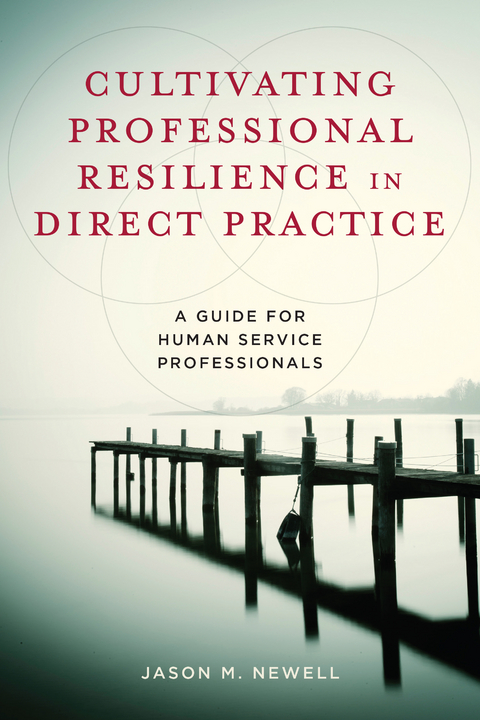
Cultivating Professional Resilience in Direct Practice (eBook)
Columbia University Press (Verlag)
978-0-231-54490-0 (ISBN)
Overwhelming empirical evidence indicates that new social workers, particularly those going into child welfare or other trauma-related care, will discover emotional challenges including the indirect or secondary effects of the trauma work itself, professional burnout, and compassion fatigue. However, the newly revised CSWE Educational Policy and Accreditation Standards (EPAS) does not mandate the inclusion of content related to self-care in social work curriculum or field education. In a textbook that bridges the gap between theoretical and pragmatic approaches to this important issue in human service work, Jason M. Newell provides a potential resolution by conceptualizing self-care as an ongoing and holistic set of practice behaviors described as the key to professional resilience.To address the effects of trauma-related care on direct practitioners, Newell provides a comprehensive, competency-based model for professional resilience, examining four key constructs-stress, empathy, resilience, and self-care-from a range of theoretical dimensions. For those who work with vulnerable populations, the tendency to frame self-care solely within organizational context overlooks the importance of self-care in domains beyond the agency setting. Alternatively, he uses a framework grounded in the ecological-systems perspective conceptualizing self-care as a broader set of practice behaviors pertaining to the whole person, including the physical, interpersonal, organizational, familial, and spiritual domains of the psychosocial self. Alongside professional self-care practices at the organizational level, Newell makes a case for the pragmatic role of recreational activities, time with family and friends, physical health, spirituality, and mindfulness. The application of a comprehensive approach to self-care practice has potential to empower practitioners to remain resilient and committed to the values, mission, and spirit of the social work profession in the face of trauma.
Jason M. Newell is associate professor and director of the social work program at the University of Montevallo.
PrefaceAcknowledgments1. An Introduction to Resilient Practice Through Holistic Self-CareSection 1: Theory, Conceptualization, and Measurement2. Understanding the Connection Between Stress and Trauma 3. Chronic Empathy and Trauma in Human Service Work: Implications for Social Service Professionals4. Understanding and Preventing the Effects of Professional Burnout and Indirect Trauma: An Individual and Organizational Challenge5. Assessment and Measurement of Occupational Stress and TraumaSection 2: A Holistic Framework for the Application of Self-Care Practices6. The Essential Practice of Professional Self-Care: The Key to Professional Resilience7. Preserving Professional Resilience: The Ongoing Practice of Holistic Self-Care8. The Ethical Obligation of Professional Self-Care, with James L. Jackson Jr.9. Trauma-Informed Education, Training, and Professional Development10. The Use of Mindfulness Practice as a Function of Self-CareEpilogue: Finding Balance in Social Work Practice: Self-Care as Practice WisdomWorksheetsPersonal Reflection Exercise: Resilience and Self-AppreciationPersonal Reflection Exercise: Engaging Group Discussion on TraumaSample Assignment: Deep Breathing ExerciseSample Assessment of Organizational Strengths and ChallengesSelf-Care Process: Setting Organizational GoalsSelf-Care Process: Setting Personal GoalsProfessional Development Assignment: Construct a Plan of Personal and Professional Self-CareSuggestions for Developing a Comprehensive Plan of Self-CareSample Goals and Objectives for a Plan of Self-CareBlank Template for a Comprehensive Plan of Self-CareSample Self-Care Plan: Personal TableSample Assignment: Journaling MindfullyBibliography of Recommended ReadingsBibliography of Suggested Internet ResourcesGlossaryReferencesIndex
| Erscheint lt. Verlag | 26.9.2017 |
|---|---|
| Verlagsort | New York |
| Sprache | englisch |
| Maße | 150 x 150 mm |
| Themenwelt | Sachbuch/Ratgeber ► Freizeit / Hobby ► Sammeln / Sammlerkataloge |
| Geisteswissenschaften ► Psychologie ► Persönlichkeitsstörungen | |
| Medizin / Pharmazie ► Gesundheitswesen | |
| Sozialwissenschaften ► Pädagogik ► Sozialpädagogik | |
| Sozialwissenschaften ► Soziologie | |
| ISBN-10 | 0-231-54490-1 / 0231544901 |
| ISBN-13 | 978-0-231-54490-0 / 9780231544900 |
| Informationen gemäß Produktsicherheitsverordnung (GPSR) | |
| Haben Sie eine Frage zum Produkt? |
 EPUB (Adobe DRM)
Kopierschutz: Adobe-DRM
Adobe-DRM ist ein Kopierschutz, der das eBook vor Mißbrauch schützen soll. Dabei wird das eBook bereits beim Download auf Ihre persönliche Adobe-ID autorisiert. Lesen können Sie das eBook dann nur auf den Geräten, welche ebenfalls auf Ihre Adobe-ID registriert sind.
Details zum Adobe-DRM
Dateiformat: EPUB (Electronic Publication)
EPUB ist ein offener Standard für eBooks und eignet sich besonders zur Darstellung von Belletristik und Sachbüchern. Der Fließtext wird dynamisch an die Display- und Schriftgröße angepasst. Auch für mobile Lesegeräte ist EPUB daher gut geeignet.
Systemvoraussetzungen:
PC/Mac: Mit einem PC oder Mac können Sie dieses eBook lesen. Sie benötigen eine
eReader: Dieses eBook kann mit (fast) allen eBook-Readern gelesen werden. Mit dem amazon-Kindle ist es aber nicht kompatibel.
Smartphone/Tablet: Egal ob Apple oder Android, dieses eBook können Sie lesen. Sie benötigen eine
Geräteliste und zusätzliche Hinweise
Buying eBooks from abroad
For tax law reasons we can sell eBooks just within Germany and Switzerland. Regrettably we cannot fulfill eBook-orders from other countries.
aus dem Bereich