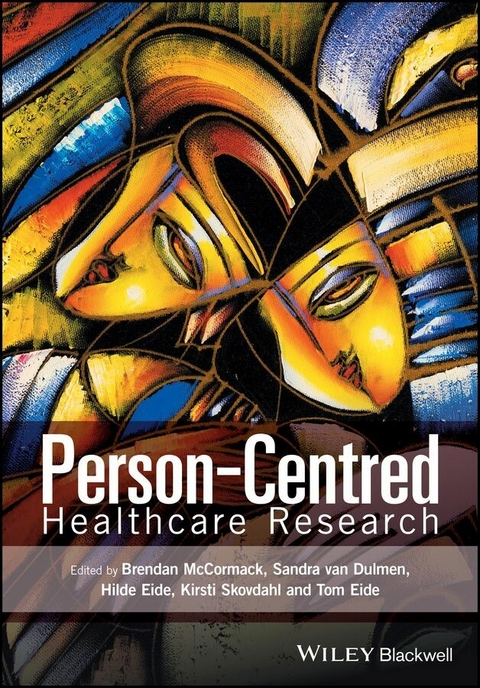
Person-Centred Healthcare Research (eBook)
John Wiley & Sons (Verlag)
978-1-119-09962-8 (ISBN)
Person-Centred Healthcare Research provides an innovative and novel approach to exploring a range of research designs and methodological approaches aimed at investigating person-centred healthcare practice within and across healthcare disciplines.
With contributions from internationally renowned experts in the field, this engaging resource challenges existing R&D methodologies and their relevance to advancing person-centred knowledge generation, dissemination, translation, implementation and use. It also explores new developments in research methods and practices that open up new avenues for advancing the field of person-centred practice.
Person-Centred Healthcare Research:
- Enables students, practitioners, managers and researchers to gain a solid understanding of the complexity of person-centred thinking in research designs and methods.
- Explores the theories and practices underpinning a topical subject within current healthcare practice.
- Is edited by an internationally recognised team who are at the forefront of person-centred healthcare research.
Brendan McCormack is Professor and Head of the Division of Nursing; Associate Director of the Centre for Person-Centred Practice Research at the School of Health Sciences, Queen Margaret University, Edinburgh, Scotland, UK; and Professor II, University College of Southeast Norway, Drammen, Norway.
Sandra van Dulmen is Programme Coordinator of Communication in Healthcare at NIVEL (Netherlands Institute for Health Services Research), Utrecht, the Netherlands; Professor of Communication in Healthcare at Radboud University Medical Center, Nijmegen, the Netherlands; and Professor II, Faculty of Health and Social Sciences, University College of Southeast Norway, Drammen, Norway.
Hilde Eide is Professor in Communication and Health Counselling; Research Director at the Science Centre Health and Technology, Faculty of Health and Social Sciences, University College of Southeast Norway, Drammen, Norway.
Kirsti Skovdahl is Programme Director of the PhD programme in Person-Centred Healthcare, and Professor at the Faculty of Health and Social Sciences, University College of Southeast Norway, Drammen, Norway.
Tom Eide is Professor of Leadership, Ethics and Literature, and affiliated with the Science Centre Health and Technology, Faculty of Health and Social Sciences, University College of Southeast Norway, Drammen, Norway.
For more information on the complete range of Wiley nursing publishing, please visit: www.wileynursing.com
To receive automatic updates on Wiley books and journals, join our email list. Sign up today at www.wiley.com/email
This new title is also available as an e-book. For more details, please see www.wiley.com/buy/9781119099604Brendan McCormack is Professor and Head of the Division of Nursing; Associate Director of the Centre for Person-Centred Practice Research at the School of Health Sciences, Queen Margaret University, Edinburgh, Scotland, UK; and Professor II, University College of Southeast Norway, Drammen, Norway. Sandra van Dulmen is Programme Coordinator of Communication in Healthcare at NIVEL (Netherlands Institute for Health Services Research), Utrecht, the Netherlands; Professor of Communication in Healthcare at Radboud University Medical Center, Nijmegen, the Netherlands; and Professor II, Faculty of Health and Social Sciences, University College of Southeast Norway, Drammen, Norway. Hilde Eide is Professor in Communication and Health Counselling; Research Director at the Science Centre Health and Technology, Faculty of Health and Social Sciences, University College of Southeast Norway, Drammen, Norway. Kirsti Skovdahl is Programme Director of the PhD programme in Person-Centred Healthcare, and Professor at the Faculty of Health and Social Sciences, University College of Southeast Norway, Drammen, Norway. Tom Eide is Professor of Leadership, Ethics and Literature, and affiliated with the Science Centre Health and Technology, Faculty of Health and Social Sciences, University College of Southeast Norway, Drammen, Norway.
Contributors vii
Introduction xi
Foreword xiii
Section 1: Person-Centredness and Foundations of Person-Centred Research 1
1 Person-Centredness in Healthcare Policy, Practice and Research 3
Brendan McCormack, Sandra van Dulmen, Hilde Eide, Kirsti Skovdahl and Tom Eide
2 Philosophical Perspectives on Person-Centredness for Healthcare Research 19
Jan Dewing, Tom Eide and Brendan McCormack
3 The Knowing and Being of Person-Centred Research Practice Across Worldviews: An Epistemological and Ontological Framework 31
Angie Titchen, Shaun Cardiff and Stian Biong
4 Being a Person-Centred Researcher: Principles and Methods for Doing Research in a Person-Centred Way 51
Gaby Jacobs, Famke van Lieshout, Marit Borg and Ottar Ness
5 Research into Person-Centred Healthcare Technology: A Plea for Considering Humanisation Dimensions 61
Gaby Jacobs, Teatske van der Zijpp, Famke van Lieshout and Sandra van Dulmen
6 A Participatory Approach to Person-Centred Research: Maximising Opportunities for Recovery 69
Larry Davidson, Chyrell Bellamy, Elizabeth Flanagan, Kimberly Guy and Maria O'Connell
7 Co-Creating Flourishing Research Practices Through Person-Centred Research: A Focus on Persons Living with Dementia 85
Kirsti Skovdahl and Jan Dewing
8 Leadership Research: A Person-Centred Agenda 95
Tom Eide and Shaun Cardiff
Section 2: Doing Person-Centred Research: Methods in Action 117
9 Staffing Structures for Effectiveness in Person-Centred Care:The RAFAELA¯® System 119
Lisbeth Fagerström
10 Giving Voice to 'Hard To Reach Groups' in Healthcare Research: A Narrative Approach 131
Catherine Buckley
11 Promoting Health Across the Lifespan: A Systems Approach 141
Elisabeth Fosse, Steffen Torp and Ingun Stang
12 How Knowledge Developed Through Ethnography May Inform Person-Centred Healthcare Practices 149
Kristin Briseid, Astrid Skatvedt and Brendan McCormack
13 Person-Centred Technology-Supported Interventions 159
Sandra van Dulmen, Espen Brembo, Janne Dugstad and Hilde Eide
14 Learning to be an Effective Person-Centred Practitioner 169
Caroline Williams and Brendan McCormack
15 Doing Eye and Vision Research in a Person-Centred Way 181
Rigmor C. Baraas, Lene A. Hagen, Hilde R. Pedersen and Jon V.B. Gjelle
16 Person-Centred Communication Research: Systematic Observation of Real Life Practice 191
Hilde Eide, Linda Hafskjold, Vibeke Sundling and Sandra van Dulmen
17 Introducing Sex and Gender-Sensitive Person-Centred Research 201
Stina Öresland and Sylvia Määttä
18 Future Directions for Person-Centred Healthcare Research 209
Sandra van Dulmen, Brendan McCormack, Tom Eide, Kirsti Skovdahl and Hilde Eide
Index 219
1
Person‐Centredness in Healthcare Policy, Practice and Research
Brendan McCormack, Sandra van Dulmen, Hilde Eide, Kirsti Skovdahl and Tom Eide
INTRODUCTION
Twentieth century (western) societies are increasingly individualised. This is not only reflected in general politics, opinions and lifestyles but also in healthcare. Partly this is a result of an increased knowledge about the human genome, allowing for more individualised treatment plans (‘personalised or precision medicine’), and partly because of scarce healthcare resources resulting in increased self‐management and more patient responsibility for their own health. A welcome side effect of this individualisation is an increased attention to the person behind the patient and, related to this, more attention to individual needs and preferences in treatment and care. This person‐centred movement is not new, but has so far been captured through discourses of patient‐centredness (in contrast to doctor‐ or disease‐centredness) and patients’ rights, which already represent important paradigm shifts in healthcare. Person‐centredness has, however, continued to develop and also incorporates concepts like positive health, well‐being and individualised care planning as well as the inclusion of the person of the healthcare provider. Person‐centredness can thus be summarised as promoting care of the person (of the totality of the person’s health, including its ill and positive aspects), for the person (promoting the fulfilment of the person’s life project), by the person (with clinicians extending themselves as full human beings with high ethical aspirations) and with the person (working respectfully, in collaboration and in an empowering manner) (Mezzich et al., 2009). Person‐centredness implies recognition of the broad biological, social, psychological, cultural and spiritual dimensions of each person, their families and communities. The person‐centred approach is closely linked to Carl Rogers’ humanistic psychology and person‐centred therapy (Rogers, 1961) with a focus on the fulfilment of personal potentials including sociability, the need to be with other human beings and a desire to know and be known by other people (the origins of person‐centredness will be further explored in Chapter 2). It also includes being open to experience, being trusting and trustworthy, being curious about the world, being creative and compassionate. This perspective has been particularly influential in the field of dementia care.
Person‐centredness has permeated all fields in healthcare. For example, person‐centred nursing has been defined as an approach to practice that is established through the formation and fostering of healthful relationships between all care providers, patients/clients/families and significant others (McCormack and McCance, 2017). It is underpinned by values of respect for persons, individual right to self‐determination, and mutual respect and understanding. Person‐centred nursing practice is about developing, coordinating and providing healthcare services that respect the uniqueness of individuals by focusing on their beliefs, values, desires and wishes, independent of age, gender, social status, economy, faith, ethnicity and cultural background and in a context that includes collaborative and inclusive practices. In addition, person‐centred nursing practice aims to plan and deliver care that takes account of the person’s context including their social context, community networks, cultural norms and material supports. Person‐centred medicine is anchored in a broad and holistic approach that is critical of the modern development of medicine, which has been dominated by reductionism, attention to disease, super‐specialisation, commoditisation and commercialism (Mezzich et al., 2009). These authors argue that this has resulted in less attention being paid to ‘whole‐person needs’ and reduced focus on the ethical imperatives connected to promoting the autonomy, responsibility and dignity of every person involved.
Changes in the delivery of healthcare services have been significant over the past 25 years. The increasing demands on emergency services, reduction in the number of available hospital beds, shorter lengths of stay, increased throughput and the erosion of Health Services’ commitment to the provision of continuing healthcare have all impacted on the way healthcare services are provided and the practice of healthcare professionals. In addition, the prevailing culture of consumerism has enabled a shift away from society’s collective responsibility for the provision of an equitable and just healthcare system to one that is based on individual responsibility, increasingly more complex models of insurance‐based services and a growth in healthcare as a private for‐profit business.
The combined effects of these strategic changes to healthcare globally, major changes to the organisation of services, a dominant focus on standardisation and risk reduction with associated limits on the potential for creative practice have all had an impact on the ability of healthcare practitioners to develop person‐centred approaches. McCormack (2001) suggested that there was a need for ‘a cultural shift in philosophical values’ in healthcare if authentic person‐centred healthcare is to be realised for all persons. The following quote from one of the participants in McCormack’s research highlighted the need for this shift:
…people need to be able to take on a different view of things and able to see a different kind of potential when the whole system is kind of set up in a particular way and how do you change it? Because you’ve got teachers and educators and you’ve got role models and supervisors and people in clinical settings who have all been socialised in this system and what I think it needs is actually a complete culture shift, a shift in philosophical values, to see people as people who have responsibility for their own health and come into a system that should not totally remove that, that kind of ownership…
Since then there have been significant developments globally in advancing person‐centred healthcare within a dominant philosophy of people as persons who have responsibility for their own health.
PERSON‐CENTREDNESS IN HEALTHCARE
The use of the term ‘person‐centred’ has become increasingly common in health and social care services at a global level. While a cynical view would argue that the term is being used as a ‘catch‐all’ for anything concerning high quality health and social care, an alternative perspective would suggest that it is representative of something more significant than this, i.e. a movement that has an explicit focus on humanising health services and ensuring that the person using health and social care services is at the centre of care delivery decision‐making. This global focus on person‐centredness has, as a consequence, resulted in a growing body of evidence supporting the processes and outcomes associated with person‐centredness in health and social care.
Holding the person’s values central in decision‐making is essential to a person‐centred approach to practice. Talking with patients and families about values and using the outcomes from these discussions as a means of evaluating how well their autonomy and self‐determination is being respected is a useful vehicle for exploring the processes of care‐giving as opposed to a focus on how well the care outcomes were achieved using, for instance, PROMS (Patient Reported Outcome Measures) and PREMS (Patient Reported Experience Measures). For example, the focus on achieving a short length of stay may not always be consistent with the values of the patient or family. In such situations, without the practitioner, patient and family clarifying their values base and its relationship to the goal of care, there is potential for conflict. The skill involved in balancing a duty of care to the patient while at the same time maintaining a focus on working with the ‘best’ evidence in care decisions is a significant challenge in person‐centred healthcare. Maintaining the person’s identity as central to care decisions and helping to maintain that in the sense of who they are in the context of their lives, i.e. their biography is a key pillar of person‐centred practice (see Chapter 9 in this book for example). Rather than removing people from their biographies which has been the dominant ideology underpinning evidence‐based practice (EBP), holding values as central allows a variety of possible ‘futures’ to emerge.
Of course, practising in this way poses challenges to healthcare practitioners who are largely educated and trained in a culture that emphasises professional control and expertise derived from autonomous decision‐making. By controlling the outcome of care, healthcare practitioners are protected from needing to face the many difficulties and challenges associated with working with the patient’s agenda – for example balancing the need for early discharge in order to maintain throughput, with the actual needs of the person. In addition, practitioners often lack the ability to appreciate the life skills that the person has because the patient is unable to demonstrate these skills in a hospital context, due to the attitudinal, organisational and...
| Erscheint lt. Verlag | 1.8.2017 |
|---|---|
| Sprache | englisch |
| Themenwelt | Sachbuch/Ratgeber ► Gesundheit / Leben / Psychologie |
| Medizin / Pharmazie ► Pflege | |
| Schlagworte | academic • Communication • Community • Forschung im Gesundheitswesen • Gesundheits- u. Sozialwesen • Gesundheitswesen • Health & Social Care • Healthcare • Health Care • health care research • Krankenpflege • Krankenpflegeforschung • Leadership • Method • Nurse • nursing • Nursing Research • person-centred • person-centredness • person-centred practice • Practice • reflection • Research • Researcher |
| ISBN-10 | 1-119-09962-5 / 1119099625 |
| ISBN-13 | 978-1-119-09962-8 / 9781119099628 |
| Informationen gemäß Produktsicherheitsverordnung (GPSR) | |
| Haben Sie eine Frage zum Produkt? |
 EPUB (Adobe DRM)
Kopierschutz: Adobe-DRM
Adobe-DRM ist ein Kopierschutz, der das eBook vor Mißbrauch schützen soll. Dabei wird das eBook bereits beim Download auf Ihre persönliche Adobe-ID autorisiert. Lesen können Sie das eBook dann nur auf den Geräten, welche ebenfalls auf Ihre Adobe-ID registriert sind.
Details zum Adobe-DRM
Dateiformat: EPUB (Electronic Publication)
EPUB ist ein offener Standard für eBooks und eignet sich besonders zur Darstellung von Belletristik und Sachbüchern. Der Fließtext wird dynamisch an die Display- und Schriftgröße angepasst. Auch für mobile Lesegeräte ist EPUB daher gut geeignet.
Systemvoraussetzungen:
PC/Mac: Mit einem PC oder Mac können Sie dieses eBook lesen. Sie benötigen eine
eReader: Dieses eBook kann mit (fast) allen eBook-Readern gelesen werden. Mit dem amazon-Kindle ist es aber nicht kompatibel.
Smartphone/Tablet: Egal ob Apple oder Android, dieses eBook können Sie lesen. Sie benötigen eine
Geräteliste und zusätzliche Hinweise
Buying eBooks from abroad
For tax law reasons we can sell eBooks just within Germany and Switzerland. Regrettably we cannot fulfill eBook-orders from other countries.
aus dem Bereich