My Nuclear Nightmare (eBook)
200 Seiten
Cornell University Press (Verlag)
978-1-5017-0611-0 (ISBN)
Naoto Kan is the former Prime Minister of Japan. He is an adviser on renewable energy for Japan's Technical Committee on Renewable Energy.
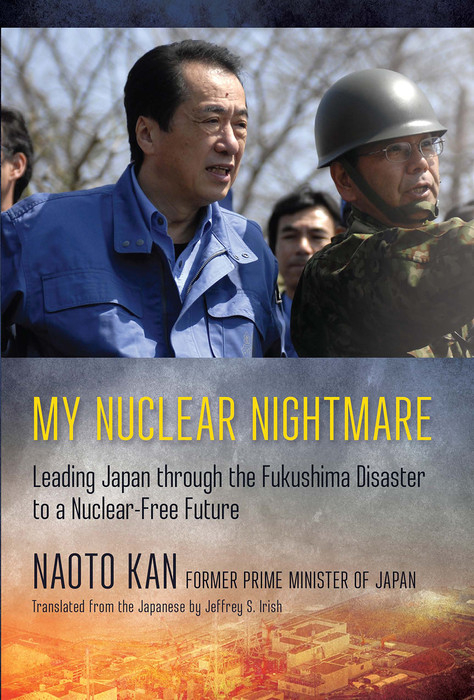
Naoto Kan, who was prime minister of Japan when the March 2011 Fukushima nuclear disaster began, has become a ubiquitous and compelling voice for the global antinuclear movement. Kan compared the potential worst-case devastation that could be caused by a nuclear power plant meltdown as tantamount only to 'a great world war. Nothing else has the same impact.' Japan escaped such a dire fate during the Fukushima disaster, said Kan, only 'due to luck.' Even so, Kan had to make some steely-nerved decisions that necessitated putting all emotion aside. In a now famous phone call from Tepco, when the company asked to pull all their personnel from the out-of-control Fukushima site for their own safety, Kan told them no. The workforce must stay. The few would need to make the sacrifice to save the many. Kan knew that abandoning the Fukushima Daiichi site would cause radiation levels in the surrounding environment to soar. His insistence that the Tepco workforce remain at Fukushima was perhaps one of the most unsung moments of heroism in the whole sorry saga.-The Ecologist On March 11, 2011, a massive undersea earthquake off Japan's coast triggered devastating tsunami waves that in turn caused meltdowns at three reactors in the Fukushima Daiichi Nuclear Power Plant. Ranked with Chernobyl as the worst nuclear disaster in history, Fukushima will have lasting consequences for generations. Until 3.11, Japan's Prime Minister, Naoto Kan, had supported the use of nuclear power. His position would undergo a radical change, however, as Kan watched the nuclear disaster at the Fukushima No. 1 Power Plant unfold and came to understand the potential for the physical, economic, and political destruction of Japan. In My Nuclear Nightmare, Kan offers a fascinating day-by-day account of his actions in the harrowing week after the earthquake struck. He records the anguished decisions he had to make as the scale of destruction became clear and the threat of nuclear catastrophe loomed ever larger-decisions made on the basis of information that was often unreliable. For example, frustrated by the lack of clarity from the executives at Tepco, the company that owned the power plant, Kan decided to visit Fukushima himself, despite the risks, so he could talk to the plant's manager and find out what was really happening on the ground. As he details, a combination of extremely good fortune and hard work just barely prevented a total meltdown of all of Fukushima's reactor units, which would have necessitated the evacuation of the thirty million residents of the greater Tokyo metropolitan area. In the book, first published in Japan in 2012, Kan also explains his opposition to nuclear power: I came to understand that a nuclear accident carried with it a risk so large that it could lead to the collapse of a country. When Kan was pressured by the opposition to step down as prime minister in August 2011, he agreed to do so only after legislation had been passed to encourage investments in alternative energy. As both a document of crisis management during an almost unimaginable disaster and a cogent argument about the dangers of nuclear power, My Nuclear Nightmare is essential reading.
| Erscheint lt. Verlag | 10.1.2017 |
|---|---|
| Übersetzer | Jeffrey S. Irish |
| Sprache | englisch |
| Themenwelt | Literatur ► Biografien / Erfahrungsberichte |
| Literatur ► Romane / Erzählungen | |
| Sachbuch/Ratgeber ► Geschichte / Politik | |
| Geisteswissenschaften ► Geschichte ► Regional- / Ländergeschichte | |
| Sozialwissenschaften ► Pädagogik ► Sozialpädagogik | |
| Sozialwissenschaften ► Politik / Verwaltung | |
| Sozialwissenschaften ► Soziologie | |
| ISBN-10 | 1-5017-0611-X / 150170611X |
| ISBN-13 | 978-1-5017-0611-0 / 9781501706110 |
| Informationen gemäß Produktsicherheitsverordnung (GPSR) | |
| Haben Sie eine Frage zum Produkt? |
 PDF (Adobe DRM)
Kopierschutz: Adobe-DRM
Adobe-DRM ist ein Kopierschutz, der das eBook vor Mißbrauch schützen soll. Dabei wird das eBook bereits beim Download auf Ihre persönliche Adobe-ID autorisiert. Lesen können Sie das eBook dann nur auf den Geräten, welche ebenfalls auf Ihre Adobe-ID registriert sind.
Details zum Adobe-DRM
Dateiformat: PDF (Portable Document Format)
Mit einem festen Seitenlayout eignet sich die PDF besonders für Fachbücher mit Spalten, Tabellen und Abbildungen. Eine PDF kann auf fast allen Geräten angezeigt werden, ist aber für kleine Displays (Smartphone, eReader) nur eingeschränkt geeignet.
Systemvoraussetzungen:
PC/Mac: Mit einem PC oder Mac können Sie dieses eBook lesen. Sie benötigen eine
eReader: Dieses eBook kann mit (fast) allen eBook-Readern gelesen werden. Mit dem amazon-Kindle ist es aber nicht kompatibel.
Smartphone/Tablet: Egal ob Apple oder Android, dieses eBook können Sie lesen. Sie benötigen eine
Geräteliste und zusätzliche Hinweise
Buying eBooks from abroad
For tax law reasons we can sell eBooks just within Germany and Switzerland. Regrettably we cannot fulfill eBook-orders from other countries.
aus dem Bereich