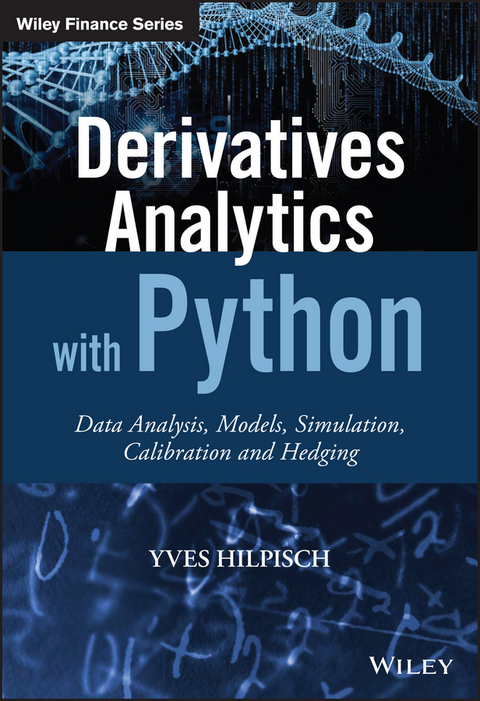
Derivatives Analytics with Python (eBook)
Derivatives Analytics with Python shows you how to implement market-consistent valuation and hedging approaches using advanced financial models, efficient numerical techniques, and the powerful capabilities of the Python programming language. This unique guide offers detailed explanations of all theory, methods, and processes, giving you the background and tools necessary to value stock index options from a sound foundation. You'll find and use self-contained Python scripts and modules and learn how to apply Python to advanced data and derivatives analytics as you benefit from the 5,000+ lines of code that are provided to help you reproduce the results and graphics presented. Coverage includes market data analysis, risk-neutral valuation, Monte Carlo simulation, model calibration, valuation, and dynamic hedging, with models that exhibit stochastic volatility, jump components, stochastic short rates, and more. The companion website features all code and IPython Notebooks for immediate execution and automation.
Python is gaining ground in the derivatives analytics space, allowing institutions to quickly and efficiently deliver portfolio, trading, and risk management results. This book is the finance professional's guide to exploiting Python's capabilities for efficient and performing derivatives analytics.
- Reproduce major stylized facts of equity and options markets yourself
- Apply Fourier transform techniques and advanced Monte Carlo pricing
- Calibrate advanced option pricing models to market data
- Integrate advanced models and numeric methods to dynamically hedge options
Recent developments in the Python ecosystem enable analysts to implement analytics tasks as performing as with C or C++, but using only about one-tenth of the code or even less. Derivatives Analytics with Python - Data Analysis, Models, Simulation, Calibration and Hedging shows you what you need to know to supercharge your derivatives and risk analytics efforts.
YVES HILPISCH is founder and Managing Partner of The Python Quants, a group that focuses on Python & Open Source Software for Quantitative Finance. Yves is also a Computational Finance Lecturer on the CQF Program. He works with clients in the financial industry around the globe and has ten years of experience with Python. Yves is the organizer of Python and Open Source for Quant Finance conferences and meetup groups in Frankfurt, London and New York City.
Supercharge options analytics and hedging using the power of Python Derivatives Analytics with Python shows you how to implement market-consistent valuation and hedging approaches using advanced financial models, efficient numerical techniques, and the powerful capabilities of the Python programming language. This unique guide offers detailed explanations of all theory, methods, and processes, giving you the background and tools necessary to value stock index options from a sound foundation. You'll find and use self-contained Python scripts and modules and learn how to apply Python to advanced data and derivatives analytics as you benefit from the 5,000+ lines of code that are provided to help you reproduce the results and graphics presented. Coverage includes market data analysis, risk-neutral valuation, Monte Carlo simulation, model calibration, valuation, and dynamic hedging, with models that exhibit stochastic volatility, jump components, stochastic short rates, and more. The companion website features all code and IPython Notebooks for immediate execution and automation. Python is gaining ground in the derivatives analytics space, allowing institutions to quickly and efficiently deliver portfolio, trading, and risk management results. This book is the finance professional's guide to exploiting Python's capabilities for efficient and performing derivatives analytics. Reproduce major stylized facts of equity and options markets yourself Apply Fourier transform techniques and advanced Monte Carlo pricing Calibrate advanced option pricing models to market data Integrate advanced models and numeric methods to dynamically hedge options Recent developments in the Python ecosystem enable analysts to implement analytics tasks as performing as with C or C++, but using only about one-tenth of the code or even less. Derivatives Analytics with Python Data Analysis, Models, Simulation, Calibration and Hedging shows you what you need to know to supercharge your derivatives and risk analytics efforts.
YVES HILPISCH is founder and Managing Partner of The Python Quants, a group that focuses on Python & Open Source Software for Quantitative Finance. Yves is also a Computational Finance Lecturer on the CQF Program. He works with clients in the financial industry around the globe and has ten years of experience with Python. Yves is the organizer of Python and Open Source for Quant Finance conferences and meetup groups in Frankfurt, London and New York City.
| Erscheint lt. Verlag | 15.6.2015 |
|---|---|
| Reihe/Serie | The Wiley Finance Series | Wiley Finance Series |
| Sprache | englisch |
| Themenwelt | Recht / Steuern ► Wirtschaftsrecht |
| Wirtschaft ► Betriebswirtschaft / Management ► Finanzierung | |
| Schlagworte | advanced options modeling • Derivatives Analytics with Python — Data Analysis, Models, Simulation, Calibration and Hedging • dynamic hedging • Finance & Investments • finance data analysis • Financial Engineering • financial modeling • Finanztechnik • Finanz- u. Anlagewesen • Fourier transform • Learning Python • market-based stock index option valuation • Monte-Carlo Simulation • option analysis • options model calibration • Options Pricing • options valuation • practical options pricing • python analytics • python for finance • python for quants • Python guide • Python Scripts • Python valuation • risk-neutral pricing • The Python Quants GmbH • Yves Hilpisch |
| ISBN-13 | 9781119037934 / 9781119037934 |
| Informationen gemäß Produktsicherheitsverordnung (GPSR) | |
| Haben Sie eine Frage zum Produkt? |
 PDF (Adobe DRM)
Kopierschutz: Adobe-DRM
Adobe-DRM ist ein Kopierschutz, der das eBook vor Mißbrauch schützen soll. Dabei wird das eBook bereits beim Download auf Ihre persönliche Adobe-ID autorisiert. Lesen können Sie das eBook dann nur auf den Geräten, welche ebenfalls auf Ihre Adobe-ID registriert sind.
Details zum Adobe-DRM
Dateiformat: PDF (Portable Document Format)
Mit einem festen Seitenlayout eignet sich die PDF besonders für Fachbücher mit Spalten, Tabellen und Abbildungen. Eine PDF kann auf fast allen Geräten angezeigt werden, ist aber für kleine Displays (Smartphone, eReader) nur eingeschränkt geeignet.
Systemvoraussetzungen:
PC/Mac: Mit einem PC oder Mac können Sie dieses eBook lesen. Sie benötigen eine
eReader: Dieses eBook kann mit (fast) allen eBook-Readern gelesen werden. Mit dem amazon-Kindle ist es aber nicht kompatibel.
Smartphone/Tablet: Egal ob Apple oder Android, dieses eBook können Sie lesen. Sie benötigen eine
Geräteliste und zusätzliche Hinweise
Buying eBooks from abroad
For tax law reasons we can sell eBooks just within Germany and Switzerland. Regrettably we cannot fulfill eBook-orders from other countries.
aus dem Bereich