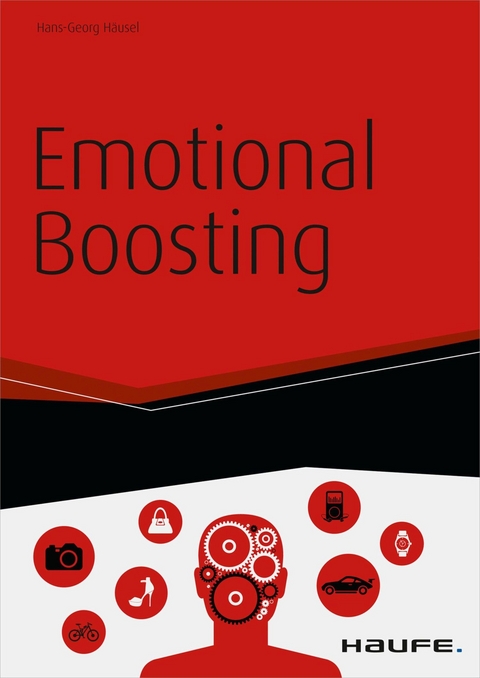
Emotional Boosting - Englische Version (eBook)
230 Seiten
Haufe Verlag
978-3-648-04113-0 (ISBN)
Dr. Hans-Georg Häusel, Psychologe und Hirnforscher, ist Bestseller-Autor und einer der gefragtesten Redner im deutschsprachigen Raum. Mit seinem im Jahr 2000 erschienen Buch 'Think Limbic' revolutionierte er das Denken. Sein Buch 'Brain View - Warum Kunden kaufen' wurde von einer internationalen Jury zu einem der 100 besten Wirtschaftsbücher aller Zeiten gewählt. Das von ihm entwickelte Limbic-Modell gilt heute als die beste und verständlichste Beschreibung der Emotionssysteme im Gehirn und deren Einfluss auf das Denken, Entscheiden, Fühlen und Handeln. Mehr von Hans-Georg Häusel unter: www.haeusel.com
Cover 1
Inhaltsverzeichnis 8
Vorwort 14
Das bietet Ihnen dieses Buch 16
Chronologische Beschreibung der Wahlen 16
Kontrolle der Betriebsratswahl, Rechtsschutz und Nichtigkeit 16
Kosten der Wahl 17
Wörterbuch der Betriebsratswahl 17
Teil I Chronologische Darstellung einer Betriebsratswahl 18
1 Der Zeitpunkt der Betriebsratswahlen 20
1.1 Die regelmäßigen Betriebsratswahlen 20
1.1.1 Die zu spät eingeleitete Betriebsratswahl 21
1.1.2 Die zu früh eingeleitete Betriebsratswahl 21
1.1.3 Die Koordination mit den Wahlen zum Sprecherausschuss 22
1.2 Außerordentliche Betriebsratswahl 22
1.2.1 Allgemeines 22
1.2.2 Die einzelnen Tatbestände 23
1.3 Weiterführung der Geschäfte bei außerordentlicher Betriebsratswahl 28
2 Reguläres Wahlverfahren oder vereinfachtes Wahlverfahren? 30
2.1 Welches Wahlverfahren ist einschlägig? 30
2.1.1 Betrieb mit bereits bestehendem Betriebsrat 30
2.1.2 Betriebe ohne Betriebsrat 32
2.2 Wahlmöglichkeit in Betrieben bis 100 Arbeitnehmer 33
3 Die Vorbereitung der regulären Wahl 36
3.1 Die Bestellung des Wahlvorstands 36
3.1.1 Zeitpunkt der Bestellung 36
3.1.2 Der Akt der Bestellung 37
3.1.3 Zusammensetzung des Wahlvorstands 37
3.1.4 Bestellung durch Arbeitsgericht oder Gesamt-/Konzernbetriebsrat 40
3.1.5 Die rechtliche Stellung der Wahlvorstandsmitglieder 44
3.1.6 Beginn und Beendigung des Wahlvorstandsamts 44
3.2 Die Maßnahmen des Wahlvorstands bis zur Einleitung der Wahl 45
3.2.1 Die erste Sitzung des Wahlvorstands 45
3.2.2 Allgemeine Regeln für die erste und weitere Sitzungen des Wahlvorstands 45
3.2.3 Welche Aufgaben stehen an? 46
4 Von der Einleitung der Wahl bis zum Wahltag 54
4.1 Einleitung der Wahl/Erlass des Wahlausschreibens 54
4.1.1 Allgemeines zur Einleitung der Wahl 54
4.1.2 Der Inhalt des Wahlausschreibens 56
4.1.3 Berichtigung oder Ergänzung des Wahlausschreibens 61
4.2 Nach Erlass des Wahlausschreibens bis zum Wahltag 62
4.2.1 Korrekturen der Wählerliste 62
4.2.2 Einreichung der Wahlvorschläge 66
4.2.3 Entgegennahme der Vorschlagslisten 70
4.2.4 Prüfung und Beanstandung der Vorschlagslisten 71
4.2.5 Sonderfall: Innerhalb der Frist von § 6 Abs. 1 Satz 2 WOBetrVG sind keine gültigen Wahlvorschläge eingereicht worden 75
4.2.6 Bekanntmachung der Vorschlagslisten 76
4.2.7 Vorbereitung der Wahlhandlung 77
5 Die Wahl und die Aufgaben nach der Wahl 80
5.1 Die verschiedenen Varianten der Wahl 80
5.1.1 Verhältniswahl, Wahlverfahren bei mehreren Vorschlagslisten
81
5.1.2 Mehrheitswahl, Wahlverfahren bei nur einer Vorschlagsliste 87
5.2 Briefwahl 89
5.3 Aufgaben nach der Wahl 91
5.3.1 Mitteilung an weitere Beteiligte 91
5.3.2 Einberufung der konstituierenden Sitzung des Betriebsrats 91
5.3.3 Aufbewahrung der Wahlakten, Einsichtsrecht 93
6 Die Wahl im vereinfachten Wahlverfahren 94
6.1 Allgemeines 94
6.2 Einstufiges vereinfachtes Wahlverfahren 97
6.2.1 Die Vorbereitung der vereinfachten einstufigen Wahl 97
6.2.2 Von der Einleitung der vereinfachten einstufigen Wahl bis zum Wahltag 103
6.2.3 Die Wahl und Aufgaben nach der Wahl 114
6.3 Zweistufiges vereinfachtes Wahlverfahren 118
6.3.1 Die Vorbereitung der vereinfachten zweistufigen Wahl
118
6.3.2 Die erste Wahlversammlung 122
6.3.3 Aufgaben zwischen erster und zweiter Wahlversammlung 126
6.3.4 Die zweite Wahlversammlung und Aufgaben nach der Wahl 127
Teil II Kontrolle der Betriebsratswahl: Rechtsschutz, Nichtigkeit 128
1 Übersicht 130
1.1 Übersicht über den Rechtsschutz 130
1.2 Ersetzung des Wahlvorstands wegen Untätigkeit nach § 18 Abs. 1 BetrVG 131
1.3 Statusverfahren zur Klärung des Betriebs nach § 18 Abs. 2 BetrVG 132
1.4 Vorgeschaltetes Kontrollverfahren 133
1.5 Einspruch gegen die Wählerliste 134
1.5.1 Einspruchsberechtigung 135
1.5.2 Einspruchsfrist 135
1.5.3 Form 136
1.5.4 Entscheidung des Wahlvorstands 136
1.5.5 Rechtsschutz 137
2 Einstweilige Verfügung 138
2.1 Übersicht 138
2.2 Inhalt einer einstweiligen Verfügung 139
2.3 Antragsberechtigung 139
2.4 Verfügungsanspruch 140
2.5 Verfügungsgrund 140
2.5.1 Allgemeines 140
2.5.2 Änderungen im laufenden Wahlverfahren 141
2.5.3 Abbruch der Wahl 141
2.6 Verfahren der einstweiligen Verfügung 142
2.6.1 Verfügungsgesuch 142
2.6.2 Ablauf des Verfahrens 143
3 Wahlanfechtung 146
3.1 Übersicht 146
3.2 Anfechtungsgründe 147
3.2.1 Verstoß gegen wesentliche Wahlvorschriften 147
3.2.2 Keine Berichtigung 148
3.2.3 Kausalität 148
3.2.4 Anfechtungsgründe im Einzelnen 149
3.3 Anfechtungsberechtigte 155
3.3.1 Arbeitgeber 155
3.3.2 Drei wahlberechtigte Arbeitnehmer 156
3.3.3 Im Betrieb vertretene Gewerkschaften 157
3.4 Rechtsschutzinteresse 157
3.5 Anfechtungsfrist 158
3.6 Inhalt des Antrags 159
3.7 Anfechtungsgegner 159
3.8 Anfechtungsverfahren 160
3.9 Vermeidung von Anfechtungsverfahren 161
4 Nichtigkeit der Betriebsratswahlen 162
4.1 Übersicht 162
4.2 Nichtigkeitsgründe 162
4.3 Folgen der Nichtigkeit 164
Teil III Kosten der Betriebsratswahl 166
1 Übersicht 168
2 Unmittelbare Kosten der Wahl 170
3 Arbeitsausfall 174
Teil IV Wörterbuch der Betriebsratswahl 176
Altersteilzeit 178
Amtszeit des Betriebsrats 178
Anfechtung der Betriebsratswahl 181
Angestellter 182
Annahme oder Ablehnung der Wahl 183
Arbeiter 187
Arbeitgeber 188
Arbeitnehmer 190
Arbeitsausfall 198
Ausländer 198
Auszubildender 200
Beamter 200
Beauftragter der Gewerkschaften 200
Beeinflussung der Wahl 202
Behinderung der Wahl 205
Bekanntgabe des Ergebnisses 207
Benachrichtigung der Gewählten 207
Berufsausbildungsverhältnis 208
Beschäftigung, regelmäßige 209
Betrieb 210
Betriebsadresse des Wahlvorstands 215
Betriebsteil 216
Betriebsversammlung zur Bestellung des Wahlvorstands 220
Briefwahl 223
Büroräume des Wahlvorstands 229
d’Hondt’sches Verfahren 229
Einleitung der Betriebsratswahl 231
Einspruch gegen die Wählerliste 232
Einstweilige Verfügung 232
Ermittlung der Gewählten 232
Ersatzmitglied 233
Freiwilligkeitsprinzip 240
Fristberechnung 241
Gegenstandswert 243
Gemeinschaftsbetrieb 243
Geschäftsordnung des Wahlvorstands 244
Geschlecht des Arbeitnehmers 245
Gewerkschaft 249
Größe des Betriebsrats 252
Grundsätze der Wahl 254
Hauptbetrieb 257
Heimarbeiter 257
Kleinbetrieb 258
Kleinstbetrieb 259
Konzern 260
Kosten der Wahl 261
Leiharbeitnehmer 262
Leitender Angestellter 265
Listenvertreter 272
Listenwahl 273
Mehrheitswahl 273
Minderheitsgeschlecht 276
Nichtigkeit der Betriebsratswahl 276
Niederschrift über die Betriebsratswahl 277
Persönlichkeitswahl 277
Regelmäßig Beschäftigte 277
Sitzverteilung 278
Sofort 278
Soldat 279
Sprecherausschuss 279
Stimmabgabe allgemein 281
Stimmabgabe, eine Vorschlagsliste 283
Stimmabgabe, mehrere Vorschlagslisten 284
Stimmabgabe, nachträgliche schriftliche 284
Stimmabgabe, vereinfachtes Wahlverfahren 289
Stimmenauszählung 289
Stimmzettel, allgemein 291
Stimmzettel bei Mehrheitswahl 292
Stimmzettel bei Verhältniswahl 292
Straftaten 293
Streitwert 293
Stützunterschriften 293
Unternehmen 296
Unverzüglich 297
Urne 298
Vereinfachtes Wahlverfahren 298
Verhältniswahl 298
Vermittler 303
Verteilung der Betriebsratssitze 305
Vorgeschaltetes Kontrollverfahren 305
Vorschlagsliste 306
Wahlakte 311
Wahlanfechtung 312
Wahlausschreiben, reguläres Wahlverfahren 313
Wahlausschreiben, vereinfachtes einstufiges Wahlverfahren 316
Wahlausschreiben, vereinfachtes zweistufiges Wahlverfahren 320
Wählbarkeit 325
Wahlberechtigung 329
Wählerliste 331
Wählerliste, vereinfachtes Wahlverfahren 335
Wahlhelfer 336
Wahlniederschrift 336
Wahlrecht 338
Wahlumschlag 338
Wahlurne 339
Wahlverfahren 340
Wahlversammlung 340
Wahlvorschlag 344
Wahlvorstand 351
Zahl der Betriebsratsmitglieder 357
Zeitarbeitnehmer 357
Zeitpunkt der Betriebsratswahl 357
Zuordnung der leitenden Angestellten 359
Stichwortverzeichnis 364
1 No emotions – no money
1.1 Why only emotions create value and values
What is in store for you in this chapter:
Alchemists have always dreamed of turning water into gold. Something that was impossible back then is now practically a reality. By means of emotional boosting, the value of water is increased by a factor of 75,000 for example. Someone who wants to be successful in sales and marketing must say good-bye to the image of the conscious and rational customer. Instead, he must systematically press the countless purchase buttons in the unconscious of the customer's brain.
Would you, dear reader, pay a thousand times more for a product than it is actually worth? „Never,“ you would say. Just the idea that you could act so unreasonably is almost insulting. Ultimately we perceive ourselves as people who act in a rational and conscious manner, or in this specific case: consumers. We believe we make our decisions consciously and intelligently. Pay more than a product is worth? Never! But let's take a look at the world of everyday consumption for a shocking example. Certainly the most commonplace product one can think of is water. If you live, as I do, south of Munich, you are fortunate that your tap water comes directly from the Bavarian Alps. 0.75 liters of this good quality water costs 12/100 of one cent including wastewater charges. Now go to the supermarket and buy a 0.75-liter bottle of a brand-name water. You pay about 80 cents for it after deducting the deposit for the glass or plastic bottle. The bottled water, food chemists assure us, is not better and not healthier than the water coming out of my tap. So for this regular, brand-name water you have already paid 650 times as much as it is worth. Why? Because obviously a brand label was sufficient to open the wallet in your brain. But we have not yet reached the end of our journey. Now you go out for a nice dinner in the evening and, with your wine, you order a bottle of San Pellegrino or Perrier. On the bill you find the price for this water is 7 Euros. Now calculating it based on our starting point of 12/100 of a cent, this is an increase of a factor of 6,000! Why did you pay that? On the one hand, because it was a premium brand. On the other hand, because the water was served in an elegant environment by a distinguished waiter. You are probably stunned – but our journey with the water has yet to come to an end. After dinner you and your dining partner go to a club that is an absolute hotspot. Everything is very stylish here and the financial elite of your city meet regularly at this club. You order water here as well. The bartender asks whether you would prefer Bling Gold or Voss water. You aren't familiar with either one. The bartender says that Bling Gold is selling like hotcakes and is totally „in“ and so you order a bottle. The bartender brings the bottle to the table and removes the metal cap, in the same manner as with a bottle of wine, and then he opens it with a corkscrew. He pours you a glass and then leaves you with the bottle. You are astonished. The frosted glass feels delicate and precious and the label is made of Swarovski crystals (see Figure 1). You drink the water in awe. But to be honest, you do not notice a difference compared to regular water. The only thing you notice are the curious looks coming from the people at the next table.
Figure 1. How to turn water into gold: Bling H2O (reference/photo:M.Strachwitz)
But the difference on the bill, which soon follows, is dramatic compared to your tap water: 90 (ninety!) Euros. That is an increase in value of 75,000, although you don't taste a difference at all! You are speechless. How could something like that happen to you, the consciously acting consumer? Already your willingness to pay 650 times the value for the supermarket brand-name water caused you to pause. And now this fiasco of logical reasoning. Even the bartender's comment that Paris Hilton's dogs drink this water every day brings little comfort. But now we are interested in a different question. How are the American makers of Bling able to turn water into gold? Using emotional boosting. In the course of chapters 3 and 4 we will look at Bling more than once and will become familiar with the many small details of its emotional increase in value.
1.1.1 How a taxi driver makes his customers happy
Let's depart this glamorous world and return to everyday life. A few weeks ago I called a taxi to take me to the airport. The taxi, a very well cared for Mercedes, was punctual. The driver of Persian origin stowed my luggage and opened the rear door for me. I got in and sat down. Next to me, on the back seat, I found an up-to-date newspaper and several magazines, plus an opened tin of hard candy on the center console. Because I am a somewhat taller person, the space in the rear is somewhat cramped when the front seat is in its regular position. I had barely gotten into the car when the driver immediately moved the seat forward, a procedure which only takes place in most taxis when specifically requested.
The driver turned around and said, „The newspapers are there for you. Help yourself to the candy, and have a nice start to your day.“ After a brief pause he asked, „Would you like to hear music? Pop, classical or folk music? Or would you prefer peace and quiet?“ When you are treated in such a friendly manner, of course it is easy to start up a conversation and I asked him (in the midst of the recession) how business was. He answered, „I am very satisfied and I am constantly booked.“ I had asked a different taxi driver the same question several days earlier. His answer? „Crummy.“ But back to our driver. I asked him why he was so satisfied with his business. His answer was, „I get the same amount of money per kilometer as my colleagues, but I have a lot more personal reservations for my services. I have a great deal of regular customers and they often use my services to drive to the far-away airport. I am at full capacity, and many of my colleagues are not.“ What is the reason for our taxi driver's success? Emotional boosting. In Chapter 7, Sales Boosting, we will deal with the topic of service.
When compared to our water example, an important insight becomes clear: While the price of the water multiplied by means of emotional boosting, the taxi driver's price remained the same. What did increase, however, was the number of customers and the customer loyalty. Both examples have one more thing in common, and that is that the money is rolling in!
1.1.2 Don't negotiate with the government spokesperson, but instead with the government itself
Perhaps you are asking yourself what is really behind this new term „emotional boosting“? Very briefly: Emotional boosting is marketing and sales from the brain's point of view. But what makes it different from conventional marketing? What differentiates emotional boosting from „customer orientation“? While classic marketing including customer orientation is based on a conscious and rational customer, whom one asks what he or she wants, emotional boosting follows a completely different path altogether. Because purchase decisions are made to a great extent unconsciously, based on emotional programming in the customer's brain, it is the goal of emotional boosting to very consistently press the thousand small purchase buttons in the customer's unconscious. Emotional boosting departs from the conscious and rational customer, and utilizes the findings of modern brain research. Namely, the customer generally has no idea why he or she decides the way they do, even if he or she believes they do. Brain research calls this illusion „user illusion.“ Or freely adapted from American neuro-philosopher Daniel Dennett: „The consciousness of a customer (in Dennett's words: „people“) is like a government spokesman who has to announce decisions he or she a) did not participate in and b) whose true decision-making reasons are also not accessible to him or her.“ So someone who wants to be successful does not approach the government spokesman, but instead the government itself. And who is the government? The emotion systems in the customer's brain!
Now critics could say, „But that's nothing new – creating value through emotion. Every advertiser has that hammered home during his or her first year of education.“ Whereas an advertiser understands emotionalization as showing a couple in a TV commercial lovingly gazing into each other's eyes while enjoying yogurt, or his or her colleague who organizes events, who, when asked to get more emotion in the room, gets the bass thumping and pushes the disco lights as far as they can go, we will discover that this form of emotionalization certainly is justified and can work. But emotional boosting goes much, much farther and deeper. And with that we have already reached the first principle of emotional boosting.
1.1.3 Principle No. 1: Emotional boosting is a strategic and practical approach
Especially creative professionals believe that emotionalization must always be associated with a ‚wow’ effect. Admittedly,‚ wow’ effects, which a lot of people talk about in the short-term, can certainly be...
| Erscheint lt. Verlag | 10.4.2013 |
|---|---|
| Reihe/Serie | Haufe Fachbuch |
| Verlagsort | München |
| Sprache | englisch |
| Themenwelt | Recht / Steuern ► Allgemeines / Lexika |
| Recht / Steuern ► Arbeits- / Sozialrecht | |
| Wirtschaft ► Betriebswirtschaft / Management ► Unternehmensführung / Management | |
| Schlagworte | Betriebsrat • Betriebsratswahlen • Wahlanfechtung • Wahlunterlagen • Wahlverfahren |
| ISBN-10 | 3-648-04113-4 / 3648041134 |
| ISBN-13 | 978-3-648-04113-0 / 9783648041130 |
| Informationen gemäß Produktsicherheitsverordnung (GPSR) | |
| Haben Sie eine Frage zum Produkt? |
 PDF (Wasserzeichen)
DRM: Digitales Wasserzeichen
Dieses eBook enthält ein digitales Wasserzeichen und ist damit für Sie personalisiert. Bei einer missbräuchlichen Weitergabe des eBooks an Dritte ist eine Rückverfolgung an die Quelle möglich.
Dateiformat: PDF (Portable Document Format)
Mit einem festen Seitenlayout eignet sich die PDF besonders für Fachbücher mit Spalten, Tabellen und Abbildungen. Eine PDF kann auf fast allen Geräten angezeigt werden, ist aber für kleine Displays (Smartphone, eReader) nur eingeschränkt geeignet.
Systemvoraussetzungen:
PC/Mac: Mit einem PC oder Mac können Sie dieses eBook lesen. Sie benötigen dafür einen PDF-Viewer - z.B. den Adobe Reader oder Adobe Digital Editions.
eReader: Dieses eBook kann mit (fast) allen eBook-Readern gelesen werden. Mit dem amazon-Kindle ist es aber nicht kompatibel.
Smartphone/Tablet: Egal ob Apple oder Android, dieses eBook können Sie lesen. Sie benötigen dafür einen PDF-Viewer - z.B. die kostenlose Adobe Digital Editions-App.
Buying eBooks from abroad
For tax law reasons we can sell eBooks just within Germany and Switzerland. Regrettably we cannot fulfill eBook-orders from other countries.
aus dem Bereich