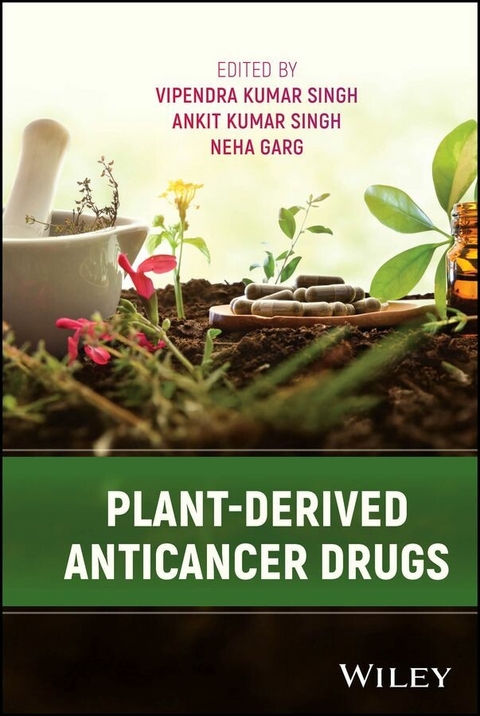
Plant-derived Anticancer Drugs (eBook)
757 Seiten
Wiley (Verlag)
978-1-394-30057-0 (ISBN)
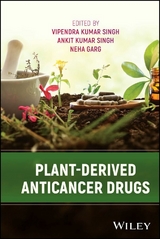
Enhanced approaches for using plant-derived molecules as a more promising cancer treatment alternative, with lower costs and fewer side effects
Plant-derived Anticancer Drugs discusses the current scenario of cancer, the limitations of synthetic drugs, and the potential of plant-derived molecules in cancer treatment, highlighting a variety of approaches, such as biodegradable nano and quantum dot-based materials, that enhance the therapeutic efficacy of plant-derived molecules to improve solubility, applicability, target-specific delivery, and overall efficacy.
The book begins by discussing the preclinical and clinical utilization of synthetic drugs in cancer therapy, highlighting their mechanisms of action, therapeutic outcomes, limitations, and future perspectives. The book then provides a snapshot of the major drugs approved by the FDA which have historically served as the cornerstone of center treatment, and provides a clinical evidence-based analysis of their survival outcomes. Next, the current role, acceptance, advancements, and challenges of using plant-derived molecules in cancer therapy are reviewed.
Contributed to by international experts in the field, Plant-derived Anticancer Drugs continues to cover sample topics including:
- Advancements in anti-cancer drug development due to genomics, biotechnology, and systems biology
- Integrative approaches which leverage the cytotoxic precision of synthetic drugs alongside the multitargeted and often less toxic nature of phytochemicals
- Optimization of phytochemicals with high anticancer potential to reduce drug discovery timelines and associated costs
- Integration of Artificial Intelligence (AI) and plant-derived bioactive compounds
- Ability of plant-derived molecules and herbal formulations to target multiple pathways involved in cancer progression, such as cell proliferation, apoptosis, angiogenesis, and metastasis
Plant-derived Anticancer Drugs is a completely comprehensive and up-to-date reference on the subject, ideal for natural products chemists, medicinal chemists, biochemists, and cancer researchers in academia and industry. The book is also valuable reading for graduates and undergraduates studying nanotechnology, phytochemistry, pharmacology, oncology, and toxicology.
Vipendra Kumar Singh, PhD is a senior postdoctoral fellow in the School of Biosciences and Bioengineering at the Indian Institute of Technology Mandi, Himachal Pradesh, India.
Ankit Kumar Singh, PhD works as an Assistant Professor at the University Department of Botany Lalit Narayan Mithila University, Darbhanga, Bihar, India.
Neha Garg, PhD is an Assistant Professor at the Institute of Medical Sciences, Department of Medicinal Chemistry, Banaras Hindu University in India.
Enhanced approaches for using plant-derived molecules as a more promising cancer treatment alternative, with lower costs and fewer side effects Plant-derived Anticancer Drugs discusses the current scenario of cancer, the limitations of synthetic drugs, and the potential of plant-derived molecules in cancer treatment, highlighting a variety of approaches, such as biodegradable nano and quantum dot-based materials, that enhance the therapeutic efficacy of plant-derived molecules to improve solubility, applicability, target-specific delivery, and overall efficacy. The book begins by discussing the preclinical and clinical utilization of synthetic drugs in cancer therapy, highlighting their mechanisms of action, therapeutic outcomes, limitations, and future perspectives. The book then provides a snapshot of the major drugs approved by the FDA which have historically served as the cornerstone of center treatment, and provides a clinical evidence-based analysis of their survival outcomes. Next, the current role, acceptance, advancements, and challenges of using plant-derived molecules in cancer therapy are reviewed. Contributed to by international experts in the field, Plant-derived Anticancer Drugs continues to cover sample topics including: Advancements in anti-cancer drug development due to genomics, biotechnology, and systems biologyIntegrative approaches which leverage the cytotoxic precision of synthetic drugs alongside the multitargeted and often less toxic nature of phytochemicalsOptimization of phytochemicals with high anticancer potential to reduce drug discovery timelines and associated costsIntegration of Artificial Intelligence (AI) and plant-derived bioactive compoundsAbility of plant-derived molecules and herbal formulations to target multiple pathways involved in cancer progression, such as cell proliferation, apoptosis, angiogenesis, and metastasis Plant-derived Anticancer Drugs is a completely comprehensive and up-to-date reference on the subject, ideal for natural products chemists, medicinal chemists, biochemists, and cancer researchers in academia and industry. The book is also valuable reading for graduates and undergraduates studying nanotechnology, phytochemistry, pharmacology, oncology, and toxicology.
Preface
Cancer is a group of diseases that can start in nearly any tissue or organ once neoplastic cells grow unconditionally and invade other parts of the body. Metastasis is the process by which cancer spreads from one part of the body to others, and it is a major cause of death in nearly all types of cancer. According to the World Health Organization (WHO), cancer is a leading cause of death globally, responsible for nearly one in six deaths, or approximately 10 million deaths, in 2020. The most thoroughly diagnosed cancers are the colon, prostate, breast, rectum, and lung. The incidence and mortality rate of cancer is increasing day by day. Although various synthetic drugs, such as doxorubicin, Taxol, and platinum-based drugs, are available for cancer treatment, they are used to target different stages of the disease. These synthetic drugs do not bring about significant changes in terms of survival; they alter the quality of life and patient’s health. As per the WHO, nearly 75% of cancer patients globally depend on plant-derived molecules or their herbal formulations to cure this disease. Most available plant-derived molecules or herbal medicines are cheaper than other options, such as surgery and chemotherapy. Plant-derived molecules targeting oncogenic signaling pathways have been shown to reduce tumor burden while also offering safe and cost-effective treatment options. Recent preclinical studies suggest their minimal cytotoxicity and ease of accessibility as key advantages. However, challenges remain, including poor bioavailability, off-target effects, low retention time, and limited solubility.
The side effects and limited therapeutic efficacy of current synthetic drugs have become a major topic of debate. Clinicians and researchers are actively seeking novel plant-derived molecules that exhibit minimal cytotoxicity and improved therapeutic efficacy in cancer treatment. Building on this concept, this book aims to provide a comprehensive blueprint for plant-derived molecules as an alternative cancer therapy. It includes 14 chapters contributed by experts from various countries.
Cancer remains one of the most formidable global health challenges. Synthetic drugs have emerged as indispensable tools in modern oncology. Chapter 1 discusses the preclinical and clinical utilization of synthetic drugs in cancer therapy, highlighting their mechanisms of action, therapeutic outcomes, limitations, and future perspectives. The US Food and Drug Administration (FDA) plays a pivotal role in regulating and approving therapeutic agents for cancer treatment. These treatment modalities span conventional chemotherapies, targeted therapies, hormonal agents, immunotherapies, and cellular therapies. FDA approvals are based on rigorous clinical trials and evidence of safety and efficacy. Basic snapshots of FDA-approved drugs have been described in Chapter 2. Synthetic drugs have long served as the cornerstone in cancer treatment, offering diverse mechanisms of action against various tumor types. While their clinical effectiveness has been widely documented, these agents often present a trade-off between improved survival and potential adverse effects. Chapter 3 provides a clinical evidence-based analysis of survival outcomes and side effect profiles of commonly used synthetic anticancer drugs. Cancer remains one of the leading causes of morbidity and mortality worldwide. While synthetic drugs and modern treatment modalities have revolutionized cancer care, there has been a global resurgence of interest in plant-derived cancer therapies due to their accessibility, lower toxicity, and diverse pharmacological properties. Chapter 4 offers a global perspective on the role, acceptance, advancements, and challenges of using plant-derived molecules in cancer therapy. Over the past few decades, the exploration and utilization of plant-derived molecules have gained global momentum as effective agents in the fight against cancer. Their ability to target multiple cellular pathways, particularly those involved in cancer progression and metastasis, has made them attractive candidates for anticancer therapy. This globalization is driven by technological advancements, increased cross-border research collaboration, and the integration of traditional medicine knowledge into modern drug discovery covered in Chapter 5. Over the past few decades, cancer treatment has undergone a profound transformation – from nonspecific cytotoxic chemotherapy to precise, personalized therapies guided by molecular profiling. Chapter 6 covers the paradigm shift in anticancer drug development, driven by advancements in genomics, biotechnology, and systems biology. As a result, survival rates for many cancers have improved, side effect profiles have reduced, and treatment strategies have become more patient-centric. The convergence of conventional cancer therapies (chemotherapy, radiotherapy, immunotherapy) with plant-derived compounds represents a promising frontier in oncology. Integrative approaches aim to harness the strengths of both treatment paradigms, leveraging the cytotoxic precision of synthetic drugs alongside the multitargeted, often less toxic, nature of phytochemicals. This synergy not only improves therapeutic outcomes but also enhances patient quality of life, reduces side effects, and potentially mitigates drug resistance. General snapshots of these ideas have been illustrated in Chapter 7. Chapter 8 described that the therapeutic potential of plant-derived molecules in cancer treatment is gaining increased attention due to their bioactivity, lower toxicity, multitarget effects, and historical use in traditional medicine. Clinical trials play a critical role in validating their efficacy and safety in humans.
Chapter 9 briefly described the identification and optimization of phytochemicals with high anticancer potential. This integrative methodology not only reduces drug discovery timelines but also offers a cost-effective, sustainable, and targeted route to novel chemotherapeutics. Chapter 10 describes the integration of green nanotechnology with phytochemistry, which has opened new frontiers in cancer therapy. Biosynthesized nanomaterials, produced using plant extracts, offer a sustainable, eco-friendly, and biocompatible platform for delivering plant-derived anticancer agents. These nanocarriers enhance solubility, bioavailability, and target specificity of phytochemicals, thereby improving their therapeutic index. Quantum dots (QDs) are semiconductor nanoparticles with unique optical properties, such as high fluorescence, tunability, and photostability. These properties make them ideal for various biomedical applications, including targeted drug delivery. When combined with plant-derived anticancer biomolecules, QDs can enhance the precision and effectiveness of cancer treatment. The general concept of QDs in targeted drug delivery has been described in Chapter 10. Chapter 11 illustrates that the integration of artificial intelligence (AI) and plant-derived bioactive compounds represents a transformative frontier in oncology. While plant-based molecules have long demonstrated anticancer properties, AI’s ability to decode biological complexity, accelerate drug discovery, and personalize therapies positions it as a powerful enabler. Together, these domains promise faster identification of novel compounds, predictive modeling of drug responses, and more effective, patient-specific treatment protocols. This synergy could redefine the future of precision oncology. The quest for safer and more effective anticancer therapies has brought plant-derived molecules into the spotlight as promising candidates, especially when combined with cutting-edge in silico and pharmacophore modeling approaches. QDs are semiconductor nanoparticles with unique optical and electronic properties that make them highly suitable for biomedical applications, including drug delivery and cancer therapy. They have been increasingly explored for enhancing the therapeutic efficacy of plant-derived molecules in cancer treatment. The scientific basis for using QDs in combination with plant-derived molecules stems from their unique properties, which can address several limitations of traditional cancer therapies. Chapter 12 provides an overview of the scientific principles and mechanisms by which QDs enhance the therapeutic potential of plant-derived molecules in cancer treatment.
Plant-derived molecules and herbal formulations have been extensively researched for their potential in cancer treatment due to their bioactive compounds with anticancer properties. These compounds, often rich in antioxidants, polyphenols, flavonoids, alkaloids, and terpenoids, can target multiple pathways involved in cancer progression, such as cell proliferation, apoptosis, angiogenesis, and metastasis. In vitro (cell-based) and in vivo (animal-based) studies have provided substantial evidence supporting the effectiveness of these natural compounds in cancer therapy. Chapter 13 of this book provides an overview of the key plant-derived molecules and herbal formulations, along with the in vitro and in vivo evidence of their anticancer effects. We hope that our book is helpful for clinicians, researchers, oncologists, pharmacists, academicians, clinicians, scholars, graduates, and undergraduates who are working in the field of nanotechnology, phytochemistry, pharmacology, oncology, toxicology, and herbal research. Plant-derived nanoparticles (PDNPs) are gaining increasing attention in cancer therapy due to their biocompatibility, biodegradability, and the ability to deliver various therapeutic agents, including natural plant-based anticancer compounds. These...
| Erscheint lt. Verlag | 12.11.2025 |
|---|---|
| Sprache | englisch |
| Themenwelt | Naturwissenschaften ► Chemie |
| Schlagworte | angiogenesis • Apoptosis • biodegradable nano materials • cancer ai • cancer alternative treatment • Herbal Cancer Treatment • Metastasis • nanotechnology cancer • Phytochemicals • Quantum dot materials • synthetic cancer treatment |
| ISBN-10 | 1-394-30057-3 / 1394300573 |
| ISBN-13 | 978-1-394-30057-0 / 9781394300570 |
| Informationen gemäß Produktsicherheitsverordnung (GPSR) | |
| Haben Sie eine Frage zum Produkt? |
 EPUB (Adobe DRM)
Kopierschutz: Adobe-DRM
Adobe-DRM ist ein Kopierschutz, der das eBook vor Mißbrauch schützen soll. Dabei wird das eBook bereits beim Download auf Ihre persönliche Adobe-ID autorisiert. Lesen können Sie das eBook dann nur auf den Geräten, welche ebenfalls auf Ihre Adobe-ID registriert sind.
Details zum Adobe-DRM
Dateiformat: EPUB (Electronic Publication)
EPUB ist ein offener Standard für eBooks und eignet sich besonders zur Darstellung von Belletristik und Sachbüchern. Der Fließtext wird dynamisch an die Display- und Schriftgröße angepasst. Auch für mobile Lesegeräte ist EPUB daher gut geeignet.
Systemvoraussetzungen:
PC/Mac: Mit einem PC oder Mac können Sie dieses eBook lesen. Sie benötigen eine
eReader: Dieses eBook kann mit (fast) allen eBook-Readern gelesen werden. Mit dem amazon-Kindle ist es aber nicht kompatibel.
Smartphone/Tablet: Egal ob Apple oder Android, dieses eBook können Sie lesen. Sie benötigen eine
Geräteliste und zusätzliche Hinweise
Buying eBooks from abroad
For tax law reasons we can sell eBooks just within Germany and Switzerland. Regrettably we cannot fulfill eBook-orders from other countries.
aus dem Bereich