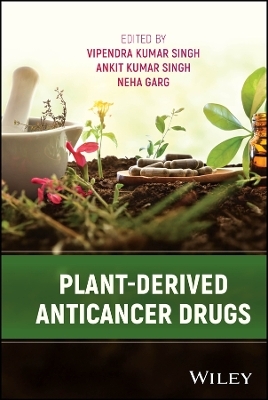
Plant-derived Anticancer Drugs
John Wiley & Sons Inc (Verlag)
978-1-394-30056-3 (ISBN)
Plant-derived Anticancer Drugs discusses the current scenario of cancer, the limitations of synthetic drugs, and the potential of plant-derived molecules in cancer treatment, highlighting a variety of approaches, such as biodegradable nano and quantum dot-based materials, that enhance the therapeutic efficacy of plant-derived molecules to improve solubility, applicability, target-specific delivery, and overall efficacy.
The book begins by discussing the preclinical and clinical utilization of synthetic drugs in cancer therapy, highlighting their mechanisms of action, therapeutic outcomes, limitations, and future perspectives. The book then provides a snapshot of the major drugs approved by the FDA which have historically served as the cornerstone of center treatment, and provides a clinical evidence-based analysis of their survival outcomes. Next, the current role, acceptance, advancements, and challenges of using plant-derived molecules in cancer therapy are reviewed.
Contributed to by international experts in the field, Plant-derived Anticancer Drugs continues to cover sample topics including:
Advancements in anti-cancer drug development due to genomics, biotechnology, and systems biology
Integrative approaches which leverage the cytotoxic precision of synthetic drugs alongside the multitargeted and often less toxic nature of phytochemicals
Optimization of phytochemicals with high anticancer potential to reduce drug discovery timelines and associated costs
Integration of Artificial Intelligence (AI) and plant-derived bioactive compounds
Ability of plant-derived molecules and herbal formulations to target multiple pathways involved in cancer progression, such as cell proliferation, apoptosis, angiogenesis, and metastasis
Plant-derived Anticancer Drugs is a completely comprehensive and up-to-date reference on the subject, ideal for natural products chemists, medicinal chemists, biochemists, and cancer researchers in academia and industry. The book is also valuable reading for graduates and undergraduates studying nanotechnology, phytochemistry, pharmacology, oncology, and toxicology.
Vipendra Kumar Singh, PhD is a senior postdoctoral fellow in the School of Biosciences and Bioengineering at the Indian Institute of Technology Mandi, Himachal Pradesh, India. Ankit Kumar Singh, PhD works as an Assistant Professor at the University Department of Botany Lalit Narayan Mithila University, Darbhanga, Bihar, India. Neha Garg, PhD is an Assistant Professor at the Institute of Medical Sciences, Department of Medicinal Chemistry, Banaras Hindu University in India.
List of Contributors xvii
Preface xxi
1 Utilization of Synthetic Drugs in Cancer: Preclinical and Clinical-based Evidence 1
Sandeep Vaidya, Avadh Biharee, Arpita Yadav, Arun Kumar Sharma, Akhlesh Kumar Jain, Suresh Thareja, and Mayank Kumar Singh
1.1 Introduction 1
1.1.1 Cancer Biology and Pathophysiology 2
1.1.2 Nanomedicine in Cancer Treatments 3
1.1.2.1 Applications of Nanomedicine in Cancer Treatment 5
1.1.3 Evolution of Synthetic Anticancer Drugs from Ancient Beliefs to Modern Medicine 6
1.2 Synthetic Pharmaceutical Anticancer Drugs 8
1.3 Challenges Faced in Early Drug Development 17
1.4 Conclusion 20
Acknowledgments 21
References 21
2 United States and European Union Regulations: Approved Treatment Modalities for Managing Cancer 29
Avadh Biharee, Khushi Gupta, Arpita Yadav, Shivam Kumar kori, Sudha Bhartiya, Kashif sheikh, Sandeep Vaidya, Sushil K. Kashaw, Suresh Thareja, and Mayank Kumar Singh
2.1 Introduction 29
2.2 FDA Strategies for Drug Approval in the United States 31
2.2.1 Expedited Approval of Anticancer Drugs in the United States 32
2.3 EMA Approach for Drug Approval in the EU 35
2.3.1 Expedited Anticancer Drug Approval in EU 36
2.4 Approved Treatment Modalities for Cancer Care 38
2.4.1 Conventional Cancer Therapy 39
2.4.2 Innovative Cancer Treatments 40
2.4.3 Physical Therapy for Cancer Treatment 41
2.4.4 Personalized and Precision Medicine 42
2.5 Quality Control in Cancer Treatment 43
2.6 Regulatory Frameworks Involved in Drug Approval Process 44
2.6.1 FDA and EMA Approach to Drug Approval for Cancer Treatment 45
2.6.1.1 Drug Approval in the United States 46
2.6.1.2 Drug Approval in the EU 46
2.6.2 Key Differences in the FDA and the EU Drug Approval Processes 48
2.6.3 Comparison of the United States and the EU Device Approval 50
2.7 Challenges Associated in Drug and Devices Regulation and Approval 52
2.8 Conclusion 53
Acknowledgments 54
References 54
3 Survival Rate and Associated Side Effects of Synthetic Drugs in Cancer Patients: A Shred of Clinical Evidence 63
Arpita Yadav, Arun Kumar Sharma, Kishan Kumar Pandey, Anu Chaudhary, Avadh Biharee, Sandeep Vaidya, Suresh Thareja, and Mayank Kumar Singh
3.1 Introduction 63
3.2 Synthetic Drugs in Cancer Treatment 65
3.3 The Evolution of Chemotherapeutic Agents from Alkylators to Modern Drugs 66
3.4 Cancer Survival Rates: Challenges and Emerging Trends in Treatment and Diagnosis 68
3.4.1 Targeted Therapies and Immunotherapies: The New Cancer Treatments 69
3.4.2 Factors Affecting Survival Rates 70
3.5 Deleterious Effects of Chemotherapeutic Agents and Their Management Strategies 72
3.6 Side Effects of Synthetic Drugs 74
3.6.1 Short-term Side Effects 74
3.6.2 Long-term Side Effects 75
3.7 Clinical Evidence of Side Effects 76
3.8 Resistance and Recurrence 76
3.9 Future Directions of Synthetic Drugs Against Various Types of Cancer 77
3.10 Conclusion 78
Acknowledgments 79
References 79
4 Global Perspectives on Plant-derived Cancer Therapies 91
Sayanta Sarkar and Poorwa Awasthi
4.1 Introduction 91
4.2 Phytochemicals in Cancer Therapies 92
4.2.1 Rosmarinus officinalis L. 93
4.2.2 Withania somnifera 95
4.2.3 Hedychium coronarium 97
4.2.4 Catharanthus roseus 99
4.2.5 Ocimum sanctum 100
4.2.6 Piper betle 102
4.3 Phytochemicals in Drug-resistant Cancers 103
4.4 Plant-based Nanomedicines in Cancer Therapies 103
4.5 Conclusion and Future Perspectives 104
References 106
5 Integrative Approaches: Combining Conventional and Plant-derived Cancer Therapies 119
Poorwa Awasthi, Shweta Goyal, and Sayanta Sarkar
5.1 Introduction 119
5.2 Conventional Cancer Therapies: Achievements and Limitations 120
5.3 Plant-derived Compounds in Cancer Therapy 124
5.3.1 Bioactive Molecules and Their Mechanisms 124
5.3.1.1 Polyphenols 124
5.3.1.2 Alkaloids 124
5.3.1.3 Terpenoids 125
5.4 Advantages of Natural Products 125
5.5 Synergistic Potential of Combination Therapies 128
5.5.1 Mechanisms of Synergy 128
5.5.2 Common Examples of Cancer with Combination Therapies 128
5.5.2.1 Breast Cancer 129
5.5.2.2 Lung Cancer 130
5.5.2.3 Colorectal Cancer 131
5.5.2.4 Prostate Cancer 132
5.5.2.5 Ovarian Cancer 133
5.5.2.6 Leukemia 135
5.5.2.7 Liver Cancer 136
5.5.2.8 Brain Cancer 138
5.6 Challenges and Future Perspectives 140
5.7 Conclusion 142
References 143
6 Phytochemical Drugs in Cancer: Therapeutic Interventions and Opportunities 159
Archana Kumari, Shankar Suman, and Shivam Priya
6.1 Introduction 159
6.2 Plant-derived Compounds in Cancer Therapy 160
6.2.1 Alkaloids and Their Anticancer Effects 161
6.2.2 Terpenoids as Potent Anticancer Agents 161
6.2.3 Flavonoids: Multifunctional Cancer Fighters 161
6.3 Mechanisms of Action of Plant-derived Compounds 162
6.3.1 Induction of Apoptosis 162
6.3.2 Targeting CSCs 162
6.3.3 Antiangiogenic Properties 163
6.3.4 Inhibition of Metastasis and Tumor Progression 163
6.4 Nanotechnology in Enhancing Plant-derived Compounds 164
6.4.1 Improving Bioavailability and Stability Through Nanoparticle Encapsulation 164
6.4.2 Targeted Delivery and Reduced Side Effects of Plant-derived Compounds 164
6.4.3 Overcoming Multidrug Resistance with Nanotechnology 164
6.5 Clinical Trials and Research on Plant-derived Anticancer Compounds 165
6.5.1 Clinical Trials of Curcumin in Cancer Therapy 165
6.5.2 Paclitaxel and Semisynthetic Taxanes 165
6.5.3 Flavonoids in Clinical Studies 166
6.6 Challenges and Future Directions in Plant-derived Cancer Therapies 166
6.6.1 Issues with Bioavailability and Solubility 166
6.6.2 Standardization and Quality Control 166
6.6.3 Clinical Validation and Regulatory Challenges 166
6.6.4 Potential of Bioinformatics in Drug Discovery 167
6.7 Advanced Applications of Bioinformatics in Plant-based Drug Discovery 168
6.7.1 Molecular Docking Studies and Predictive Modeling 168
6.7.2 Network Pharmacology Approaches 168
6.7.3 Genomics and Metabolomics in Identifying Novel Compounds 169
6.8 Case Studies of Successful Plant-derived Cancer Therapies 169
6.8.1 Green Tea Extracts in Clinical Applications 169
6.8.2 Vinca Alkaloids in Clinical Applications 169
6.8.3 Resveratrol’s Potential in Cancer Therapy 170
6.9 Future Perspectives and Integration into Clinical Oncology 171
6.9.1 Development of Combination Therapies 171
6.9.2 Role of Personalized Medicine 171
6.9.3 Advanced Drug Delivery Systems 171
6.10 Conclusion and Future Directions 172
References 174
7 Plant-derived Anticancer Molecules as Novel Outlook in the Management of Cancers: An In silico and Pharmacophore-based Approaches 183
Surya Venkateswara Prabhu Ratnam Kesanapalli, Babli K. Jha, and Laxmi Devi
7.1 Introduction 183
7.2 Historical Perspective 184
7.3 Key Discoveries of Plant-derived Anticancer Compounds 184
7.4 Phytochemicals with Anticancer Properties 185
7.4.1 Alkaloids 185
7.4.2 Flavonoids 186
7.4.3 Terpenes 187
7.4.3.1 Paclitaxel (Taxol) 187
7.4.3.2 Limonene 187
7.4.3.3 Phenolics 187
7.4.3.4 Polyphenols 187
7.4.3.5 Saponins 188
7.4.3.6 Lignans 188
7.5 Computational Approaches in Phytochemical Research 188
7.5.1 In silico Docking Analysis 189
7.5.2 Virtual Screening 190
7.5.3 Quantitative Structure-Activity Relationship 190
7.5.4 Structure-based Screening Method 191
7.5.5 Molecular Dynamics Simulations 192
7.5.6 Cheminformatics 192
7.5.7 Pharmacophore Modeling 192
7.5.8 ml and AI in Drug Discovery 193
7.6 Novel Therapeutic Approaches 193
7.6.1 Phytochemical-based Drug Formulations 193
7.6.2 Immunotherapy 194
7.6.3 Targeted Therapy 194
7.6.4 Nano Catalysts 194
7.6.5 Combination Therapies 194
7.6.6 Personalized Medicine 195
7.6.7 Advanced Drug Delivery Systems 195
7.7 Challenges and Future Directions 196
7.8 Bioavailability Issues 196
7.9 Regulatory Hurdles 196
7.9.1 Ethical Considerations and Sustainable Sourcing 197
7.10 Advancements in Computational Power and Algorithms 197
7.10.1 Quantum Computing 197
7.10.2 Explainable AI 198
7.10.3 Precision Oncology 199
7.10.4 Biomarker Discovery 199
7.11 Conclusion 200
Acknowledgment 201
References 202
8 Plant-derived Molecules and Herbal Formulation for Cancer Treatment: in vitro and in vivo Evidence 209
Surya Venkateswara Prabhu Ratnam Kesanapalli, Babli K. Jha, and Laxmi Devi
8.1 Introduction 209
8.2 Historical Use of Herbal Remedies in Cancer 210
8.3 Natural Compounds with Anticancer Properties 211
8.3.1 Alkaloids 212
8.3.2 Flavonoids 214
8.3.3 Terpenoids 214
8.3.4 Polyphenols 215
8.3.5 Saponins 215
8.3.6 Lignans 215
8.4 Mechanism of Action 215
8.5 Natural Remedies in Cancer Treatment 216
8.6 Phototherapeutic Approaches in Oncology Care 218
8.7 Methodological Approaches 220
8.7.1 In silico Studies (Computational Approaches) 220
8.7.2 Network Pharmacology 221
8.7.3 In vitro Studies (Cell-based Assays) 221
8.7.3.1 Cytotoxicity Assays (MTT, Trypan Blue, LDH Assay) 221
8.7.3.2 Lactate Dehydrogenase Release Assay 221
8.7.4 Apoptosis and Cell Cycle Analysis 221
8.7.5 Caspase Activation Assays 221
8.7.6 Proliferation and Migration Assays 221
8.7.6.1 Bromodeoxyuridine or 5-Ethynyl-2’-deoxyuridine Incorporation Assays 221
8.7.6.2 Scratch Wound Healing Assay 222
8.7.7 Caco-2 Permeability Assay 222
8.7.8 Western Blot and Reverse Transcription-Polymerase Chain Reaction 222
8.7.9 Wound Healing and Transwell Migration Assays 222
8.8 In vivo Studies (Animal Models) 222
8.8.1 Xenograft Models 222
8.8.2 Genetically Engineered Mouse Models 222
8.8.3 Toxicity and Pharmacokinetics Studies 222
8.8.4 Xenograft Tumor Models 222
8.8.5 GEMMs in Drug Resistance Studies 223
8.8.6 Patient-derived Xenograft Models 223
8.9 Ex Vivo and 3D Models 224
8.9.1 Patient-derived Organoids 224
8.9.2 3D Spheroid Cultures 224
8.10 Clinical Trials and Translational Research 224
8.10.1 Phases I–III Clinical Trials 224
8.10.2 Combination Therapy Studies 224
8.11 Nanotechnology-based Delivery Systems 224
8.12 Experimental Validation of Computational Predictions 224
8.12.1 Machine Learning and Artificial Intelligence in Drug Discovery 225
8.12.2 Biophysical and Biochemical Binding Assays 225
8.12.3 Advanced Experimental Approaches 226
8.12.4 Immunomodulatory Approaches 226
8.12.5 Pharmacophore-based Approaches 226
8.12.5.1 Targeting Specific Interactions 226
8.12.5.2 Guiding Virtual Screening 227
8.12.5.3 Enhancing Lead Optimization 227
8.12.5.4 Reducing False Positives/Negatives 227
8.13 Key Findings 228
8.14 Challenges and Future Directions 228
8.14.1 Challenges in Standardization and Bioavailability 228
8.14.2 Natural Compounds for Supportive Cancer Care 228
8.15 Future Studies and Clinical Trials 229
8.16 Conclusion 229
Acknowledgment 229
References 230
9 Globalization of Plant-derived Molecules Against Progression and Metastasis of Cancer in the Last Few Decades 239
Kavita, Praveen Kumar, Shikha Singh, and Neha Garg
9.1 Introduction 239
9.2 Plant-derived Molecules in Cancer 240
9.2.1 Alkaloids 240
9.2.1.1 Camptothecin 240
9.2.1.2 Berberine 251
9.2.1.3 Evodiamine 251
9.2.1.4 Sanguinarine 252
9.2.1.5 Matrine 252
9.2.1.6 Piperine 253
9.2.1.7 Vinblastine and Vincristine 253
9.2.1.8 Tetrandrine 253
9.2.2 Polyphenols 254
9.2.2.1 Flavonoids 254
9.2.2.2 Phenolic Acids 259
9.2.2.3 Stilbenes 259
9.2.2.4 Lignans 260
9.2.3 Taxanes and Epipodophyllotoxins 261
9.2.3.1 Paclitaxel 261
9.2.3.2 Docetaxel 261
9.2.4 Glycosides 262
9.2.4.1 Rutin 262
9.2.4.2 Verbascoside 262
9.2.4.3 Russelioside 262
9.3 Conclusion and Future Perspectives 263
List of Abbreviations 263
Conflict of Interest 263
Acknowledgment 264
References 264
10 Quantum Dots for Targeted Delivery of Plant-derived Anticancer Biomolecules 279
Rashmi P. Sharma
10.1 Introduction 279
10.2 Quantum Dots: A Promising Nanomaterial 283
10.2.1 Types of QDs 283
10.2.1.1 Core-type QDs 284
10.2.1.2 Core-shell QDs 284
10.2.1.3 Alloyed QDs 284
10.2.2 Advantageous Properties of QDs for Targeted Drug Delivery 285
10.3 Cellular Delivery of Cancer-targeting QDs 286
10.4 Recent Developments in Using QD-based Targeted Drug Delivery 288
10.4.1 Taxanes 290
10.4.2 Alkaloids 291
10.4.3 Polyphenols 293
10.4.4 Flavonoids 295
10.4.5 Other Plant-derived Anticancerous Compounds 296
10.5 Challenges and Future Perspectives 297
10.6 Conclusions 299
References 299
11 Future of Artificial Intelligence and Plant-derived Molecules in Cancer Therapy 313
Jyotika Rajawat, Shreya Prakash, and Poorwa Awasthi
11.1 Introduction 313
11.2 Plant-derived Molecules in Cancer Therapy 315
11.2.1 Camptothecin 315
11.2.2 Taxol 316
11.2.3 Anthocyanins 316
11.2.4 Phytosphingosine 317
11.2.5 Genistein 317
11.3 Natural Plant Extracts with Potential as Anticancer Agents 319
11.3.1 Fagonia indica 320
11.3.2 Aristolochia baetica 320
11.3.3 Catharanthus roseus 321
11.3.4 Curcuma longa 322
11.3.5 Artemisia annua 322
11.4 AI in Cancer Diagnosis and Treatment 323
11.5 Role of AI in Advancing Plant-derived Molecules for Cancer Therapy 327
11.5.1 High-throughput Screening of Phytochemicals 327
11.5.2 Toxicity Prediction and ADMET Profiling 328
11.5.3 Target Identification and Validation 330
11.5.4 Optimization of Drug Design 331
11.5.5 Drug Repurposing 332
11.6 Future Perspectives 332
References 333
12 Scientific Basis of Plant-derived Quantum Dots for Enhancing the Therapeutic Efficacy in Cancer 341
Lucky Kumari, Shashi Kumar, Chandramani Batsh, Shachi Mishra, and Akanksha Upadhyay
12.1 Introduction 341
12.2 Classification of QDs 344
12.3 Synthesis of Plant-derived QDs 346
12.3.1 Hydrothermal Method 347
12.3.2 Microwave Method 348
12.3.3 Chemical Oxidation Method 348
12.3.4 Pyrolysis Method 349
12.4 Plant-derived QDs in Cancer Diagnosis and Therapy 352
12.4.1 In vitro Cytotoxicity 352
12.4.2 In vivo Cytotoxicity 353
12.5 Therapeutic Efficacy 354
12.5.1 Photo-induced Cancer Treatment 355
12.5.2 Gene Therapy 356
12.5.3 Immunotherapy 357
12.6 Conclusion and Future Perspectives 359
References 360
13 Clinical Trials of Plant-derived Molecules and Herbal Formulations for the Treatment of Cancers 367
Ankur Kumar
13.1 Introduction 367
13.2 Clinical Trials of Curcumin 368
13.3 Clinical Trials of Catechin and Tea 373
13.4 Clinical Trials of Quercetin 379
13.5 Clinical Trials of Ginseng Extract 380
13.6 Clinical Trials of Genistein 381
13.7 Clinical Trial of Resveratrol 382
13.8 Clinical Trials of Sulforaphane 383
13.9 Clinical Trials of Berberine 384
13.10 Clinical Trials of Lycopene 385
13.11 Clinical Trials of Chinese Herbal Formulation 386
13.12 Clinical Trials of Other Herbal Formulation 393
13.13 Clinical Trials of Rutin 395
13.14 Clinical Trials of Betulinic Acid 395
Competing Interest 396
References 396
14 Preclinical and Clinical Trials of Plant-derived Nanoparticles in Different Cancers 401
Vivek Kumar Pandey and Shailja Tripathi
14.1 Introduction 401
14.2 Synthesis of Plant-derived Nanoparticles 402
14.2.1 Advantages of Plant-derived Nanoparticles 404
14.3 PDNPs in Cancers 405
14.3.1 Plant-derived Nanoparticles in Cancer Treatment 406
14.3.2 Advantages of Plant-derived Nanoparticles in Cancer Treatment 409
14.3.3 PDNPs’ Mechanisms of Action in Cancer Therapy 409
14.3.4 Plant-derived Nanoparticles in Cancer Therapy 410
14.3.5 PDNPs in Clinical Trials for Cancer Treatment 411
14.4 PDNPs in Other Metabolic Diseases 411
14.5 Challenges and Future Directions 413
References 414
Index 427
| Erscheinungsdatum | 12.11.2025 |
|---|---|
| Verlagsort | New York |
| Sprache | englisch |
| Themenwelt | Medizin / Pharmazie ► Medizinische Fachgebiete ► Pharmakologie / Pharmakotherapie |
| Medizin / Pharmazie ► Studium ► 1. Studienabschnitt (Vorklinik) | |
| Naturwissenschaften ► Chemie | |
| Technik ► Umwelttechnik / Biotechnologie | |
| ISBN-10 | 1-394-30056-5 / 1394300565 |
| ISBN-13 | 978-1-394-30056-3 / 9781394300563 |
| Zustand | Neuware |
| Informationen gemäß Produktsicherheitsverordnung (GPSR) | |
| Haben Sie eine Frage zum Produkt? |
aus dem Bereich